Zirconium-based pretreatment technology has emerged as the leading alternative to traditional phosphate conversion coatings for powder coating applications. Developed in the early 2000s and now widely adopted across automotive, appliance, general industrial, and architectural markets, zirconium pretreatment deposits a thin, amorphous layer of zirconium oxide on the metal substrate surface through a controlled chemical reaction. This nano-ceramic conversion coating provides adhesion and corrosion resistance comparable to zinc phosphate while offering significant advantages in process simplicity, environmental impact, and multi-metal compatibility.
Technical
Powder Coating Zirconium Pretreatment: Chrome-Free Nano-Ceramic Conversion Technology
Sundial Powder Coating·April 23, 2026·13 min
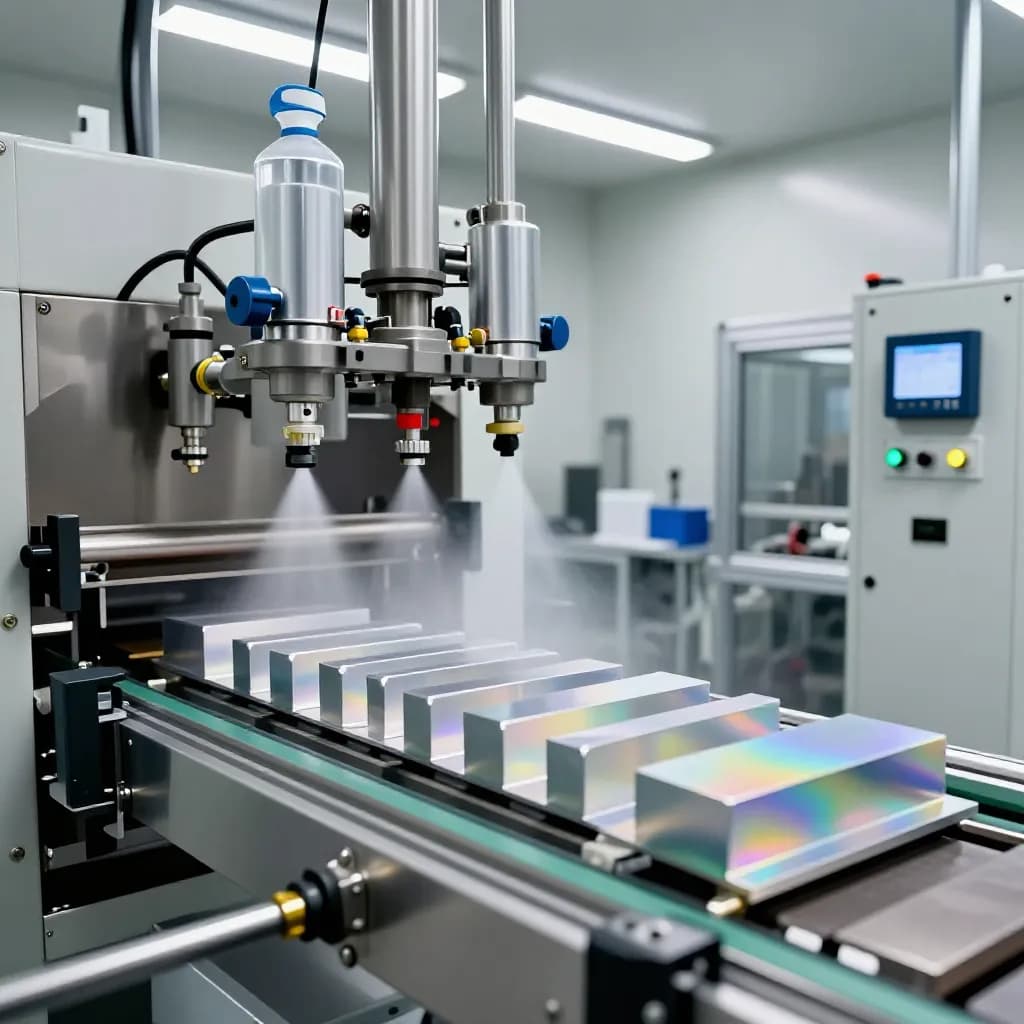
The shift toward zirconium pretreatment has been driven by multiple converging factors. Environmental regulations have increasingly restricted phosphate discharge limits and hexavalent chromium use, making traditional phosphate and chromate systems more expensive to operate and dispose of. Automotive OEMs have adopted zirconium pretreatment as a standard specification, pulling the supply chain toward the technology. And the operational advantages — lower operating temperature, reduced sludge generation, fewer process stages, and compatibility with both steel and aluminum — have made zirconium pretreatment economically attractive even without regulatory pressure.
Ready to Start Your Project?
From one-off customs to 15,000-part production runs — get precise pricing in 24 hours.
On This Page
Zirconium Pretreatment: The Modern Alternative to Phosphate
Zirconium pretreatment is marketed under various trade names by major chemical suppliers, including Henkel (Bonderite), PPG (Zircobond), Chemetall (Gardobond), and Nihon Parkerizing (Paltec). While the specific formulations differ, the underlying chemistry and performance characteristics are broadly similar across suppliers.
Chemistry and Formation Mechanism
Zirconium pretreatment solutions contain hexafluorozirconic acid (H₂ZrF₆) as the primary active ingredient, along with pH buffers, surfactants, and proprietary additives that enhance coating formation and performance. The solution operates at pH 3.5–5.5 and temperatures of 20–45°C — significantly lower than the 35–60°C required for phosphate systems, resulting in meaningful energy savings.
The coating formation mechanism involves a controlled acid attack on the metal substrate surface that raises the local pH at the metal-solution interface. As the pH rises above approximately 4.0, zirconium ions in solution become insoluble and precipitate as a thin layer of hydrated zirconium oxide (ZrO₂·xH₂O) on the substrate surface. The reaction is self-limiting — as the oxide layer forms, it insulates the substrate from the solution and stops the acid attack, producing a uniform coating of consistent thickness.
The resulting conversion coating is extremely thin — typically 20–100 nanometers (0.02–0.10 microns), compared to 0.5–1.0 microns for iron phosphate and 2–10 microns for zinc phosphate. Despite this thinness, the zirconium oxide layer provides excellent adhesion promotion and corrosion inhibition because of its dense, amorphous structure and strong chemical bonding to both the metal substrate and the organic powder coating. The coating weight is typically 10–50 mg/m² of zirconium, measured by X-ray fluorescence (XRF) spectroscopy — a non-destructive technique that allows rapid, in-line quality monitoring.
Multi-Metal Compatibility: Steel, Aluminum, and Mixed Lines
One of the most significant advantages of zirconium pretreatment is its ability to effectively treat both ferrous and non-ferrous metals in the same bath. Traditional phosphate systems are optimized for specific substrates — iron phosphate works well on steel but poorly on aluminum, while zinc phosphate requires different bath chemistry and operating conditions for aluminum versus steel. This substrate specificity forces multi-metal operations to either run separate pretreatment lines or accept compromised performance on one substrate.
Zirconium pretreatment chemistry is inherently multi-metal compatible because the coating formation mechanism — acid attack followed by oxide precipitation — works on any metal that is attacked by the mildly acidic solution. Steel, galvanized steel, aluminum (including various alloy series), and zinc die castings all develop effective zirconium oxide conversion coatings from the same bath under the same operating conditions. This compatibility simplifies operations for facilities that process mixed substrates, eliminating the need for separate pretreatment lines or bath chemistry adjustments when switching between materials.
The multi-metal capability is particularly valuable in the automotive industry, where body-in-white structures increasingly combine steel and aluminum panels. A single zirconium pretreatment bath can treat the entire mixed-metal assembly, providing consistent conversion coating quality on both substrates. Performance testing confirms that zirconium pretreatment on aluminum achieves adhesion and corrosion resistance comparable to chromate conversion coating (the traditional aluminum pretreatment), while on steel it matches or exceeds iron phosphate and approaches zinc phosphate performance in many test protocols.
Environmental and Operational Advantages
The environmental profile of zirconium pretreatment represents a step change improvement over traditional phosphate systems. The most significant environmental benefit is the elimination of phosphate discharge. Phosphate in wastewater contributes to eutrophication of receiving water bodies, and discharge limits have been progressively tightened by regulatory agencies worldwide. Zirconium pretreatment baths contain no phosphate, eliminating this discharge concern entirely.
Sludge generation is reduced by 80–95% compared to zinc phosphate systems. Zinc phosphate baths generate 15–30 grams of sludge per square meter of treated surface, requiring continuous sludge removal, dewatering, and disposal. Zirconium systems generate less than 1 gram of sludge per square meter, dramatically reducing waste handling costs and disposal volumes. The minimal sludge also means less nozzle clogging, less tank cleaning, and less maintenance downtime.
Operational advantages extend beyond environmental benefits. The lower operating temperature (20–45°C vs. 35–60°C for phosphate) reduces energy consumption for bath heating by 30–50%. The simpler bath chemistry requires fewer control parameters and less frequent chemical testing — total acid and pH are the primary control points, compared to total acid, free acid, zinc content, accelerator, iron content, and sludge monitoring for zinc phosphate. Fewer process stages may be needed — some zirconium systems operate effectively in 3-stage or 4-stage configurations that would require 5–7 stages with zinc phosphate. These operational simplifications reduce labor, chemical consumption, water usage, and waste generation, contributing to a lower total operating cost despite the higher chemical concentrate cost of zirconium products.
Performance Testing and Corrosion Resistance
The corrosion resistance of zirconium pretreatment under powder coating has been extensively validated through standardized testing and field experience. In neutral salt spray testing per ASTM B117, powder-coated steel panels with zirconium pretreatment typically achieve 500–1,000 hours before failure, depending on the specific zirconium product, the powder coating system, and the steel substrate quality. This performance is comparable to zinc phosphate (750–1,500 hours) and significantly better than iron phosphate (250–500 hours).
Cyclic corrosion testing — which alternates salt spray, humidity, and drying cycles to more closely simulate real-world exposure — often shows zirconium pretreatment performing equal to or better than zinc phosphate. Standards such as SAE J2334, GMW 14872, and VDA 621-415 are used for cyclic testing in automotive applications. The superior performance in cyclic testing is attributed to the dense, non-porous nature of the zirconium oxide layer, which resists moisture penetration more effectively than the porous crystalline structure of zinc phosphate during the drying phases of the test cycle.
Adhesion testing per ASTM D3359 (cross-cut tape test) consistently shows 5B ratings (no coating removal) for zirconium-pretreated panels, equivalent to the best results achieved with zinc phosphate. Humidity resistance per ASTM D2247 (1,000 hours at 100% RH, 38°C) shows no blistering or adhesion loss on properly pretreated panels. These results have been validated by major automotive OEMs, appliance manufacturers, and architectural coating specifiers, leading to widespread acceptance of zirconium pretreatment as a qualified alternative to zinc phosphate in demanding applications.
Process Control and Quality Monitoring
Zirconium pretreatment bath control is simpler than phosphate systems but still requires disciplined monitoring to maintain consistent coating quality. The primary control parameters are free acid (measured by titration), pH (measured by meter), total zirconium concentration (measured by titration or ICP analysis), temperature, and conductivity.
Free acid and pH are the most frequently monitored parameters, tested every 4–8 hours during production. The free acid value indicates the overall chemical activity of the bath, while pH affects the coating formation rate and thickness. Operating outside the specified pH range (typically 3.8–5.0) results in either insufficient coating formation (pH too low, excessive acid attack without precipitation) or excessive coating formation with poor adhesion (pH too high, rapid precipitation of loosely adherent oxide).
Coating quality is verified by XRF measurement of zirconium coating weight on test panels or production parts. XRF provides a non-destructive, rapid measurement (5–10 seconds per reading) that can be performed on the production floor without sample preparation. Target coating weights are typically 15–40 mg/m² of zirconium, with the specific target depending on the product formulation and the performance requirements. Coating weights below the minimum indicate insufficient bath concentration, low temperature, or short contact time. Weights above the maximum may indicate excessive bath concentration or pH drift.
Additional quality monitoring includes water break testing (a simple visual test where the rinsed surface should show a continuous water film without beading, indicating a clean, uniformly treated surface), adhesion testing on coated panels per ASTM D3359, and periodic salt spray testing per ASTM B117 to verify long-term corrosion resistance.
Conversion from Phosphate to Zirconium: Implementation Guide
Converting an existing phosphate pretreatment system to zirconium technology is a common project that requires careful planning but is typically straightforward to execute. The conversion can often be accomplished using the existing pretreatment equipment — spray washers, immersion tanks, pumps, heaters, and controls — with modifications to the chemical program and operating parameters.
The first step is a thorough evaluation of the existing system layout and the performance requirements of the products being processed. If the existing system is a 5-stage or 7-stage phosphate system, it may be possible to reduce the number of active stages when converting to zirconium, potentially freeing stages for additional rinsing or other process improvements. The zirconium supplier should be involved in the system evaluation to recommend the optimal stage configuration and operating parameters for the specific application.
Tank cleaning is critical during conversion. Phosphate residues — particularly zinc phosphate sludge — must be completely removed from tanks, piping, nozzles, and heat exchangers before charging the zirconium chemistry. Even trace phosphate contamination can interfere with zirconium coating formation and produce inconsistent results. A thorough acid cleaning followed by multiple rinses is typically required.
After charging the zirconium chemistry and adjusting operating parameters, a qualification program validates the conversion. This includes coating weight verification by XRF, adhesion testing per ASTM D3359, and accelerated corrosion testing per ASTM B117 or the applicable customer specification. Production parts should be tested alongside laboratory panels to confirm that the results are representative of actual production conditions. Most conversions achieve qualification within 2–4 weeks of startup, with ongoing optimization continuing for several months as the operating team gains experience with the new chemistry.
Frequently Asked Questions
How does zirconium pretreatment compare to zinc phosphate in corrosion resistance?
Zirconium pretreatment typically achieves 500–1,000 hours of salt spray resistance per ASTM B117 under powder coating, compared to 750–1,500 hours for zinc phosphate. In cyclic corrosion testing, zirconium often performs equal to or better than zinc phosphate due to its dense, non-porous oxide structure.
Can zirconium pretreatment handle both steel and aluminum?
Yes. Multi-metal compatibility is a key advantage of zirconium pretreatment. Steel, galvanized steel, aluminum alloys, and zinc die castings can all be treated in the same bath under the same conditions, eliminating the need for separate pretreatment lines or chemistry adjustments.
How much sludge does zirconium pretreatment generate?
Zirconium pretreatment generates less than 1 gram of sludge per square meter of treated surface, compared to 15–30 g/m² for zinc phosphate — an 80–95% reduction. This dramatically reduces waste handling, disposal costs, nozzle clogging, and maintenance downtime.
How is zirconium coating weight measured?
Zirconium coating weight is measured by X-ray fluorescence (XRF) spectroscopy, a non-destructive technique that provides rapid results (5–10 seconds per reading) on the production floor. Target coating weights are typically 15–40 mg/m² of zirconium.
Can an existing phosphate system be converted to zirconium?
Yes. Most conversions use existing equipment with modifications to chemistry and operating parameters. Thorough tank cleaning to remove phosphate residues is critical. The conversion typically achieves qualification within 2–4 weeks, with the zirconium supplier providing technical support throughout the process.
Ready to Start Your Project?
From one-off customs to 15,000-part production runs — get precise pricing in 24 hours.