Powder coating is the overwhelmingly dominant finishing method for aluminum windows and doors in both commercial and residential construction. The technology's combination of durability, consistency, design flexibility, and environmental performance has made it the default specification for fenestration manufacturers and the architects who specify their products.
Architecture
Specifying Powder Coating for Aluminum Windows and Doors
Sundial Powder Coating·April 20, 2026·9 min
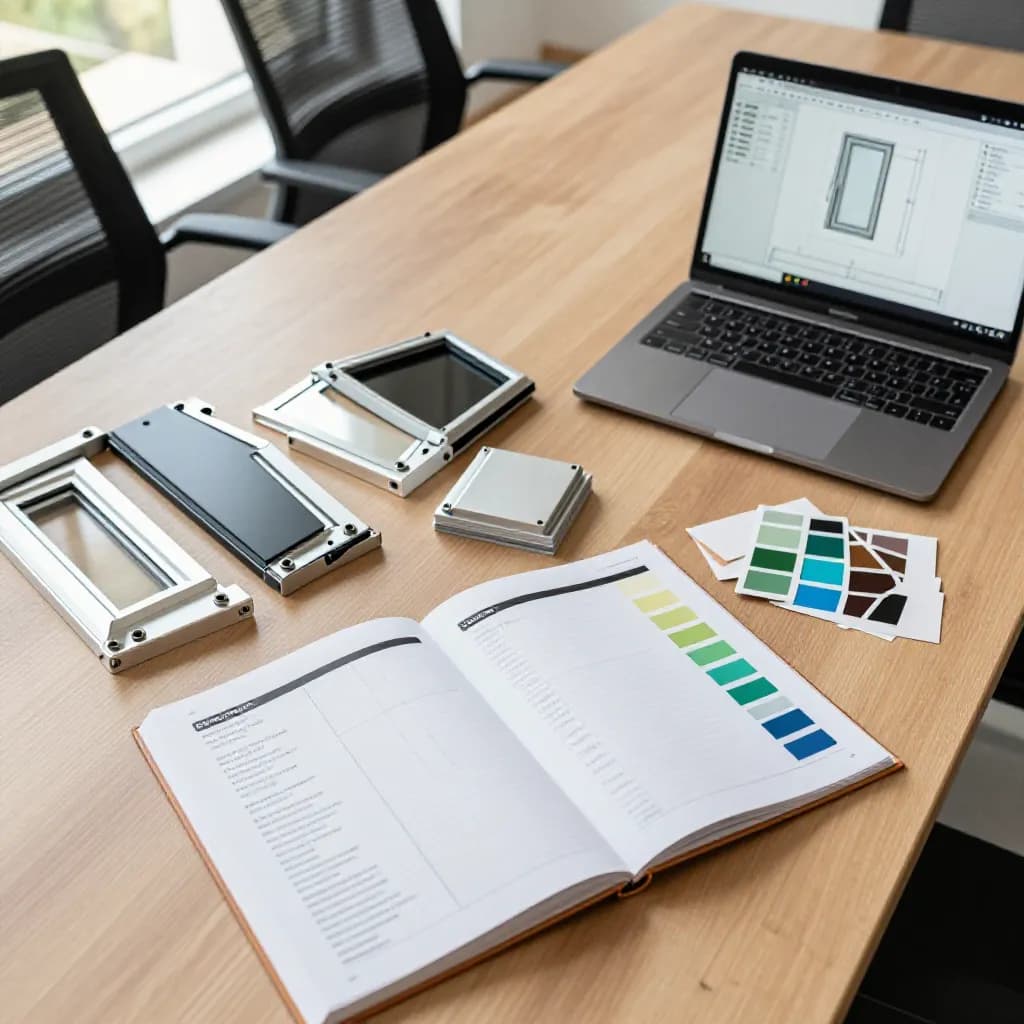
Aluminum windows and doors face a uniquely demanding set of performance requirements. They must withstand continuous UV exposure, thermal cycling, rain, condensation, and frequent physical contact from daily use — all while maintaining their appearance and protective function for the life of the building. The coating system must resist scratching from hardware operation, cleaning, and general handling without chipping, peeling, or losing color.
Ready to Start Your Project?
From one-off customs to 15,000-part production runs — get precise pricing in 24 hours.
On This Page
Why Powder Coating Dominates the Windows and Doors Market
Powder coating meets these requirements comprehensively. Its 60-120 micron film thickness provides a robust protective barrier, its thermally fused bond to the aluminum substrate resists chipping and peeling, and its zero-VOC formulation aligns with the sustainability expectations of modern building projects. These advantages explain why virtually all major aluminum fenestration manufacturers have standardized on powder coating as their primary finishing process.
Key Specification Elements for Fenestration Coatings
Specifying powder coating for aluminum windows and doors requires attention to several key elements. Film thickness should be specified at a minimum of 60 microns for standard applications, with 80-120 microns recommended for high-exposure locations. The powder chemistry should be superdurable polyester for exterior applications, ensuring long-term UV resistance and color stability.
Pretreatment specification is equally important. A multi-stage chrome-free pretreatment process — including alkaline cleaning, acid etching, and conversion coating — provides the foundation for coating adhesion and corrosion resistance. For coastal or industrial environments, enhanced pretreatment with anodic oxidation or specialized conversion coatings should be specified.
Gloss level, surface texture, and color must be clearly defined in the specification. Standard gloss levels range from matte (10-20 gloss units) through satin (30-50 GU) to full gloss (80-90 GU). The specification should reference the applicable quality standard — Qualicoat, GSB, or AAMA — and require that both the powder manufacturer and the coating applicator hold current certification.
Qualicoat and GSB Certification for Windows and Doors
Qualicoat certification is the most widely specified quality mark for powder-coated aluminum windows and doors in Europe and many international markets. The Qualicoat label guarantees that the coating applicator operates to defined quality management standards and that the coating system — including pretreatment, powder material, and application process — meets rigorous performance requirements.
Qualicoat Class 1 is suitable for standard architectural applications, requiring superdurable powder coatings with proven weathering resistance. Class 1.5 and Class 2 provide progressively higher performance levels for more demanding exposures. The Qualicoat Seaside label adds specific requirements for salt spray resistance, making it essential for fenestration projects in coastal locations.
GSB International certification provides an equivalent quality framework, with GSB Standard, Premium, and Master tiers. GSB Master certification requires the highest levels of weathering resistance and is appropriate for premium fenestration projects. Both Qualicoat and GSB require regular factory audits, batch testing, and independent laboratory verification, giving specifiers confidence that certified products will perform as expected.
Dual-Color and Special Finish Options
Modern aluminum window and door systems frequently require different colors on interior and exterior faces. Powder coating technology accommodates this through dual-color application processes, where the exterior face is coated in one color and the interior face in another. This allows architects to coordinate the exterior facade color scheme while giving interior designers freedom to match internal finishes.
Beyond standard solid colors, powder coating offers an extensive range of special finishes for fenestration. Metallic effects create a contemporary, high-end appearance. Textured finishes provide tactile interest and can help conceal minor surface imperfections. Anodic-look powder coatings replicate the appearance of anodized aluminum without the color limitations of the anodizing process.
Wood-grain sublimation finishes have become particularly popular for residential windows and doors, offering the warm aesthetic of timber with the durability and low maintenance of powder-coated aluminum. These finishes use a heat-transfer process to apply photorealistic wood patterns onto the powder-coated surface, achieving remarkably convincing results that are virtually indistinguishable from natural timber at normal viewing distances.
Why Liquid Paint Fails on Windows and Doors
Liquid paint has significant shortcomings when applied to aluminum windows and doors. The thin film build of 25-50 microns provides inadequate protection for elements that are subject to daily physical contact, thermal movement, and continuous weathering. Liquid-painted window frames are prone to chipping at contact points, particularly around handles, hinges, and locking mechanisms where repeated operation causes mechanical wear.
Color stability is another weakness of liquid paint on fenestration. Thinner films degrade faster under UV exposure, leading to visible chalking and fading within a few years — particularly on south-facing elevations. Yellowing is a common problem with liquid-painted white and light-colored frames, as the thinner film offers less UV protection to the underlying resin system.
Maintenance demands for liquid-painted windows and doors are substantially higher than for powder-coated equivalents. Repainting window frames is a labor-intensive process requiring careful masking of glass, hardware, and seals. The typical 5-10 year repaint cycle for liquid-painted fenestration compares poorly with the 20-25 year service life of powder coating, making liquid paint a false economy despite its potentially lower initial cost.
Warranty Expectations: 20-25 Years vs 5-10 Years
Warranty coverage reflects the confidence that manufacturers and coating applicators have in their products' long-term performance. Powder-coated aluminum windows and doors from reputable manufacturers typically carry coating warranties of 20-25 years, covering defects such as peeling, cracking, blistering, and excessive fading or chalking. These warranties are underpinned by the proven track record of superdurable polyester powder coatings and the rigorous quality standards of Qualicoat, GSB, and AAMA certification.
Liquid-painted fenestration, by contrast, typically carries coating warranties of only 5-10 years. This shorter warranty period reflects the inherent limitations of thinner film builds and the greater susceptibility of liquid coatings to UV degradation, mechanical damage, and adhesion failure over time.
When evaluating fenestration specifications, architects and building owners should consider warranty coverage as a meaningful indicator of expected coating performance. A 20-25 year powder coating warranty provides assurance that the fenestration will maintain its appearance and protective function through multiple decades of service, reducing the risk of premature maintenance expenditure and protecting the building's long-term value.
Frequently Asked Questions
What is the recommended film thickness for powder-coated windows?
A minimum of 60 microns is standard for aluminum windows and doors, with 80-120 microns recommended for high-exposure locations such as coastal areas or south-facing elevations. This is significantly thicker than the 25-50 microns typical of liquid paint, providing superior protection against UV, moisture, and mechanical wear.
Can aluminum windows have different colors inside and outside?
Yes. Dual-color powder coating is a standard option for aluminum windows and doors. The exterior face is coated in one color to match the facade design, while the interior face is coated in a different color to coordinate with internal finishes. This is achieved through specialized masking and application techniques during the powder coating process.
How long is the warranty on powder-coated aluminum windows?
Reputable manufacturers typically offer 20-25 year coating warranties on powder-coated aluminum windows and doors, covering peeling, cracking, blistering, and excessive fading. This compares to just 5-10 years for liquid-painted fenestration, reflecting the superior long-term performance of powder coating systems.
Why do liquid-painted window frames chip and yellow?
Liquid paint achieves only 25-50 microns of film thickness, which provides inadequate protection against mechanical wear at contact points around handles and hinges. The thinner film also degrades faster under UV exposure, causing yellowing in light colors and visible chalking and fading, particularly on sun-exposed elevations.
What Qualicoat class should I specify for windows and doors?
Qualicoat Class 1 is suitable for standard applications. For higher-exposure locations, specify Class 1.5 or Class 2 for enhanced weathering resistance. For coastal projects, add the Qualicoat Seaside requirement for salt spray resistance. Always ensure both the powder manufacturer and the coating applicator hold current Qualicoat certification.
Ready to Start Your Project?
From one-off customs to 15,000-part production runs — get precise pricing in 24 hours.