Aluminum window and door systems represent one of the largest and most technically demanding applications for architectural powder coating. The global market for aluminum fenestration continues to grow, driven by the material's strength-to-weight ratio, design flexibility, recyclability, and ability to achieve the slim sightlines and large spans that contemporary architecture demands.
Architecture
Powder Coating for Window and Door Systems: Dual-Color Finishes and Thermal Performance
Sundial Powder Coating·April 22, 2026·11 min
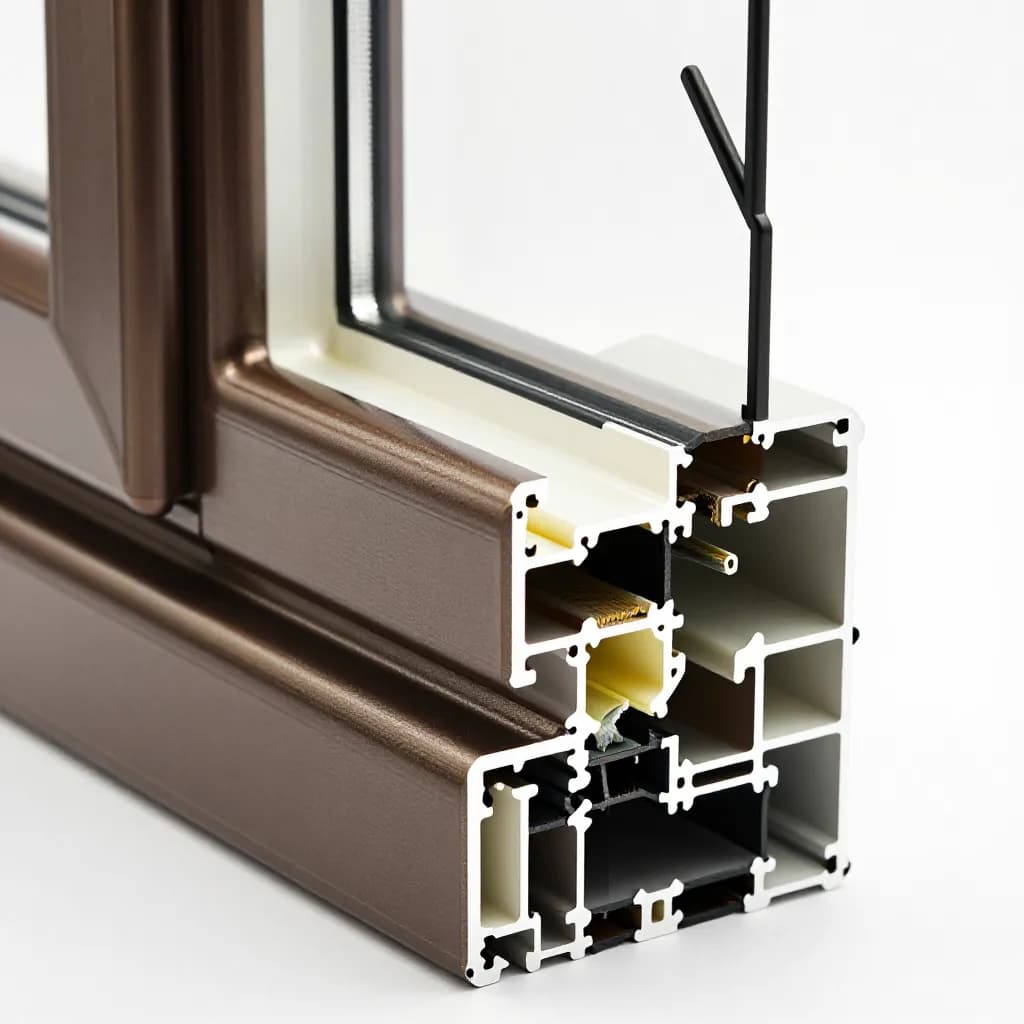
Powder coating is the finishing technology of choice for aluminum fenestration, with market share exceeding 85% in most developed markets. The technology's advantages are particularly well-suited to window and door applications: the electrostatic application process handles the complex profiles of window frames efficiently, the cured film provides excellent weather resistance for exterior-exposed surfaces, and the wide color palette enables architects to specify fenestration that integrates seamlessly with the overall building design.
Ready to Start Your Project?
From one-off customs to 15,000-part production runs — get precise pricing in 24 hours.
On This Page
Aluminum Windows and Doors: A Growing Market for Powder Coating
The fenestration sector has driven several important innovations in powder coating technology. Dual-color coating — applying different colors to the interior and exterior faces of a window or door frame — was developed primarily for the fenestration market and has become a standard capability for architectural coating applicators. Low-temperature cure formulations were advanced partly to enable coating of thermally broken profiles without damaging the polyamide thermal break strips. And the development of super-durable polyester formulations was motivated by the need for fenestration coatings that maintain their appearance over 25-year building lifecycles.
This article examines the specific requirements, technologies, and quality standards for powder coating aluminum window and door systems, from standard casement windows to large-format sliding and bi-fold door systems.
Window System Types and Coating Considerations
Different window system types present distinct coating challenges related to their operating mechanisms, profile geometries, and exposure conditions. Understanding these differences helps specifiers select the appropriate coating system for each application.
Casement windows (side-hung, top-hung, and bottom-hung) are the most common window type in residential and commercial buildings. The frame and sash profiles are relatively simple extruded sections that coat well using standard powder application techniques. The hinge side of casement windows experiences concentrated wear where the sash contacts the frame during opening and closing, and the coating in this area must resist abrasion from repeated operation over the window's 25-30 year service life.
Tilt-and-turn windows, popular in European markets, combine inward tilting for ventilation with inward opening for cleaning and emergency egress. The complex hardware mechanism requires precise profile dimensions, and powder coating film thickness must be controlled to avoid interference with hardware operation. Maximum film thickness of 80 microns in hardware rebate areas is a common specification for tilt-and-turn systems.
Sliding windows and doors use tracks and rollers that require smooth, low-friction surfaces for easy operation. The track profiles are powder coated with particular attention to surface smoothness — orange peel texture or excessive film build in the track channel can impede roller movement and increase operating force. Some manufacturers specify PTFE-modified powder coatings for track surfaces to reduce friction.
Fixed (non-opening) windows and curtain wall vision panels have the simplest coating requirements because there are no moving parts or hardware interfaces to consider. The coating specification focuses on weather resistance, color consistency, and aesthetic quality.
Roof windows and skylights experience more intense UV exposure and thermal cycling than vertical windows, requiring super-durable polyester powder coatings that maintain color and gloss under these demanding conditions. The horizontal or near-horizontal orientation also increases water ponding and dirt accumulation, making the coating's resistance to moisture and staining particularly important.
Bi-Fold and Large-Format Sliding Door Systems
Bi-fold doors and large-format sliding systems have become defining features of contemporary residential and commercial architecture, creating seamless connections between interior and exterior spaces. These systems present unique coating challenges due to their large panel sizes, heavy weights, and the precision required for smooth operation.
Bi-fold door panels, typically 600-1,000 mm wide and up to 3,000 mm tall, are connected by hinges and fold against each other when opened. The hinge connections experience concentrated mechanical stress during operation, and the powder coating at hinge mounting points must withstand the clamping forces of hinge screws without cracking or delaminating. Pre-drilling and countersinking hinge screw holes before coating ensures clean, damage-free hardware installation.
The folding action of bi-fold doors brings adjacent panel faces into contact, creating potential for coating-to-coating abrasion. Nylon or PTFE guide blocks at contact points prevent direct coating contact, but the coating must still resist the minor abrasion that occurs during normal operation. Pencil hardness of H to 2H and abrasion resistance tested per ASTM D4060 are standard requirements.
Large-format lift-and-slide doors, with individual panels weighing 200-400 kg, require powder-coated aluminum profiles with exceptional dimensional stability. The coating process must not introduce warping or distortion in the long, thin-walled profiles used for these systems. Controlled heating rates during the curing cycle — ramping from ambient to cure temperature over 10-15 minutes rather than rapid insertion into a hot oven — minimize thermal stress and distortion in large profiles.
Pocket sliding doors, where the door panel slides into a wall cavity when opened, require coating on all four faces of the door panel because the panel is fully visible from both sides when in the open position. This four-sided coating requirement adds complexity to the application process but is readily achieved with modern multi-gun spray systems.
The trend toward minimal frame sightlines in sliding and bi-fold systems has produced increasingly slim aluminum profiles where the coating must provide maximum protection with minimum film thickness. Thin-film powder coatings applied at 50-70 microns deliver adequate protection while maintaining the tight dimensional tolerances required for these precision systems.
Dual-Color Coating Technology for Fenestration
Dual-color powder coating — applying one color to the exterior face and a different color to the interior face of a window or door frame — is one of the most commercially important capabilities in architectural fenestration coating. This technology allows architects to specify exterior colors that complement the building facade while interior designers select colors that coordinate with the interior scheme, without compromise on either side.
The dual-color coating process involves two complete coating cycles with masking between them. In the first cycle, the profile is masked on one face (typically the interior) using precision-cut adhesive masking film, and the exterior color is applied and cured. The masking is then removed, the cured exterior face is masked, and the interior color is applied and cured in a second pass through the spray booth and oven.
The quality of the color transition line — the boundary between the two colors, typically located in the profile's glazing rebate where it will be concealed by the glass unit — is a critical quality parameter. A clean, straight transition line requires precise masking alignment, and the masking film must seal tightly against the profile surface to prevent powder infiltration under the mask edge. Automated masking application systems using CNC-cut films achieve transition line accuracy of ±0.5 mm.
The dual-cure process subjects the first-applied color to two curing cycles — its own cure plus the cure cycle for the second color. This double cure can cause yellowing or over-cure of the first color if the powder formulation is not designed for dual-color application. Powder manufacturers offer dual-color-compatible formulations with wider cure windows that tolerate the additional thermal exposure without color shift.
Common dual-color combinations include dark exterior colors (anthracite grey RAL 7016, black RAL 9005, dark bronze) with white or light grey interiors, matching the exterior to the building facade while maintaining bright, neutral interior surfaces. Wood-effect sublimation finishes on the interior face with solid colors on the exterior are also popular, providing the warmth of timber inside with the durability of powder-coated aluminum outside.
The additional processing required for dual-color coating — two spray passes, two cure cycles, and masking operations — approximately doubles the coating time compared to single-color application. However, the value added by dual-color capability is substantial, and most architectural coating applicators have invested in the equipment and processes to offer this service as standard.
Thermal Performance and Energy Efficiency Considerations
The thermal performance of window and door systems is a critical factor in building energy efficiency, and powder coating interacts with thermal performance in several important ways that specifiers must understand.
Thermal break profiles, which use insulating polyamide strips to separate the interior and exterior aluminum sections, are standard in all energy-efficient fenestration systems. The powder coating process must be compatible with the thermal break assembly method. In the coat-before-break sequence, profiles are powder coated and then the thermal break strips are mechanically crimped into place. In the coat-after-break sequence, the complete thermally broken profile is coated as an assembly. Each approach has implications for coating coverage, film thickness control, and process efficiency.
The emissivity of the powder coating surface affects the radiative heat transfer component of the window frame's thermal performance. Standard powder coatings have high emissivity (0.85-0.95), meaning they radiate heat efficiently. In cold climates, this high emissivity can increase heat loss from the interior frame surface. Low-emissivity powder coatings with metallic pigments or specialized additives can reduce surface emissivity to 0.3-0.5, improving the frame's thermal performance by reducing radiative heat loss.
Solar absorptance — the fraction of incident solar radiation absorbed by the coating — varies significantly with color. Dark colors (absorptance 0.7-0.95) absorb more solar energy than light colors (absorptance 0.2-0.4), causing higher surface temperatures on sun-exposed facades. For dark-colored fenestration on south-facing facades, the thermal expansion of the aluminum profiles due to solar heating must be accommodated by the system's movement joints and gasket design. Surface temperatures of 80°C or higher are possible on dark-colored profiles in direct sunlight, well within the service range of standard polyester powder coatings but requiring consideration in the system's thermal movement design.
Passive House and near-zero-energy building standards impose stringent requirements on window frame thermal performance, with frame U-values of 0.8-1.0 W/m²K or better required for certification. Achieving these values requires wide thermal break profiles (typically 30-50 mm) and careful attention to every detail that affects thermal bridging, including the powder coating's interaction with thermal break assembly and the coating's surface emissivity properties.
Hardware Coordination and Coating Interface Management
Window and door hardware — hinges, handles, locks, espagnolette mechanisms, restrictors, and trickle ventilators — interfaces directly with the powder-coated aluminum profiles, creating a complex coordination challenge that affects both the coating specification and the hardware installation process.
Hardware mounting typically involves screwing or bolting components to the powder-coated profile surface. The screw or bolt must penetrate the coating to achieve metal-to-metal contact for structural integrity and electrical continuity (important for earthing/grounding of the window frame). Self-tapping screws designed for use with powder-coated aluminum have cutting tips that cleanly penetrate the coating without chipping or cracking the surrounding film. Pre-drilling pilot holes before coating, with the holes masked during the coating process, provides the cleanest hardware installation.
Handle and lock mechanisms require precise pocket routing in the aluminum profile, and the coating must not build up excessively in these pockets. Maximum film thickness of 60-80 microns in hardware pocket areas is typical, compared to 80-120 microns on exposed surfaces. Excessive coating in hardware pockets can prevent proper seating of the mechanism and interfere with smooth operation.
Hinge systems for casement and tilt-and-turn windows require particular attention. The hinge rebate area experiences repeated mechanical contact during window operation, and the coating must resist wear at these contact points over the window's 25-30 year service life. Some window system manufacturers specify uncoated or specially treated hinge rebate areas to ensure reliable hinge performance.
Color coordination between powder-coated profiles and hardware finishes is an important aesthetic consideration. Hardware manufacturers offer finishes in standard colors (white, black, silver, bronze) that are designed to complement common powder coating colors. For custom powder coating colors, hardware can be powder coated to match, or anodized hardware in complementary tones can be specified.
Weatherstripping and gasket compatibility with the powder coating surface is essential for the window's weather performance. EPDM and silicone gaskets must maintain their seal against the powder-coated surface over the full range of operating temperatures and after years of UV exposure. Gasket compression set — the permanent deformation that occurs over time — must be accounted for in the gasket groove design to ensure long-term sealing performance against the coated surface.
Quality Standards and Testing for Fenestration Coatings
Powder coatings for window and door systems must meet the same rigorous quality standards as other architectural coatings, with additional requirements specific to fenestration applications. The major certification systems provide the framework for specifying and verifying coating quality.
Qualicoat certification is the baseline requirement for fenestration coatings in European markets. Class 1 certification is acceptable for interior-only applications, while Class 2 is the standard for exterior-exposed fenestration. Class 3 (super-durable) is specified for high-exposure applications such as south-facing facades, coastal locations, and buildings at altitude where UV intensity is elevated.
The Qualicoat specification includes requirements for film thickness (minimum 60 microns average, minimum 50 microns local), gloss (measured at 60° geometry, within ±5 units of the specified value), adhesion (cross-cut test rating 0 per ISO 2409), hardness (minimum pencil hardness F), impact resistance (minimum 2.5 Nm per ISO 6272), and cupping resistance (minimum 5 mm per ISO 1520). These mechanical properties ensure the coating withstands the handling, installation, and operational stresses that fenestration components experience.
Accelerated weathering testing per ISO 16474-2 (xenon arc) simulates years of outdoor exposure in compressed timeframes. Qualicoat Class 2 requires 1,000 hours of xenon arc exposure with gloss retention ≥ 50% and color change ≤ delta E 4.0. Class 3 extends this to 2,000 hours with tighter acceptance criteria.
Corrosion resistance is tested using the acetic acid salt spray test (AASS) per ISO 9227, which is more aggressive than the neutral salt spray test and better represents the corrosive conditions that aluminum fenestration encounters in polluted urban and coastal environments. Qualicoat Class 2 requires 1,000 hours of AASS without significant corrosion or adhesion loss.
For fenestration systems exported to North American markets, AAMA 2603 (basic performance), AAMA 2604 (high performance), or AAMA 2605 (superior performance) specifications apply. AAMA 2605, which requires 10 years of South Florida exposure testing, is the standard specification for premium fenestration projects in North America.
Beyond coating-specific tests, complete window and door systems undergo performance testing for air permeability, water tightness, wind resistance, operating force, durability (cycling tests), and security. The powder coating contributes to long-term system performance by protecting the aluminum structure from corrosion that could compromise seal integrity and hardware function.
Frequently Asked Questions
Can windows have different colors inside and outside?
Yes. Dual-color powder coating applies different colors to interior and exterior faces using precision masking between two separate coating and curing cycles. This is standard practice for architectural fenestration, allowing exterior colors to match the facade while interior colors coordinate with the interior design.
Does powder coating affect window thermal performance?
The coating itself has negligible effect on thermal transmittance due to its thin film. However, film thickness must be controlled in thermal break grooves to avoid compromising the mechanical connection. Dark colors increase solar absorptance and surface temperatures, which must be considered in thermal movement design for sun-exposed facades.
How long does powder coating last on aluminum windows?
Qualicoat Class 2 certified powder coatings maintain acceptable appearance for 20-25 years on aluminum windows. Super-durable Class 3 coatings extend this further. Regular cleaning every 6-24 months depending on location helps maintain appearance and extends coating life.
What quality standard should window powder coating meet?
In Europe, Qualicoat Class 2 is the standard for exterior fenestration, with Class 3 for high-exposure locations. In North America, AAMA 2604 or AAMA 2605 are specified for high-performance and superior-performance applications respectively. Coastal projects should specify Qualicoat Seaside certification.
How is hardware installed on powder-coated window frames?
Hardware is mounted using self-tapping screws designed to cleanly penetrate the coating, or through pre-drilled pilot holes masked during coating. Film thickness in hardware pocket areas is controlled to 60-80 microns to ensure proper mechanism seating and smooth operation. Color-matched hardware is available for aesthetic coordination.
Ready to Start Your Project?
From one-off customs to 15,000-part production runs — get precise pricing in 24 hours.