Wildfire risk is increasing globally due to climate change, drought, and expanding development into wildland-urban interface (WUI) zones. California, Australia, southern Europe, western Canada, and parts of South America and Southeast Asia all face growing wildfire threats that directly affect building design and material specification. The devastating fires in Paradise, California (2018), eastern Australia (2019-2020), and the Mediterranean (2021-2023) have intensified focus on building materials that resist ignition and limit fire spread.
Architecture
Powder Coating for Wildfire Zone Buildings: Ember Resistance, Non-Combustible Ratings, Radiant Heat, and Recovery
Sundial Powder Coating·April 22, 2026·11 min
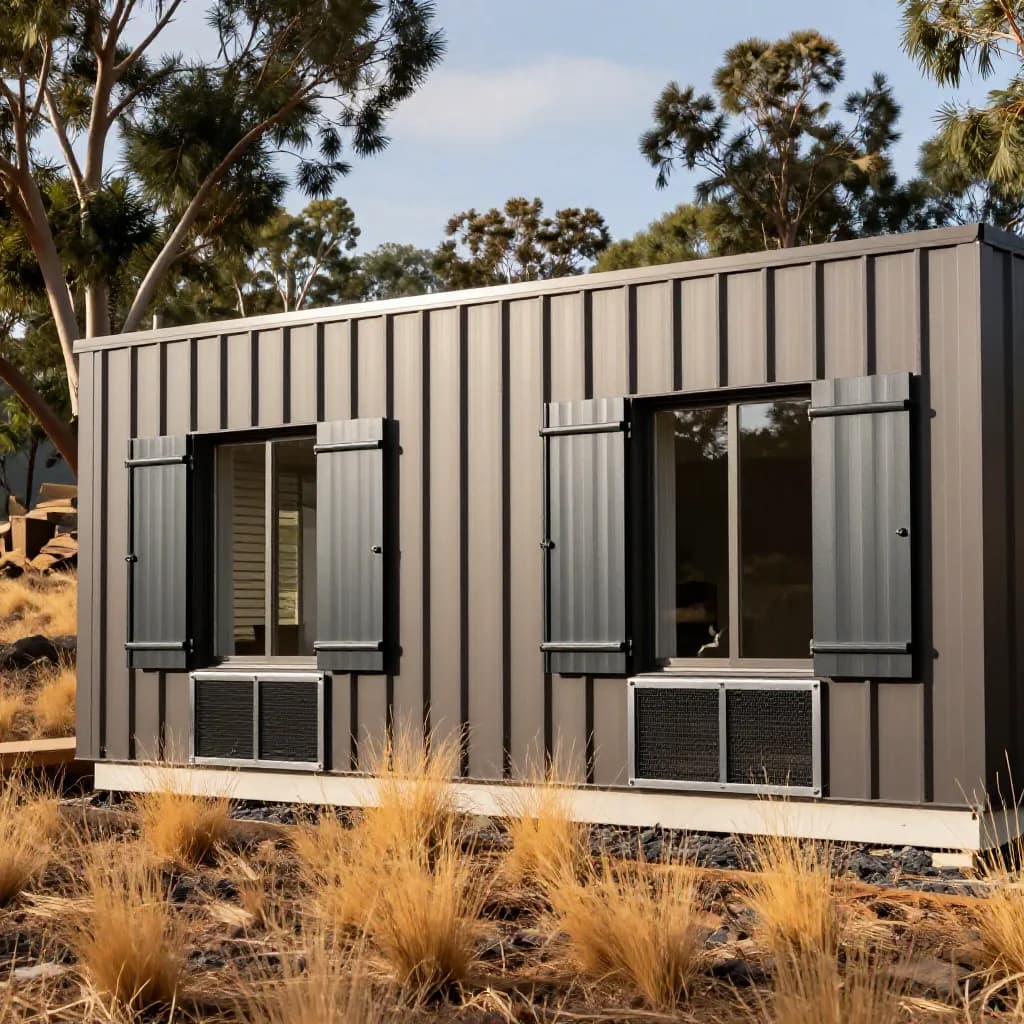
Buildings in wildfire zones face three primary fire exposure mechanisms: ember attack (burning particles carried by wind up to 2 km ahead of the fire front), radiant heat (thermal radiation from the fire front and burning vegetation), and direct flame contact (when the fire front reaches the building). Of these, ember attack is responsible for the majority of building ignitions — studies of Australian bushfires found that embers caused 80-90% of house losses, primarily through ignition of combustible building materials and entry through gaps and openings.
Ready to Start Your Project?
From one-off customs to 15,000-part production runs — get precise pricing in 24 hours.
On This Page
Wildfire Risk and Building Envelope Protection
Powder-coated aluminum provides inherent wildfire resistance through the non-combustible nature of both the aluminum substrate and the thin organic coating film. When tested to EN 13501-1, powder-coated aluminum achieves Euroclass A2-s1,d0 (limited combustibility, negligible smoke, no flaming droplets) — meeting the most stringent non-combustible facade requirements. This classification means that powder-coated aluminum cladding does not contribute fuel to a wildfire, does not produce toxic smoke, and does not generate flaming droplets that could ignite other materials.
The wildfire performance of powder-coated aluminum contrasts sharply with combustible cladding materials — timber, some composite panels, and certain plastic-based systems — that can ignite from ember attack or radiant heat and contribute to rapid fire spread across building facades. The tragic consequences of combustible cladding in fire have driven regulatory changes worldwide that increasingly favor non-combustible materials like powder-coated aluminum.
Ember Attack Resistance
Ember attack is the most common mechanism of building ignition during wildfires. Burning embers — ranging from small sparks to large pieces of burning bark and vegetation — are carried by convective winds ahead of the fire front and can accumulate on and around buildings for hours before the main fire arrives. These embers lodge in gaps, accumulate on horizontal surfaces, and ignite any combustible material they contact.
Powder-coated aluminum cladding is inherently resistant to ember ignition. The aluminum substrate has a melting point of 660°C and does not ignite or support combustion. The thin powder coating film (60-100 microns) contains insufficient organic material to sustain combustion — even if the coating surface is charred by direct ember contact, the fire self-extinguishes when the ember is consumed because the coating cannot propagate flame.
The critical vulnerability in ember attack is not the cladding surface but the gaps and joints in the facade system. Embers can enter through open joints, ventilation gaps, and improperly sealed penetrations, reaching combustible materials behind the cladding — insulation, timber framing, or building wrap. Ember-resistant facade design requires sealing or screening all gaps larger than 2 mm with non-combustible materials, using ember guards on ventilation openings, and ensuring that the cavity behind rainscreen cladding does not provide a pathway for ember entry.
Australian Standard AS 3959 (Construction of Buildings in Bushfire-Prone Areas) provides the most detailed guidance for ember-resistant building design, defining six Bushfire Attack Levels (BAL) from BAL-LOW to BAL-FZ (Flame Zone). Powder-coated aluminum cladding is acceptable at all BAL levels, including BAL-FZ, provided the facade system design meets the gap, screening, and structural requirements for each level.
The surface temperature of powder-coated aluminum during ember accumulation depends on the density and duration of ember deposition. Testing has shown that accumulated embers can raise surface temperatures to 300-400°C locally, which exceeds the decomposition temperature of the powder coating (typically 250-350°C) but does not ignite the aluminum substrate. The coating in the ember contact zone will be damaged and require repair after the fire, but the structural integrity of the cladding is maintained.
Radiant Heat Performance
Radiant heat from a wildfire front can reach intensities of 10-40 kW/m² at distances of 10-100 meters from the fire, depending on vegetation type, fire intensity, and topography. At these heat flux levels, combustible building materials can ignite spontaneously (piloted ignition of timber occurs at approximately 12-15 kW/m²), and even non-combustible materials experience significant thermal stress.
Powder-coated aluminum responds to radiant heat exposure through a predictable sequence of events. At heat fluxes below 10 kW/m², the coating surface temperature rises but remains below the decomposition threshold, and no permanent damage occurs. At 10-20 kW/m², the coating begins to discolor and may show surface charring, but the aluminum substrate remains structurally sound. At 20-40 kW/m², the coating decomposes and the aluminum surface temperature approaches the softening range (above 200°C), potentially causing localized deformation of thin-gauge panels. Above 40 kW/m², aluminum panels may deform significantly, though they do not ignite or contribute to fire spread.
The color and finish of the powder coating affect radiant heat absorption. Dark-colored coatings absorb more radiant energy than light-colored coatings, reaching higher surface temperatures at the same heat flux. For buildings in high-BAL wildfire zones, specifying light-colored powder coatings with high solar reflectance reduces the thermal load on the facade during radiant heat exposure, providing additional time before the coating reaches its decomposition temperature.
Radiant heat barriers — such as fire-rated glazing, solid masonry walls, and metal shutters — can be integrated with powder-coated aluminum facade systems to protect vulnerable areas (windows, doors, and ventilation openings) from radiant heat exposure. Powder-coated aluminum shutters and screens provide both radiant heat protection and ember screening, serving a dual function in wildfire defense.
The thermal mass of the aluminum substrate provides a beneficial heat sink effect during short-duration radiant heat exposure. The high thermal conductivity of aluminum (205 W/m·K) distributes heat rapidly across the panel, preventing localized hot spots and delaying the time to reach critical temperatures. This heat distribution effect is more pronounced in thicker aluminum panels and in panels with good thermal contact with the building structure.
Fire Classification and Regulatory Compliance
Fire classification of building facade materials is governed by national and international standards that define test methods and performance criteria for combustibility, flame spread, smoke production, and flaming droplet generation. Powder-coated aluminum consistently achieves the highest non-combustible classifications across all major regulatory frameworks.
EN 13501-1 (European classification) rates powder-coated aluminum as A2-s1,d0: A2 indicates limited combustibility (the material does not significantly contribute to fire), s1 indicates negligible smoke production, and d0 indicates no flaming droplets. This classification is achieved through testing to EN ISO 1182 (non-combustibility test) and EN ISO 1716 (calorific potential test), which confirm that the thin organic powder coating on the non-combustible aluminum substrate contributes negligible fuel load.
Some powder-coated aluminum systems achieve the highest possible A1 classification (non-combustible) when the coating thickness is below certain thresholds — typically 50-60 microns depending on the specific test results. At standard architectural coating thicknesses of 60-100 microns, A2 is the typical classification, which still meets the most stringent facade fire requirements in European building regulations.
Australian Standard AS 1530.1 (combustibility test) classifies powder-coated aluminum as non-combustible, meeting the requirements for all Bushfire Attack Levels under AS 3959. The Building Code of Australia (NCC) accepts powder-coated aluminum for all facade applications, including high-rise buildings where non-combustible cladding is mandatory.
In the United States, NFPA 285 (fire test for exterior wall assemblies) evaluates the fire performance of complete wall assemblies rather than individual materials. Powder-coated aluminum cladding systems have successfully passed NFPA 285 testing in numerous configurations, demonstrating that the complete wall assembly — including insulation, air barriers, and structural framing — does not propagate fire when the cladding is powder-coated aluminum.
The regulatory trend worldwide is toward stricter facade fire requirements, driven by high-profile cladding fires. Powder-coated aluminum is well-positioned to meet these tightening requirements, as its non-combustible classification provides a straightforward path to compliance without the need for complex fire engineering assessments or additional fire-retardant treatments.
Post-Wildfire Assessment and Recovery
Buildings that survive a wildfire event with their structural integrity intact may still require significant assessment and repair of their powder-coated facades. The extent of coating damage depends on the fire exposure level — ember attack only, radiant heat exposure, or direct flame contact — and the duration of exposure.
Post-wildfire coating assessment should be conducted systematically, documenting the extent and severity of damage across the entire building envelope. Damage categories include: no visible damage (coating intact, no discoloration), minor heat damage (surface discoloration or slight gloss change, coating adhesion intact), moderate heat damage (coating charring, blistering, or partial decomposition, substrate intact), severe heat damage (coating fully decomposed, aluminum surface oxidized or discolored), and structural damage (aluminum deformed or melted, requiring panel replacement).
For areas with minor heat damage, the coating may be restorable through cleaning and polishing without recoating. Surface discoloration from smoke and soot deposits can often be removed with appropriate cleaning agents, revealing undamaged coating beneath. Adhesion testing (ISO 2409 or ISO 4624) should confirm that the coating-substrate bond remains intact before deciding that cleaning alone is sufficient.
For areas with moderate to severe heat damage, the damaged coating must be removed and the surface recoated. If the aluminum substrate is structurally sound (no deformation or significant oxidation), the damaged coating can be removed by chemical stripping or abrasive blasting, the surface re-pretreated, and new powder coating applied. This restoration process is significantly less costly than panel replacement and can restore the facade to its original appearance and performance.
For areas with structural damage — deformed or melted aluminum — panel replacement is required. Maintaining an inventory of spare panels coated from the original powder batch enables rapid replacement with consistent color matching. If original-batch panels are not available, color matching to the weathered condition of the surviving panels provides the best visual consistency.
Design Strategies for Wildfire-Resilient Buildings
Wildfire-resilient building design integrates non-combustible materials, ember-resistant detailing, and defensible space management into a comprehensive protection strategy. Powder-coated aluminum cladding is a key component of this strategy, but its effectiveness depends on the overall building design.
Defensible space — the managed zone around a building where vegetation is reduced or eliminated — is the first line of wildfire defense. Australian AS 3959 and California's WUI building codes define minimum defensible space requirements based on fire risk level. The effectiveness of defensible space in reducing radiant heat and ember exposure directly affects the fire exposure that the building facade must withstand.
Facade design for wildfire zones should minimize horizontal surfaces where embers can accumulate, eliminate gaps and crevices where embers can lodge, screen all ventilation openings with non-combustible mesh (maximum 2 mm aperture), and ensure that the cavity behind rainscreen cladding is compartmentalized to prevent fire spread within the cavity.
Roof-wall junctions are critical vulnerability points in wildfire design. Embers accumulate in the re-entrant angle where the wall meets the roof, and if combustible materials are present at this junction, ignition is likely. Powder-coated aluminum flashings, fascias, and soffits at roof-wall junctions provide non-combustible protection at these critical locations.
Window and door openings are the most vulnerable elements of the building envelope during wildfire. Radiant heat can break glass, allowing embers to enter the building. Powder-coated aluminum window frames with fire-rated glazing (tempered or wired glass) provide significantly better wildfire resistance than timber or PVC frames. Powder-coated aluminum bushfire shutters — which can be closed over windows when fire threatens — provide the highest level of opening protection.
Under-floor and sub-floor spaces in elevated buildings are particularly vulnerable to ember entry and ignition. Powder-coated aluminum screening and enclosure systems for sub-floor spaces prevent ember entry while maintaining the ventilation required for moisture management. The non-combustible aluminum screening does not contribute to fire spread even if embers accumulate against it.
Wildfire Zone Coating Specification and Standards
Specifying powder coatings for wildfire zone buildings requires integrating fire performance requirements with standard architectural coating specifications for weathering, corrosion, and aesthetics. The fire performance is primarily determined by the material classification (A1/A2 for powder-coated aluminum), while the coating specification addresses long-term durability in the specific climate of the wildfire zone.
Australian Standard AS 3959 provides the most comprehensive framework for wildfire building specification, defining construction requirements for six Bushfire Attack Levels. For powder-coated aluminum cladding, AS 3959 requires non-combustible classification per AS 1530.1 at all BAL levels, with additional requirements for gap sealing, screening, and structural adequacy at higher BAL levels.
California's Chapter 7A of the Building Code (Materials and Construction Methods for Exterior Wildfire Exposure) defines requirements for buildings in WUI zones, including non-combustible exterior wall covering and ignition-resistant construction. Powder-coated aluminum meets these requirements and is listed as an approved exterior wall covering material.
European wildfire building regulations vary by country but generally reference EN 13501-1 fire classification. Powder-coated aluminum's A2-s1,d0 classification meets the most stringent European facade fire requirements, including those in wildfire-prone regions of Spain, Portugal, Greece, and southern France.
The coating specification for wildfire zone buildings should address the specific climate of the region — which is often hot, dry, and UV-intense (conditions that also challenge coating durability). Super-durable polyester or fluoropolymer powder coatings meeting Qualicoat Class 2 or Class 3 provide both the fire performance inherent in powder-coated aluminum and the weathering resistance required for the typically aggressive climates of wildfire-prone regions.
Post-fire recoating specifications should be included in the original building specification, defining the procedures for coating assessment, removal, surface preparation, and recoating after a wildfire event. This forward-looking specification ensures that post-fire restoration can be carried out efficiently and to a consistent quality standard, minimizing the time and cost of building recovery.
Frequently Asked Questions
Is powder-coated aluminum fire-resistant for wildfire zones?
Yes. Powder-coated aluminum achieves Euroclass A2-s1,d0 (limited combustibility, negligible smoke, no flaming droplets) per EN 13501-1, and non-combustible classification per Australian AS 1530.1. It is approved for all Bushfire Attack Levels under AS 3959 and meets California WUI building code requirements.
How does powder-coated aluminum resist ember attack?
The aluminum substrate (melting point 660°C) does not ignite, and the thin coating film (60-100 microns) contains insufficient fuel to sustain combustion. Embers may char the coating surface locally, but fire self-extinguishes. The critical design requirement is sealing gaps below 2 mm and screening ventilation openings to prevent ember entry behind the cladding.
What happens to powder coating during radiant heat exposure?
Below 10 kW/m²: no permanent damage. At 10-20 kW/m²: surface discoloration and possible charring, substrate intact. At 20-40 kW/m²: coating decomposes, possible panel deformation. Above 40 kW/m²: significant deformation possible. Light-colored coatings absorb less radiant energy and perform better than dark colors.
Can wildfire-damaged powder coatings be repaired?
Yes. Minor heat damage (discoloration) may be cleanable without recoating. Moderate damage requires coating removal and reapplication. Severe damage with aluminum deformation requires panel replacement. Maintaining spare panels from the original coating batch enables rapid, color-matched replacement after fire events.
What design details are critical for wildfire-resistant powder-coated facades?
Minimize horizontal ember-accumulating surfaces, seal all gaps over 2 mm, screen ventilation openings with non-combustible mesh (2 mm max aperture), compartmentalize rainscreen cavities, use non-combustible flashings at roof-wall junctions, and specify fire-rated glazing in powder-coated aluminum frames. Defensible space management complements building design.
Ready to Start Your Project?
From one-off customs to 15,000-part production runs — get precise pricing in 24 hours.