Every powder-coated surface exposed to the outdoor environment faces a relentless assault from multiple degradation agents acting simultaneously. Understanding these agents and their mechanisms of attack is fundamental to designing powder coatings that maintain their appearance and protective function over decades of service.
Technical
Powder Coating Weathering and Degradation Science: UV, Hydrolysis, Chalking, and Stabilization
Sundial Powder Coating·April 23, 2026·11 min
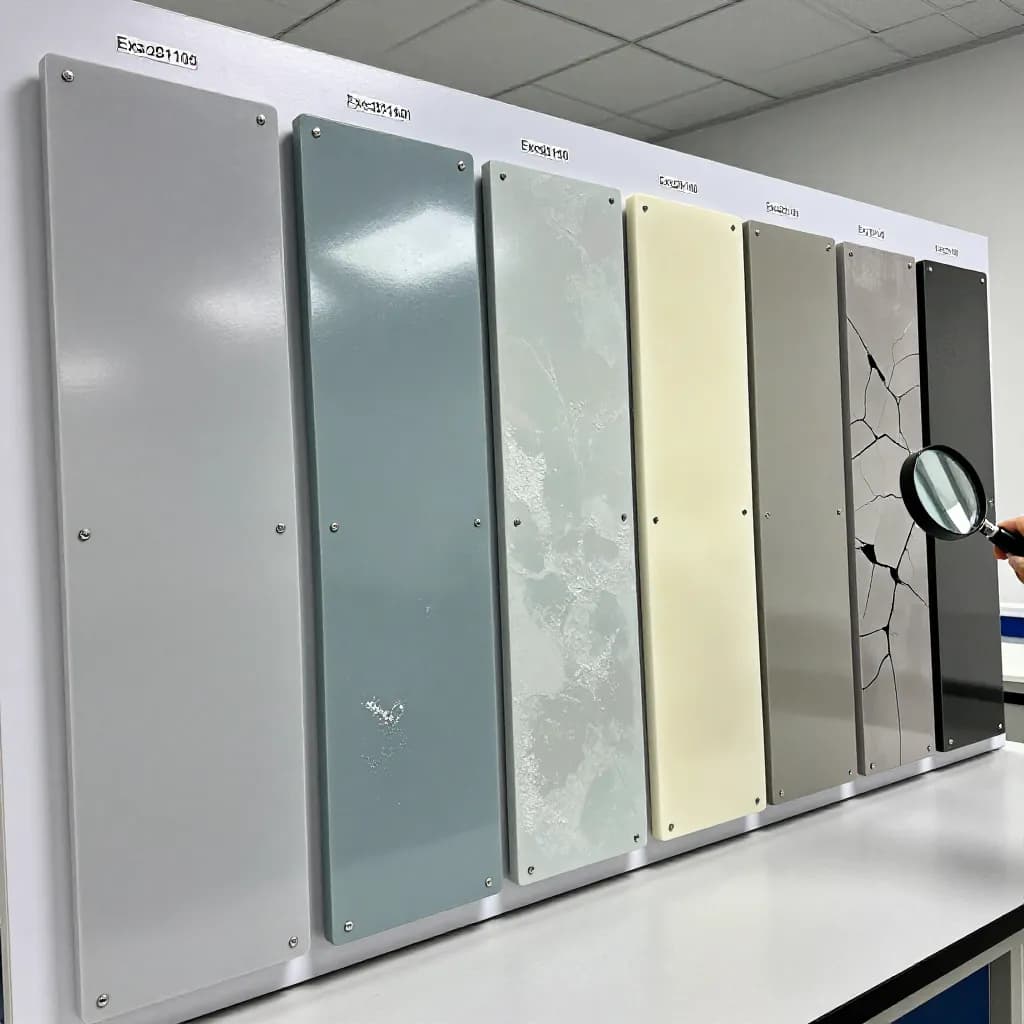
Solar radiation is the primary driver of coating degradation. The sun emits a broad spectrum of electromagnetic radiation, but the ultraviolet (UV) portion — wavelengths between 290 and 400 nanometers — is responsible for most photochemical damage to organic coatings. UV photons carry sufficient energy to break chemical bonds in polymer chains, initiating degradation reactions that progressively destroy the coating's molecular structure.
Ready to Start Your Project?
From one-off customs to 15,000-part production runs — get precise pricing in 24 hours.
On This Page
The Weathering Environment and Its Effects on Coatings
Moisture, in the form of rain, dew, humidity, and condensation, is the second major degradation agent. Water participates directly in hydrolysis reactions that cleave certain chemical bonds in the polymer network. It also acts as a transport medium for aggressive species such as acids, salts, and pollutants, carrying them into the coating where they accelerate degradation. The cyclic wetting and drying that occurs in natural weathering creates mechanical stresses as the coating absorbs and releases water, contributing to cracking and loss of adhesion.
Temperature affects degradation rates through the Arrhenius relationship — chemical reaction rates approximately double for every 10°C increase in temperature. High surface temperatures, which can exceed 70-80°C on dark-colored coatings in direct sunlight, significantly accelerate both photochemical and hydrolytic degradation. Temperature cycling between day and night creates thermal stresses that can cause cracking and delamination, particularly in thick or rigid coatings.
Atmospheric pollutants — including sulfur dioxide, nitrogen oxides, ozone, and particulate matter — contribute to coating degradation through chemical attack and surface erosion. Industrial and urban environments with high pollutant concentrations are significantly more aggressive than rural environments, even at the same latitude and climate.
The combined effect of these agents is synergistic — the total degradation caused by UV, moisture, heat, and pollutants acting together is greater than the sum of their individual effects. This synergy makes natural weathering a complex, multi-factorial process that is difficult to replicate precisely in accelerated laboratory tests.
UV Photodegradation: The Primary Degradation Mechanism
Ultraviolet photodegradation is the dominant mechanism of powder coating weathering, responsible for the majority of gloss loss, color change, and surface deterioration observed in outdoor-exposed coatings. The process begins when UV photons are absorbed by chromophoric groups — chemical structures within the polymer that absorb light at specific wavelengths.
The energy of a UV photon at 300 nm wavelength is approximately 400 kilojoules per mole — sufficient to break carbon-carbon, carbon-oxygen, and carbon-nitrogen bonds that form the backbone of most coating polymers. When a chromophore absorbs a UV photon, it is promoted to an excited electronic state with excess energy. This excited molecule can undergo several fates: it may dissipate the energy harmlessly as heat, it may fluoresce (emit light), or it may undergo a photochemical reaction that breaks a chemical bond.
Bond breaking through photolysis generates free radicals — highly reactive molecular fragments with unpaired electrons. These radicals initiate chain reactions with oxygen (photo-oxidation) that propagate through the polymer network, breaking additional bonds and creating new chromophores that absorb more UV light. This autocatalytic cycle means that photodegradation accelerates over time as the concentration of chromophores increases.
The photo-oxidation process produces a variety of degradation products, including carbonyl groups (ketones, aldehydes, carboxylic acids), hydroperoxides, and low-molecular-weight fragments. These products alter the chemical composition of the coating surface, changing its optical properties (causing yellowing and gloss loss) and mechanical properties (causing embrittlement and cracking).
Different polymer chemistries have dramatically different susceptibilities to UV photodegradation. Aromatic polyesters and epoxies contain chromophoric aromatic rings that absorb UV radiation efficiently, making them highly susceptible to photodegradation. This is why epoxy powder coatings chalk and yellow rapidly when exposed to sunlight. Aliphatic polyesters, which lack aromatic chromophores, are much more UV-resistant and form the basis of exterior-durable powder coatings. Fluoropolymers, with their extremely strong carbon-fluorine bonds, are the most UV-resistant coating polymers available.
The wavelength dependence of photodegradation is important for understanding and predicting coating performance. Not all UV wavelengths are equally damaging. The most destructive wavelengths for most organic coatings fall in the UV-B range (290-320 nm), where photon energy is high and solar intensity is sufficient to cause significant damage. UV-A radiation (320-400 nm) is less energetic per photon but more abundant, and it contributes to degradation of sensitive polymers.
Hydrolysis and Chemical Degradation
Hydrolysis — the chemical cleavage of bonds by water — is the second major degradation mechanism affecting powder coatings in outdoor environments. While less dramatic than UV photodegradation, hydrolysis can significantly compromise coating performance, particularly in warm, humid climates where moisture exposure is prolonged.
Ester bonds, which form the backbone of polyester powder coatings, are susceptible to hydrolytic cleavage. In the presence of water and elevated temperature, the ester linkage (R-COO-R') can be broken to regenerate a carboxylic acid and an alcohol. This reaction is catalyzed by both acids and bases, meaning that acidic rain, alkaline cleaning agents, and even the degradation products of the coating itself can accelerate hydrolysis.
The rate of hydrolysis depends on several factors: the chemical structure of the ester bond (some ester types are more resistant than others), the crosslink density of the polymer network (higher crosslink density restricts water access), the temperature (hydrolysis rates increase exponentially with temperature), and the duration of moisture exposure. Coatings in tropical climates with high temperatures and persistent humidity experience significantly more hydrolytic degradation than identical coatings in temperate climates.
Polyester powder coatings formulated for exterior durability use resin structures specifically designed to resist hydrolysis. Neopentyl glycol-based polyesters, for example, have ester bonds that are sterically hindered — the bulky molecular groups surrounding the ester linkage physically block water molecules from accessing the bond, dramatically reducing the hydrolysis rate. This molecular design principle is one of the key factors that distinguish exterior-durable polyester resins from standard interior-grade formulations.
Urethane bonds in polyurethane powder coatings are generally more resistant to hydrolysis than ester bonds, contributing to the excellent durability of polyurethane systems. Epoxy bonds are also relatively hydrolysis-resistant, but the UV sensitivity of epoxy resins limits their use to interior or under-body applications where hydrolysis resistance is needed without UV exposure.
Chemical attack by atmospheric pollutants represents another form of chemical degradation. Sulfur dioxide and nitrogen oxides, dissolved in moisture on the coating surface, form sulfuric and nitric acids that can attack the polymer network and accelerate both hydrolysis and oxidation. Ozone, a powerful oxidizing agent, can directly attack carbon-carbon double bonds in the polymer structure. These pollutant-driven degradation mechanisms are most significant in industrial and urban environments.
Chalking: The Visible Sign of Surface Degradation
Chalking is the most visible and commonly observed manifestation of powder coating weathering. It appears as a white, powdery residue on the coating surface that can be rubbed off with a finger or cloth. Understanding the chalking mechanism provides insight into the broader degradation process and helps explain why some coatings chalk rapidly while others resist chalking for decades.
Chalking occurs when the polymer binder at the coating surface is degraded by UV radiation and oxidation, leaving behind the inorganic pigment particles that were previously embedded in the polymer matrix. As the binder erodes, these pigment particles — primarily titanium dioxide in white and light-colored coatings — become loosely attached to the surface and can be easily removed by wiping or rain washing.
The process is progressive and self-perpetuating. As the surface binder erodes and pigment particles are exposed and washed away, a fresh layer of binder is exposed to UV radiation, and the cycle repeats. The rate of chalking depends on the UV resistance of the binder, the pigment volume concentration, the intensity of UV exposure, and the frequency of rain washing (which removes loose chalk and exposes fresh surface).
Titanium dioxide, the most widely used white pigment in powder coatings, plays a complex dual role in the chalking process. On one hand, TiO₂ is a powerful UV absorber that shields the underlying polymer from UV radiation. On the other hand, TiO₂ is a photocatalyst — when it absorbs UV light, it can generate reactive oxygen species (hydroxyl radicals and superoxide ions) that attack the surrounding polymer binder, accelerating degradation.
The photocatalytic activity of TiO₂ depends on its crystal form and surface treatment. Anatase TiO₂ is highly photocatalytic and promotes rapid chalking. Rutile TiO₂ is less photocatalytic and is preferred for exterior coatings. Surface treatments — coatings of alumina, silica, or zirconia applied to the TiO₂ particle surface during pigment manufacturing — further suppress photocatalytic activity by preventing UV-generated charge carriers from reaching the polymer binder.
Chalking is quantified using standardized methods such as ASTM D4214 or ISO 4628-6, which rate the degree of chalking on a numerical scale based on the amount of chalk transferred to a felt pad or dark cloth pressed against the surface. Chalking ratings are a key performance metric in architectural coating specifications, with standards such as Qualicoat and AAMA 2605 setting maximum allowable chalking levels after specified periods of natural or accelerated weathering.
UV Stabilization Strategies
Protecting powder coatings from UV degradation requires a multi-layered stabilization strategy that addresses different stages of the photodegradation process. Modern exterior-durable powder coatings employ combinations of UV absorbers, hindered amine light stabilizers (HALS), and antioxidants to achieve the long-term weathering performance demanded by architectural and automotive specifications.
UV absorbers (UVAs) work by preferentially absorbing UV radiation before it can reach and damage the polymer binder. The absorbed UV energy is converted to harmless heat through a rapid molecular rearrangement process. Benzotriazole and hydroxyphenyl triazine UV absorbers are the most widely used classes in powder coatings, offering broad UV absorption across the critical 290-380 nm wavelength range with excellent thermal stability to survive the extrusion and curing processes.
The effectiveness of UV absorbers depends on their concentration in the coating, their absorption spectrum, and their photostability (resistance to degradation by the UV light they absorb). Higher UVA concentrations provide better protection but increase formulation cost and can affect coating appearance. The UVA must also be compatible with the resin system and stable at the processing and curing temperatures used in powder coating manufacturing.
Hindered amine light stabilizers (HALS) operate through a fundamentally different mechanism than UV absorbers. Rather than preventing UV absorption, HALS intercept and neutralize the free radicals generated by photodegradation before they can propagate chain reactions through the polymer network. HALS are regenerated in the stabilization cycle, meaning that a single HALS molecule can neutralize many radicals over its lifetime, providing long-lasting protection.
The combination of UV absorbers and HALS provides synergistic protection that is significantly greater than either stabilizer alone. UVAs reduce the rate of radical generation by absorbing UV light, while HALS scavenge the radicals that are generated despite the UVA screen. This dual-mechanism approach is the standard stabilization strategy for high-performance exterior powder coatings.
Antioxidants — including hindered phenols and phosphite esters — provide additional protection by scavenging peroxide radicals and decomposing hydroperoxides that form during photo-oxidation. While antioxidants alone are insufficient to prevent UV degradation, they complement UVAs and HALS by addressing oxidative degradation pathways that the primary stabilizers do not fully control.
The total stabilizer package in a high-performance exterior powder coating typically represents 1-3% of the formulation by weight, with the specific types and concentrations optimized for the resin system, the pigmentation, and the target performance level.
Accelerated Weathering Testing
Accelerated weathering tests are essential tools for predicting the long-term outdoor performance of powder coatings without waiting years for natural exposure results. These tests use laboratory instruments that simulate and intensify the key weathering agents — UV radiation, moisture, and temperature — to produce degradation in weeks or months that would take years to develop in natural exposure.
Xenon arc weathering (ISO 11341, ASTM G155) is considered the gold standard for accelerated weathering of coatings. Xenon arc lamps produce a spectral power distribution that closely matches natural sunlight, including the critical UV wavelengths responsible for photodegradation. Test chambers cycle between light and dark periods, with controlled temperature and humidity, and may include water spray to simulate rain. Xenon arc testing is specified by most major architectural coating standards, including Qualicoat, GSB, and AAMA.
Fluorescent UV weathering (ISO 11507, ASTM G154) uses fluorescent UV lamps (UVA-340 or UVB-313 types) that emit UV radiation concentrated in the wavelength range most damaging to organic coatings. While the spectral output does not match sunlight as closely as xenon arc, fluorescent UV testing is faster, less expensive, and provides good discrimination between coatings of different durability levels. UVA-340 lamps are preferred for most coating evaluations because their output closely matches the UV portion of the solar spectrum.
The correlation between accelerated and natural weathering results is a subject of ongoing research and debate. No accelerated test perfectly predicts natural weathering performance because the complex interactions between UV, moisture, temperature, and pollutants in natural environments cannot be fully replicated in a laboratory chamber. However, well-designed accelerated tests provide useful ranking of coating durability and can identify formulations that are likely to fail prematurely in outdoor service.
Natural weathering exposure remains the ultimate validation of coating durability. Major coating manufacturers and standards organizations maintain exposure sites in locations chosen for their aggressive weathering environments. South Florida (high UV, high humidity, salt air) is the benchmark exposure site for North American coating standards, while sites in Arizona (high UV, low humidity), coastal Australia, and tropical Southeast Asia provide additional data for different climate types.
An important principle in weathering evaluation is that accelerated tests should be used for screening and ranking, while natural exposure data should be used for absolute performance claims. Stating that a coating will last 20 years based solely on accelerated test results is scientifically questionable; such claims should be supported by actual long-term exposure data from relevant climatic zones.
Designing Powder Coatings for Maximum Weathering Resistance
Creating powder coatings that resist weathering for decades requires careful attention to every component of the formulation — resin chemistry, crosslinker selection, pigment choice, and stabilizer package — as well as proper application and curing to ensure the coating performs as designed.
Resin selection is the foundation of weathering resistance. Aliphatic polyester resins based on neopentyl glycol and isophthalic acid provide the best balance of weathering resistance, mechanical properties, and processability for most exterior applications. These resins lack the aromatic chromophores that make standard polyesters and epoxies vulnerable to UV degradation, and their sterically hindered ester bonds resist hydrolysis. Super-durable polyester formulations using these resins can achieve 15-25 years of outdoor performance in moderate climates.
For the most demanding applications — high-UV environments, coastal locations, or specifications requiring 30+ years of performance — fluoropolymer-based powder coatings offer the ultimate in weathering resistance. Polyvinylidene fluoride (PVDF) powder coatings, typically formulated as 70/30 blends of PVDF resin and acrylic resin, provide exceptional UV resistance, color retention, and chalk resistance. The carbon-fluorine bond in PVDF is one of the strongest in organic chemistry, making it virtually immune to UV photolysis.
Crosslinker selection affects weathering resistance through its influence on network structure and the chemical stability of the crosslink bonds. HAA (hydroxyalkylamide) crosslinkers produce amide-ester crosslinks that are more hydrolytically stable than the ester crosslinks formed by TGIC, potentially offering improved durability in humid environments. However, the water released during HAA cure requires careful oven design to prevent pinholing.
Pigment selection for exterior coatings must prioritize lightfastness and heat stability. Inorganic pigments (rutile TiO₂ with appropriate surface treatment, iron oxides, chromium oxide green) offer the best weathering resistance. Organic pigments must be carefully selected for their lightfastness ratings — only the most durable organic pigment classes (quinacridones, phthalocyanines, perylenes, DPP) are suitable for long-term exterior exposure.
The stabilizer package — UV absorbers, HALS, and antioxidants — must be optimized for the specific resin system and the target performance level. Higher stabilizer loadings provide better protection but increase cost. The stabilizer types must be compatible with the resin and stable at processing temperatures. And the stabilizer package must be validated through accelerated and natural weathering testing to confirm that it delivers the required performance.
Proper application and curing are the final links in the chain. Under-cured coatings have incomplete crosslink networks that are more vulnerable to UV and hydrolytic degradation. Over-cured coatings have thermally degraded polymer chains that compromise weathering resistance. Achieving the correct cure — verified by temperature profiling and DSC analysis — ensures that the coating's designed weathering resistance is fully realized in the finished product.
Frequently Asked Questions
What causes powder coating to chalk?
Chalking occurs when UV radiation and oxidation degrade the polymer binder at the coating surface, leaving behind loosely attached pigment particles (primarily titanium dioxide). The process is progressive — as surface binder erodes and pigment washes away, fresh binder is exposed to UV attack. Using rutile TiO₂ with surface treatments and UV-resistant resins minimizes chalking.
How do UV stabilizers protect powder coatings?
UV protection uses a multi-layered approach: UV absorbers (benzotriazoles, triazines) absorb UV radiation and convert it to heat before it damages the polymer. HALS (hindered amine light stabilizers) intercept free radicals generated by photodegradation. Antioxidants scavenge peroxide radicals. The combination provides synergistic protection greater than any single stabilizer.
Why do epoxy powder coatings yellow outdoors?
Epoxy resins contain aromatic chromophores that efficiently absorb UV radiation, generating free radicals that cause rapid photo-oxidation. This produces carbonyl degradation products that cause yellowing, along with chain scission that leads to chalking and gloss loss. Epoxy coatings are therefore limited to interior or under-body applications where UV exposure is minimal.
How is weathering resistance tested in powder coatings?
Accelerated tests include xenon arc weathering (ISO 11341, the gold standard simulating full sunlight spectrum) and fluorescent UV testing (ISO 11507, faster and less expensive). Natural weathering at sites like South Florida provides the ultimate validation. Architectural standards like Qualicoat and AAMA 2605 specify both accelerated and natural exposure requirements.
Which powder coating type lasts longest outdoors?
Fluoropolymer (PVDF) powder coatings offer the longest outdoor life, maintaining color and gloss for 30+ years due to the extremely strong carbon-fluorine bond. Super-durable polyester coatings provide 15-25 years of performance. Standard polyester coatings last 10-15 years, while epoxy coatings degrade rapidly outdoors and are not suitable for exterior use.
Ready to Start Your Project?
From one-off customs to 15,000-part production runs — get precise pricing in 24 hours.