Water treatment facilities — encompassing drinking water purification plants, wastewater treatment works, desalination plants, and industrial water processing systems — contain some of the most chemically aggressive environments that coated steel structures encounter. The combination of continuous water immersion, chemical treatment agents, biological activity, and varying pH conditions creates a corrosion environment that destroys inadequately protected steel within months.
Industrial
Powder Coating for Water Treatment Equipment: Chemical Resistance and NSF 61 Compliance
Sundial Powder Coating·April 22, 2026·12 min
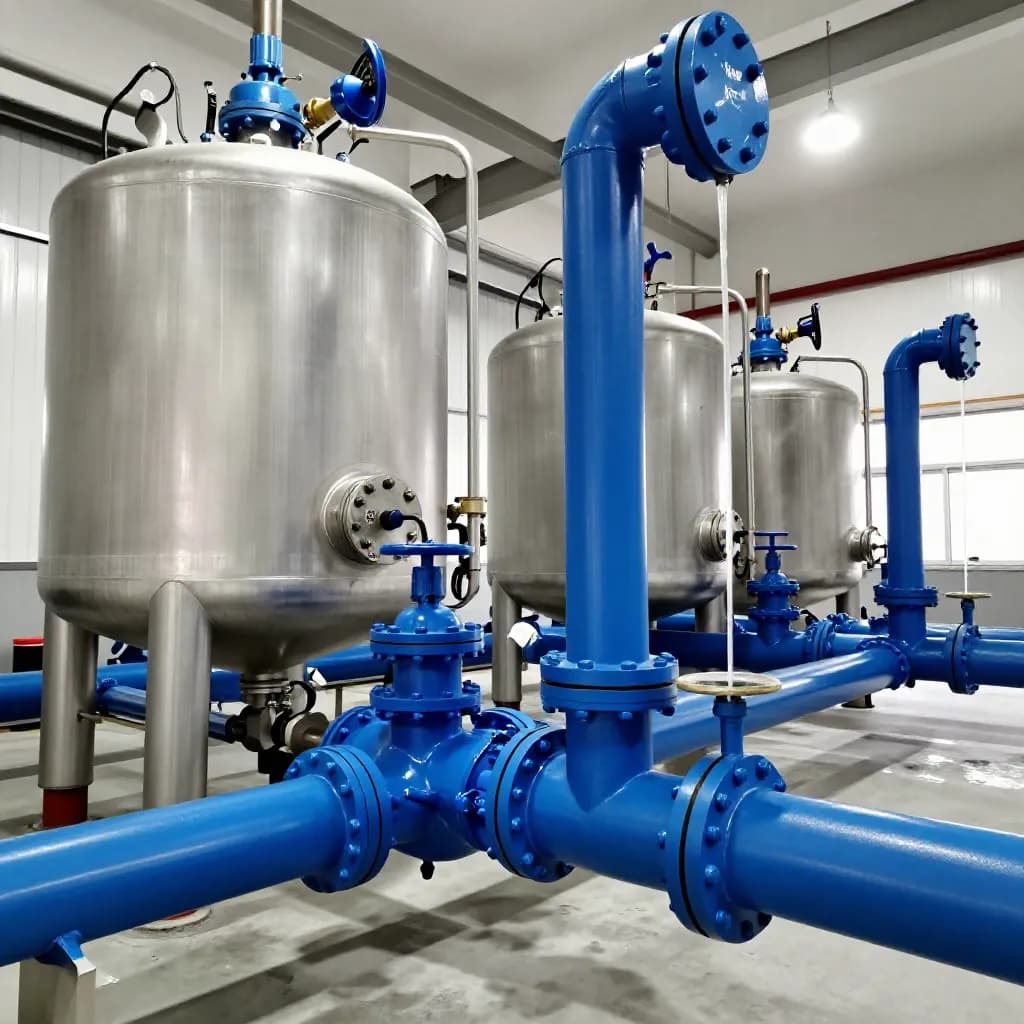
Powder coating technology, particularly fusion-bonded epoxy (FBE) and specialized immersion-grade formulations, plays a critical role in protecting the steel infrastructure of water treatment facilities. Pipes, tanks, valves, clarifiers, filter housings, and structural steelwork all rely on powder coating systems to maintain structural integrity and prevent contamination of the water being treated.
Ready to Start Your Project?
From one-off customs to 15,000-part production runs — get precise pricing in 24 hours.
On This Page
Water Treatment Infrastructure and Coating Requirements
The water treatment coating market is distinguished from general industrial coating by two overriding requirements: the coating must withstand continuous immersion in water containing treatment chemicals, and for potable (drinking) water applications, the coating must not leach harmful substances into the water supply. These requirements are codified in standards such as NSF/ANSI 61 (Drinking Water System Components — Health Effects) in North America and BS 6920 (Suitability of Non-Metallic Products for Use in Contact with Water Intended for Human Consumption) in the United Kingdom.
This article examines the specific powder coating technologies, performance requirements, and regulatory standards that govern coatings for water treatment equipment, from the chemistry of immersion-grade formulations to the testing and certification processes that ensure public health protection.
Fusion-Bonded Epoxy Linings for Pipes and Tanks
Fusion-bonded epoxy (FBE) is the workhorse coating technology for the internal lining of steel pipes, tanks, and vessels in water treatment applications. FBE is a thermosetting powder coating that is applied to preheated steel substrates, where it melts, flows, and cures in a single operation to form a dense, highly crosslinked film with exceptional adhesion, chemical resistance, and barrier properties.
The FBE application process differs from conventional powder coating in that the substrate is heated to 220-245°C before powder application, rather than being coated at ambient temperature and then oven-cured. This preheat approach ensures immediate melting and flow of the powder on contact with the hot steel surface, producing a void-free film with intimate contact between the coating and the substrate. The result is adhesion values typically exceeding 15 MPa (pull-off test per ISO 4624), significantly higher than the 5-8 MPa typical of conventionally applied powder coatings.
For pipe lining applications, FBE is applied at film thicknesses of 300-500 microns (single coat) or 400-800 microns (dual coat) depending on the pipe diameter, operating conditions, and required service life. The thick film provides a robust barrier against water permeation and chemical attack, while the high crosslink density of the cured epoxy resists softening and swelling in continuous immersion service.
Tank and vessel linings use FBE at similar or greater thicknesses, with particular attention to coverage at weld seams, nozzle connections, and internal fittings where coating defects are most likely to occur. Holiday detection (spark testing) at voltages of 1-5 kV per 25 microns of film thickness is performed on 100% of the lined surface to identify pinholes and thin spots that could allow water to contact the steel substrate.
The chemical resistance of FBE linings is validated through immersion testing in the specific water chemistry the lining will encounter in service. Standard test protocols include immersion in deionized water, chlorinated water (up to 5 ppm free chlorine), and water at the pH extremes of the expected operating range (typically pH 4-10 for water treatment applications). After 1,000-3,000 hours of immersion at elevated temperature (typically 65°C to accelerate degradation), the coating is assessed for blistering, adhesion loss, color change, and softening.
Chemical Resistance for Treatment Process Equipment
Water treatment processes use a wide range of chemicals that the coating system must resist. Understanding the specific chemical exposures at each stage of the treatment process is essential for selecting the appropriate powder coating chemistry.
Coagulation and flocculation stages use aluminum sulfate (alum), ferric chloride, ferric sulfate, and polyelectrolyte flocculants. These chemicals create acidic conditions (pH 5-7) that attack unprotected steel and can degrade coatings with inadequate acid resistance. Epoxy powder coatings provide excellent resistance to these coagulant chemicals, maintaining adhesion and barrier properties under continuous exposure.
Disinfection chemicals present the most aggressive challenge for coatings in water treatment. Chlorine gas, sodium hypochlorite, chlorine dioxide, and ozone are powerful oxidizing agents that attack organic coatings by breaking polymer chain bonds. Chlorine concentrations in treatment plant contact tanks can reach 2-5 ppm, with occasional shock dosing at 10-20 ppm. Epoxy coatings with enhanced oxidation resistance, formulated with chemically resistant resins and stabilizers, are specified for chlorine contact applications.
pH adjustment chemicals — lime (calcium hydroxide), caustic soda (sodium hydroxide), sulfuric acid, and carbon dioxide — create localized extreme pH conditions at dosing points. Caustic soda at concentrations of 10-50% and temperatures of 20-60°C is particularly aggressive to many coating systems. Novolac epoxy powder coatings, which have higher crosslink density and chemical resistance than standard bisphenol-A epoxy formulations, are specified for caustic handling equipment.
Activated carbon filtration systems expose coatings to the abrasive action of granular activated carbon (GAC) during backwash cycles. The coating on filter vessel internals must resist the hydraulic abrasion of carbon particles moving at velocities of 0.5-1.0 m/s during backwash. FBE linings at 400-600 microns provide adequate abrasion resistance for most GAC filter applications.
Membrane treatment systems (reverse osmosis, ultrafiltration, nanofiltration) use anti-scalant chemicals, cleaning acids (citric, hydrochloric), and cleaning alkalis (sodium hydroxide) that the coating on pressure vessels, piping, and support structures must resist. The chemical resistance requirements are defined by the specific cleaning protocol used by the membrane system manufacturer.
NSF 61 Certification for Potable Water Contact
NSF/ANSI 61 is the critical regulatory standard for coatings that contact drinking water in North America. This standard, developed by NSF International, establishes health-based requirements for materials, components, and products that contact drinking water, ensuring that they do not leach harmful substances into the water supply at levels that could affect public health.
The NSF 61 certification process for powder coatings involves rigorous extraction testing. Coated test panels are immersed in standardized test water (pH-adjusted to represent worst-case extraction conditions) for specified periods, and the extraction water is analyzed for a comprehensive list of regulated contaminants. The contaminant levels must fall below the maximum allowable concentrations derived from EPA drinking water standards, with a safety factor applied.
The testing protocol varies depending on the product category. Barrier materials (coatings and linings) are tested under Section 5 of NSF 61, which requires extraction testing at three pH levels (pH 5, 8, and 10) and at elevated temperature (23°C or the maximum service temperature, whichever is higher) for exposure periods of 1, 3, and 9 days. The most aggressive extraction condition determines the coating's compliance status.
NSF 61 certification is product-specific — it applies to a specific powder coating formulation applied at a defined thickness range on a specified substrate with a defined pretreatment and cure schedule. Any change to these parameters may require re-testing and re-certification. This means that specifiers must verify that the specific powder coating product, not just the manufacturer or product family, holds current NSF 61 certification for the intended application.
The certification is maintained through annual surveillance testing and factory audits by NSF International. Certified products are listed in the NSF online database, which specifiers and regulators can search to verify certification status. The listing includes the product name, manufacturer, certified application conditions (substrate, thickness, cure schedule), and any limitations on use.
In the United Kingdom and many Commonwealth countries, BS 6920 provides equivalent requirements for materials in contact with drinking water. The testing methodology differs from NSF 61 but the objective is the same — ensuring that coating materials do not contaminate the water supply. Products certified to BS 6920 are listed by the Drinking Water Inspectorate (DWI) in England and Wales, and equivalent authorities in Scotland and Northern Ireland.
Immersion Conditions and Long-Term Performance
Continuous water immersion is the defining service condition for coatings in water treatment applications, and it imposes requirements that go far beyond those of atmospheric exposure coatings. Understanding the mechanisms of coating degradation under immersion conditions is essential for specifying systems that deliver reliable long-term performance.
Water permeation through the coating film is the primary degradation mechanism in immersion service. All organic coatings are permeable to water vapor to some degree, and in immersion conditions, water molecules gradually diffuse through the coating film to reach the metal substrate. Once water reaches the substrate, it can initiate corrosion that undermines the coating from below, causing blistering and delamination. The rate of water permeation depends on the coating chemistry, crosslink density, film thickness, and temperature.
Epoxy coatings have the lowest water permeation rates among common powder coating chemistries, which is why they dominate immersion applications. The dense, highly crosslinked network structure of cured epoxy resins creates a tortuous diffusion path that slows water molecule transport. FBE coatings at 300-500 microns provide water permeation rates low enough to maintain protection for 20-30 years in continuous immersion at ambient temperatures.
Temperature significantly affects immersion performance. Water permeation rates approximately double for every 10°C increase in temperature, meaning that coatings in hot water service (60-80°C) degrade much faster than those in cold water service. For hot water applications, increased film thickness, enhanced crosslink density (achieved through higher cure temperatures or novolac epoxy chemistry), and more rigorous pretreatment are specified to compensate for the accelerated degradation.
Cathodic disbondment — the loss of coating adhesion caused by cathodic protection currents — is a concern for coated steel structures that are also cathodically protected (common for buried or submerged pipelines and tanks). The alkaline environment generated at the cathode can attack the coating-metal interface, causing the coating to lift away from the substrate. Cathodic disbondment testing per ASTM G8 or ISO 15711 evaluates the coating's resistance to this mechanism, with maximum disbondment radii of 5-8 mm after 28 days at -1.5V being typical acceptance criteria for FBE coatings.
Microbiological attack is an additional concern in water treatment environments. Biofilm formation on coating surfaces can create localized acidic conditions (through bacterial metabolic activity) that accelerate coating degradation. Antimicrobial powder coatings incorporating silver ion or copper-based biocides are available for applications where biofilm control is a priority.
Exterior Protection for Water Treatment Plant Structures
While internal linings receive the most attention in water treatment coating specifications, the exterior surfaces of treatment plant structures also require robust protection. Clarifier mechanisms, filter galleries, chemical storage buildings, and exposed piping are all subject to atmospheric corrosion, chemical splash, and UV exposure that demand appropriate coating systems.
Clarifier and sedimentation tank mechanisms — including scraper arms, weir plates, and drive assemblies — operate in a splash zone environment where they are alternately wetted and dried as they rotate through the water surface. This wet-dry cycling is more aggressive than continuous immersion because it provides both the moisture needed for corrosion and the oxygen needed to sustain the corrosion reaction. Duplex coating systems (hot-dip galvanizing plus polyester powder coating) are commonly specified for clarifier mechanisms, providing sacrificial protection at damage sites combined with barrier protection from the powder coating.
Chemical storage and dosing areas experience splash and fume exposure from the treatment chemicals handled in these zones. The coating on structural steelwork, platforms, handrails, and equipment supports in chemical areas must resist the specific chemicals present. Epoxy powder coatings provide broad chemical resistance suitable for most water treatment chemicals, while novolac epoxy formulations are specified for areas handling concentrated acids or caustic solutions.
Exposed piping and valves on the exterior of treatment plant buildings are subject to atmospheric corrosion, UV exposure, and temperature cycling. Polyester powder coating at 80-100 microns over zinc phosphate pretreatment provides adequate protection for most atmospheric exposures. Color coding of piping per facility standards (typically following ANSI/ASME A13.1 or equivalent national standards) identifies the contents of each pipe, and powder coating's color accuracy and retention ensure that safety-critical color coding remains legible throughout the pipe's service life.
Roof-mounted equipment — including ventilation fans, odor control units, and solar panel mounting structures — is exposed to full weather conditions and may be difficult to access for maintenance. Super-durable polyester powder coatings are recommended for roof-mounted equipment to maximize the interval between maintenance interventions.
Perimeter fencing and security structures at water treatment plants are typically powder-coated steel or aluminum, with the coating specification following standard fencing practice (polyester powder over galvanized steel for maximum durability). The critical infrastructure status of water treatment facilities may require enhanced security fencing with anti-climb features, all of which benefit from the durable, low-maintenance protection of powder coating.
Specification, Testing, and Quality Assurance
Specifying powder coatings for water treatment applications requires a systematic approach that considers the specific service conditions, regulatory requirements, and performance expectations for each component and location within the treatment facility.
The specification process begins with characterizing the service environment for each coated component. Key parameters include: water chemistry (pH, chlorine content, dissolved solids, temperature), immersion conditions (continuous, intermittent, splash zone), chemical exposures (type, concentration, frequency), mechanical stresses (abrasion, impact, flexing), and required service life. This environmental characterization drives the selection of coating chemistry, film thickness, and pretreatment system.
Coating system selection follows established frameworks such as ISO 12944 for atmospheric exposures and NACE SP0188 (now AMPP SP21471) for immersion service. For potable water contact, the coating must hold current NSF 61 or BS 6920 certification for the specific application conditions. For wastewater applications, chemical resistance testing per ASTM D1308 against the specific chemicals present validates the coating's suitability.
Pretreatment specification for water treatment equipment is typically more rigorous than for general industrial applications. Abrasive blast cleaning to Sa 2.5 or Sa 3 per ISO 8501-1 is standard, with surface profile requirements of 50-100 microns for FBE linings. Zinc phosphate or chromate-free conversion coatings provide the adhesion foundation, with the specific pretreatment selected based on the substrate material and service conditions.
Quality assurance during coating application includes verification of surface preparation (visual assessment, surface profile measurement, soluble salt testing per ISO 8502-6), film thickness measurement (magnetic or eddy current gauges at defined inspection frequencies), cure verification (differential scanning calorimetry or solvent rub testing), adhesion testing (pull-off per ISO 4624 or cross-cut per ISO 2409), and holiday detection (spark testing at voltages appropriate to the film thickness).
Documentation requirements for water treatment coatings are extensive. Material certificates, batch test reports, application records (including ambient conditions, surface preparation verification, film thickness measurements, and cure verification), and inspection reports must be compiled into a coating quality documentation package that is retained for the life of the facility. This documentation supports warranty claims, regulatory compliance verification, and future maintenance planning.
Frequently Asked Questions
What is NSF 61 certification and why does it matter for water treatment coatings?
NSF/ANSI 61 certifies that coatings in contact with drinking water do not leach harmful substances above safe levels. It requires extraction testing at multiple pH levels and temperatures. Certification is product-specific — the exact formulation, thickness, substrate, and cure schedule must be certified. It is legally required for potable water contact in most North American jurisdictions.
How thick is fusion-bonded epoxy lining for water pipes?
FBE pipe linings are typically 300-500 microns for single-coat applications and 400-800 microns for dual-coat systems. The thick film provides a robust barrier against water permeation and chemical attack. Film thickness is verified by measurement and 100% holiday detection (spark testing) to identify any pinholes or thin spots.
Can powder coating resist chlorine in water treatment?
Yes. Epoxy powder coatings with enhanced oxidation resistance withstand continuous chlorine exposure at 2-5 ppm and shock dosing at 10-20 ppm. Chemical resistance is validated through immersion testing in chlorinated water at the expected concentration and temperature for 1,000-3,000 hours. Novolac epoxy formulations provide the highest chlorine resistance.
How long do powder coatings last in water immersion service?
FBE linings at 300-500 microns typically provide 20-30 years of protection in continuous ambient-temperature water immersion. Hot water service (60-80°C) reduces service life to 10-15 years due to accelerated water permeation. Service life depends on water chemistry, temperature, film thickness, and pretreatment quality.
What is the difference between FBE and standard powder coating for water treatment?
FBE is applied to preheated steel (220-245°C) rather than ambient-temperature steel, producing a void-free film with adhesion exceeding 15 MPa versus 5-8 MPa for standard powder. FBE uses specialized epoxy chemistry optimized for immersion resistance, and is applied at 300-800 microns versus 60-120 microns for standard powder coating.
Ready to Start Your Project?
From one-off customs to 15,000-part production runs — get precise pricing in 24 hours.