Powder coating is inherently one of the most material-efficient finishing technologies available. The ability to collect and reuse overspray powder — a capability that liquid paint systems cannot match — enables material utilization rates of 95-98% in well-managed operations. Combined with zero VOC emissions and the absence of solvent waste, powder coating's environmental profile is fundamentally superior to liquid painting. However, even within this favorable framework, significant waste streams exist that represent both environmental impact and economic cost.
Environmental
Powder Coating Waste Minimization: Zero-Waste Strategies, Reclaim, and Color Change Efficiency
Sundial Powder Coating·April 22, 2026·14 min
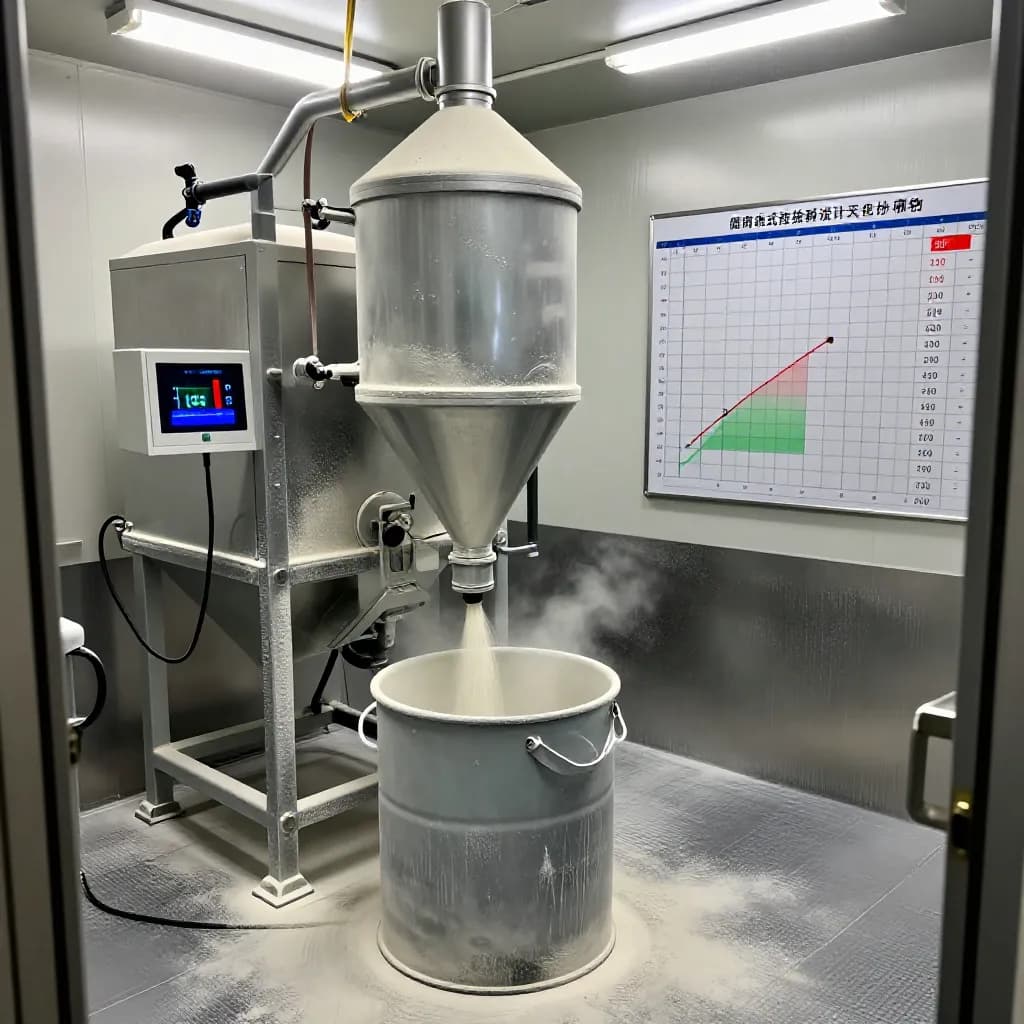
The primary waste streams in powder coating operations include powder waste (non-reclaimable overspray, color change waste, expired or contaminated powder), pretreatment waste (spent chemical baths, rinse water, sludge), packaging waste (bags, boxes, pallets, drums), energy waste (oven heat loss, compressed air leaks, inefficient lighting and HVAC), and solid waste (masking materials, filters, cleaning supplies, rejected parts). Each of these waste streams can be reduced through systematic analysis and targeted improvement measures.
Ready to Start Your Project?
From one-off customs to 15,000-part production runs — get precise pricing in 24 hours.
On This Page
The Waste Advantage of Powder Coating — and Room for Improvement
The economic motivation for waste minimization is compelling. Powder material typically represents 15-25% of the total coating cost, and every kilogram of powder wasted is a direct material cost loss. Pretreatment chemicals, water, and energy are additional cost centers where waste reduction translates directly to bottom-line savings. Waste disposal costs — particularly for hazardous waste such as spent pretreatment chemicals and heavy-metal-containing sludge — add further economic incentive for waste reduction.
The environmental motivation is equally strong. Regulatory pressure on waste generation, water discharge, and energy consumption is increasing globally. Customers and specifiers are increasingly evaluating suppliers on environmental performance, and sustainability certifications (ISO 14001, EMAS) require demonstrated commitment to waste reduction. Powder coating operations that proactively minimize waste are better positioned for regulatory compliance, customer expectations, and long-term business sustainability.
Reclaim System Optimization for Maximum Material Recovery
The powder reclaim system — the equipment that collects overspray powder from the spray booth and returns it for reuse — is the single most important factor in powder material efficiency. A well-designed and properly maintained reclaim system can recover 95-99% of overspray powder, while a poorly performing system may recover only 80-90%, with the difference going to waste as booth filter loading, duct deposits, and fugitive emissions.
Cyclone separators are the primary reclaim technology for most powder coating operations. The cyclone uses centrifugal force to separate powder particles from the exhaust air stream, collecting the powder in a hopper for return to the feed system. Cyclone efficiency depends on the cyclone geometry, air velocity, particle size distribution, and maintenance condition. Well-designed cyclones achieve 95-98% collection efficiency for standard powder particle sizes (D50 30-45 microns), but efficiency drops significantly for fine particles below 10 microns.
After-filters (cartridge filters or bag filters) downstream of the cyclone capture the fine particles that pass through the cyclone. These fine particles are typically not returned to the feed system because their small size causes application problems (poor fluidization, excessive film thickness variation, changed appearance). Instead, after-filter waste is collected and disposed of or recycled through specialized powder recycling services.
Optimizing reclaim system performance involves several measures. Regular cleaning of cyclone internals removes buildup that reduces separation efficiency. Maintaining proper air velocities through the booth and ductwork ensures that overspray is captured efficiently. Sieving reclaimed powder through a 150-micron mesh removes agglomerates and contaminants before the powder is returned to the feed system. Monitoring the reclaim ratio (percentage of reclaim in the feed mix) and adjusting it based on coating quality feedback ensures that reclaim powder does not accumulate contaminants that degrade coating quality.
The reclaim ratio should be optimized for each product and application. For standard colors with high production volumes, reclaim ratios of 30-40% are typical. For metallic and special-effect coatings, lower reclaim ratios (10-20%) may be necessary because the bonded metallic pigments can separate from the powder particles during reclaim, changing the appearance of the coating. For critical-quality applications, fresh (virgin) powder only may be specified, with all overspray collected for use in less critical applications or returned to the powder manufacturer for reprocessing.
Color Change Waste Reduction Strategies
Color changes are the largest single source of powder waste in most coating operations. Each color change requires purging the feed system, cleaning the spray guns and hoses, and cleaning the booth and reclaim system. The powder purged from the system during changeover — typically 2-10 kg per change depending on the system size and cleaning thoroughness — is usually mixed-color waste that cannot be reused and must be disposed of.
Reducing color change frequency is the most effective waste reduction strategy. Production scheduling that groups parts by color — running all parts of one color before changing to the next — minimizes the number of color changes per shift. Batch size optimization ensures that each color run is large enough to justify the changeover waste. Color family grouping — scheduling similar colors in sequence (light colors before dark, or within the same color family) — reduces the cleaning thoroughness required between changes and the visibility of any residual contamination.
Quick color change booth systems are designed to minimize both changeover time and powder waste. These systems feature smooth, non-stick booth walls (stainless steel or plastic) that are easily cleaned, automated booth cleaning systems (air blow-off, robotic cleaning), quick-disconnect powder feed systems, and dedicated gun sets for high-volume colors. Modern quick-change systems can complete a full color change in 5-15 minutes with minimal powder waste, compared to 30-60 minutes for conventional booth systems.
Dedicated booth lines for high-volume colors eliminate color change waste entirely for those colors. If a coating operation runs 3-5 colors that account for 60-80% of production volume, dedicating a booth line to each of these colors and using a separate booth for low-volume colors can dramatically reduce total color change waste. The capital investment in additional booth lines is offset by reduced waste, increased productivity (less downtime for color changes), and improved quality (less cross-contamination risk).
Color change waste powder — the mixed-color material purged during changeover — can sometimes be reused rather than disposed of. If the waste is predominantly one color with minor contamination from the previous color, it may be usable for non-critical applications where color consistency is less important (interior surfaces, hidden areas, primer coats). Some powder manufacturers accept color change waste for reprocessing into dark or neutral colors. Specialized recycling services can also process mixed-color waste into usable products.
Pretreatment Waste Reduction and Water Conservation
Pretreatment — the chemical cleaning and conversion coating process that prepares substrates for powder coating — generates significant waste streams including spent chemical baths, contaminated rinse water, and chemical sludge. These waste streams often contain regulated substances (heavy metals, phosphates, fluorides) that require treatment before discharge and may be classified as hazardous waste.
Bath life extension is the primary strategy for reducing pretreatment chemical waste. Regular monitoring and replenishment of bath chemistry — adding fresh chemicals to maintain concentration within operating limits rather than dumping and replacing entire baths — can extend bath life from weeks to months or even years. Automated bath monitoring systems that continuously measure pH, conductivity, temperature, and chemical concentration enable precise replenishment and maximize bath life.
Drag-out reduction — minimizing the amount of chemical solution carried out of each bath on the parts and racks — reduces both chemical consumption and rinse water contamination. Drag-out can be reduced by optimizing part orientation (allowing solution to drain back into the bath), increasing drain time over each bath, using air knives or drip shields to remove excess solution, and reducing bath concentration to the minimum effective level (lower concentration means less chemical carried out per unit of drag-out volume).
Rinse water conservation is achieved through counter-current rinsing — using the overflow from later rinse stages to feed earlier rinse stages, so that the cleanest water is used for the final rinse and progressively more contaminated water is used for earlier rinses. This cascade approach can reduce rinse water consumption by 50-80% compared to single-stage rinsing. Closed-loop rinse systems that treat and recycle rinse water can further reduce water consumption and eliminate rinse water discharge entirely.
Sludge minimization involves optimizing the pretreatment process to reduce the generation of insoluble byproducts (metal hydroxides, phosphate sludge) that accumulate in the baths and must be periodically removed and disposed of. Using lower-sludge pretreatment chemistries (zirconium-based conversion coatings generate less sludge than zinc phosphate), optimizing bath chemistry to minimize side reactions, and using sludge dewatering equipment (filter presses, centrifuges) to reduce the volume of sludge for disposal all contribute to sludge waste reduction.
Wastewater treatment systems that enable discharge compliance or water recycling are essential for pretreatment operations. Treatment typically involves pH adjustment, heavy metal precipitation, flocculation, and clarification. The treated water can be discharged to sewer (if it meets local discharge limits) or recycled for use in rinsing or other non-critical applications. Zero-liquid-discharge (ZLD) systems that evaporate and recover all wastewater are available for operations where water discharge is not permitted or where water conservation is a priority.
Packaging Waste and Supply Chain Optimization
Packaging waste from powder coating materials — bags, boxes, drums, pallets, and stretch wrap — represents a significant solid waste stream that is often overlooked in waste minimization programs. A medium-sized powder coating operation consuming 50-100 tonnes of powder per year generates several tonnes of packaging waste annually.
Bulk powder delivery systems eliminate individual bag and box packaging by delivering powder in reusable bulk containers (IBCs, big bags, or bulk tanker trucks) that are returned to the manufacturer for refilling. Bulk delivery is economically viable for high-volume colors where consumption rates justify the minimum order quantities, and it can reduce packaging waste by 80-90% for those colors. The reusable containers also reduce the risk of powder contamination from damaged packaging.
Returnable packaging programs — where the powder manufacturer supplies powder in reusable containers that are returned, cleaned, and refilled — provide packaging waste reduction for medium-volume colors where full bulk delivery is not justified. These programs require coordination between the coating operation and the powder supplier but can significantly reduce packaging waste and associated disposal costs.
Packaging material recycling should be implemented for all packaging waste that cannot be eliminated through bulk delivery or returnable packaging. Cardboard boxes, paper bags, and wooden pallets are readily recyclable through standard recycling channels. Plastic bags and stretch wrap can be recycled through specialized plastic film recycling programs. Metal drums can be returned to drum reconditioning services for cleaning and reuse.
Supply chain optimization — working with powder suppliers to reduce packaging intensity, consolidate shipments, and optimize delivery schedules — can reduce both packaging waste and transportation-related environmental impact. Ordering larger quantities less frequently reduces the number of individual packages and shipments, while just-in-time delivery reduces inventory levels and the risk of powder aging in storage.
Pallet management deserves specific attention because wooden pallets represent a significant volume of packaging waste. Pallet pooling programs (where pallets are shared among multiple users and managed by a third-party logistics provider) reduce pallet waste and cost. Switching from single-use wooden pallets to reusable plastic pallets eliminates pallet waste entirely, though the higher initial cost of plastic pallets must be justified by the volume of pallet movements.
Rejected Parts and Rework Waste Reduction
Rejected coated parts — parts that fail quality inspection and must be stripped and recoated or scrapped — represent a compound waste stream that includes the wasted coating material, the energy consumed in curing, the pretreatment chemicals used, and the labor invested in coating the rejected parts. Reducing the rejection rate is one of the most impactful waste minimization measures because it addresses multiple waste streams simultaneously.
Root cause analysis of rejections identifies the most frequent defect types and their causes, enabling targeted corrective action. Common rejection causes include surface defects (craters, pinholes, orange peel), color or gloss out of specification, insufficient or excessive film thickness, adhesion failure, and substrate defects (corrosion, contamination, dimensional errors) that are not detected before coating. Pareto analysis of rejection data typically reveals that a small number of defect types account for the majority of rejections, allowing improvement efforts to be focused where they will have the greatest impact.
Pre-coating inspection of substrates catches defects that would cause coating rejection before the coating investment is made. Inspecting substrates for corrosion, contamination, dimensional accuracy, and surface quality before they enter the pretreatment line prevents the waste of coating materials, chemicals, and energy on parts that will ultimately be rejected.
Process capability improvement — reducing the variability of coating parameters (film thickness, color, gloss, cure) to ensure that all parts consistently meet specification — reduces the rejection rate by narrowing the distribution of coating properties around the target values. Statistical process control (SPC) of key parameters, regular equipment calibration, and operator training all contribute to improved process capability.
Stripping and recoating of rejected parts recovers the substrate value but consumes additional chemicals (stripping agents), energy, and labor. Chemical stripping generates hazardous waste (spent stripper containing dissolved coating material) that must be treated and disposed of. Minimizing the need for stripping through defect prevention is far more effective than optimizing the stripping process.
For parts that cannot be recoated — due to substrate damage, dimensional changes from thermal cycling, or economic considerations — recycling the metal substrate recovers material value and reduces landfill waste. Aluminum, steel, and other metals used in powder-coated products have established recycling markets, and the coating material does not significantly impair the recyclability of the metal substrate.
Measuring and Reporting Waste Performance
Effective waste minimization requires systematic measurement and reporting of waste generation to track progress, identify improvement opportunities, and demonstrate environmental performance to customers and regulators.
Key performance indicators (KPIs) for powder coating waste include powder utilization rate (percentage of purchased powder that ends up on finished parts), rejection rate (percentage of coated parts that fail quality inspection), pretreatment chemical consumption per unit area coated, water consumption per unit area coated, energy consumption per unit area coated, and total waste generation per unit area coated. These KPIs should be tracked monthly and trended over time to identify improvement or deterioration.
Waste auditing — a systematic assessment of all waste streams, their sources, quantities, and disposal methods — provides the baseline data needed to prioritize waste reduction efforts. A waste audit should quantify each waste stream (powder waste, chemical waste, water waste, packaging waste, solid waste, energy waste), identify the sources and causes of each stream, evaluate the current disposal or treatment methods, and identify opportunities for reduction, reuse, or recycling.
Environmental management systems (ISO 14001, EMAS) provide a structured framework for waste minimization that includes policy commitment, objective setting, action planning, implementation, monitoring, and management review. Certification to ISO 14001 demonstrates to customers and regulators that the organization has a systematic approach to environmental management, including waste minimization.
Carbon footprint reporting is increasingly requested by customers and required by regulations. Powder coating operations can calculate their carbon footprint using established methodologies (GHG Protocol, ISO 14064) that account for direct emissions (natural gas combustion in ovens), indirect emissions (electricity consumption), and supply chain emissions (powder manufacturing, chemical production, transportation). Waste reduction contributes to carbon footprint reduction by reducing the material, energy, and transportation associated with waste generation and disposal.
Benchmarking against industry averages and best-in-class performers provides context for evaluating waste performance and setting improvement targets. Industry associations and coating technology organizations publish benchmarking data that enables coating operations to compare their waste performance against peers and identify areas where they lag behind best practice.
Frequently Asked Questions
What is a typical powder utilization rate for well-managed operations?
Well-managed powder coating operations achieve 95-98% powder utilization rates, meaning only 2-5% of purchased powder is wasted. This is achieved through effective reclaim systems, optimized color change procedures, and proper powder storage and handling. Operations without reclaim systems may achieve only 50-70% utilization.
How can color change waste be reduced?
Key strategies include production scheduling that groups parts by color, quick-change booth systems that minimize changeover time and waste, dedicated booth lines for high-volume colors, and color family sequencing (light to dark). Modern quick-change systems can complete color changes in 5-15 minutes with minimal waste.
Can mixed-color waste powder be reused?
Sometimes. If the waste is predominantly one color, it may be usable for non-critical applications. Some powder manufacturers accept waste for reprocessing into dark or neutral colors. Specialized recycling services can process mixed waste into usable products. Otherwise, it must be disposed of as solid waste.
How can pretreatment water consumption be reduced?
Counter-current rinsing (cascading rinse water from later to earlier stages) reduces consumption by 50-80%. Closed-loop rinse systems with water treatment and recycling can further reduce or eliminate water discharge. Drag-out reduction through optimized part orientation and drain time also reduces rinse water contamination and consumption.
What is the biggest source of waste in powder coating operations?
Color change waste is typically the largest single source of powder waste, generating 2-10 kg of mixed-color waste per changeover. For operations with frequent color changes, this can represent a significant percentage of total powder consumption. Reducing color change frequency and using quick-change systems are the most effective countermeasures.
Ready to Start Your Project?
From one-off customs to 15,000-part production runs — get precise pricing in 24 hours.