While powder coating is significantly cleaner than liquid painting, it does generate waste streams that require proper management. The primary waste sources are booth sweepings and floor waste (powder contaminated with dirt, debris, or mixed colors), color change waste (powder that cannot be reclaimed when switching between colors), pretreatment sludge (from chemical pretreatment processes), and packaging waste (cardboard boxes, plastic bags, and pallets from powder and chemical deliveries).
Environmental
Powder Coating Waste Management: Best Practices for Minimal Impact
Sundial Powder Coating·April 20, 2026·9 min
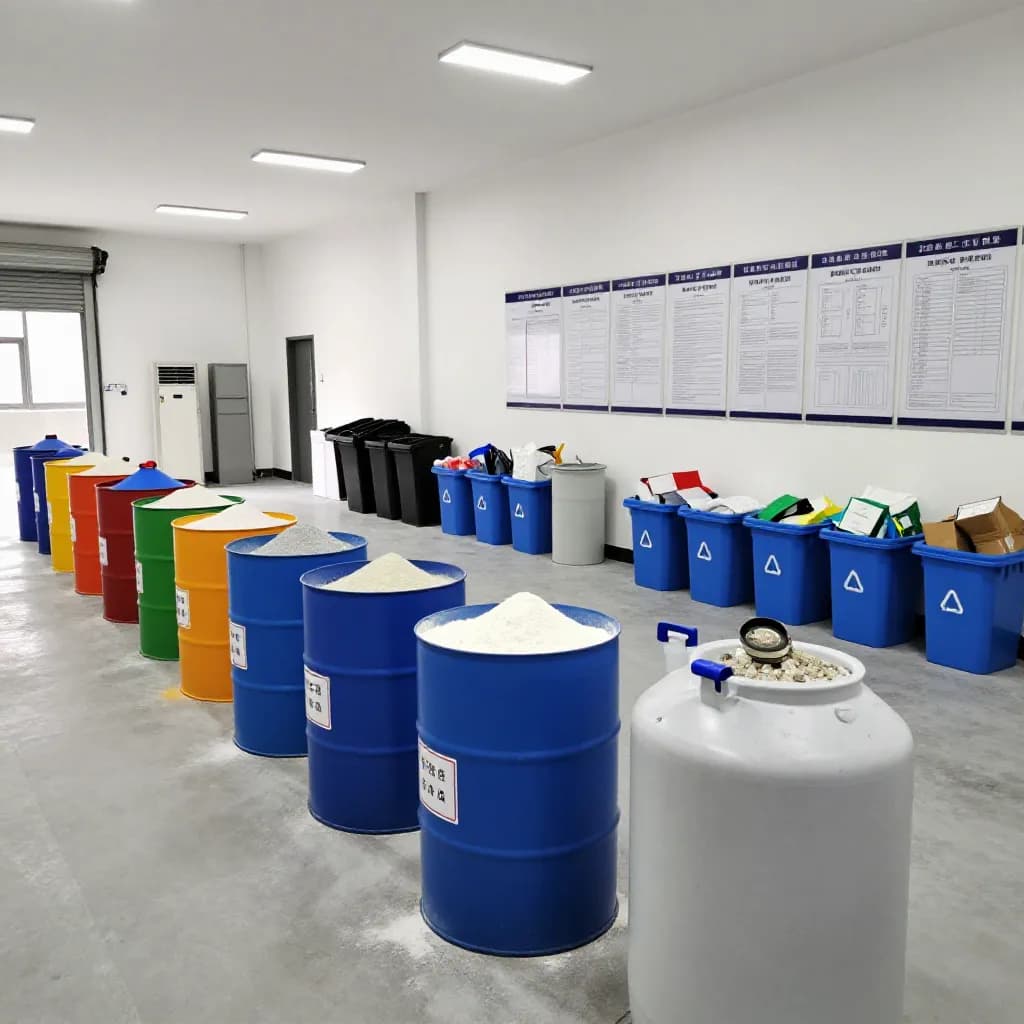
Booth sweepings accumulate from powder that settles on booth floors, walls, and equipment surfaces rather than being captured by the recovery system. This material is typically contaminated with dirt, conveyor lubricant, or substrate debris and cannot be returned to the application process without risking coating defects. The volume of booth sweepings depends on booth design, housekeeping practices, and the effectiveness of the recovery system.
Ready to Start Your Project?
From one-off customs to 15,000-part production runs — get precise pricing in 24 hours.
On This Page
Waste Streams in Powder Coating Operations
Pretreatment sludge is generated when dissolved metals and other contaminants are removed from pretreatment bath solutions through chemical precipitation and filtration. This sludge contains metal hydroxides, phosphates, and other precipitated compounds, and its classification as hazardous or non-hazardous waste depends on the metal content and local regulatory thresholds. Pretreatment chemical containers, spent filter elements, and water treatment consumables add to the waste inventory.
Overspray Reclaim and Reuse
The overspray recovery system is the cornerstone of powder coating's material efficiency. Modern recovery systems use a two-stage approach: a primary cyclone separator captures the majority of overspray particles (typically 90-95% by weight) through centrifugal separation, and a secondary filter bank (cartridge or bag filters) captures the remaining fine particles. The recovered powder is returned to the feed hopper and blended with virgin powder for reapplication.
The ratio of virgin to reclaimed powder in the feed mix is a critical quality parameter. Most operations maintain a virgin-to-reclaim ratio between 70:30 and 80:20 to ensure consistent film properties and appearance. Higher reclaim ratios can lead to issues with particle size distribution (reclaimed powder tends to have a higher proportion of fines), color shift, and reduced fluidization in the feed hopper. Monitoring reclaim quality through regular particle size analysis and color checks helps maintain optimal blending ratios.
Recovery system maintenance directly impacts reclaim quality and material efficiency. Cyclone separators must be kept clean and properly adjusted to maintain separation efficiency. Filter cartridges require regular pulse-cleaning and periodic replacement to prevent pressure drop increases that reduce capture efficiency. Grounding and earthing of all recovery system components prevents electrostatic charge buildup that can cause powder adhesion to system walls and reduce recovery rates.
Minimizing Color Change Waste
Color changes are the largest source of powder waste in most coating operations. When switching from one color to another, the booth, recovery system, and application equipment must be thoroughly cleaned to prevent cross-contamination. The powder remaining in the system after the previous color run — in the feed hopper, delivery hoses, spray guns, booth, cyclone, and filters — becomes waste unless it can be collected and stored for future use of the same color.
Scheduling optimization is the most effective strategy for reducing color change waste. Grouping production runs by color family (all whites together, all blacks together, then light colors before dark colors) minimizes the number of color changes and reduces the cleaning required between similar colors. Some operations schedule their production week with a logical color progression from lightest to darkest, performing a single thorough clean at the end of the week.
Dedicated application systems for high-volume colors eliminate color changes entirely for those colors. A facility that applies 40% of its volume in a single color can justify a dedicated booth and recovery system for that color, while using a second, quick-change booth for lower-volume colors. Quick-color-change booth designs with smooth, non-stick interior surfaces, cartridge-based recovery systems, and automated cleaning cycles can reduce color change time to 10-15 minutes and minimize the powder lost during each changeover.
Pretreatment Waste Management
Pretreatment waste management focuses on three areas: bath maintenance to extend chemical life, sludge handling and disposal, and water treatment. Proper bath maintenance — including regular analysis and replenishment of chemical concentrations, removal of contaminants through filtration and oil skimming, and temperature control — extends the useful life of pretreatment baths and reduces the frequency of bath dumps that generate large volumes of waste.
Pretreatment sludge from chemical precipitation must be dewatered to reduce volume and facilitate handling. Filter presses, centrifuges, and vacuum filters are commonly used to separate water from the solid sludge, producing a cake with 30-50% solids content. The dewatered sludge is then characterized for waste classification — if heavy metal concentrations exceed regulatory thresholds, it is classified as hazardous waste requiring licensed disposal. Non-hazardous sludge may be suitable for landfill or, in some cases, recycling as a raw material in cement or brick manufacturing.
Water treatment and recycling can significantly reduce both water consumption and wastewater discharge. Closed-loop rinse water systems using reverse osmosis or ion exchange purify rinse water for reuse, generating only a small concentrate stream for disposal. Chemical recycling programs offered by some pretreatment chemical suppliers take back spent bath solutions for reprocessing, recovering valuable chemicals and reducing waste disposal requirements.
Comparing Waste Generation: Powder vs Liquid Coating Operations
A direct comparison of waste generation between powder and liquid coating operations reveals the scale of powder coating's environmental advantage. A typical powder coating operation achieving 96% material utilization generates approximately 40 kg of powder waste per 1,000 kg of powder consumed — consisting of booth sweepings, color change waste, and unrecoverable fines. This waste is a dry, non-hazardous solid that can be disposed of through standard waste channels or, in some cases, recycled.
A comparable liquid paint operation with 50% transfer efficiency generates approximately 500 kg of waste per 1,000 kg of paint consumed — including paint sludge from booth water, contaminated filters, spent cleaning solvents, contaminated rags, and residual paint in containers. Much of this waste is classified as hazardous due to solvent content, heavy metals, or ignitability, requiring licensed hazardous waste disposal at significantly higher cost.
When pretreatment waste is included (which is similar for both technologies), the total waste comparison still strongly favors powder coating. The elimination of solvent waste, paint sludge, and contaminated consumables reduces total waste volume by 80-90% compared to liquid painting. The shift from hazardous to non-hazardous waste classification for the remaining waste further reduces disposal complexity and cost. For operations seeking to minimize their environmental footprint and waste management burden, powder coating's waste profile is a compelling advantage.
Frequently Asked Questions
What are the main waste streams in powder coating?
The primary waste streams are booth sweepings (contaminated floor powder), color change waste (powder lost during color switches), pretreatment sludge (from chemical surface preparation), and packaging waste. Unlike liquid paint operations, powder coating generates no solvent waste, paint sludge, or contaminated cleaning solutions.
How can color change waste be reduced?
Key strategies include scheduling production runs by color family (light to dark), using dedicated booths for high-volume colors, investing in quick-color-change booth designs with automated cleaning, and collecting single-color waste for future reuse rather than disposing of it after each changeover.
Is powder coating waste hazardous?
Powder coating application waste (booth sweepings, color change waste) is typically non-hazardous dry solid waste. Pretreatment sludge may be classified as hazardous if heavy metal concentrations exceed regulatory thresholds. Overall, powder coating generates far less hazardous waste than liquid paint operations.
How much less waste does powder coating generate compared to liquid paint?
Powder coating generates approximately 80-90% less total waste than liquid painting for equivalent production volumes. A powder operation with 96% material utilization produces roughly 40 kg of waste per 1,000 kg consumed, compared to approximately 500 kg of waste (much of it hazardous) from a liquid paint operation with 50% transfer efficiency.
Ready to Start Your Project?
From one-off customs to 15,000-part production runs — get precise pricing in 24 hours.