Warehouses and industrial buildings present a distinct set of coating requirements driven by scale, budget, and operational demands. These structures typically feature large surface areas of metal cladding, roofing, doors, and structural steelwork, all of which require protection from corrosion, UV degradation, and mechanical damage. The sheer volume of metalwork means that coating cost per square metre is a critical specification factor, and any inefficiency in material usage is amplified across thousands of square metres.
Architecture
Powder Coating for Warehouses and Industrial Buildings
Sundial Powder Coating·April 20, 2026·9 min
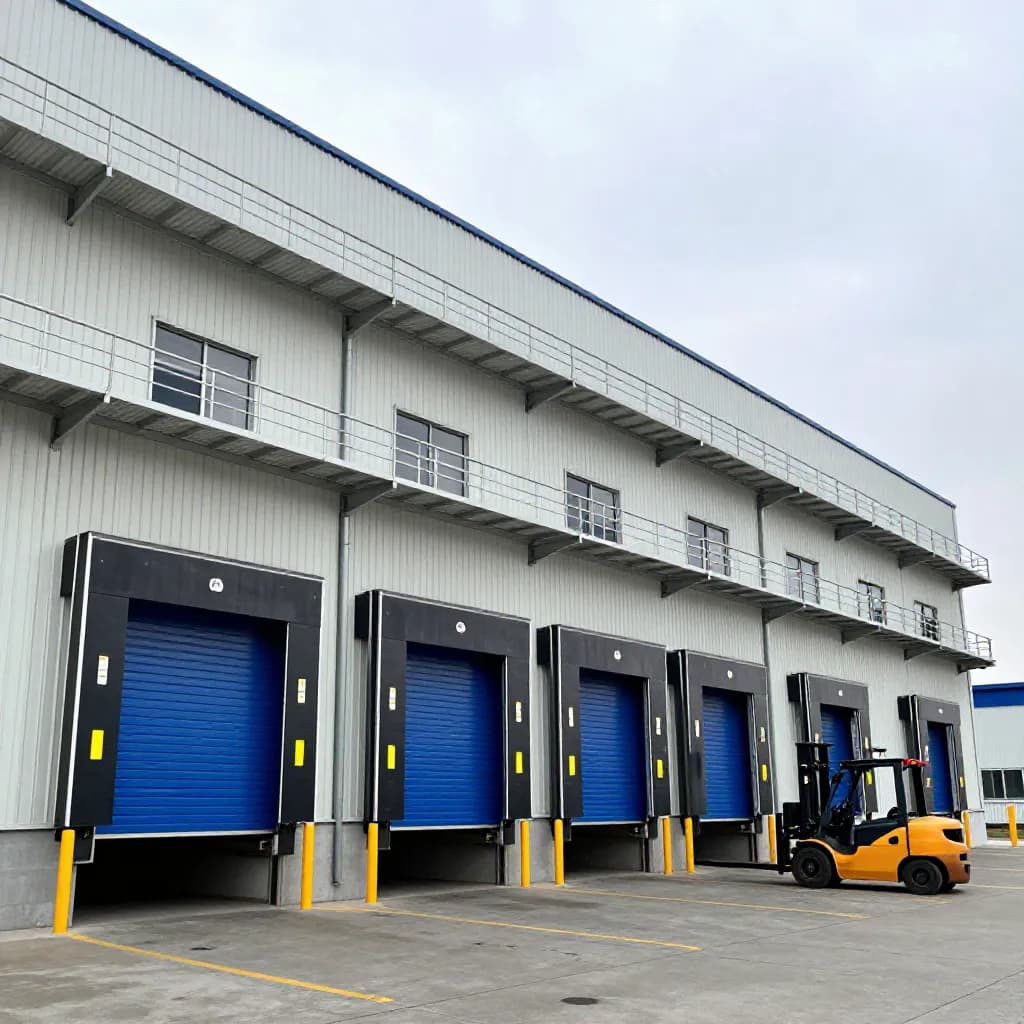
Durability expectations for industrial buildings are shaped by practical economics. Facility operators need coatings that last as long as possible with minimal maintenance, because recoating a warehouse or factory involves significant disruption to operations, access costs for working at height, and potential downtime for production areas. A coating that fails prematurely generates costs that far exceed the initial saving from choosing a cheaper system.
Ready to Start Your Project?
From one-off customs to 15,000-part production runs — get precise pricing in 24 hours.
On This Page
Industrial Building Coating Requirements
Industrial environments also expose coatings to chemical agents, forklift impacts, loading dock collisions, and abrasion from goods handling. Interior metalwork in food processing, chemical storage, and manufacturing facilities faces additional challenges from process chemicals, steam, and temperature fluctuations. The ideal coating for industrial buildings must balance cost efficiency with robust, long-lasting protection across this range of conditions.
Why Powder Coating Suits Industrial Buildings
Powder coating's combination of thick film build, chemical resistance, and single-coat application makes it a natural fit for industrial construction. The 60-120 micron film achieved in one pass through the coating line provides a robust barrier against corrosion, UV exposure, and mechanical damage that significantly outperforms the 25-50 micron films of liquid paint systems. This thicker film is particularly valuable on industrial buildings where metalwork is exposed to impacts from vehicles, equipment, and goods handling.
Chemical resistance is another key advantage. Powder coating's dense, cross-linked polymer structure resists attack from oils, fuels, cleaning agents, and many industrial chemicals that would quickly degrade a thinner liquid paint film. For warehouses storing chemicals, food processing facilities requiring regular washdown, and manufacturing plants with process chemical exposure, powder coating provides reliable protection without the need for specialized coating systems.
The single-coat application process delivers significant productivity advantages for industrial projects. Where liquid paint systems may require primer plus one or two topcoats with drying time between each layer, powder coating achieves its full film build and performance in a single application and curing cycle. This faster throughput reduces lead times for coated components and supports the tight construction programmes typical of industrial building projects.
Applications in Warehouses and Industrial Buildings
Metal cladding panels are the largest single application of powder coating on industrial buildings. Wall cladding, roof sheets, and composite panels are all available with factory-applied powder coating that provides consistent color, film thickness, and performance across the entire building envelope. The range of available colors, including corporate brand colors, allows industrial buildings to present a professional, well-maintained appearance that reflects positively on the business.
Roller shutters, sectional doors, and loading dock equipment are high-wear applications where powder coating's impact resistance delivers clear advantages. These elements endure daily mechanical stress from operation, vehicle contact, and goods handling, and the thick powder film maintains its integrity under conditions that would quickly chip and degrade liquid paint. Personnel doors, fire doors, and emergency exit hardware also benefit from powder coating's durability and fire performance.
Structural steelwork, mezzanine floors, staircase systems, and equipment housings represent the interior applications. Powder-coated structural elements resist the humidity, temperature fluctuations, and chemical exposure found inside industrial buildings, while maintaining a clean, professional appearance that supports workplace safety and morale. Cable tray systems, ventilation ductwork, and lighting support structures are further examples of industrial metalwork that benefits from powder coating's protective and aesthetic qualities.
Cost Efficiency at Scale
Powder coating's material efficiency is a decisive economic advantage for industrial projects with large surface areas. The electrostatic application process achieves 95-98% material utilization because overspray powder is collected, reclaimed, and reused in the coating process. Liquid paint systems, by contrast, typically achieve only 30-70% transfer efficiency, with the remainder lost as overspray waste requiring collection and disposal. On a large warehouse project with thousands of square metres of cladding, this efficiency difference translates directly into significant material cost savings.
The single-coat process also reduces labour costs. Liquid paint systems requiring primer plus topcoat involve multiple application passes, inter-coat drying times, and additional quality control checks at each stage. Powder coating's one-pass application eliminates these intermediate steps, reducing the total labour hours per square metre of coated surface and accelerating production throughput.
Lifecycle cost analysis further favours powder coating for industrial buildings. The 20-25 year service life of powder coating means that a warehouse built today will not require recoating until the mid-2040s, while a liquid-painted equivalent would need its first recoat within 8-12 years. The avoided cost of mid-life recoating — including scaffolding, surface preparation, material, labour, and operational disruption — typically exceeds the modest premium for powder coating at the initial specification stage.
Why Liquid Paint Adds Hidden Costs to Industrial Buildings
The apparent cost advantage of liquid paint on industrial buildings is often illusory when the full lifecycle is considered. Thin 25-50 micron liquid films degrade faster under the mechanical and chemical stresses of industrial environments, requiring recoating within 8-12 years. For a large warehouse, the cost of a single recoating project — including access equipment, surface preparation, materials, labour, and operational disruption — can exceed the original coating cost, effectively doubling the total expenditure within the first decade.
Solvent storage and disposal represent additional hidden costs for liquid paint operations. Solvent-based industrial paints require fire-rated storage facilities, hazardous waste disposal for unused material and contaminated equipment, and compliance with increasingly stringent VOC emission regulations. These regulatory compliance costs are ongoing and can be substantial for large-scale industrial painting operations.
The environmental compliance burden of liquid paint is also growing. Regulations limiting VOC emissions are tightening across all major markets, and industrial facilities using solvent-based paints face increasing costs for emission monitoring, abatement equipment, and regulatory reporting. Powder coating's zero-VOC profile eliminates these compliance costs entirely, simplifying environmental management and reducing the administrative burden on facility operators. The 95-98% material efficiency of powder coating also means less waste generation, further reducing disposal costs and environmental liability.
Frequently Asked Questions
Is powder coating cost-effective for large industrial buildings?
Yes. Powder coating's 95-98% material efficiency significantly reduces material costs on large surface areas compared to liquid paint's 30-70% transfer efficiency. The single-coat process also reduces labour costs, and the 20-25 year service life eliminates the need for mid-life recoating that liquid paint requires within 8-12 years.
Can powder coating withstand forklift impacts and loading dock damage?
Powder coating's 60-120 micron film thickness provides substantially better impact resistance than the 25-50 microns of liquid paint. While no coating is immune to severe impacts, powder coating maintains its integrity under the routine mechanical stresses of warehouse and loading dock environments far more effectively than thinner liquid alternatives.
Does powder coating resist industrial chemicals?
Powder coating's dense, cross-linked polymer film resists a wide range of industrial chemicals including oils, fuels, cleaning agents, and many process chemicals. For specific chemical exposures, specialist powder formulations such as epoxy-polyester hybrids or pure epoxy systems can be specified for enhanced chemical resistance.
How does powder coating reduce environmental compliance costs?
Powder coating produces zero VOC emissions, eliminating the need for solvent abatement equipment, emission monitoring, and VOC regulatory reporting. The 95-98% material efficiency also minimizes waste generation and disposal costs. These savings can be substantial for large industrial facilities subject to environmental regulations.
Ready to Start Your Project?
From one-off customs to 15,000-part production runs — get precise pricing in 24 hours.