The choice between powder coating and wet (liquid) paint is one of the most consequential decisions in industrial finishing, affecting product quality, production efficiency, environmental compliance, operating costs, and worker safety. While powder coating has captured an increasing share of the industrial finishing market since its commercial introduction in the 1960s, liquid paint remains dominant in certain applications where its unique properties are essential. Understanding the technical and economic trade-offs between these two technologies is critical for manufacturers evaluating new finishing lines or upgrading existing operations.
Comparison
Powder Coating vs Wet Paint for Industrial Use: VOC, Efficiency, and Process
Sundial Powder Coating·April 22, 2026·14 min
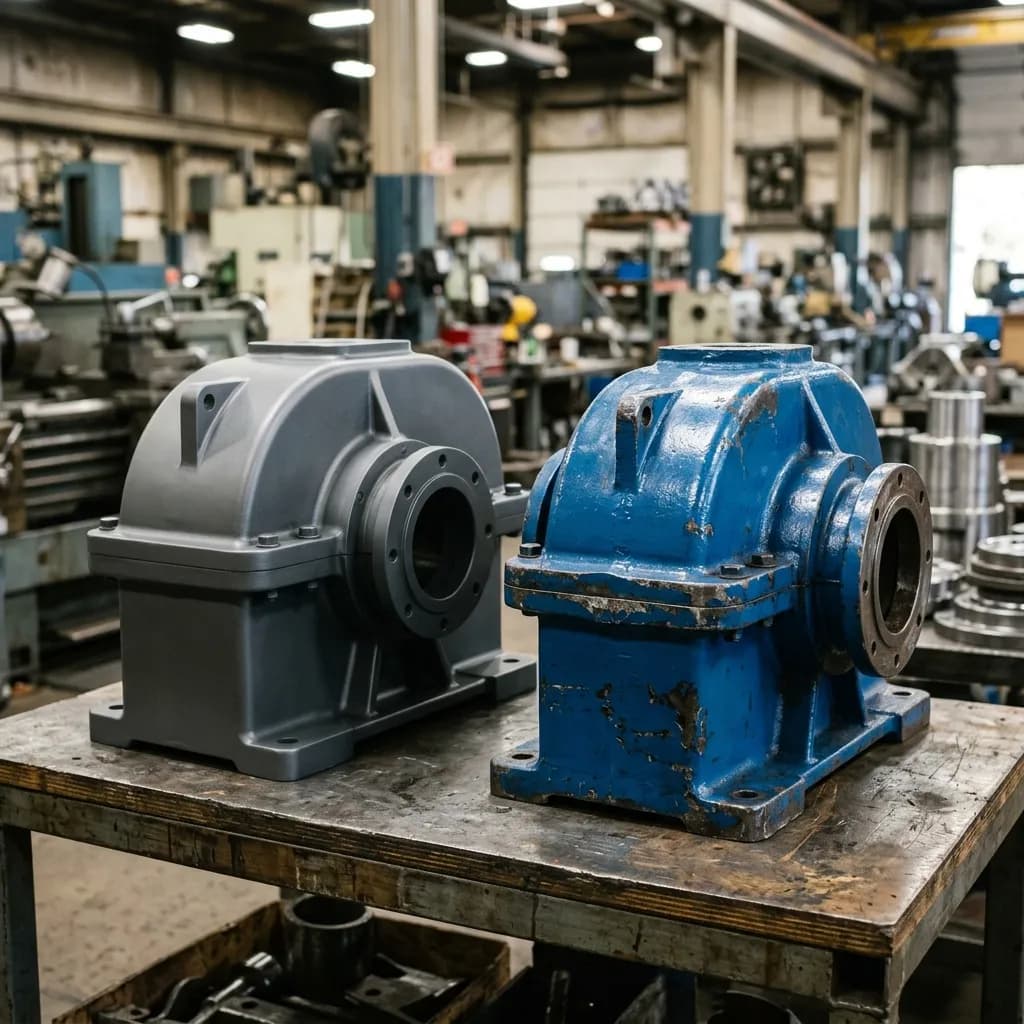
Liquid paint — whether solvent-based, waterborne, or high-solids — is applied as a wet film containing pigments and resins dissolved or dispersed in a liquid carrier. The carrier evaporates during drying and curing, leaving behind a solid film of pigment and binder. This evaporation process is the source of liquid paint's primary environmental liability: volatile organic compound (VOC) emissions. Solvent-based paints typically contain 40-60% organic solvents by weight, all of which are released into the atmosphere during application and curing unless captured by abatement equipment.
Ready to Start Your Project?
From one-off customs to 15,000-part production runs — get precise pricing in 24 hours.
On This Page
The Industrial Finishing Landscape: Powder vs Liquid
Powder coating eliminates the liquid carrier entirely. The coating material is a 100% solids dry powder — finely ground particles of resin, pigment, and additives — that is applied electrostatically and cured by heat. Because there is no liquid carrier, there are no VOC emissions, no solvent flash-off, and no need for solvent abatement equipment. The powder that does not adhere to the workpiece (overspray) is collected and recycled, achieving material utilization rates of 95-98%.
The industrial finishing market has shifted steadily toward powder coating over the past several decades, driven by environmental regulations, material efficiency advantages, and improvements in powder coating technology that have expanded its application range. However, liquid paint retains important niches — automotive Class A finishes, very thin films, heat-sensitive substrates, and extremely large structures — where its properties remain advantageous. The optimal choice depends on the specific requirements of the application, the production environment, and the regulatory context.
VOC Emissions and Environmental Compliance
VOC emissions represent the most significant environmental difference between powder coating and liquid paint, and increasingly, the most significant regulatory and economic difference as well. Conventional solvent-based industrial paints emit 300-600 grams of VOC per liter of applied coating. Even with high-efficiency application methods and solvent recovery systems, substantial VOC emissions reach the atmosphere, contributing to ground-level ozone formation and photochemical smog.
Regulatory frameworks worldwide have progressively tightened VOC emission limits for industrial finishing operations. In the European Union, the Industrial Emissions Directive (IED) and the Solvent Emissions Directive set strict limits on VOC emissions from surface coating operations. In the United States, the EPA's National Emission Standards for Hazardous Air Pollutants (NESHAP) and state-level regulations (particularly California's South Coast Air Quality Management District rules) impose increasingly stringent limits. Compliance with these regulations requires either switching to low-VOC coating technologies or installing expensive solvent abatement equipment — thermal oxidizers, catalytic oxidizers, or carbon adsorption systems — that add significant capital and operating costs to liquid paint operations.
Powder coating produces zero VOC emissions. This is not a reduction or a low level — it is zero. The coating contains no solvents, no volatile organic compounds, and no hazardous air pollutants. This eliminates the need for VOC abatement equipment, simplifies air quality permitting, and removes a major source of regulatory risk. For manufacturers in regions with strict air quality regulations, the environmental compliance advantage of powder coating can be the single most compelling reason to switch from liquid paint.
Waterborne paints represent the liquid paint industry's primary response to VOC regulations. By replacing organic solvents with water as the primary carrier, waterborne paints reduce VOC emissions to 50-150 g/L — a significant improvement over solvent-based paints but still far from zero. Waterborne paints also introduce new process challenges: sensitivity to humidity and temperature during application, longer flash-off and drying times, and the need for stainless steel or plastic equipment to prevent corrosion from the water-based formulations. High-solids paints (70-90% solids by volume) offer another path to VOC reduction but still emit measurable VOCs and require careful application technique to achieve acceptable film quality.
Transfer Efficiency and Material Utilization
Transfer efficiency — the percentage of coating material that actually ends up on the workpiece versus the amount sprayed — is a critical economic and environmental metric where powder coating holds a commanding advantage. Conventional air-spray liquid painting achieves transfer efficiencies of only 25-35%, meaning 65-75% of the paint sprayed is lost as overspray. HVLP (high-volume, low-pressure) spray guns improve this to 40-65%, and electrostatic liquid spray can reach 60-85% depending on part geometry and application conditions.
Powder coating achieves first-pass transfer efficiencies of 60-70% with corona-charging guns, comparable to electrostatic liquid spray. However, the critical difference is that powder coating overspray is recoverable. The dry powder that does not adhere to the workpiece is collected in the spray booth using cyclone separators and cartridge filters, sieved to remove contaminants, and returned to the feed hopper for reuse. This reclaim process raises overall material utilization to 95-98% — virtually all powder purchased is converted into finished coating.
Liquid paint overspray cannot be economically recovered in most operations. The atomized paint droplets mix with booth air, are captured by water wash or dry filter systems, and become waste requiring disposal. Water wash booth sludge — a mixture of paint solids, water, and coagulating chemicals — is classified as hazardous waste in many jurisdictions and must be disposed of at licensed facilities. Dry filter booths generate paint-laden filter media that also requires proper disposal. These waste streams represent both a direct material cost (the lost paint) and an indirect disposal cost.
The economic impact of the transfer efficiency difference is substantial. For a manufacturer applying 1,000 kg of coating material per month, a liquid paint operation at 50% transfer efficiency uses 2,000 kg of paint to deposit 1,000 kg on parts, with 1,000 kg lost as waste. A powder coating operation at 97% utilization uses approximately 1,030 kg of powder to deposit 1,000 kg on parts, with only 30 kg lost. The material savings alone — before considering waste disposal costs — can justify the capital investment in a powder coating line within 2-5 years for many operations.
Cure Process: Thermal Crosslinking vs Solvent Evaporation
The curing mechanisms of powder coating and liquid paint differ fundamentally, with significant implications for production throughput, energy consumption, and finish quality. Powder coatings cure through a thermal process: the part is heated in an oven to 160-200°C (depending on the powder chemistry), causing the powder particles to melt, flow into a continuous film, and undergo irreversible chemical crosslinking. The crosslinking reaction — typically between carboxyl-functional polyester resins and TGIC or HAA crosslinkers, or between epoxy and amine/acid functional groups — creates a three-dimensional polymer network that gives the cured film its hardness, chemical resistance, and durability.
The powder coating cure process is binary and predictable: once the part reaches the specified temperature for the specified time (the cure schedule), the crosslinking reaction goes to completion and the coating achieves its full performance properties. There is no risk of solvent entrapment, no sensitivity to humidity, and no need for flash-off time between coats. A single coat of powder achieves 60-120 microns of fully cured film in one pass through the oven — a process that takes 10-20 minutes at temperature.
Liquid paint curing is more complex and variable. Solvent-based paints cure through a combination of solvent evaporation and chemical crosslinking (for two-component systems) or solvent evaporation and oxidative crosslinking (for air-dry alkyds). The evaporation process is sensitive to temperature, humidity, and air flow — conditions that must be carefully controlled to prevent defects such as solvent pop (blisters caused by rapid surface skinning that traps solvent beneath), sagging (excessive film thickness on vertical surfaces before the paint sets), and orange peel (textured surface caused by poor flow and leveling).
Multi-coat liquid paint systems require flash-off time between coats — typically 5-15 minutes at elevated temperature — to allow sufficient solvent evaporation before the next coat is applied. A three-coat system (primer, basecoat, clearcoat) may require 30-60 minutes of total flash and cure time, compared to 10-20 minutes for a single-coat powder system that achieves equivalent or greater total film thickness. This time advantage translates directly to higher throughput and lower energy consumption per part for powder coating operations.
Low-temperature and UV-cure powder coatings are expanding the cure options for powder coating. Low-bake formulations cure at 130-150°C, reducing energy consumption and enabling coating of some heat-sensitive substrates. UV-cure powder coatings melt and flow at low temperatures (80-120°C) and then crosslink instantly under UV radiation, enabling extremely fast cure cycles and further reducing energy requirements.
Batch vs Line Production: Flexibility and Throughput
Production configuration — batch versus continuous line — is an important consideration when choosing between powder coating and liquid paint. Both technologies can be configured for either batch or continuous production, but their optimal operating modes differ.
Powder coating is exceptionally well-suited to both batch and continuous production. Small job shops operate batch powder coating systems with manual spray booths and batch ovens, processing dozens to hundreds of parts per day with quick color changes and flexible scheduling. Large OEMs operate conveyorized powder coating lines with automated multi-gun application, continuous ovens, and integrated quality control, processing thousands of parts per hour. The scalability of powder coating — from a $10,000 batch setup to a multi-million-dollar automated line — makes it accessible to manufacturers of all sizes.
Color change is a key operational consideration for powder coating. Because the reclaim system collects overspray for reuse, changing colors requires purging the booth, reclaim system, and feed equipment of the previous color. A well-designed quick-color-change booth can complete this process in 5-15 minutes, but frequent color changes reduce throughput and increase waste (the purged powder from color changes is typically discarded or blended into dark colors). Dedicated booths for high-volume colors eliminate change time entirely.
Liquid paint lines offer faster color changes in some configurations — a solvent flush of the spray gun and supply lines can be completed in 1-3 minutes, and robotic systems can switch between multiple color supply lines almost instantly. This makes liquid paint advantageous for operations requiring very frequent color changes with small batch sizes. Automotive body painting, where each car on the line may be a different color, leverages this rapid color change capability.
For industrial applications with moderate color variety and batch sizes of 50+ parts per color, powder coating's throughput and efficiency advantages outweigh the color change time penalty. For applications with very high color variety and small batch sizes (1-10 parts per color), liquid paint may be more practical unless the powder coating operation is configured with multiple dedicated booths or accepts the throughput impact of frequent changes.
The trend in powder coating technology is toward faster color changes and smaller minimum batch sizes. Cartridge booth systems, robotic gun cleaning, and automated powder feed systems are reducing color change times and making powder coating increasingly competitive in high-mix, low-volume production environments that were traditionally liquid paint territory.
Film Properties and Performance Comparison
The performance properties of cured powder coatings and liquid paints overlap significantly, but important differences exist that influence application suitability. Powder coatings generally achieve greater film thickness in a single coat — 60-120 microns versus 15-40 microns per coat for liquid paints. This thickness advantage provides superior barrier protection, impact resistance, and edge coverage. The single-coat capability also eliminates inter-coat adhesion risks and reduces total process time.
Surface finish quality — specifically smoothness, flow, and leveling — has historically been liquid paint's advantage. The liquid carrier allows paint to flow and level on the surface before curing, producing a smooth, uniform film with excellent depth of image. Powder coatings, which must melt and flow from discrete particles, can exhibit slight orange peel texture, particularly at higher film thicknesses. However, modern powder coating formulations have closed this gap significantly — ultra-smooth powder coatings using optimized particle size distributions and flow additives now achieve surface quality that rivals liquid paint for most industrial applications.
For automotive Class A surfaces — exterior body panels where surface quality is judged by the most demanding standards — liquid paint (specifically waterborne basecoat and solvent or powder clearcoat) remains the standard. The combination of thin-film basecoat for color and effect, followed by a thick clearcoat for protection and gloss, produces a finish quality that current powder coating technology approaches but has not fully matched for the most critical applications. BMW's powder clearcoat technology demonstrates that powder coating is closing this gap, but widespread adoption for Class A automotive body panels remains in development.
Chemical resistance, hardness, and flexibility are comparable between well-formulated powder coatings and liquid paints of similar chemistry. Epoxy powder coatings match or exceed epoxy liquid paints in chemical and solvent resistance. Polyester powder coatings match polyester liquid paints in UV resistance and weathering performance. The crosslinked thermoset network formed during powder coating cure is fundamentally similar to that formed during liquid paint cure — the performance differences are driven more by formulation chemistry than by the application method.
Making the Industrial Finishing Decision
For manufacturers evaluating powder coating versus liquid paint for industrial finishing, the decision framework should consider environmental compliance, material efficiency, production requirements, finish quality needs, and total cost of ownership. In the majority of industrial applications — metal furniture, appliances, agricultural equipment, construction products, electrical enclosures, automotive components, and general fabrication — powder coating delivers superior environmental performance, higher material efficiency, simpler process control, and lower total cost of ownership compared to liquid paint.
The environmental case for powder coating is compelling and increasingly non-negotiable. Zero VOC emissions, 95-98% material utilization, minimal waste generation, and simplified regulatory compliance represent advantages that liquid paint cannot match regardless of formulation advances. As environmental regulations continue to tighten globally, the compliance cost advantage of powder coating will only increase.
Liquid paint retains advantages in specific niches: applications requiring very thin films (under 30 microns), heat-sensitive substrates that cannot withstand powder coating cure temperatures, extremely large structures that cannot fit in curing ovens, field application and repair where oven curing is not possible, and the highest-quality automotive Class A surfaces where liquid paint's flow and leveling remain superior.
For new finishing line investments, the trend strongly favors powder coating. The combination of environmental compliance, material efficiency, single-coat capability, and improving finish quality makes powder coating the default choice for most new industrial finishing installations. Liquid paint lines are still installed for specific applications, but the burden of justification has shifted — manufacturers must now justify why they need liquid paint rather than why they should switch to powder.
The most forward-thinking manufacturers are investing in hybrid finishing capabilities — powder coating for the majority of production with liquid paint capability retained for specialty applications, touch-up, and repair. This approach captures the efficiency and environmental benefits of powder coating for high-volume production while maintaining the flexibility to handle applications where liquid paint remains the better technical choice.
Frequently Asked Questions
How much do VOC emissions differ between powder coating and wet paint?
Powder coating produces zero VOC emissions — none at all. Conventional solvent-based liquid paints emit 300-600 g/L of VOCs. Waterborne paints reduce this to 50-150 g/L but still produce measurable emissions. This difference makes powder coating the clear choice for environmental compliance and eliminates the need for expensive solvent abatement equipment.
Is powder coating more efficient than liquid paint?
Yes, dramatically. Powder coating achieves 95-98% material utilization through overspray reclaim, while liquid paint operations typically achieve 25-65% transfer efficiency with the remainder lost as waste. This means powder coating converts nearly all purchased material into finished coating, while liquid paint wastes 35-75% of material purchased.
Can powder coating achieve the same finish quality as liquid paint?
For most industrial applications, modern powder coatings match or exceed liquid paint finish quality. Ultra-smooth powder formulations achieve excellent flow and leveling. For the most demanding automotive Class A surfaces, liquid paint still holds a slight edge in surface smoothness, though powder clearcoat technology is closing this gap.
Is powder coating faster than liquid painting?
Generally yes. Powder coating achieves 60-120 microns in a single coat with one cure cycle of 10-20 minutes. Liquid paint systems often require multiple coats with flash-off time between each, totaling 30-60+ minutes for equivalent film build. Powder coating's single-coat capability provides a significant throughput advantage.
When is liquid paint still better than powder coating?
Liquid paint is preferred for heat-sensitive substrates that cannot withstand 160-200°C cure temperatures, very thin film applications under 30 microns, extremely large structures that cannot fit in curing ovens, field application and repair, and the highest-quality automotive Class A body panel finishes where liquid paint's flow characteristics remain superior.
Ready to Start Your Project?
From one-off customs to 15,000-part production runs — get precise pricing in 24 hours.