Vacuum metallization is a thin-film deposition process that applies an extremely thin layer of metal — typically aluminum, chromium, or stainless steel — onto a substrate surface within a vacuum chamber. The process works by heating the source metal until it vaporizes, then allowing the metal vapor to condense onto the cooler substrate surface, forming a uniform metallic film measured in nanometers to a few microns. The result is a highly reflective, mirror-like metallic surface that closely resembles traditional chrome plating.
Comparison
Powder Coating vs Vacuum Metallization: Chrome Look, Decorative Trim, and Durability
Sundial Powder Coating·April 22, 2026·10 min
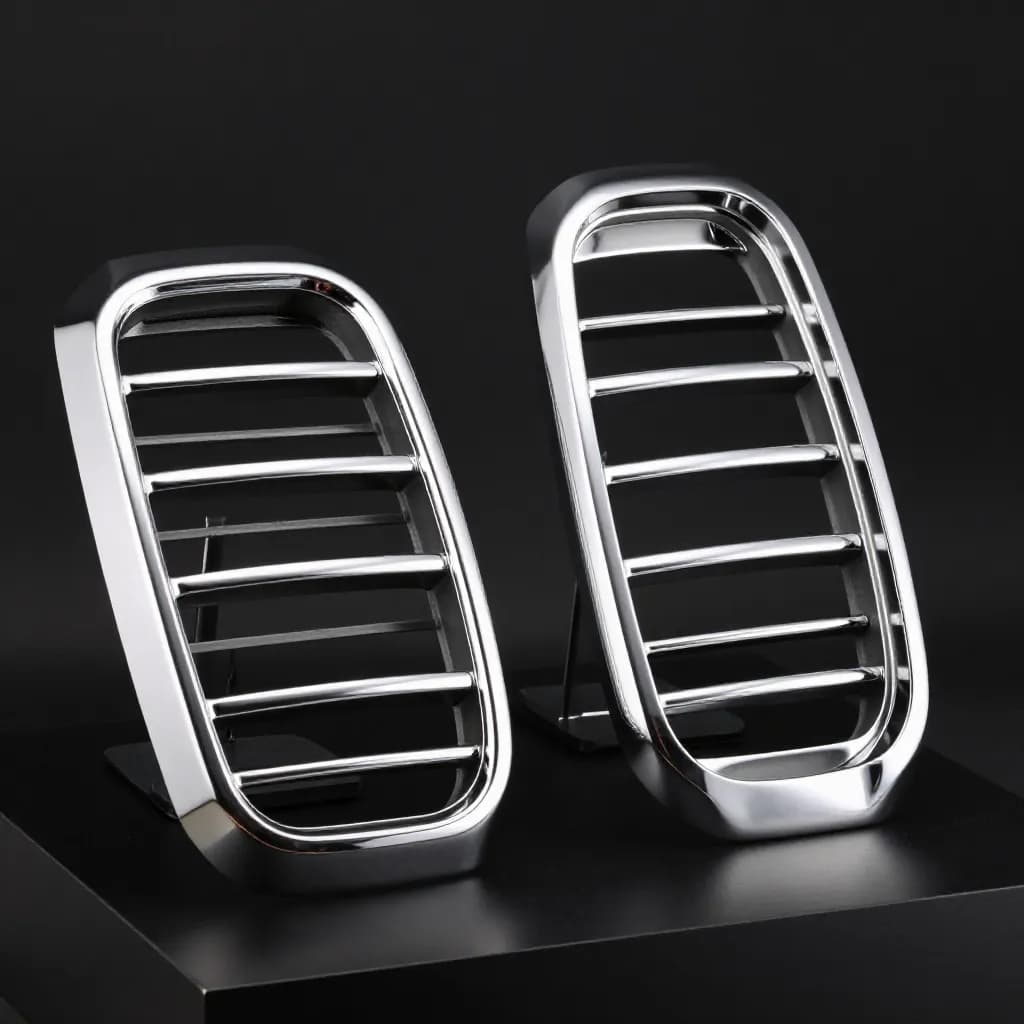
The two main vacuum metallization techniques are Physical Vapor Deposition (PVD) and sputtering. In PVD, the source metal is evaporated by resistive heating or electron beam, and the vapor deposits onto the substrate in a line-of-sight pattern. In sputtering, ions bombard a metal target, ejecting atoms that deposit onto the substrate with better adhesion and more uniform coverage on complex geometries. Both processes operate in high-vacuum environments and produce extremely thin, highly reflective coatings.
Ready to Start Your Project?
From one-off customs to 15,000-part production runs — get precise pricing in 24 hours.
On This Page
What Is Vacuum Metallization?
Vacuum metallization is widely used for automotive trim, consumer electronics, cosmetic packaging, lighting reflectors, decorative hardware, and any application where a bright, reflective metallic appearance is desired without the environmental concerns and cost of traditional chrome electroplating. The process can be applied to metals, plastics, glass, and ceramics, making it more versatile than electroplating in terms of substrate compatibility.
Powder Coating's Approach to Metallic Finishes
Powder coating achieves metallic effects through an entirely different mechanism than vacuum metallization. Metallic powder coatings contain small metallic flakes — typically aluminum, mica, or bronze particles — blended into the powder formulation. When the powder is applied and cured, these metallic flakes orient within the film to create a sparkling, metallic appearance. The effect ranges from subtle metallic shimmer to bold, eye-catching sparkle depending on the flake size, concentration, and type.
Chrome-effect powder coatings have been developed to approximate the mirror-like appearance of vacuum metallization, using specialized metallic pigments and application techniques to maximize reflectivity. While these chrome-effect powders produce an impressive metallic finish, they do not achieve the true mirror-like reflectivity of vacuum-deposited metal. The powder coating film is inherently thicker and the metallic flakes are dispersed within a polymer matrix rather than forming a continuous metallic surface, which limits the maximum achievable reflectivity.
However, powder coating's metallic finishes offer something vacuum metallization cannot — a thick, durable, protective film that combines decorative appeal with genuine corrosion protection and mechanical durability. A metallic powder coating is a complete finishing system in itself, providing both appearance and protection in a single coat. Vacuum metallization, by contrast, produces a decorative layer so thin that it provides negligible protection and typically requires both a basecoat and a protective topcoat to function as a complete finishing system.
Durability and Wear Resistance Comparison
Durability is where powder coating holds a significant advantage over vacuum metallization for most practical applications. A standard powder coating film of 60 to 120 microns is a robust, cross-linked polymer that resists scratching, chipping, chemical attack, and UV degradation. The film is thick enough to absorb impacts and abrasion that would destroy a vacuum-metallized surface, making powder coating suitable for products that experience handling, cleaning, and everyday wear.
Vacuum-metallized coatings are extremely thin — typically 0.05 to 0.5 microns for the metallic layer itself. This ultra-thin film is inherently fragile and can be scratched, worn through, or damaged by chemical exposure, fingerprint oils, and even aggressive cleaning. To protect the metallized layer, a clear topcoat — typically a UV-cured lacquer or a thin powder clear coat — is applied over the metallic deposit. Even with a protective topcoat, vacuum-metallized finishes are less durable than standard metallic powder coatings and are best suited for low-wear, decorative applications.
For automotive exterior trim, where the finish must withstand car washes, road debris, UV exposure, and temperature cycling, vacuum metallization with a protective topcoat can provide adequate durability for the vehicle's service life. However, for applications involving more aggressive wear — door handles, kick plates, industrial equipment, outdoor furniture — metallic powder coating provides a more robust and longer-lasting finish. The thicker powder coating film simply offers more material between the environment and the substrate.
Appearance: Mirror Finish vs Metallic Effect
The visual difference between vacuum metallization and metallic powder coating is significant and often determines which technology is appropriate for a given application. Vacuum metallization produces a true mirror finish — a continuous metallic surface that reflects light and images with the clarity and brightness of polished metal. This mirror-like quality is essential for applications such as automotive chrome trim, reflector housings, cosmetic packaging, and decorative hardware where the design intent is to replicate the appearance of polished chrome or bright metal.
Metallic powder coatings produce a sparkling, metallic effect that is attractive and eye-catching but fundamentally different from a mirror finish. The metallic flakes within the powder coating scatter light in multiple directions, creating a glittering or shimmering appearance rather than a coherent reflection. This effect can be beautiful and is widely used for automotive wheels, consumer electronics, furniture, and architectural applications, but it does not replicate the mirror-like reflectivity of vacuum-deposited metal.
The choice between the two often comes down to design intent. If the specification calls for a chrome-look mirror finish, vacuum metallization is the technology that delivers it. If the specification calls for an attractive metallic appearance with genuine durability and protection, metallic powder coating is the better choice. Many modern product designs deliberately choose the sparkling metallic effect of powder coating over the mirror finish of metallization, as it provides a contemporary aesthetic that is both attractive and practical.
Environmental and Process Considerations
Both powder coating and vacuum metallization offer environmental advantages over traditional chrome electroplating, which uses hexavalent chromium — a known carcinogen — and generates hazardous wastewater requiring extensive treatment. The move away from hexavalent chrome plating has been a major driver for both vacuum metallization and chrome-effect powder coatings as alternative decorative finishing technologies.
Vacuum metallization is a relatively clean process that operates in a sealed vacuum chamber without liquid chemicals or significant waste streams. The primary environmental concerns are energy consumption for maintaining the vacuum and heating the source metal, and the management of spent targets and chamber cleaning residues. The process does not generate VOC emissions or hazardous wastewater, making it environmentally preferable to chrome plating.
Powder coating offers the same zero-VOC advantage with the additional benefit of near-complete material utilization through overspray reclamation. The powder coating process is simpler, requires less specialized equipment than vacuum metallization, and can be performed by a wider range of coating applicators. For operations that need a metallic finish on metal substrates, powder coating is typically the more accessible and cost-effective technology, while vacuum metallization is reserved for applications where the mirror-like finish quality justifies the more specialized process.
Substrate Compatibility and Applications
Vacuum metallization has a significant advantage in substrate versatility. Because the process operates at relatively low temperatures and does not require electrical conductivity, it can be applied to plastics, glass, ceramics, and composites in addition to metals. This makes vacuum metallization the technology of choice for chrome-look finishes on plastic automotive trim, consumer electronics housings, cosmetic packaging, and lighting components where the substrate cannot withstand powder coating's curing temperatures.
Powder coating is limited to substrates that can withstand oven curing at 160 to 200 degrees Celsius and that are electrically conductive for electrostatic application. This effectively restricts standard powder coating to metal substrates, though specialized processes exist for coating some heat-resistant plastics and MDF. For metal substrates, powder coating provides a complete finishing solution — decoration and protection in a single coat — that vacuum metallization cannot match without additional basecoat and topcoat layers.
In practice, the two technologies often serve different market segments. Vacuum metallization dominates in plastic component finishing for automotive interiors, consumer electronics, and cosmetic packaging. Powder coating dominates in metal component finishing for automotive wheels, architectural aluminum, furniture, and industrial equipment. Where both technologies could be applied — such as metal automotive trim — the choice depends on whether the mirror finish of metallization or the durability of powder coating is the higher priority.
Making the Right Choice for Decorative Metal Finishing
For decorative metal finishing, the decision between powder coating and vacuum metallization should be guided by three factors: the required appearance, the expected wear environment, and the production volume. If the design requires a true chrome mirror finish on metal parts, vacuum metallization with a protective topcoat is the appropriate technology. If the design calls for an attractive metallic effect with maximum durability, metallic powder coating is the better choice.
For high-wear applications — outdoor furniture, automotive wheels, door hardware, industrial equipment — metallic powder coating provides the durability needed to maintain appearance through years of use. The thick, hard powder coating film resists the scratching, chipping, and chemical exposure that would quickly degrade a vacuum-metallized surface. The wide range of metallic colors and effects available in powder coating also provides design flexibility that vacuum metallization's limited palette of bright chrome, gold, and copper tones cannot match.
For low-wear decorative applications — interior trim, display fixtures, lighting components, cosmetic packaging — vacuum metallization provides the premium mirror-like appearance that these applications demand. The finish is protected from heavy wear by its indoor or low-contact environment, allowing the thin metallized layer to maintain its reflective quality over the product's service life. In these applications, the visual impact of a true mirror finish justifies the additional process complexity and the need for protective topcoats.
Frequently Asked Questions
Can powder coating achieve a chrome mirror finish?
Chrome-effect powder coatings produce an impressive metallic finish but do not achieve the true mirror-like reflectivity of vacuum metallization. The metallic flakes in powder coating scatter light rather than reflecting it coherently. For a genuine chrome mirror finish, vacuum metallization or chrome plating is required.
Is vacuum metallization more durable than powder coating?
No. Vacuum metallization produces an extremely thin metallic layer (0.05-0.5 microns) that is fragile and requires a protective topcoat. Powder coating produces a thick (60-120 micron), hard, cross-linked film that resists scratching, chipping, and chemical attack far better than metallized surfaces. For durability, powder coating is clearly superior.
Can vacuum metallization be applied to plastic parts?
Yes. Vacuum metallization operates at low temperatures and does not require electrical conductivity, making it suitable for plastics, glass, ceramics, and composites. This is a key advantage over powder coating, which requires heat-curable, conductive substrates and is primarily limited to metal parts.
Is vacuum metallization better for the environment than chrome plating?
Yes. Vacuum metallization does not use hexavalent chromium or generate hazardous wastewater, making it far more environmentally friendly than traditional chrome electroplating. Powder coating is also environmentally superior to chrome plating, with zero VOC emissions and near-complete material utilization.
Which is better for automotive wheels, powder coating or vacuum metallization?
Powder coating is the better choice for automotive wheels because it provides the thick, durable film needed to resist stone chips, brake dust, road salt, and car wash chemicals. Vacuum metallization is too fragile for the demanding wear environment that wheels experience. Metallic powder coatings provide attractive finishes with the durability wheels require.
Ready to Start Your Project?
From one-off customs to 15,000-part production runs — get precise pricing in 24 hours.