Vitreous enamel — also known as porcelain enamel, stove enamel, or simply enamel — is a glass-based coating that is fused to a metal substrate at extremely high temperatures. The process involves applying a slurry or powder of finely ground glass frit (a mixture of silica, borax, feldspar, and metal oxides) to a metal surface and then firing it in a kiln at temperatures of 750 to 850 degrees Celsius. At these temperatures, the glass frit melts and fuses to the metal substrate, creating a smooth, hard, glass-like surface that is permanently bonded to the metal.
Comparison
Powder Coating vs Stove Enamel: Vitreous Enamel, Cookware, and Heat Resistance
Sundial Powder Coating·April 22, 2026·10 min
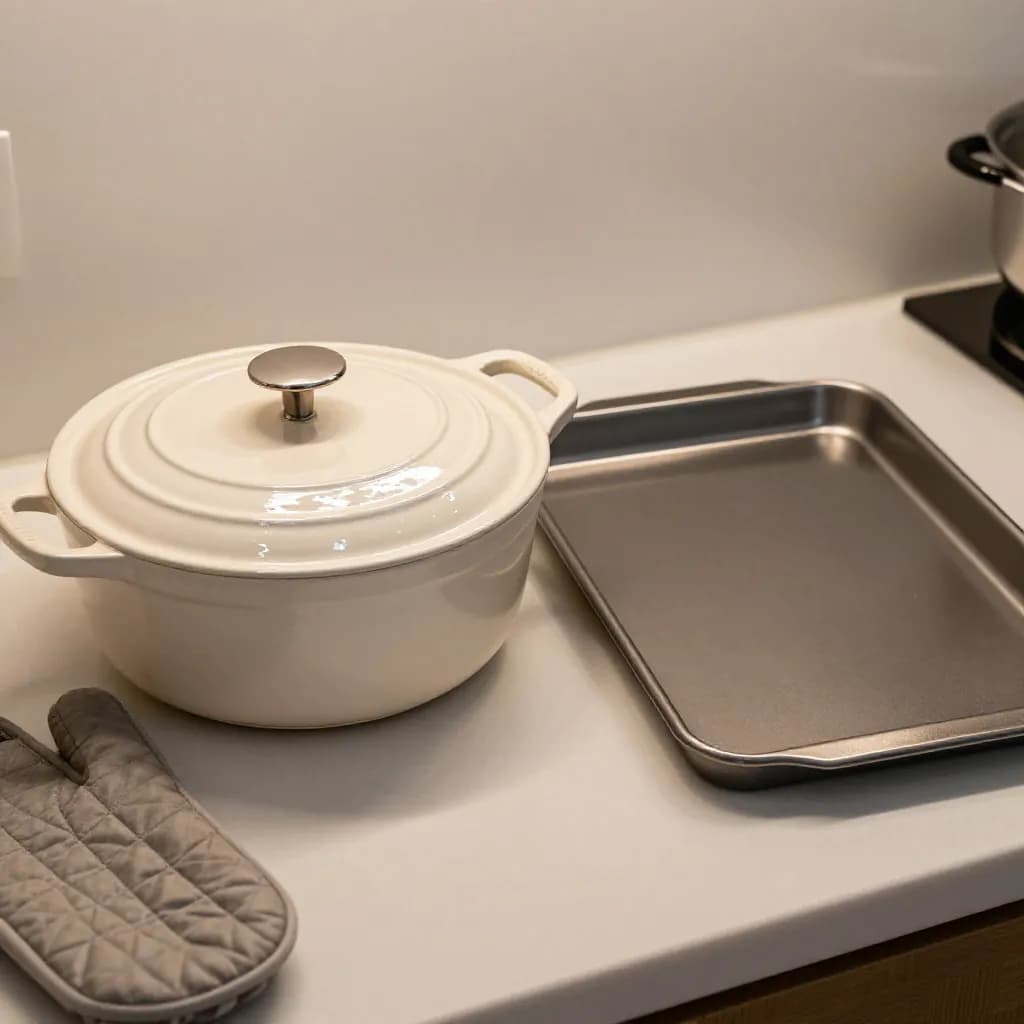
Vitreous enamel has been used for over a century on cookware, kitchen appliances, bathtubs, sinks, signage, and architectural panels. The glass surface is chemically inert, resistant to staining, easy to clean, and capable of withstanding temperatures far beyond what any organic coating can survive. These properties make vitreous enamel the traditional choice for surfaces that contact food, water, and high temperatures — oven interiors, cooktop surfaces, roasting pans, and cast iron cookware.
Ready to Start Your Project?
From one-off customs to 15,000-part production runs — get precise pricing in 24 hours.
On This Page
What Is Vitreous Stove Enamel?
The term stove enamel specifically refers to vitreous enamel formulations designed for high-temperature applications such as wood stoves, fireplaces, barbecue grills, and oven interiors. These formulations use specialized glass compositions that maintain their integrity and appearance at sustained temperatures of 500 to 600 degrees Celsius, making them suitable for surfaces that experience direct or radiant heat from combustion or heating elements.
How Powder Coating Compares as a Technology
Powder coating is an organic polymer coating — fundamentally different from the inorganic glass coating of vitreous enamel. Where vitreous enamel is glass fused to metal, powder coating is a plastic film bonded to metal. This fundamental material difference drives most of the performance differences between the two technologies and determines which is appropriate for specific applications.
Standard powder coatings cure at 160 to 200 degrees Celsius and maintain their properties at continuous service temperatures up to approximately 150 degrees Celsius for polyester formulations. Specialized high-temperature powder coatings based on silicone, fluoropolymer, or ceramic-modified resins can withstand higher temperatures — up to 500 to 600 degrees Celsius for the most heat-resistant formulations — but these are specialty products with limited color options and different performance characteristics than standard powder coatings.
The application process for powder coating is simpler and more energy-efficient than vitreous enameling. Powder coating cures at 160 to 200 degrees Celsius compared to 750 to 850 degrees Celsius for vitreous enamel, requiring significantly less energy per part. The electrostatic application process is cleaner and more material-efficient than the dipping or spraying methods used for enamel slurry. These process advantages make powder coating more economical for applications where vitreous enamel's unique properties are not required.
Heat Resistance: Enamel's Defining Advantage
Heat resistance is the area where vitreous enamel holds an unassailable advantage over standard powder coatings. The glass surface of vitreous enamel is stable at temperatures that would completely destroy any organic coating. Oven interiors enameled with vitreous enamel withstand self-cleaning cycle temperatures of 480 to 500 degrees Celsius without damage — temperatures at which standard powder coatings would decompose, discolor, and lose adhesion within minutes.
This heat resistance makes vitreous enamel essential for applications involving direct heat exposure — oven cavities, cooktop surfaces, wood stove bodies, fireplace inserts, barbecue grill components, and industrial furnace linings. No organic coating, including high-temperature powder coatings, can match the sustained high-temperature performance of vitreous enamel in these applications.
However, for applications where temperatures remain below 150 degrees Celsius — which includes the vast majority of industrial, architectural, and consumer product applications — powder coating's heat resistance is more than adequate. Appliance exteriors, equipment housings, furniture, automotive components, and architectural panels rarely experience temperatures above 80 degrees Celsius in normal service. For these applications, powder coating provides equivalent or superior performance to vitreous enamel in every respect except maximum temperature capability.
Durability and Impact Resistance
Durability comparisons between vitreous enamel and powder coating reveal a nuanced picture where each technology excels in different aspects. Vitreous enamel is extremely hard — harder than most steels — and highly resistant to scratching, abrasion, and chemical attack. Its glass surface does not absorb stains, resists acids and alkalis, and can be cleaned with abrasive cleaners that would damage organic coatings. These properties make vitreous enamel ideal for surfaces that must withstand aggressive cleaning and chemical exposure.
However, vitreous enamel's hardness comes with a significant weakness — brittleness. The glass coating is rigid and cannot flex or absorb impact energy. A sharp impact — dropping a heavy pot on an enameled cooktop, or striking an enameled panel with a hard object — can crack or chip the enamel, exposing the bare metal beneath. Once chipped, vitreous enamel cannot be effectively repaired in the field, and the exposed metal will corrode.
Powder coating is significantly more impact-resistant than vitreous enamel. The organic polymer film is flexible and can absorb impact energy by deforming rather than cracking. Powder-coated surfaces withstand impacts that would chip vitreous enamel, making powder coating the better choice for products that experience handling, shipping, and operational impacts. For appliance exteriors, equipment housings, and any product where impact damage is a concern, powder coating's flexibility provides a meaningful durability advantage over the brittle glass surface of vitreous enamel.
Appliance Industry: A Divided Landscape
The appliance industry uses both vitreous enamel and powder coating, with each technology applied where its specific properties are most needed. Oven interiors, cooktop surfaces, and other high-temperature components are finished with vitreous enamel because no organic coating can withstand the temperatures these surfaces experience. The glass surface also provides the chemical resistance and cleanability needed for surfaces that contact food and cooking residues.
Appliance exteriors — the visible outer surfaces of refrigerators, washing machines, dryers, and dishwashers — have increasingly transitioned from vitreous enamel to powder coating. The exterior surfaces do not experience high temperatures, and powder coating provides equivalent or better appearance, superior impact resistance, and lower manufacturing cost compared to vitreous enamel for these surfaces. The transition has been driven by both performance and economics.
This divided approach — vitreous enamel on high-temperature interior surfaces and powder coating on exterior surfaces — represents the optimal use of both technologies in appliance manufacturing. Each coating is applied where its specific properties provide the greatest benefit, resulting in appliances that perform well in all aspects of their service life. The trend continues toward expanding powder coating's role on appliance exteriors while maintaining vitreous enamel on surfaces where its heat resistance and chemical inertness are essential.
Cookware and Food Contact Applications
Cookware is an application where vitreous enamel has a clear and established role that powder coating cannot fill. Enameled cast iron cookware — Dutch ovens, skillets, and roasting pans — uses vitreous enamel to provide a non-reactive, easy-to-clean cooking surface that withstands oven temperatures and direct stovetop heat. The glass surface does not react with acidic foods, does not impart flavors, and can be cleaned with standard kitchen methods. These properties have made enameled cast iron a premium cookware category valued by home cooks and professional chefs.
Standard powder coatings are not suitable for cookware interiors because they cannot withstand cooking temperatures, are not certified for direct food contact in most formulations, and would degrade rapidly under the thermal cycling and chemical exposure that cookware experiences. While specialized food-safe powder coatings exist for applications like food processing equipment exteriors and beverage can interiors, they are not designed for the direct heat and food contact conditions of cookware.
However, powder coating is used on cookware exteriors and handles where heat exposure is lower and the coating's primary function is decorative and protective. The colorful exterior finishes on many modern enameled cookware pieces are actually powder coatings or specialized organic coatings applied over the vitreous enamel base, combining the heat resistance of enamel on the cooking surface with the color options and impact resistance of organic coatings on the exterior.
Choosing the Right Coating for Your Application
The choice between vitreous enamel and powder coating is determined primarily by the temperature and chemical exposure requirements of the application. Choose vitreous enamel when the surface will be exposed to temperatures above 200 degrees Celsius, when direct food contact at cooking temperatures is required, or when the surface must withstand aggressive chemical cleaning with abrasive or caustic cleaners. Oven interiors, cooktop surfaces, cookware, laboratory equipment, and chemical processing vessels are appropriate applications for vitreous enamel.
Choose powder coating for virtually everything else. For applications where temperatures remain below 150 degrees Celsius — which includes the vast majority of industrial, architectural, automotive, and consumer product applications — powder coating provides superior impact resistance, broader color options, lower manufacturing cost, and equivalent or better corrosion protection compared to vitreous enamel. The simpler application process, lower curing temperature, and higher material efficiency of powder coating make it the more economical and practical choice for most metal finishing applications.
For products that include both high-temperature and ambient-temperature surfaces — such as appliances with hot interiors and cool exteriors — using vitreous enamel on the high-temperature surfaces and powder coating on the exterior surfaces provides the optimal combination of performance and value. This combined approach is standard practice in the appliance industry and represents the most effective use of both coating technologies.
Frequently Asked Questions
Can powder coating withstand oven temperatures like vitreous enamel?
No. Standard powder coatings are limited to approximately 150 degrees Celsius continuous service temperature. Vitreous enamel withstands 500-600 degrees Celsius and higher. For oven interiors, cooktop surfaces, and other high-temperature applications, vitreous enamel is the only appropriate choice among these two options.
Is vitreous enamel more durable than powder coating?
Vitreous enamel is harder and more scratch-resistant than powder coating, but it is also more brittle and prone to chipping from impact. Powder coating is more flexible and impact-resistant. For surfaces subject to impacts and handling, powder coating is more durable. For surfaces subject to abrasion and chemical cleaning, vitreous enamel is more durable.
Why do appliance exteriors use powder coating instead of enamel?
Appliance exteriors do not experience high temperatures, so vitreous enamel's heat resistance is unnecessary. Powder coating provides better impact resistance, broader color options, and lower manufacturing cost for exterior surfaces. The industry has progressively transitioned appliance exteriors from enamel to powder coating for these reasons.
Is vitreous enamel safe for food contact?
Yes. Vitreous enamel is a glass surface that is chemically inert and does not react with foods or beverages. It has been used safely on cookware, kitchen sinks, and food processing equipment for over a century. Standard powder coatings are not typically certified for direct food contact at cooking temperatures.
Can chipped vitreous enamel be repaired?
Field repair of chipped vitreous enamel is difficult because the glass coating requires kiln firing at 750-850 degrees Celsius to fuse properly. Touch-up enamel repair kits are available but produce a cosmetic repair rather than a true vitreous enamel restoration. Powder coating chips can be touched up with liquid paint more effectively.
Ready to Start Your Project?
From one-off customs to 15,000-part production runs — get precise pricing in 24 hours.