Bed liner coatings — marketed under brand names including Rhino Linings, Line-X, ArmorThane, and Bullet Liner — are thick, spray-applied polyurethane or polyurea coatings designed primarily for truck bed protection. These coatings are applied at extreme thicknesses (typically 3,000-6,000 microns, or 3-6 millimeters) to create a tough, textured, impact-absorbing barrier that protects the truck bed from the heavy abuse of cargo loading, hauling, and unloading.
Comparison
Powder Coating vs Bed Liner Coatings: Rhino Lining, Line-X, and Truck Protection
Sundial Powder Coating·April 22, 2026·12 min
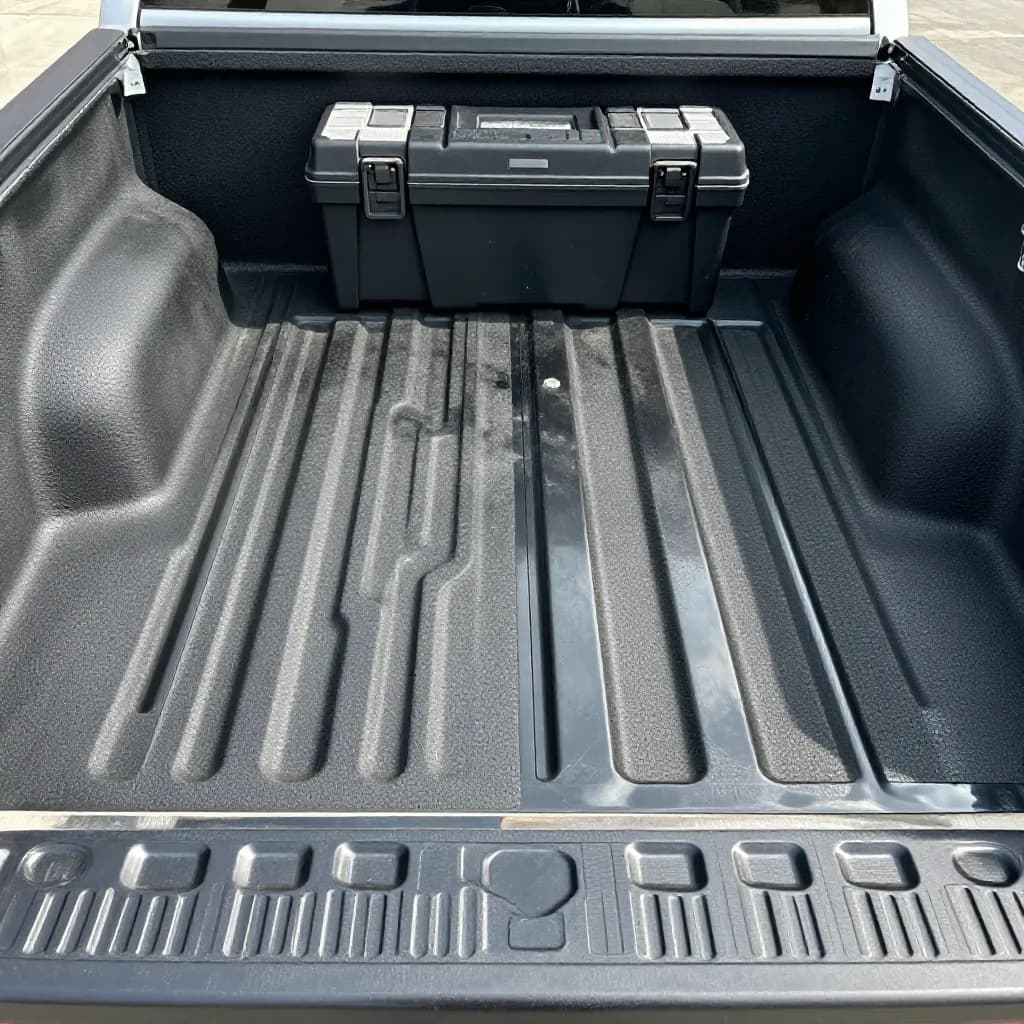
The chemistry of bed liner coatings is based on polyurethane, polyurea, or hybrid polyurethane-polyurea formulations. Polyurea coatings — the premium option — are formed by the rapid reaction of isocyanate and amine components, producing a coating that cures in seconds and achieves full hardness within minutes. This fast cure is achieved through specialized plural-component spray equipment that mixes the two components at the spray gun, allowing immediate application and rapid return to service. Polyurethane bed liners use a similar two-component chemistry but with polyol rather than amine reactants, resulting in slightly slower cure and different mechanical properties.
Ready to Start Your Project?
From one-off customs to 15,000-part production runs — get precise pricing in 24 hours.
On This Page
Understanding Bed Liner Coatings and Their Purpose
The extreme thickness of bed liner coatings is their defining characteristic and their primary advantage for the specific application they serve. At 3-6mm thick, these coatings absorb the impact energy of heavy cargo — toolboxes, lumber, machinery, rocks — that would dent the sheet metal bed and destroy any conventional coating. The textured surface prevents cargo from sliding during transport, and the seamless, monolithic application eliminates joints and seams where moisture could penetrate and cause corrosion.
Powder coating operates at a completely different thickness scale — 60-120 microns, or roughly 1/30th to 1/50th the thickness of a bed liner coating. This thickness difference means that powder coating and bed liner coatings are optimized for fundamentally different levels of mechanical abuse. Comparing them requires understanding what each technology is designed to do and where each excels.
Impact Resistance and Mechanical Protection
Impact resistance is the performance dimension where bed liner coatings most dramatically outperform powder coating, and it is the primary reason bed liners exist. The 3-6mm thick polyurethane or polyurea film absorbs enormous amounts of impact energy — a 50-pound toolbox dropped from waist height into a bed-liner-coated truck bed bounces off without leaving a mark. The same impact on a powder-coated surface would likely chip or crack the coating and dent the underlying metal.
The impact absorption mechanism differs between the two coating types. Bed liner coatings are elastomeric — they deform under impact, absorbing and distributing the energy across a large area, then recover their original shape. The thick, rubbery film acts as a shock absorber between the impacting object and the metal substrate. Elongation at break for polyurea bed liners is typically 300-400%, meaning the coating can stretch to three to four times its original length before tearing.
Powder coatings are thermoset films that are relatively rigid compared to bed liners. While powder coatings have good impact resistance for their thickness — passing standard impact testing (ASTM D2794) at 60-160 inch-pounds depending on formulation — they cannot absorb the heavy impacts that bed liners are designed to handle. The thinner film and more rigid chemistry mean that powder coating protects against moderate impacts, scratches, and abrasion, but not against the heavy cargo abuse that truck beds experience.
For truck bed applications specifically, bed liner coatings are the clear and only appropriate choice. No powder coating — regardless of formulation or thickness — can provide the impact protection that a 3-6mm bed liner delivers. The comparison is not close, and attempting to use powder coating as a truck bed finish would result in rapid coating failure and substrate damage.
However, for applications where moderate impact resistance is sufficient — vehicle frames, suspension components, bumpers, tool boxes, and equipment housings — powder coating provides excellent protection at a fraction of the thickness and weight of a bed liner coating. The key is matching the coating technology to the actual impact severity of the application.
Off-Road and Extreme Use Applications
The off-road and overlanding community has embraced bed liner coatings for applications beyond truck beds — rocker panels, fender flares, bumpers, roof racks, and even entire vehicle exteriors. The appeal is understandable: a thick, textured, impact-resistant coating that shrugs off trail damage, rock impacts, and branch scrapes is highly attractive for vehicles that regularly encounter these hazards. Brands like Line-X and Rhino Linings actively market their products for full-vehicle and exterior panel applications.
For extreme off-road use — rock crawling, trail riding, and expedition vehicles that regularly contact rocks, trees, and terrain — bed liner coatings on vulnerable lower body panels, rocker panels, and bumpers provide protection that no other coating can match. The thick elastomeric film absorbs impacts that would dent sheet metal and destroy conventional coatings. The textured surface hides minor damage and maintains a consistent appearance despite heavy abuse.
Powder coating serves the off-road community in different applications. Bumpers, skid plates, roof racks, suspension components, and accessories are commonly powder coated because these components benefit from powder coating's combination of corrosion protection, aesthetic quality, and moderate impact resistance. A powder-coated steel bumper provides excellent protection against corrosion and moderate impacts while maintaining a clean, professional appearance that bed liner texture cannot achieve.
The choice between bed liner and powder coating for off-road applications depends on the specific component and the severity of expected abuse. Components that will regularly contact rocks and terrain at speed — rocker panels, lower door panels, wheel arches — benefit from bed liner's extreme impact absorption. Components that need corrosion protection and aesthetic quality with moderate impact resistance — bumpers, racks, brackets, accessories — are better served by powder coating.
Some off-road builders combine both technologies on the same vehicle: powder-coated bumpers, racks, and accessories for their clean appearance and corrosion protection, with bed liner on rocker panels and lower body panels for maximum impact protection. This combined approach optimizes each technology for its strengths.
UV Resistance, Color, and Aesthetic Considerations
Aesthetics and UV resistance are areas where powder coating significantly outperforms bed liner coatings. Powder coatings — particularly superdurable polyester formulations — are engineered for long-term UV stability, maintaining color and gloss for 15-25 years in exterior exposure. The smooth, controlled surface of a powder coating provides a professional, finished appearance with precise color matching, controlled gloss levels, and a range of textures from mirror-smooth to lightly textured.
Bed liner coatings have a rough, heavily textured surface that is functional rather than decorative. The texture — which ranges from fine orange peel to coarse aggregate depending on the application parameters — provides grip and hides damage but does not deliver the aesthetic quality that most vehicle owners expect for visible surfaces. The appearance is utilitarian, and while some owners appreciate the rugged look, it is not suitable for applications where visual quality matters.
UV resistance is a known weakness of many bed liner formulations. Polyurethane bed liners are susceptible to UV degradation, which causes chalking, fading, and surface degradation over time. Black bed liners may fade to a dull gray after 2-5 years of sun exposure. Polyurea formulations offer better UV resistance than polyurethane, but even premium polyurea bed liners can show UV degradation after several years of direct sun exposure. Some manufacturers offer UV-resistant topcoats or additives to improve UV performance, but these add cost and complexity.
Color options for bed liner coatings are limited compared to powder coating. Most bed liners are applied in black, though some manufacturers offer a range of colors including gray, tan, olive, and custom tints. The color range is a fraction of what powder coating offers — thousands of colors in any finish from matte to high gloss. For any application where specific colors, brand matching, or aesthetic quality are requirements, powder coating is the only viable option.
For vehicle exteriors where both protection and appearance matter, the choice often comes down to priorities. If maximum impact protection is the priority and aesthetics are secondary (dedicated off-road vehicles, work trucks, military vehicles), bed liner coatings serve well. If appearance quality is important alongside good protection (daily drivers, show vehicles, commercial fleets), powder coating provides the better balance.
Weight, Thickness, and Practical Considerations
The extreme thickness of bed liner coatings has practical implications beyond impact resistance. A bed liner coating at 3-6mm thickness adds significant weight to the coated surface. For a standard truck bed (approximately 4-5 square meters of surface area), a bed liner at 4mm average thickness adds roughly 20-30 kg of weight. For a full vehicle exterior application, the weight addition can be 50-100+ kg depending on coverage area and thickness.
Powder coating at 80 microns average thickness adds negligible weight — approximately 100-200 grams per square meter, or roughly 0.5-1.0 kg for a truck bed. The weight difference is a factor of 20-30x, which matters for performance-oriented vehicles, fuel economy, and payload capacity. For a work truck where payload capacity is important, the 20-30 kg weight of a bed liner reduces available payload by the same amount.
The thickness of bed liner coatings also affects fitment and clearances. A 4mm coating on the inside of a truck bed reduces the internal dimensions by 8mm in width and length (4mm on each side). Bed liner on wheel arches reduces tire clearance. Bed liner on door jambs can interfere with door closure. These dimensional impacts must be considered during application, and careful masking is required to avoid coating surfaces where thickness would cause interference.
Powder coating's thin film (60-120 microns) has negligible dimensional impact — less than 0.25mm total on any dimension. This makes powder coating suitable for components with close tolerances, mating surfaces, and assemblies where dimensional accuracy matters. Bed liner coatings are only appropriate for surfaces where several millimeters of added thickness is acceptable.
Application accessibility also differs. Bed liner coatings require specialized plural-component spray equipment (heated, high-pressure systems that mix two components at the gun) and trained applicators. The equipment investment is significant, and the application process requires careful temperature and mixing ratio control. Powder coating equipment ranges from affordable DIY setups to industrial automated lines, with a broader range of applicators and service providers available.
Choosing the Right Protection for Your Vehicle or Equipment
The choice between powder coating and bed liner coatings should be driven by the specific protection requirements and aesthetic priorities of the application. For truck beds that will carry heavy cargo, bed liner coatings are the definitive choice — no other coating technology provides the impact absorption, cargo grip, and seamless protection that a 3-6mm polyurethane or polyurea bed liner delivers. This is the application these products were designed for, and they excel at it.
For vehicle components that need corrosion protection, aesthetic quality, and moderate impact resistance — frames, suspension parts, bumpers, racks, brackets, wheels, and accessories — powder coating is the superior choice. Its combination of durability, color variety, UV resistance, and professional appearance serves these applications far better than bed liner coatings. The thinner film preserves dimensional accuracy and minimizes weight addition.
For extreme off-road vehicles, consider a combined approach: bed liner on the most vulnerable impact zones (rocker panels, lower body panels, wheel arches) and powder coating on structural and accessory components (bumpers, racks, skid plates, brackets). This combination optimizes each technology for its strengths — maximum impact protection where it is needed most, and aesthetic quality with corrosion protection everywhere else.
For equipment and industrial applications — tool boxes, equipment housings, trailer floors, and heavy-use surfaces — the choice depends on the severity of mechanical abuse. Equipment that will be subjected to heavy impacts, dragging, and rough handling benefits from bed liner coatings. Equipment that needs corrosion protection and professional appearance with moderate mechanical protection is better served by powder coating.
Avoid using bed liner coatings where powder coating would be more appropriate — the excessive thickness, weight, rough texture, and limited UV resistance of bed liners are disadvantages in applications that do not require extreme impact protection. Similarly, avoid using powder coating where bed liner protection is genuinely needed — the thinner film will not survive the heavy mechanical abuse that bed liners are designed to handle. Matching the coating technology to the actual demands of the application ensures optimal performance and value.
Frequently Asked Questions
Is bed liner coating stronger than powder coating?
For impact resistance, yes — dramatically. Bed liner coatings at 3-6mm thickness absorb heavy impacts that would destroy powder coating. However, powder coating provides better UV resistance, color options, and aesthetic quality. They serve different purposes: bed liners for extreme impact protection, powder coating for corrosion protection and aesthetics.
Can you powder coat a truck bed instead of using bed liner?
Technically possible but not recommended. Powder coating at 60-120 microns cannot provide the impact absorption needed for truck bed cargo protection. Heavy items would chip and crack the powder coating quickly. Bed liner coatings at 3-6mm are specifically designed for this extreme-abuse application.
Does bed liner coating fade in the sun?
Yes, many bed liner formulations are susceptible to UV degradation. Polyurethane bed liners can fade from black to dull gray within 2-5 years of sun exposure. Polyurea formulations offer better UV resistance. Powder coating, particularly superdurable polyester, maintains color for 15-25 years — a significant advantage for visible exterior surfaces.
How much weight does bed liner add compared to powder coating?
Bed liner at 4mm thickness adds approximately 5-6 kg per square meter, totaling 20-30 kg for a truck bed. Powder coating at 80 microns adds only 100-200 grams per square meter — roughly 0.5-1.0 kg for the same area. The weight difference is 20-30x, which affects payload capacity and vehicle performance.
Can you combine bed liner and powder coating on the same vehicle?
Yes, and this is a popular approach for off-road vehicles. Bed liner protects high-impact zones (rocker panels, lower body, wheel arches) while powder coating provides corrosion protection and aesthetic quality on bumpers, racks, brackets, and accessories. Each technology is used where it performs best.
Ready to Start Your Project?
From one-off customs to 15,000-part production runs — get precise pricing in 24 hours.