Polyvinylidene fluoride, commonly known as PVDF, has been the traditional premium coating choice for high-end architectural aluminum for over four decades. The standard architectural PVDF formulation consists of 70% PVDF resin and 30% acrylic resin, dissolved in organic solvents and applied as a multi-coat liquid system. The two most recognized PVDF resin brands are Kynar 500, manufactured by Arkema, and Hylar 5000, manufactured by Solvay, both of which are licensed to approved coating manufacturers worldwide.
Architecture
Powder Coating vs PVDF Liquid Coating: Which Is Better for Architecture?
Sundial Powder Coating·April 20, 2026·11 min
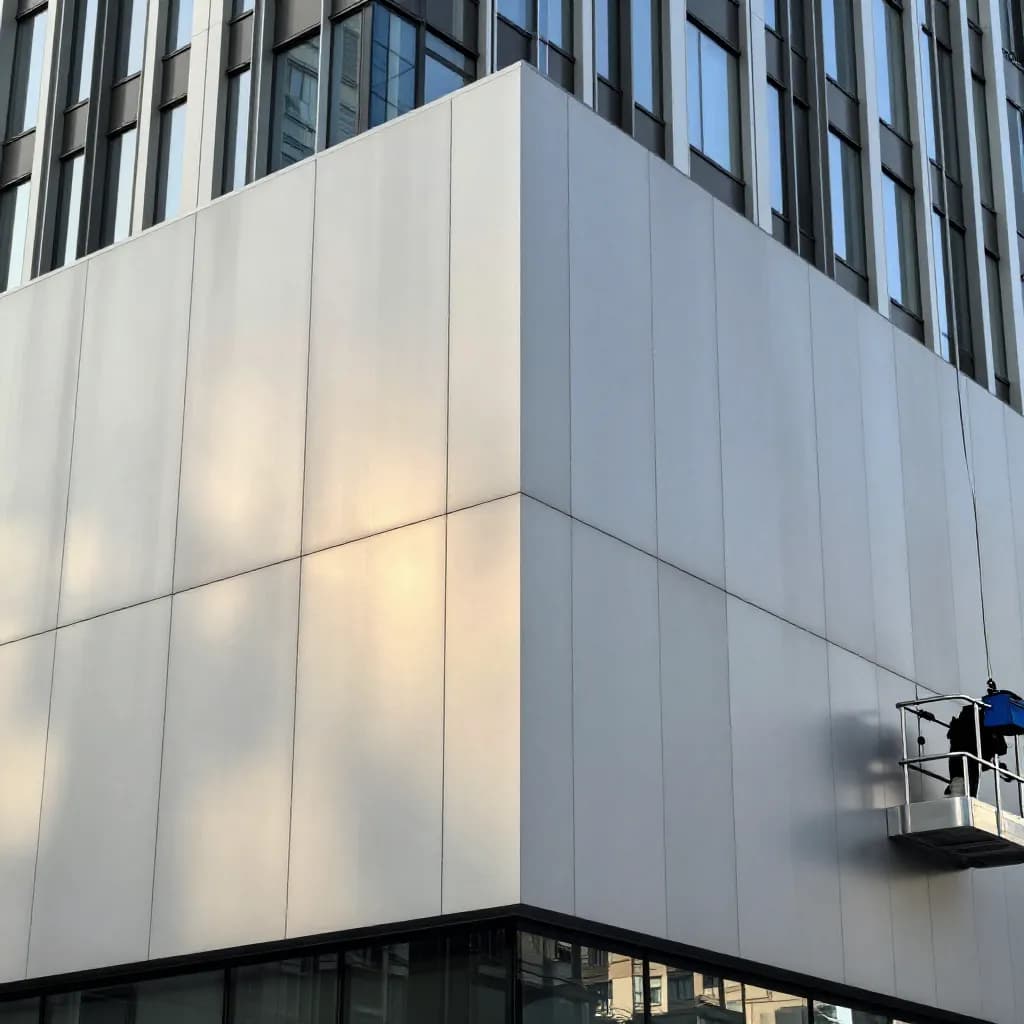
PVDF liquid coatings are typically applied in a three-coat or four-coat system comprising primer, basecoat, and clearcoat, with total dry film builds of 25-40 microns. The fluoropolymer chemistry provides exceptional resistance to UV degradation, chalking, and color fade, which is why PVDF has historically been specified for the most demanding architectural applications — particularly high-rise curtain walls and premium commercial facades where long-term color retention is critical.
Ready to Start Your Project?
From one-off customs to 15,000-part production runs — get precise pricing in 24 hours.
On This Page
What Is PVDF Liquid Coating?
The PVDF liquid coating process requires specialized coil-coating or spray application lines, solvent-based formulations, and carefully controlled multi-stage application and curing. This complexity contributes to higher application costs compared to single-coat powder systems, but the resulting finish has been the benchmark for architectural coating performance for decades.
What Is Superdurable and Hyperdurable Powder Coating?
The powder coating industry has made significant advances in weathering performance over the past two decades, developing superdurable and hyperdurable polyester formulations that approach or match the performance of PVDF liquid coatings. These advanced powder coatings use specially selected polyester resins, UV stabilizers, and pigment systems engineered to resist the color fade, gloss loss, and chalking that limit standard polyester powders in high-exposure applications.
Superdurable powder coatings are certified to Qualicoat Class 2, which requires significantly better color and gloss retention after accelerated weathering than the Class 1 standard. Hyperdurable formulations go further, meeting Qualicoat Class 3 requirements and approaching the weathering performance benchmarks set by AAMA 2605 — the specification historically reserved for PVDF liquid coatings. These advanced powders are applied at 60-120 microns in a single coat, delivering their enhanced performance within the standard powder coating process.
The development of these high-performance powder formulations has fundamentally changed the competitive landscape between powder and liquid coatings for architectural applications. Projects that would previously have required PVDF liquid coating to meet weathering specifications can now be served by superdurable or hyperdurable powder coatings, with additional benefits in environmental performance, fire safety, and application efficiency.
Performance Comparison: Weathering and Durability
In a direct weathering comparison, PVDF liquid coating retains a measurable edge in the most extreme long-term exposure scenarios. The fluoropolymer chemistry provides inherent resistance to UV-induced bond breaking that even the best polyester formulations cannot fully replicate. After 20-30 years of South Florida exposure — the industry's benchmark for accelerated natural weathering — PVDF coatings typically show less color change and gloss loss than superdurable polyester powders.
However, the performance gap has narrowed dramatically. Modern superdurable powder coatings certified to Qualicoat Class 2 deliver color and gloss retention that meets the needs of the vast majority of architectural applications, including commercial facades, curtain walls, and fenestration systems. Hyperdurable powders approaching Qualicoat Class 3 and AAMA 2605 performance close the gap further, offering weathering resistance that is functionally equivalent to PVDF for all but the most extreme exposure conditions.
Film thickness is an area where powder coating holds a clear advantage. The 60-120 micron single-coat film of powder coating provides a substantially thicker barrier than PVDF's 25-40 micron multi-coat system. This thicker film offers better mechanical protection against scratching, impact, and abrasion, and provides a greater margin of corrosion protection — advantages that are particularly relevant for accessible metalwork and elements in high-traffic areas.
Environmental Comparison: VOC Emissions and Sustainability
The environmental comparison between powder coating and PVDF liquid coating is decisive and unambiguous. Powder coating produces zero volatile organic compound emissions during application and curing, because the coating contains no solvents whatsoever. PVDF liquid coatings, by contrast, are solvent-based systems with VOC content typically exceeding 300 grams per litre. The application of PVDF liquid coatings releases significant quantities of organic solvents into the atmosphere, requiring expensive abatement equipment to meet emission regulations.
Material efficiency further separates the two technologies. Powder coating achieves 95-98% material utilization through overspray reclaim and reuse, while PVDF liquid spray application typically achieves 30-60% transfer efficiency, with the remainder lost as waste. Coil-coating lines for PVDF achieve higher efficiency but are limited to flat sheet products and cannot coat extruded profiles or complex fabrications.
For projects targeting green building certifications such as LEED, BREEAM, or DGNB, the environmental credentials of powder coating provide clear advantages. Zero-VOC emissions contribute to low-emitting materials credits, high material efficiency supports waste reduction targets, and the absence of hazardous solvents simplifies compliance with occupational health and environmental regulations. PVDF liquid coating's solvent-based chemistry is increasingly at odds with the direction of environmental regulation and sustainable construction practice.
Fire Safety Comparison
Fire safety is an area where the choice of coating system interacts critically with the choice of substrate. Powder coating applied to solid aluminum achieves A1 or A2 Euroclass fire ratings, classifying the coated system as non-combustible. The thin organic powder film on a non-combustible aluminum substrate contributes negligible fuel load, providing a straightforward path to compliance with the most demanding fire regulations for facades and external cladding.
PVDF liquid coating is frequently applied to aluminum composite panels, which consist of thin aluminum skins bonded to a core material. The fire performance of the complete panel depends heavily on the core material — panels with polyethylene cores have been implicated in several high-profile facade fires, while those with mineral-filled or aluminum honeycomb cores achieve better fire ratings. The PVDF coating itself, while thin, is an organic material applied with organic solvents, and its contribution to fire performance must be assessed as part of the complete panel system.
For architects and specifiers prioritizing fire safety, the combination of powder coating on solid aluminum provides the most straightforward and reliable route to non-combustible facade performance. This combination avoids the complexity of assessing composite panel fire ratings and eliminates any concern about the coating system's contribution to fire risk — a consideration that has become increasingly important in the post-Grenfell regulatory environment.
When to Choose Each System
PVDF liquid coating remains the appropriate choice for a narrow range of applications where absolute maximum weathering performance is the overriding specification requirement. Ultra-premium high-rise towers in extreme UV environments, landmark buildings where the architect demands the longest possible color retention guarantee, and projects where the specification explicitly requires AAMA 2605 with PVDF chemistry are the primary use cases. These represent a small fraction of the total architectural coating market.
For the remaining 95% of architectural applications, superdurable or hyperdurable powder coating delivers equivalent or superior overall performance when all factors are considered. The combination of excellent weathering resistance, thicker film build, zero VOC emissions, 95-98% material efficiency, and A1/A2 fire rating on aluminum makes powder coating the more complete specification choice. The environmental and fire safety advantages are not marginal — they are decisive differentiators that align with the direction of building regulations and sustainability standards.
The trend in architectural specification is clearly moving toward powder coating. As superdurable and hyperdurable formulations continue to improve, the weathering performance gap with PVDF narrows further, while the environmental and fire safety advantages of powder coating remain absolute. Specifiers who default to PVDF out of historical habit rather than current performance data may be missing the opportunity to deliver better overall building performance with modern powder coating technology.
Frequently Asked Questions
Is PVDF liquid coating better than powder coating for buildings?
PVDF retains an edge in extreme long-term weathering resistance, but modern superdurable powder coatings meet the needs of 95% of architectural applications. Powder coating offers decisive advantages in film thickness (60-120 vs 25-40 microns), zero VOC emissions versus PVDF's 300+ g/L, fire safety (A1/A2 on aluminum), and 95-98% material efficiency.
What is the difference between Qualicoat Class 2 and AAMA 2605?
Qualicoat Class 2 is a European certification for superdurable powder coatings with enhanced weathering resistance. AAMA 2605 is a North American specification historically associated with PVDF liquid coatings, requiring 10 years of South Florida exposure testing. Modern hyperdurable powder coatings are approaching AAMA 2605 performance levels while offering zero VOC and superior film thickness.
Does PVDF liquid coating emit VOCs?
Yes. PVDF liquid coatings are solvent-based systems with VOC content typically exceeding 300 grams per litre. Application releases significant organic solvent emissions requiring abatement equipment. Powder coating, by contrast, produces zero VOC emissions, making it the environmentally superior choice for architectural finishing.
Which coating is safer in a fire — powder or PVDF?
Powder coating on solid aluminum achieves A1 or A2 Euroclass non-combustible ratings. PVDF liquid is often applied to composite panels whose fire performance depends on the core material. For the most straightforward route to non-combustible facade performance, powder coating on solid aluminum is the safer specification.
When should I still specify PVDF liquid coating?
PVDF remains appropriate for ultra-premium high-rise towers in extreme UV environments and projects where the specification explicitly requires AAMA 2605 with fluoropolymer chemistry. For the vast majority of architectural applications, superdurable or hyperdurable powder coating delivers equivalent or superior overall performance with better environmental and fire safety credentials.
Ready to Start Your Project?
From one-off customs to 15,000-part production runs — get precise pricing in 24 hours.