In the world of high-performance architectural coatings for aluminum facades, curtain walls, and fenestration systems, two technologies compete for the premium specification tier: powder coating (particularly superdurable polyester and fluoropolymer powder formulations) and PVDF liquid coatings (polyvinylidene fluoride, marketed under brand names including Kynar 500 and Hylar 5000). This comparison sits at the top of the architectural coating performance pyramid, where both technologies deliver decades of exterior durability — the question is which delivers the best combination of performance, aesthetics, sustainability, and value for specific project requirements.
Comparison
Powder Coating vs PVDF/Kynar: Architectural Facade Finishing Compared
Sundial Powder Coating·April 22, 2026·14 min
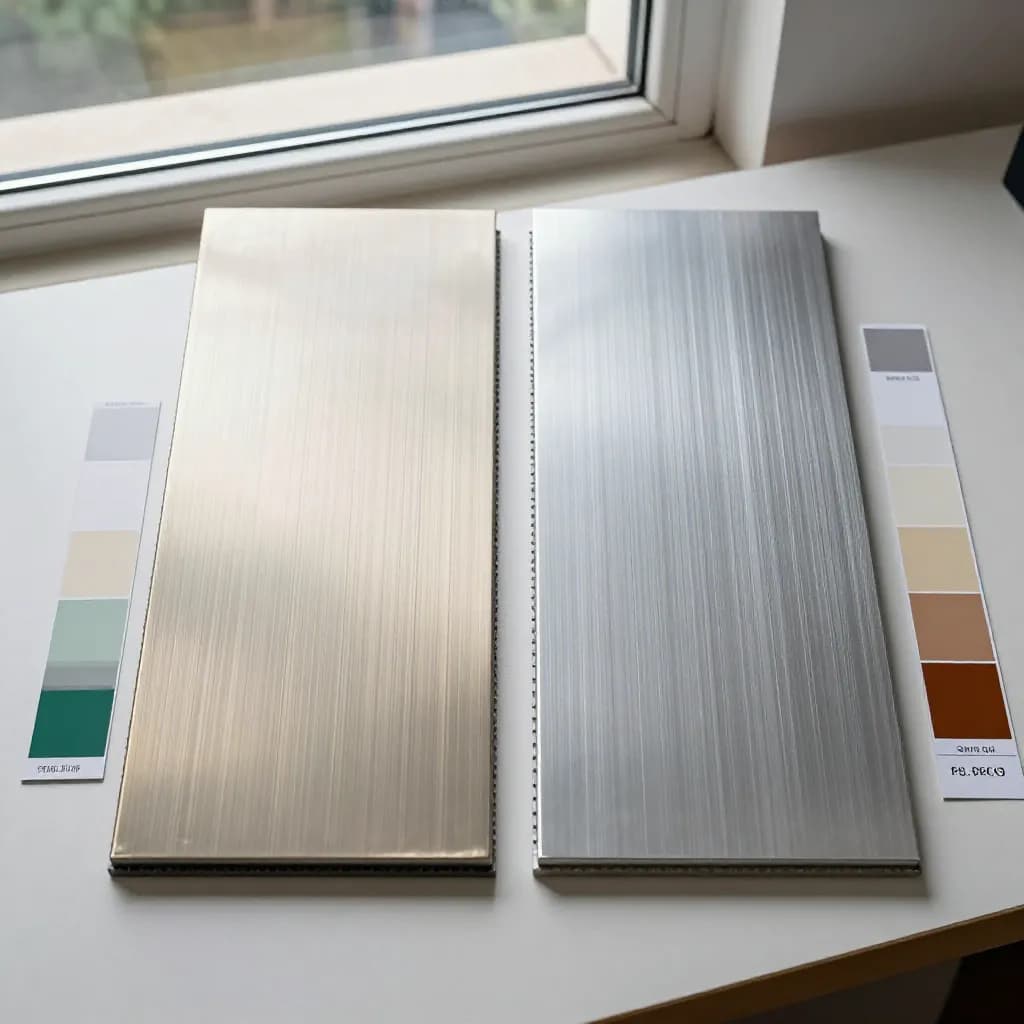
PVDF liquid coatings have been the benchmark for premium architectural aluminum finishing since the 1960s. These coatings contain a minimum of 70% PVDF resin (by weight of total resin solids) blended with acrylic resin, pigments, and solvents. The PVDF resin — a semi-crystalline fluoropolymer with exceptional chemical stability and UV resistance — provides the coating's legendary weathering performance. PVDF coatings are applied as liquid paint in two or three coats (primer plus topcoat, or primer plus basecoat plus clearcoat) to achieve a total dry film thickness of 25-40 microns.
Ready to Start Your Project?
From one-off customs to 15,000-part production runs — get precise pricing in 24 hours.
On This Page
The Premium Architectural Coating Debate
Powder coating technology has advanced dramatically in recent decades, with superdurable polyester formulations now achieving weathering performance that approaches — and in some test protocols matches — PVDF liquid coatings. Fluoropolymer powder coatings based on FEVE (fluoroethylene vinyl ether) resin have further closed the gap, offering fluoropolymer-level weathering in a powder format. These advances have disrupted the traditional hierarchy where PVDF liquid was the undisputed premium choice, creating a genuine technical debate about which technology best serves modern architectural projects.
The comparison is complicated by the different quality standards that govern each technology. PVDF liquid coatings are primarily specified to AAMA 2605 in North America, which requires 10 years of South Florida exposure testing. Powder coatings are specified to Qualicoat Class 1, 2, or 3 in Europe and AAMA 2603 or 2604 in North America, with Qualicoat Class 3 and emerging AAMA 2605-equivalent powder specifications representing the highest performance tiers. Understanding these standards and what they actually measure is essential for making an informed specification decision.
Weathering Performance and Color Retention
Weathering performance — specifically color retention and gloss retention under years of exterior exposure — is the primary performance metric for premium architectural coatings, and it is where PVDF liquid coatings have historically held their strongest advantage. AAMA 2605 requires that coatings retain color within a Delta E of 5.0 and retain at least 50% of original gloss after 10 years of South Florida exposure (the most demanding natural weathering environment in North America due to its combination of intense UV radiation, high humidity, salt air, and temperature cycling).
PVDF liquid coatings comfortably meet and typically exceed AAMA 2605 requirements. The PVDF resin's carbon-fluorine bonds — among the strongest in organic chemistry at 485 kJ/mol — resist UV-induced chain scission far more effectively than the carbon-hydrogen and carbon-oxygen bonds in conventional polyester resins. Real-world performance data from buildings coated with PVDF in the 1970s and 1980s shows color retention with Delta E values below 3-5 after 30-40 years of exposure, confirming the technology's exceptional long-term durability.
Superdurable polyester powder coatings have made remarkable progress in closing the weathering gap. These formulations use specially selected polyester resins with enhanced UV stability, combined with high-performance UV absorbers and HALS (hindered amine light stabilizers), to achieve weathering performance that meets Qualicoat Class 2 requirements (comparable to AAMA 2604) and, for the best formulations, approaches Qualicoat Class 3 (the highest powder coating weathering tier). Qualicoat Class 3 requires color retention within Delta E 4.0 after 3,000 hours of accelerated weathering — a demanding standard, though the correlation between accelerated testing and real-world Florida exposure is not perfectly linear.
FEVE fluoropolymer powder coatings represent the latest advance in powder coating weathering performance. FEVE resins contain fluorine atoms that provide UV stability approaching that of PVDF, but in a powder-compatible chemistry that can be applied electrostatically and cured in a standard oven. FEVE powder coatings have demonstrated weathering performance meeting AAMA 2605 requirements in accelerated testing, and real-world exposure data is accumulating as more projects specify these coatings. While FEVE powder coatings have not yet matched PVDF's 40+ year track record, they represent a credible fluoropolymer alternative in powder form.
Film Thickness, Application, and Coverage
Film thickness and application method represent significant practical differences between PVDF liquid and powder coating systems. PVDF liquid coatings are applied in multiple coats — typically a 5-8 micron primer followed by a 20-25 micron topcoat, or a primer plus basecoat plus clearcoat system totaling 30-40 microns. Each coat requires separate spray application and flash-off or baking, making the process more time-consuming and labor-intensive than single-coat powder application.
Powder coatings are applied in a single coat at 60-120 microns — two to four times the total thickness of a PVDF liquid system. This greater thickness provides a more robust physical barrier against moisture permeation, mechanical damage, and chemical exposure. The single-coat application eliminates inter-coat adhesion risks and reduces total process time. For architectural applications where the coating must protect aluminum for 25+ years in aggressive environments, the thicker powder coating film provides a greater margin of safety.
The application process differences have environmental implications. PVDF liquid coatings contain organic solvents — typically 50-60% by weight — that evaporate during application and curing, producing VOC emissions that require abatement. The multi-coat application process generates more overspray waste than single-coat powder application, and liquid paint overspray cannot be economically reclaimed. Transfer efficiency for PVDF liquid spray application is typically 40-65%, meaning 35-60% of the material is lost as waste.
Powder coating application produces zero VOC emissions and achieves 95-98% material utilization through overspray reclaim. The environmental advantage is substantial and increasingly influences specification decisions as green building certifications (LEED, BREEAM, DGNB) reward low-emission finishing processes. For architects and building owners committed to sustainability, powder coating's environmental profile is a significant advantage over PVDF liquid coatings.
Edge coverage is an area where powder coating's thicker film provides a practical advantage. Liquid coatings tend to thin at edges and corners due to surface tension effects, potentially leaving these vulnerable areas with inadequate film thickness. Powder coating's electrostatic application and thicker film build provide more consistent edge coverage, reducing the risk of premature corrosion at cut edges and profile corners — a common failure point for architectural aluminum coatings.
Quality Standards: Qualicoat Class 3 vs AAMA 2605
The quality standards governing architectural coatings are central to the PVDF versus powder coating comparison, and understanding their requirements and limitations is essential for informed specification. AAMA 2605 — the highest-performance North American standard — was originally developed around PVDF liquid coating technology and requires 10 years of South Florida exposure testing for color retention, gloss retention, chalk resistance, and film integrity. The standard does not specify coating chemistry — any coating that passes the performance requirements qualifies — but historically, only PVDF liquid coatings have consistently met AAMA 2605 requirements.
Qualicoat, the European quality label for coated aluminum, classifies powder coatings into three performance tiers. Class 1 is the standard tier, suitable for most architectural applications. Class 2 requires enhanced weathering resistance, tested through 1,000 hours of accelerated weathering (xenon arc) with color retention within Delta E 4.0 and gloss retention above 50%. Class 3 — introduced to recognize the highest-performing powder coatings — requires 3,000 hours of accelerated weathering with the same color and gloss retention limits. Class 3 represents the powder coating industry's answer to AAMA 2605, though direct equivalence between accelerated testing and 10-year Florida exposure is debated.
GSB International, another European quality mark, offers its GSB Master certification as the highest performance tier for architectural coatings. GSB Master requires 3,000 hours of accelerated weathering and additional performance tests, positioning it alongside Qualicoat Class 3 as a premium powder coating specification.
The standards landscape is evolving. AAMA has introduced AAMA 2604 as an intermediate performance tier between 2603 (standard) and 2605 (premium), and some powder coating manufacturers have achieved AAMA 2604 certification with superdurable polyester formulations. FEVE fluoropolymer powder coatings are pursuing AAMA 2605 certification, which would formally establish powder coating as a qualified alternative to PVDF liquid at the highest performance tier. In Europe, the growing number of Qualicoat Class 3 certified powder coatings demonstrates that powder technology has reached performance levels that were once exclusive to fluoropolymer liquid coatings.
For specifiers, the practical implication is that the performance gap between premium powder coatings and PVDF liquid coatings has narrowed dramatically. While PVDF liquid retains a proven track record advantage — decades of real-world performance data versus years for the newest powder formulations — the accelerated testing data and emerging real-world evidence support powder coating as a credible alternative for all but the most demanding long-term weathering requirements.
Sustainability and Environmental Comparison
Sustainability has become a decisive factor in architectural specification, and it is an area where powder coating holds clear advantages over PVDF liquid coatings. The environmental comparison spans multiple dimensions: air emissions, material efficiency, waste generation, energy consumption, and contribution to green building certifications.
Air emissions are the most straightforward comparison. Powder coating produces zero VOC emissions — the coating is 100% solids with no solvents. PVDF liquid coatings contain 50-60% organic solvents that are released during application and curing. Even with high-efficiency abatement equipment (thermal oxidizers achieving 95-99% destruction efficiency), PVDF liquid coating operations emit measurable VOCs. For projects targeting LEED credits for low-emitting materials and processes, powder coating's zero-VOC profile provides a clear advantage.
Material efficiency favors powder coating significantly. The 95-98% material utilization achieved through overspray reclaim means that virtually all powder purchased becomes finished coating. PVDF liquid operations achieve 40-65% transfer efficiency, with the remainder lost as waste. This waste — paint sludge from water wash booths or paint-laden filters from dry filter booths — requires disposal as industrial or hazardous waste, adding cost and environmental burden.
The PVDF resin itself raises environmental questions. PVDF is a fluoropolymer, and the production of fluoropolymer resins involves fluorinated chemicals that are under increasing regulatory scrutiny. Per- and polyfluoroalkyl substances (PFAS) — a broad class of fluorinated chemicals — are subject to growing restrictions in the EU and other jurisdictions due to their environmental persistence and potential health effects. While PVDF itself is considered a polymer of low concern by many regulatory frameworks, the broader PFAS regulatory trend creates uncertainty for fluoropolymer-based coating technologies.
Powder coatings based on superdurable polyester resins avoid fluoropolymer chemistry entirely, eliminating any PFAS-related regulatory risk. FEVE fluoropolymer powder coatings do contain fluorine, but the powder format eliminates solvent emissions and the high material utilization minimizes waste. For architects and specifiers concerned about the long-term regulatory trajectory of fluoropolymer materials, superdurable polyester powder coatings offer a high-performance, fluorine-free alternative.
Environmental Product Declarations (EPDs) are increasingly required for architectural products, and the coating system contributes to the overall environmental profile. Powder-coated aluminum products typically show lower environmental impact in EPD calculations due to zero VOC emissions, higher material efficiency, and simpler waste management compared to PVDF liquid-coated equivalents.
Aesthetic Capabilities and Design Flexibility
Both PVDF liquid and powder coatings offer extensive color and finish options for architectural applications, but their aesthetic capabilities differ in ways that can influence specification decisions. PVDF liquid coatings are available in a wide range of solid colors, metallics, and mica effects. The liquid application method produces an exceptionally smooth, uniform finish with excellent depth of image — particularly valued for large, flat facade panels where surface quality is highly visible. Multi-coat PVDF systems (basecoat plus clearcoat) can achieve metallic and pearlescent effects with outstanding depth and consistency.
Powder coatings match PVDF's color range and exceed it in finish variety. Beyond solid colors and metallics, powder coatings are available in textured, wrinkle, matte, satin, and structured finishes that PVDF liquid coatings cannot easily replicate. Sublimation transfer technology enables photorealistic wood-grain and stone effects on powder-coated aluminum — finishes that are increasingly popular for architectural facades, cladding, and fenestration where the warmth of natural materials is desired with the performance of aluminum.
Color matching and consistency are excellent for both technologies when produced by certified applicators using approved formulations. PVDF liquid coatings benefit from the precision of liquid color matching and the consistency of multi-coat application. Powder coatings achieve comparable consistency through careful batch control, electrostatic application, and standardized cure processes. For large architectural projects requiring color consistency across thousands of square meters of facade, both technologies can deliver — the key is specifying from certified applicators with robust quality management systems.
Gloss range differs slightly between the technologies. PVDF liquid coatings are typically available in gloss levels from 20% (low sheen) to 80% (high gloss), with 30% gloss being the most common architectural specification. Powder coatings offer a broader gloss range from 5% (ultra-matte) to 95% (mirror gloss), providing greater design flexibility for architects seeking specific aesthetic effects. The ultra-matte finishes achievable with powder coating — which absorb light and create a soft, contemporary appearance — are particularly popular in modern architectural design and are difficult to achieve with PVDF liquid coatings.
Specification Guidance: Choosing the Right Technology
For architects and specifiers choosing between PVDF liquid and powder coating for architectural projects, the decision should be based on a balanced assessment of weathering requirements, environmental priorities, aesthetic needs, and project-specific factors rather than historical precedent alone.
Specify PVDF liquid coating when the project requires the absolute highest proven weathering performance with a 30-40 year track record, when the specification explicitly requires AAMA 2605 compliance and the specifier is not yet comfortable with powder coating alternatives at this tier, or when the project involves extremely aggressive weathering environments (tropical coastal, high-altitude UV, severe industrial pollution) where the proven long-term performance of PVDF provides the greatest confidence.
Specify superdurable polyester powder coating when the project requires excellent weathering performance (Qualicoat Class 2 or Class 3, AAMA 2604) with the environmental benefits of zero-VOC application, when sustainability and green building certification credits are priorities, when the design requires textured, ultra-matte, or wood-grain finishes that PVDF liquid cannot achieve, or when the thicker single-coat film build provides advantages for edge coverage and barrier protection in the specific application.
Specify FEVE fluoropolymer powder coating when the project requires fluoropolymer-level weathering performance in a powder format, combining the UV stability of fluoropolymer chemistry with the environmental advantages of powder application. This emerging technology is particularly relevant for projects that would traditionally specify PVDF liquid but want to capture the sustainability benefits of powder coating.
For the majority of architectural projects — commercial buildings, residential developments, institutional facilities, and infrastructure — superdurable polyester powder coatings certified to Qualicoat Class 2 or higher provide more than adequate weathering performance with significant environmental and practical advantages over PVDF liquid coatings. The specification of PVDF liquid should be reserved for projects with genuinely exceptional weathering requirements or where the specifier's risk assessment demands the longest available performance track record.
The architectural coating market is clearly trending toward powder coating. The combination of improving weathering performance, zero-VOC application, high material efficiency, broader finish options, and growing regulatory pressure on solvent-based coatings and fluoropolymer chemicals is shifting the balance in powder coating's favor. Specifiers who evaluate both technologies on current performance data — rather than historical reputation — will increasingly find that powder coating meets their project requirements while delivering superior environmental performance.
Frequently Asked Questions
Is PVDF better than powder coating for building facades?
PVDF has a longer proven track record for extreme weathering (30-40 years of real-world data), but modern superdurable polyester and FEVE fluoropolymer powder coatings now approach PVDF's weathering performance while offering zero VOC emissions, higher material efficiency, and greater finish variety. For most architectural projects, premium powder coatings provide excellent performance with significant environmental advantages.
What is Qualicoat Class 3 and how does it compare to AAMA 2605?
Qualicoat Class 3 is the highest European performance tier for architectural powder coatings, requiring 3,000 hours of accelerated weathering with strict color and gloss retention limits. AAMA 2605 is the highest North American tier, requiring 10 years of South Florida exposure. Both represent premium performance, though direct equivalence between accelerated and natural weathering tests is debated.
Does powder coating produce VOC emissions like PVDF liquid paint?
No. Powder coating produces zero VOC emissions because it contains no solvents. PVDF liquid coatings contain 50-60% organic solvents that produce VOC emissions during application and curing. This environmental difference is increasingly important for green building certifications and regulatory compliance.
Can powder coating achieve the same color quality as PVDF?
Yes. Modern powder coatings match PVDF's color range and consistency, and exceed it in finish variety with options including textured, ultra-matte, and wood-grain effects. For large architectural projects, both technologies deliver excellent color consistency when applied by certified applicators with proper quality control.
Is PVDF coating thicker than powder coating?
No, the opposite. PVDF liquid coatings are applied at 25-40 microns total (multi-coat), while powder coatings achieve 60-120 microns in a single coat. Powder coating's thicker film provides a more robust barrier against moisture, chemicals, and mechanical damage, with better edge coverage on aluminum profiles.
Ready to Start Your Project?
From one-off customs to 15,000-part production runs — get precise pricing in 24 hours.