One of the most common misunderstandings in metal finishing is the belief that powder coating and phosphate coating are alternative finishing options — that you choose one or the other. In reality, phosphate coating (phosphating) is a pretreatment process that is applied before powder coating to enhance adhesion and corrosion resistance. The two technologies are complementary partners in a complete finishing system, not competing alternatives.
Comparison
Powder Coating vs Phosphate Coating: Complementary, Not Competing Technologies
Sundial Powder Coating·April 22, 2026·13 min
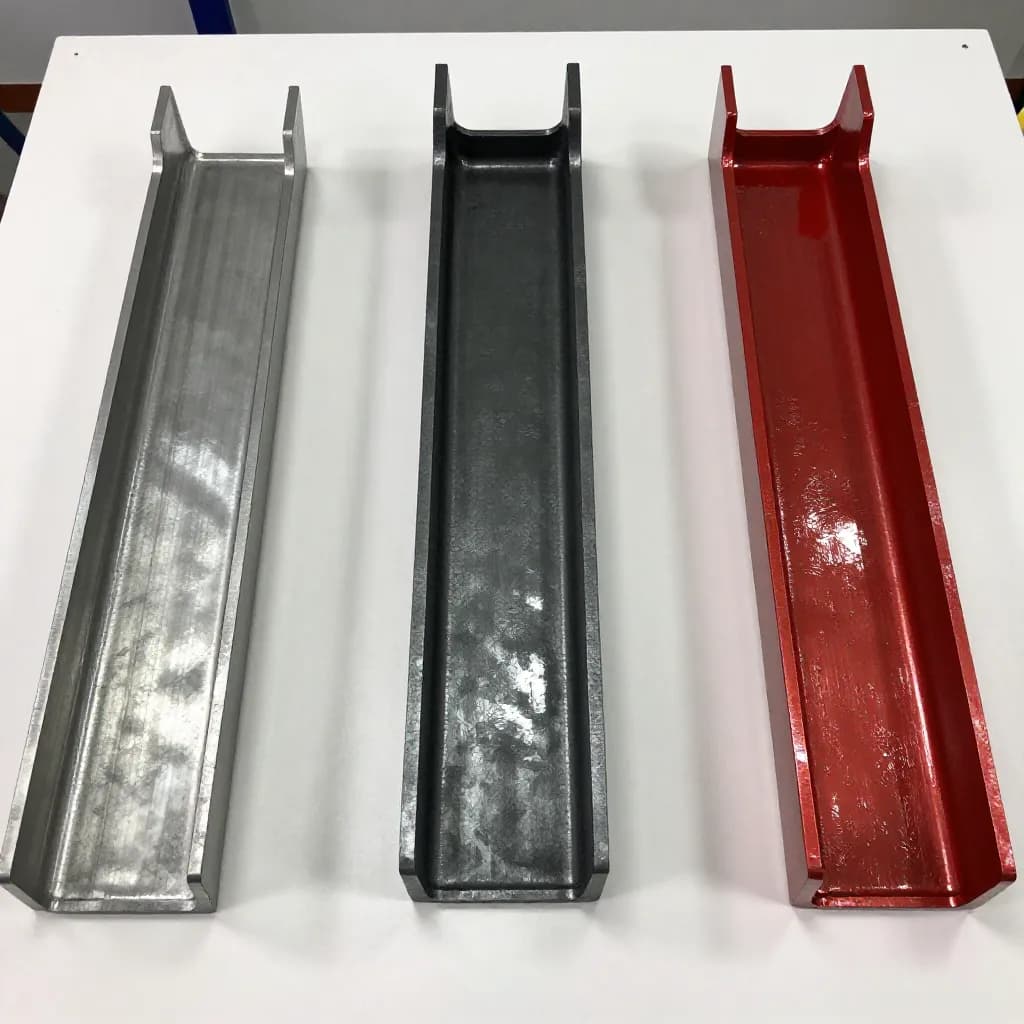
This misconception likely arises because phosphate coatings can be used as standalone finishes in certain applications — oiled iron phosphate or zinc phosphate coatings provide basic corrosion protection and serve as a base for lubricants on automotive stampings and fasteners. In these standalone applications, phosphating does function as a complete (if basic) surface treatment. But in the context of powder coating, phosphating is a preparatory step that dramatically improves the performance of the powder coating applied over it.
Ready to Start Your Project?
From one-off customs to 15,000-part production runs — get precise pricing in 24 hours.
On This Page
A Common Misconception: These Are Not Competitors
Understanding the relationship between phosphating and powder coating is essential for anyone specifying, applying, or evaluating powder-coated products. The quality of the pretreatment — including phosphating — is the single most important factor determining the long-term corrosion resistance and adhesion of a powder coating system. A premium powder coating applied over inadequate pretreatment will fail prematurely, while even a standard powder coating over excellent pretreatment will deliver years of reliable performance.
This article explains what phosphate coatings are, how they work, why they are critical for powder coating performance, and how different phosphating processes compare for different substrates and performance requirements. The goal is to clarify the complementary relationship between these technologies and help readers understand why pretreatment quality should be a primary focus when specifying powder-coated products.
What Is Phosphate Coating and How Does It Work?
Phosphate coating is a chemical conversion process that transforms the surface of a metal substrate into a layer of insoluble metal phosphate crystals. The process involves immersing or spraying the metal part with a phosphoric acid solution containing dissolved metal ions (iron, zinc, or manganese). The acid reacts with the metal surface, dissolving a thin layer of the base metal and precipitating a crystalline phosphate layer in its place. This conversion layer is chemically bonded to the substrate — it is not an applied coating but a transformation of the metal surface itself.
The three main types of phosphate coating are iron phosphate, zinc phosphate, and manganese phosphate, each with distinct properties and applications. Iron phosphate is the simplest and most economical process, producing an amorphous (non-crystalline) coating of 0.3-1.0 g/m² that provides moderate adhesion promotion and basic corrosion resistance. It is widely used as a pretreatment for powder coating on steel in moderate-performance applications — indoor furniture, electrical enclosures, and general industrial equipment.
Zinc phosphate produces a heavier, crystalline coating of 1.5-4.0 g/m² with a dense, uniform crystal structure that provides superior adhesion promotion and significantly better corrosion resistance than iron phosphate. The crystalline structure creates a micro-rough surface that mechanically interlocks with the powder coating, while the zinc phosphate chemistry provides a chemically stable interface that resists underfilm corrosion. Zinc phosphate is the standard pretreatment for automotive, architectural, and high-performance industrial powder coating applications.
Manganese phosphate produces the heaviest coating (5-30 g/m²) with excellent oil retention and wear resistance properties. It is primarily used as a standalone treatment for gears, bearings, and sliding surfaces rather than as a pretreatment for powder coating. The heavy, porous manganese phosphate layer retains lubricating oil, reducing friction and wear in metal-to-metal contact applications.
The phosphating process typically includes multiple stages: alkaline cleaning (to remove oils, greases, and contaminants), water rinse, surface conditioning (to promote uniform crystal nucleation for zinc phosphate), phosphating (immersion or spray application of the phosphate solution), water rinse, and optional post-rinse sealing (chromate or chrome-free sealers that close the pores in the phosphate layer and enhance corrosion resistance).
How Phosphating Enhances Powder Coating Performance
Phosphate pretreatment enhances powder coating performance through three mechanisms: adhesion promotion, corrosion resistance at the coating-metal interface, and surface uniformity. Each mechanism contributes to the long-term durability of the complete coating system.
Adhesion promotion is the most immediate benefit. The phosphate conversion layer creates a surface that is chemically and mechanically receptive to the powder coating. The micro-crystalline structure of zinc phosphate (crystal size typically 5-20 microns) provides mechanical interlocking points that anchor the powder coating to the surface. The phosphate chemistry also provides chemical compatibility with the organic coating — the polar groups in the phosphate layer interact with polar groups in the powder coating resin, creating chemical adhesion forces that supplement the mechanical bond. Cross-hatch adhesion testing (ASTM D3359) consistently shows that powder coatings over zinc phosphate pretreatment achieve the highest adhesion rating (5B), while coatings over bare or inadequately pretreated metal may achieve only 2B-3B.
Corrosion resistance at the coating-metal interface is the most critical long-term benefit. When moisture eventually permeates through the powder coating film — and all organic coatings are permeable to some degree over time — the phosphate layer provides a secondary barrier that prevents corrosion from initiating at the metal surface. Without this secondary barrier, moisture reaching the metal surface can initiate corrosion that spreads laterally beneath the coating (underfilm corrosion or filiform corrosion), causing blistering, delamination, and progressive coating failure. The phosphate layer dramatically slows this process, extending the service life of the coating system by years or decades.
Salt spray testing (ASTM B117) quantifies the corrosion resistance benefit of phosphating. A typical polyester powder coating over bare steel (cleaned but not phosphated) might achieve 200-500 hours of salt spray resistance. The same powder coating over iron phosphate pretreatment achieves 500-1,000 hours. Over zinc phosphate pretreatment, the same coating achieves 1,000-2,000+ hours. The pretreatment is responsible for a two-to-four-fold improvement in corrosion resistance — a dramatic performance enhancement that costs relatively little compared to the powder coating itself.
Surface uniformity ensures consistent coating quality across the entire part. The phosphating process produces a uniform conversion layer that normalizes surface variations in the base metal — differences in alloy composition, surface roughness, and residual contamination are masked by the uniform phosphate layer. This results in more consistent powder coating adhesion, thickness, and appearance across the part and from part to part.
Iron Phosphate vs Zinc Phosphate for Powder Coating
The choice between iron phosphate and zinc phosphate pretreatment depends on the performance requirements of the finished product, the substrate material, and the production environment. Iron phosphate is the simpler, more economical process — it requires fewer process stages (typically 3-5 stages versus 5-9 stages for zinc phosphate), lower chemical concentrations, lower operating temperatures, and generates less sludge. For indoor applications with moderate corrosion exposure — office furniture, electrical enclosures, shelving, and interior architectural elements — iron phosphate provides adequate pretreatment performance at lower cost.
Zinc phosphate is the higher-performance option, providing significantly better adhesion and corrosion resistance. The crystalline zinc phosphate layer (1.5-4.0 g/m²) is heavier and more chemically stable than the amorphous iron phosphate layer (0.3-1.0 g/m²), providing a more robust barrier against underfilm corrosion. For exterior applications, automotive components, architectural facades, and any product that must withstand aggressive corrosion environments, zinc phosphate is the standard specification.
The performance difference between iron and zinc phosphate is clearly demonstrated in salt spray testing. Powder coating over iron phosphate typically achieves 500-1,000 hours of salt spray resistance, while the same coating over zinc phosphate achieves 1,000-2,000+ hours — a two-fold improvement. In cyclic corrosion testing (which more closely simulates real-world conditions than constant salt spray), the advantage of zinc phosphate is even more pronounced.
Zinc phosphate also provides better performance on multi-metal assemblies. When steel and aluminum components are processed together (common in automotive and appliance manufacturing), zinc phosphate can be formulated to provide effective conversion coatings on both substrates. Iron phosphate works well on steel but provides a less effective conversion layer on aluminum, potentially compromising coating performance on aluminum components in mixed-metal assemblies.
The environmental profile of phosphating processes is an important consideration. Both iron and zinc phosphate processes generate sludge (precipitated metal phosphates and hydroxides) that requires disposal. Zinc phosphate processes generate more sludge and use more chemicals than iron phosphate. Traditional zinc phosphate processes also use nickel and manganese accelerators that add to the environmental burden. Modern low-sludge and nickel-free zinc phosphate formulations have reduced these environmental impacts, but the process remains more complex than iron phosphate.
Chrome-Free Alternatives: The Future of Pretreatment
The pretreatment landscape is evolving rapidly, driven by environmental regulations that restrict or eliminate traditional chemistries. Hexavalent chromium — once widely used in chromate conversion coatings and chromate sealers for phosphate coatings — is classified as a carcinogen and is subject to severe restrictions under REACH, RoHS, and other regulations. The industry has responded with chrome-free pretreatment technologies that provide comparable or superior performance without the health and environmental hazards of hexavalent chromium.
Zirconium-based conversion coatings (often called thin-film or nano-ceramic pretreatments) have emerged as the leading chrome-free alternative to traditional phosphating. These processes deposit a thin (20-100 nanometer) layer of zirconium oxide on the metal surface through a simple immersion or spray process. Despite their extreme thinness, zirconium-based pretreatments provide excellent adhesion promotion and corrosion resistance for powder coating — in many cases matching or exceeding the performance of iron phosphate and approaching zinc phosphate performance.
The advantages of zirconium-based pretreatments extend beyond chrome elimination. They operate at lower temperatures (ambient to 40°C versus 40-60°C for phosphating), require fewer process stages (typically 3-5 stages), generate virtually no sludge, and use significantly less water. The reduced chemical consumption, lower energy requirements, and minimal waste generation translate to lower operating costs and simpler environmental compliance. For new powder coating line installations, zirconium-based pretreatments are increasingly the default specification.
Silane-based pretreatments represent another chrome-free alternative. Organosilane coupling agents create a molecular bridge between the metal surface and the organic coating, providing excellent adhesion through chemical bonding. Silane pretreatments are particularly effective on aluminum and are used in architectural and automotive applications. They can be applied as standalone pretreatments or as sealers over phosphate coatings to replace chromate sealers.
The transition from traditional phosphating to chrome-free alternatives is well advanced in many industries. Automotive manufacturers have largely completed the transition to chrome-free pretreatments for body and component coating. Architectural aluminum finishers are adopting chrome-free processes to comply with Qualicoat and GSB requirements that now include chrome-free pretreatment options. The trend is clear: chrome-free pretreatments are the future, and their performance has reached a level where they can replace traditional phosphating in most applications without compromising powder coating performance.
Phosphating as a Standalone Finish vs Pretreatment
While this article focuses on phosphating as a pretreatment for powder coating, it is worth understanding the applications where phosphate coatings serve as standalone finishes — because these applications represent the cases where phosphating and powder coating might genuinely be considered as alternatives.
Oiled zinc phosphate or manganese phosphate coatings are used as standalone finishes on automotive stampings, fasteners, and mechanical components where the primary requirements are corrosion protection during storage and transport, lubricity for assembly operations, and break-in wear protection for moving parts. The phosphate layer provides moderate corrosion protection (typically 24-96 hours of salt spray resistance, depending on coating weight and oil type), and the oil retained in the porous phosphate structure provides lubrication and additional corrosion protection.
For these applications, the phosphate coating is a complete finishing solution — no topcoat is needed or desired. The oiled phosphate finish is functional rather than decorative, providing the specific properties (lubricity, break-in wear protection, temporary corrosion resistance) that the application requires. Powder coating would be inappropriate for these applications because it would interfere with the functional requirements — a powder-coated fastener cannot self-lubricate during assembly, and a powder-coated gear cannot benefit from the break-in wear properties of manganese phosphate.
Conversely, for any application requiring long-term corrosion protection (beyond a few hundred hours of salt spray), aesthetic quality (color, gloss, texture), or UV resistance, a standalone phosphate coating is inadequate. These applications require a topcoat — and powder coating is the most common and effective topcoat applied over phosphate pretreatment.
The decision framework is straightforward: if the application requires only temporary corrosion protection, lubricity, or break-in wear properties, a standalone phosphate coating may be sufficient. If the application requires long-term protection, aesthetics, or environmental resistance, phosphate pretreatment plus powder coating (or another topcoat) is necessary. In the vast majority of finished product applications, the phosphate-plus-powder-coating system is the appropriate specification.
Optimizing the Pretreatment-Powder Coating System
Maximizing the performance of a powder-coated product requires optimizing the entire pretreatment-coating system, not just the powder coating itself. The pretreatment process — cleaning, conversion coating, and rinsing — establishes the foundation on which the powder coating's performance depends. Cutting corners on pretreatment to save cost is one of the most common and costly mistakes in powder coating operations.
Cleaning is the first and most critical pretreatment step. All oils, greases, drawing compounds, metalworking fluids, fingerprints, and surface contaminants must be completely removed before conversion coating. Residual contamination prevents the conversion coating from forming properly and creates adhesion-weak zones where the powder coating will eventually fail. Alkaline cleaning at 50-70°C with appropriate surfactants and adequate immersion or spray time is the standard approach. The cleanliness of the rinse water after cleaning — measured by water break testing or conductivity — should be monitored as a quality control check.
Conversion coating quality depends on proper chemical concentration, temperature, contact time, and pH control. For zinc phosphate, the coating weight (measured by gravimetric analysis or XRF) should be within the specified range (typically 1.5-4.0 g/m²), and the crystal structure should be fine, uniform, and dense. Coarse, non-uniform crystals indicate process problems that will compromise coating performance. For zirconium-based pretreatments, the coating weight is much lower (measured in milligrams per square meter) and is typically verified by XRF or colorimetric testing.
Rinsing between process stages is essential to prevent chemical carryover that can contaminate subsequent stages and compromise coating quality. Deionized water final rinse is recommended for the highest quality applications, as dissolved minerals in tap water can leave deposits on the conversion-coated surface that interfere with powder coating adhesion.
The complete pretreatment-powder coating system should be validated through standardized testing — salt spray (ASTM B117), cyclic corrosion (ASTM D5894 or GMW 14872), humidity resistance (ASTM D2247), and adhesion testing (ASTM D3359) — to confirm that the system meets the performance requirements of the intended application. Quality standards such as Qualicoat, GSB, and AAMA specify minimum pretreatment and testing requirements that provide a framework for system validation.
For manufacturers seeking to optimize their powder coating performance, investing in pretreatment quality — proper equipment, chemical management, process control, and quality monitoring — delivers a greater return than investing in premium powder coatings alone. The best powder coating in the world cannot compensate for inadequate pretreatment, but excellent pretreatment can elevate the performance of even standard powder coatings to impressive levels.
Frequently Asked Questions
Is phosphate coating the same as powder coating?
No. Phosphate coating is a chemical pretreatment process that converts the metal surface into a phosphate crystal layer. Powder coating is an organic finish applied over the pretreated surface. They are complementary — phosphating is done before powder coating to improve adhesion and corrosion resistance. They are not alternatives to each other.
Do you need phosphate coating before powder coating?
A conversion coating pretreatment (phosphate or chrome-free alternative) is strongly recommended before powder coating for optimal adhesion and corrosion resistance. Powder coating over zinc phosphate achieves 1,000-2,000+ hours of salt spray resistance versus 200-500 hours over bare cleaned steel. Skipping pretreatment significantly reduces coating performance.
What is better for powder coating, iron phosphate or zinc phosphate?
Zinc phosphate provides superior performance — approximately twice the salt spray resistance of iron phosphate under the same powder coating. Zinc phosphate is recommended for exterior, automotive, and high-performance applications. Iron phosphate is adequate for indoor and moderate-exposure applications at lower cost.
Are chrome-free pretreatments as good as phosphating?
Modern chrome-free pretreatments (zirconium-based, silane-based) match or approach the performance of traditional phosphating for most powder coating applications. They offer additional advantages: lower operating temperatures, less sludge, reduced water consumption, and elimination of hexavalent chromium hazards. They are increasingly the standard for new installations.
Can phosphate coating be used without powder coating?
Yes, for specific applications. Oiled zinc or manganese phosphate coatings serve as standalone finishes on fasteners, automotive stampings, and mechanical components where temporary corrosion protection, lubricity, or break-in wear properties are needed. For long-term protection and aesthetics, phosphating must be combined with a topcoat like powder coating.
Ready to Start Your Project?
From one-off customs to 15,000-part production runs — get precise pricing in 24 hours.