Powder coating and controlled patina (including Corten/weathering steel) represent two fundamentally different philosophies about how metal surfaces should interact with their environment. Powder coating seeks to isolate the metal from the environment — creating a barrier that prevents any interaction between the substrate and atmospheric conditions. Controlled patina embraces the interaction — allowing or encouraging the metal to react with its environment to develop a natural, evolving surface character.
Comparison
Powder Coating vs Controlled Patina and Weathering Steel (Corten)
Sundial Powder Coating·April 22, 2026·12 min
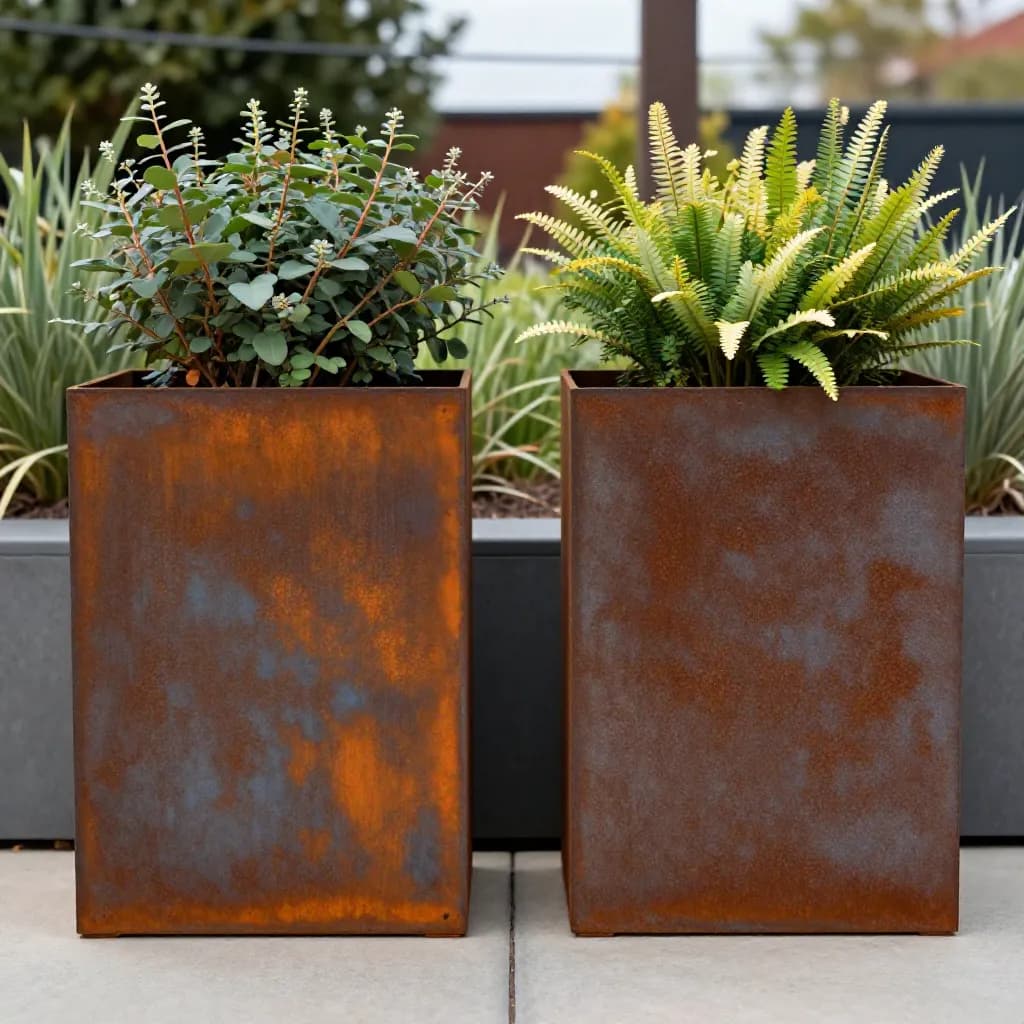
Corten steel — more properly called weathering steel, with trade names including COR-TEN (originally by United States Steel), Patinax, and Indaten — is a group of steel alloys containing small amounts of copper (0.25-0.55%), chromium (0.30-1.25%), nickel (0.12-0.40%), and phosphorus (0.07-0.15%) that form a stable, protective rust layer (patina) when exposed to atmospheric conditions. Unlike ordinary carbon steel, which corrodes progressively until the metal is consumed, weathering steel develops a dense, adherent oxide layer that slows further corrosion to a rate of approximately 5-10 microns per year — roughly one-sixth the rate of unprotected carbon steel.
Ready to Start Your Project?
From one-off customs to 15,000-part production runs — get precise pricing in 24 hours.
On This Page
Two Philosophies of Metal Surface Treatment
The patina that develops on weathering steel is a complex mixture of iron oxides and oxyhydroxides, with the alloying elements (particularly copper and chromium) incorporated into the oxide structure. This patina is not merely surface rust — it is a chemically distinct, mechanically stable protective layer that develops over 2-5 years of atmospheric exposure, progressing from an initial bright orange through various brown tones to a final deep, rich brown-purple that is characteristic of mature weathering steel.
Powder-coated steel, by contrast, maintains a constant, unchanging appearance from the day it is installed. The color, gloss, and texture specified at the time of coating remain essentially unchanged for 15-25 years, with only gradual, barely perceptible changes in gloss and color over decades. This permanence and predictability are valued by architects and building owners who want their buildings to look the same in year 20 as they did in year one.
The choice between these approaches is fundamentally a design decision — not a technical one. Both can deliver excellent long-term performance when properly specified and detailed. The question is whether the design intent calls for a surface that evolves and changes with time (patina) or one that remains constant and controlled (powder coating).
The Patina Development Process and Its Challenges
The development of a stable, attractive patina on weathering steel is not automatic — it requires specific environmental conditions and careful architectural detailing. The patina forms through repeated cycles of wetting and drying: moisture activates the corrosion process, and subsequent drying allows the oxide layer to consolidate and densify. Environments with regular rainfall followed by drying periods (temperate climates with moderate humidity) produce the best patina development. Constantly wet environments (tropical, coastal with persistent fog) or constantly dry environments (arid desert) do not promote proper patina formation.
The initial patina development period — typically 2-5 years — is the most challenging phase for weathering steel installations. During this period, the surface produces loose rust particles that are washed off by rain, creating rust staining on adjacent surfaces. Concrete walkways, stone cladding, glass panels, and light-colored surfaces below or adjacent to weathering steel panels can be permanently stained by rust runoff during the patina development period. This staining is one of the most common complaints about weathering steel in architectural applications and must be addressed through careful detailing — drip edges, drainage channels, and sacrificial surfaces that intercept rust-laden water before it contacts sensitive surfaces.
The final patina appearance varies with orientation, exposure, and microclimate. South-facing surfaces (in the northern hemisphere) that receive direct sun and rain develop patina differently from north-facing surfaces that remain damp longer. Sheltered areas under overhangs may not develop patina at all, remaining in a perpetual state of active corrosion. Water channeling from drainage points creates streak patterns in the patina. These variations can be embraced as part of the natural aesthetic or can be seen as inconsistencies — the perception depends on the design intent and the expectations of the building owner.
Powder coating eliminates all of these challenges. The finish is complete and consistent from day one — no development period, no rust runoff, no staining of adjacent surfaces, no variation with orientation or microclimate. For architects and building owners who want predictable, consistent, maintenance-free performance from the moment of installation, powder coating provides certainty that weathering steel cannot.
Maintenance, Longevity, and Lifecycle Performance
The maintenance profiles of powder-coated steel and weathering steel differ significantly, though both can deliver long service lives when properly specified. Weathering steel is often described as maintenance-free, and in ideal conditions this is largely true — once the patina has fully developed, the surface requires no coating, no painting, and no periodic treatment. The patina is self-healing: if scratched or damaged, the exposed steel develops new patina that blends with the surrounding surface over time.
However, the maintenance-free claim has important caveats. Weathering steel in constantly wet environments (where the patina cannot dry and consolidate) will corrode progressively rather than developing a stable patina. In coastal environments with high chloride exposure, the patina may not form properly, and accelerated corrosion can occur. In environments with high sulfur dioxide levels (industrial areas), the patina development may be disrupted. In these conditions, weathering steel may require protective coating — defeating the purpose of using it as an uncoated material.
Powder-coated steel requires minimal maintenance — periodic cleaning with mild detergent and water to remove accumulated dirt and pollutants. The coating provides consistent protection regardless of environmental conditions — coastal, industrial, tropical, or arid environments are all managed by the barrier protection of the powder coating film. The predictability of powder coating performance, backed by accelerated weathering testing and quality certifications (Qualicoat, GSB, AAMA), provides confidence that the coating will perform as specified for its intended service life.
Longevity comparisons are complex. Weathering steel structures can last 100+ years — the Eiffel Tower's iron structure (not weathering steel, but illustrative of metal longevity) has survived since 1889 with periodic repainting. Modern weathering steel bridges and structures are designed for 75-120 year service lives. However, the aesthetic longevity — how long the patina looks attractive and consistent — is a different question. Patina appearance can change over decades as environmental conditions shift, and areas of the structure may develop uneven or unattractive patina patterns.
Powder-coated steel has a coating service life of 15-25 years, after which the coating can be stripped and reapplied to restore the surface to as-new condition. The steel substrate beneath a well-maintained powder coating can last indefinitely, with periodic recoating extending the structure's aesthetic and protective life cycle. The total lifecycle cost — including initial coating, maintenance, and periodic recoating — is predictable and manageable.
Architectural Design Intent and Material Expression
The choice between weathering steel and powder-coated steel is ultimately a design decision rooted in the architect's intent for how the building should express itself over time. Weathering steel communicates specific design values: connection to nature, acceptance of change, material honesty, and the passage of time. The evolving patina creates a living surface that changes with the seasons and years, developing a unique character that reflects its specific environment and history. This temporal quality is deeply valued in certain architectural traditions — particularly those influenced by Japanese wabi-sabi aesthetics, Scandinavian material honesty, and contemporary landscape architecture.
Iconic weathering steel buildings demonstrate the material's architectural power. The Angel of the North by Antony Gormley, the Barclays Center in Brooklyn, the Australian Centre for the Moving Image in Melbourne, and numerous museums, cultural centers, and landscape installations worldwide use weathering steel's distinctive patina as a primary design element. In these projects, the rust-brown color and textured surface are not defects to be prevented but features to be celebrated.
Powder coating communicates different design values: precision, control, permanence, and design intentionality. A powder-coated facade maintains the architect's original color and finish intent for decades, ensuring that the building looks as designed throughout its service life. This permanence is valued in commercial, institutional, and residential architecture where consistent appearance, brand identity, and property value maintenance are priorities.
The color palette comparison is instructive. Weathering steel offers a single color trajectory — from bright orange through various browns to deep brown-purple — with no ability to specify or control the exact final color. Powder coating offers thousands of precisely specified colors, including rust-effect and Corten-look powder coatings that approximate the appearance of weathering steel without the maintenance challenges. These Corten-effect powder coatings provide the warm, earthy aesthetic of weathering steel with the consistency, predictability, and maintenance-free performance of powder coating — an increasingly popular option for architects who want the look without the complications.
For landscape architecture and exterior installations — sculptures, planters, retaining walls, and site furniture — weathering steel's natural aesthetic integrates beautifully with planted landscapes, stone, and timber. The organic, evolving surface complements natural materials in a way that the controlled perfection of powder coating may not. For building facades, fenestration, and commercial interiors, powder coating's precision and color control are typically more appropriate.
Structural and Detailing Considerations
The structural and detailing requirements for weathering steel and powder-coated steel differ in important ways that affect design, construction, and long-term performance. Weathering steel requires specific architectural detailing to manage water flow and prevent rust staining of adjacent materials. All drainage paths must be designed to direct rust-laden water away from sensitive surfaces — concrete, stone, glass, and light-colored materials. Drip edges, gutters, and drainage channels are essential at the base of weathering steel panels and at any horizontal surface where water collects.
Connection details for weathering steel must account for the corrosion behavior at joints, fasteners, and interfaces with other materials. Bolted connections should use weathering steel or stainless steel fasteners — galvanized or plated fasteners can create galvanic corrosion issues. Welded connections must use compatible welding consumables, and welds should be detailed to allow proper patina development. Contact with dissimilar metals (aluminum, copper, zinc) must be avoided or isolated to prevent galvanic corrosion.
Weathering steel has a minimum thickness requirement for structural applications — typically 6mm or greater — because the corrosion allowance (the expected thickness loss over the structure's design life) must be factored into the structural design. Thin weathering steel sheet (under 3mm) may corrode through before developing a stable patina, making it unsuitable for long-term exterior applications without protective coating.
Powder-coated steel has simpler detailing requirements. The coating provides a complete barrier that prevents corrosion regardless of water flow patterns, adjacent materials, or connection details. Standard structural steel detailing practices apply, with the addition of ensuring that all surfaces are accessible for coating application and that the coating is not damaged during construction. Powder-coated steel can be used at any thickness — the coating provides protection regardless of substrate thickness.
For architects considering weathering steel, the detailing complexity and rust management requirements should be factored into the design and construction budget. These requirements are manageable but not trivial, and inadequate detailing is the most common cause of problems with weathering steel installations. Powder-coated steel offers a simpler, more forgiving approach to detailing that reduces construction risk and simplifies long-term maintenance.
Making the Choice: Patina or Powder Coating
The decision between weathering steel patina and powder coating should be guided by design intent, environmental suitability, maintenance commitment, and practical constraints. Choose weathering steel when the design intent specifically calls for a natural, evolving surface that connects the building to its environment and expresses the passage of time. Weathering steel is most appropriate for cultural and institutional buildings where the material's expressive qualities align with the building's purpose, landscape installations where the organic aesthetic complements natural surroundings, and projects in temperate climates with regular wet-dry cycling that promotes proper patina development.
Choose powder coating when the design requires specific colors, consistent appearance, low maintenance, and predictable long-term performance. Powder coating is appropriate for commercial and residential buildings where property value and appearance consistency matter, projects in coastal, tropical, or industrial environments where weathering steel patina may not develop properly, applications on aluminum or other non-ferrous metals where patina is not an option, and any project where rust staining of adjacent surfaces is unacceptable.
Consider Corten-effect powder coatings when the design desires the warm, earthy aesthetic of weathering steel without the maintenance challenges, rust staining, and environmental limitations. These specialty powder coatings replicate the color and texture of mature weathering steel patina on any metal substrate, providing the visual effect with the practical benefits of powder coating. The result is not identical to real weathering steel — it lacks the depth and variability of natural patina — but it provides a convincing approximation that satisfies many design intents.
For projects that include both weathering steel and powder-coated elements, careful coordination is essential. The warm brown tones of weathering steel can be complemented by powder-coated elements in compatible colors — dark bronze, charcoal, warm gray, or earth tones. The contrast between the organic, textured patina surface and the smooth, controlled powder coating surface can create compelling visual compositions that celebrate both material philosophies.
Ultimately, the choice between patina and powder coating reflects the architect's relationship with time and change. Weathering steel embraces change as a design feature; powder coating resists change as a performance requirement. Both approaches are valid, and the best projects choose the approach that most authentically serves their design intent.
Frequently Asked Questions
Does Corten steel need powder coating?
Not in suitable environments. Weathering steel develops a protective patina that slows corrosion without any coating. However, in constantly wet, coastal, or high-chloride environments where proper patina cannot form, weathering steel may need protective coating. Powder coating is also used when the design requires specific colors rather than the natural rust-brown patina.
Can powder coating look like Corten steel?
Yes. Corten-effect powder coatings replicate the color and texture of mature weathering steel patina on any metal substrate. While not identical to real patina (lacking its depth and natural variability), these specialty coatings provide a convincing approximation with the practical benefits of powder coating — no rust staining, no development period, and consistent appearance.
Does weathering steel stain surrounding surfaces?
Yes, during the 2-5 year patina development period. Loose rust particles wash off in rain and can permanently stain concrete, stone, glass, and light-colored surfaces. Careful architectural detailing — drip edges, drainage channels, and sacrificial surfaces — is essential to manage rust runoff. Powder coating eliminates this issue entirely.
Which lasts longer, Corten steel or powder-coated steel?
Weathering steel structures can last 75-120+ years as the patina provides ongoing protection. Powder coating provides 15-25 years of coating life, after which the steel can be stripped and recoated. Both approaches deliver long structural life — the difference is that weathering steel's appearance evolves continuously while powder coating maintains a consistent appearance until recoating.
Is weathering steel truly maintenance-free?
In ideal conditions (temperate climate, regular wet-dry cycling, no persistent moisture or high chlorides), mature weathering steel requires minimal maintenance. However, it is not maintenance-free in all environments, and the patina development period requires management of rust staining. Powder coating offers more universally predictable, low-maintenance performance across all environments.
Ready to Start Your Project?
From one-off customs to 15,000-part production runs — get precise pricing in 24 hours.