Gates and railings occupy a unique position in residential and commercial property — they are among the most visible exterior metalwork while simultaneously being among the most exposed to weather and physical contact. A front gate is the first thing visitors see, and stair railings are touched by every person who uses them. The finish on these elements must look attractive, resist weather degradation, and withstand constant physical contact for years without showing premature wear.
Comparison
Powder Coating vs Paint for Gates and Railings: Weather Resistance, Maintenance, and Aesthetics
Sundial Powder Coating·April 22, 2026·10 min
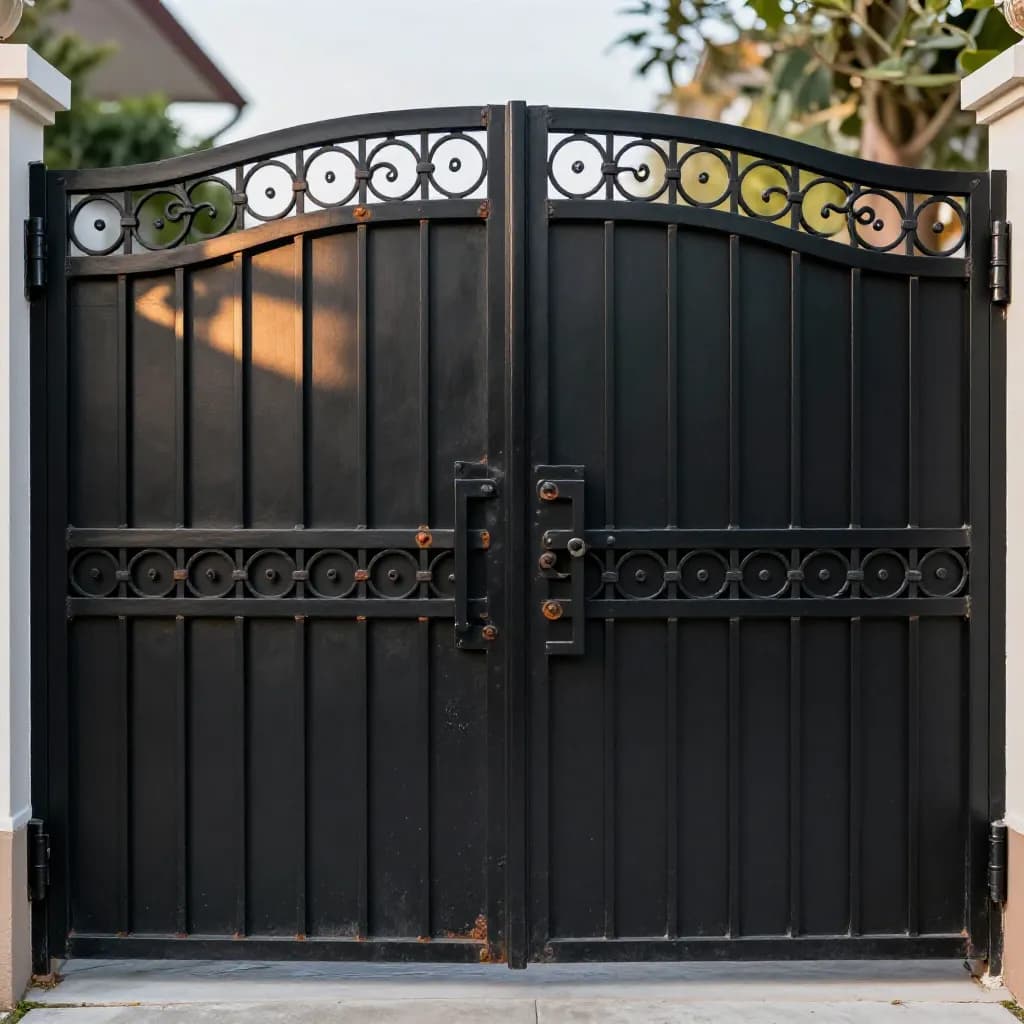
The challenge for gates and railings is that they combine the worst of both worlds — full outdoor weather exposure and frequent human contact. Rain, UV radiation, frost, and temperature cycling attack the finish from the outside, while hands, keys, bags, and cleaning products attack it from the inside. The finish must resist both environmental weathering and mechanical wear simultaneously, a combination that quickly exposes the limitations of inferior coating systems.
Ready to Start Your Project?
From one-off customs to 15,000-part production runs — get precise pricing in 24 hours.
On This Page
Gates and Railings: High Visibility, High Exposure
Traditionally, wrought iron and steel gates and railings were finished with oil-based paint, often applied by brush in multiple coats by skilled painters. This approach produced attractive results when freshly applied but required regular maintenance — sanding, priming, and repainting every few years to prevent rust and maintain appearance. Modern powder coating technology has transformed the expectations for gate and railing finishes, offering dramatically longer service life with minimal maintenance.
The Traditional Painted Approach
Painting gates and railings has been the standard approach for centuries, and the process is familiar to most property owners. The traditional method involves wire brushing or sanding to remove loose rust and old paint, applying a rust-inhibitive primer, and finishing with one or two coats of exterior gloss or satin paint. The entire process is labor-intensive, weather-dependent, and produces results that vary significantly based on the painter's skill and the quality of surface preparation.
The durability of painted gates and railings depends heavily on the paint system and preparation quality. A well-prepared surface with a zinc-rich or red oxide primer and a quality alkyd or polyurethane topcoat can provide 4 to 6 years of acceptable performance before maintenance is needed. A poorly prepared surface with a single coat of consumer-grade paint may begin showing rust within 6 to 12 months, particularly at joints, welds, and areas where water collects.
The ongoing maintenance cycle of painted gates and railings is a significant burden for property owners. Every 3 to 5 years, the metalwork needs inspection, preparation, and repainting to maintain its appearance and protection. Each maintenance cycle involves labor, materials, disruption, and the challenge of matching the original color — which may have faded or been discontinued. Over a 20-year period, a painted gate may require four to six complete maintenance cycles, accumulating substantial cost and effort.
Powder Coating's Performance Advantage
Powder-coated gates and railings are finished in a factory or specialist coating shop before installation. The metalwork is chemically pretreated, powder coated, and oven cured in a controlled environment that ensures consistent quality. The resulting finish is a 60 to 100 micron cross-linked polymer film that is harder, thicker, and more chemically resistant than any brush or spray-applied paint.
The weather resistance of powder-coated gates and railings is substantially superior to painted equivalents. Polyester powder coatings resist UV degradation, chalking, and color fading far more effectively than liquid paints, maintaining their appearance through years of outdoor exposure. In accelerated weathering tests, polyester powder coatings retain significantly more gloss and color stability than alkyd or acrylic paints at equivalent exposure levels.
Corrosion resistance is equally impressive. The combination of chemical pretreatment and thick powder coating film provides a robust barrier against moisture, salt spray, and atmospheric pollutants. Powder-coated steel gates and railings routinely provide 10 to 15 years of corrosion-free service in normal atmospheric conditions, compared to 3 to 6 years for painted equivalents. In coastal or industrial environments where corrosion is more aggressive, the performance gap between powder coating and paint widens further.
Handling Wear and Physical Contact
Gates and railings are touched, gripped, and bumped constantly, making wear resistance a critical performance factor. Handrails are gripped by every person ascending or descending stairs. Gate latches and handles are operated daily. Gate posts are bumped by vehicles, bicycles, and delivery carts. The finish must withstand this physical contact without wearing through, chipping, or losing its appearance.
Powder coating's thick, hard film provides excellent resistance to handling wear. The cross-linked polymer surface resists the abrasion of repeated hand contact, and its flexibility allows it to absorb minor impacts without chipping. Powder-coated handrails in commercial buildings maintain their finish through millions of hand contacts over their service life, demonstrating the coating's ability to withstand sustained physical wear.
Painted surfaces are more vulnerable to handling wear. The thinner paint film wears through more quickly at contact points, exposing the primer or bare metal beneath. On handrails, this wear pattern becomes visible within a few years as the paint thins and the underlying metal shows through at the grip points. On gate latches and handles, paint wear exposes metal that then corrodes, creating both an aesthetic and a functional problem. The maintenance cycle for painted gates and railings is often driven by handling wear rather than weather degradation.
Aesthetic Options and Design Flexibility
Both paint and powder coating offer a wide range of colors for gates and railings, but powder coating provides additional finish options that are difficult or impossible to achieve with liquid paint. Standard colors — black, white, bronze, green, and gray — are available in both systems. However, powder coating also offers metallic finishes, textured finishes, antique effects, and multi-tone finishes that add visual interest and design sophistication to gates and railings.
Textured powder coatings are particularly popular for gates and railings because they hide minor surface imperfections in the metalwork while providing a distinctive, high-quality appearance. A fine texture or sand finish gives the metalwork a contemporary, sophisticated look that smooth paint cannot replicate. Textured finishes also show fingerprints and minor scratches less than smooth gloss finishes, making them practical for high-contact applications like handrails.
Color consistency is another advantage of powder coating for gates and railings. When a gate, posts, railings, and associated hardware are all powder coated in the same batch, the color match is perfect. Painting multiple components to achieve a consistent color match is more challenging, particularly when different painters or different paint batches are involved. For projects where multiple metalwork elements must match precisely — a gate with matching railings, posts, and hardware — factory powder coating ensures visual consistency that field painting cannot guarantee.
Installation and Practical Considerations
One practical consideration for gates and railings is that powder coating must be applied before installation, while paint can be applied either before or after installation. This means powder-coated gates and railings must be handled carefully during transport and installation to avoid damaging the finish. Any damage that occurs during installation must be touched up with compatible liquid paint, as field powder coating is not possible.
However, the pre-installation application of powder coating is also an advantage. The metalwork is coated in a controlled factory environment with proper pretreatment, application equipment, and curing ovens — conditions that produce a far more consistent and durable finish than field painting. The coating covers all surfaces uniformly, including areas that would be difficult to reach with a brush or spray gun after installation, such as the back sides of posts set against walls and the interior surfaces of hollow sections.
For renovation projects where existing gates and railings need refinishing, the metalwork can be removed, stripped of old paint, and sent to a powder coating shop for professional refinishing. While this involves more effort than on-site repainting, the result is a factory-quality finish that will last three to four times longer than a repaint. For valuable or architecturally significant metalwork, the investment in professional powder coating is justified by the superior and longer-lasting result.
The Clear Choice for Long-Term Value
For new gates and railings, powder coating is the clear choice for long-term value. The superior weather resistance, handling wear resistance, and color retention of powder coating mean that the metalwork will maintain its appearance and protection for 10 to 15 years or more with minimal maintenance. Over the typical 30-year life of quality metalwork, a powder-coated gate or railing may need refinishing once, while a painted equivalent may need four to six maintenance cycles.
The aesthetic quality of powder coating also enhances property value. Well-maintained gates and railings contribute to curb appeal and property presentation, and powder coating's ability to maintain its appearance over time means the property continues to look well-kept without the periodic deterioration and renewal cycle that painted metalwork experiences.
For property owners, contractors, and architects specifying gates and railings, the recommendation is straightforward — specify powder coating with appropriate pretreatment and UV-resistant polyester powder for all exterior metalwork. The modest premium over painting is recovered many times over through reduced maintenance costs and extended service life. Powder coating has become the industry standard for quality gates and railings because it delivers the best combination of appearance, protection, and long-term value.
Frequently Asked Questions
How often do powder-coated gates need maintenance?
Powder-coated gates typically need only periodic washing with mild soap and water to maintain their appearance. The coating itself provides 10-15 years of protection without repainting. Painted gates typically need touch-up or repainting every 3-5 years, making powder coating significantly lower maintenance.
Can existing painted railings be powder coated?
Yes. Existing railings can be removed, stripped of old paint, and professionally powder coated. This involves more effort than on-site repainting but produces a factory-quality finish that lasts three to four times longer. For valuable or architecturally significant metalwork, the investment is well justified.
Does powder coating resist fingerprints on handrails?
Textured and satin powder coatings show fingerprints less than smooth gloss finishes. For handrails and high-contact surfaces, specifying a fine texture or satin finish minimizes visible fingerprints while maintaining an attractive appearance. Any fingerprints that do appear are easily cleaned with a damp cloth.
What happens if powder-coated gates get scratched during installation?
Minor scratches and chips from installation can be touched up with compatible liquid touch-up paint matched to the powder coating color. For significant damage, the affected component can be stripped and re-powder coated. Careful handling during installation minimizes the risk of damage.
Is powder coating suitable for coastal gate and railing installations?
Yes. Powder coating with proper pretreatment provides excellent corrosion resistance in coastal environments. For severe coastal exposure, specifying a zinc-rich powder primer under the polyester topcoat provides additional galvanic protection. Quality powder-coated metalwork outperforms painted metalwork significantly in salt spray environments.
Ready to Start Your Project?
From one-off customs to 15,000-part production runs — get precise pricing in 24 hours.