Metal fencing is a significant investment for residential, commercial, and industrial properties, and the finish applied to that fencing determines how long it will maintain its appearance and structural integrity. Unlike furniture or equipment that can be brought indoors, fencing is permanently exposed to the full force of outdoor weather — UV radiation, rain, snow, ice, humidity, wind-driven debris, and temperature extremes. The finish must withstand this continuous environmental assault for years or decades without the option of sheltered storage.
Comparison
Powder Coating vs Paint for Fencing: Outdoor Durability, Maintenance, and Lifespan
Sundial Powder Coating·April 22, 2026·10 min
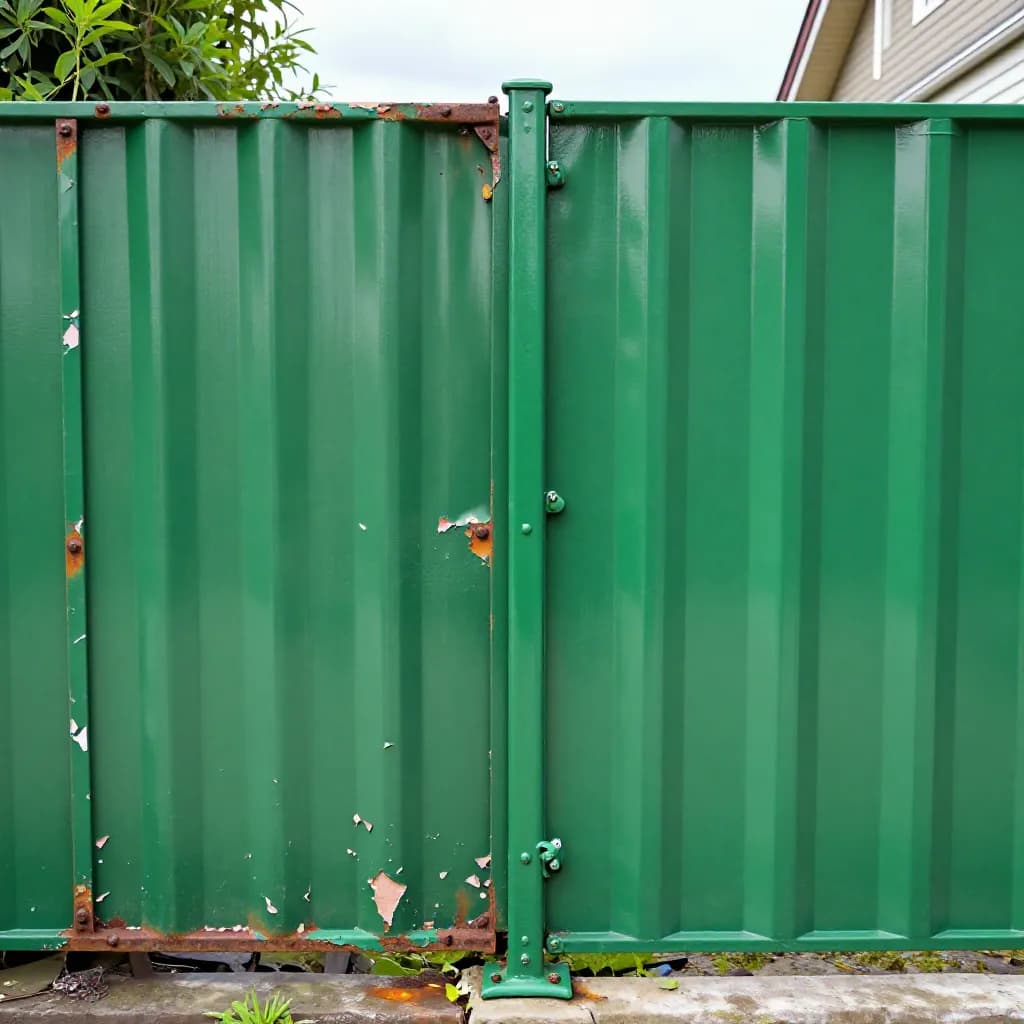
The consequences of finish failure on fencing are both aesthetic and structural. When the coating fails, corrosion begins on steel fencing, progressively weakening the metal and creating unsightly rust stains that can discolor adjacent surfaces like concrete driveways and building walls. Replacing or refinishing corroded fencing is expensive and disruptive, often requiring removal and reinstallation. Choosing the right finish at the time of installation avoids these costs and extends the useful life of the fencing investment.
Ready to Start Your Project?
From one-off customs to 15,000-part production runs — get precise pricing in 24 hours.
On This Page
Why Fencing Finish Quality Matters
The two most common finishes for metal fencing are liquid paint and powder coating. Understanding the performance difference between these options helps property owners, contractors, and specifiers make informed decisions that balance initial cost against long-term value. For a product that must perform outdoors for 15 to 30 years, the finish quality is not a place to cut corners.
How Painted Fencing Performs Outdoors
Painted metal fencing uses liquid paint — typically alkyd enamel, acrylic latex, or two-component epoxy-polyurethane systems — applied by spray or brush to the metal surface. The quality and longevity of painted fencing varies enormously depending on the paint system, surface preparation, and application quality. At the high end, professionally applied multi-coat systems with proper primer and topcoat can provide 5 to 8 years of acceptable outdoor performance. At the low end, single-coat brush-applied paint over minimal preparation may begin failing within 1 to 2 years.
The primary failure modes of painted fencing are chalking, fading, cracking, and peeling. Chalking occurs as UV radiation breaks down the paint binder, releasing pigment particles as a powdery residue on the surface. Fading follows as pigment is lost and the remaining binder becomes increasingly transparent. Cracking develops as the paint film becomes brittle with age and can no longer accommodate the thermal expansion and contraction of the metal substrate. Peeling occurs when adhesion fails, often starting at edges, welds, and areas where surface preparation was inadequate.
Once cracking and peeling begin, the exposed metal corrodes rapidly, and the corrosion spreads beneath the adjacent intact paint through undercutting. This progressive failure means that a small area of paint failure can quickly become a large area of corrosion if not addressed promptly. Maintaining painted fencing requires regular inspection and touch-up painting to catch and repair failures before they spread — a maintenance burden that continues throughout the fence's life.
How Powder-Coated Fencing Performs Outdoors
Powder-coated metal fencing is finished in a factory environment using the electrostatic powder coating process. The fencing components — panels, posts, rails, and pickets — are pretreated with a multi-stage chemical process, powder coated, and oven cured before assembly and shipment. This factory-controlled process ensures consistent quality that field-applied paint cannot match.
The performance advantages of powder coating on fencing are substantial. The 60 to 80 micron film thickness provides a robust barrier against UV radiation and moisture penetration. The cross-linked thermoset film resists chalking and fading far more effectively than most liquid paints, maintaining color and gloss through years of outdoor exposure. Polyester powder coatings — the standard chemistry for outdoor fencing — are specifically formulated for UV resistance and weathering performance.
Powder-coated fencing from quality manufacturers typically maintains its appearance for 10 to 15 years of outdoor exposure, with some premium systems lasting 20 years or more before significant color change or gloss loss becomes apparent. This longevity is two to three times longer than typical painted fencing, which translates directly into lower lifecycle cost through reduced maintenance and delayed replacement. The factory-applied pretreatment and coating also provide more consistent corrosion protection than field-applied paint, reducing the risk of premature rust at welds, edges, and connection points.
Edge and Weld Protection
Edges and welds are the most vulnerable points on any metal fence, and the coating's ability to protect these areas is critical for long-term performance. Liquid paint tends to thin on sharp edges due to surface tension — the wet paint pulls away from edges and corners, leaving these areas with significantly less protection than flat surfaces. Welds present similar challenges, with their irregular surface geometry making uniform paint coverage difficult to achieve.
Powder coating provides superior edge coverage compared to liquid paint. The electrostatic application process deposits powder particles on edges and corners with reasonable uniformity, and the melt-flow-cure process allows the powder to flow and level over weld beads and surface irregularities. While powder coating can still be thinner on very sharp edges, the overall edge coverage is significantly better than liquid paint, providing more reliable protection at these critical failure points.
For fencing applications, edge and weld protection is particularly important because fence components are fabricated from cut and welded steel or aluminum. Every cut edge, every weld joint, and every drilled hole is a potential corrosion initiation site. Powder coating's better edge coverage means fewer weak points in the protective barrier, which translates to longer service life and fewer maintenance interventions. Some premium fencing manufacturers apply additional powder to edges and welds to ensure maximum protection at these vulnerable locations.
Maintenance Requirements Compared
The maintenance difference between painted and powder-coated fencing is one of the most compelling reasons to choose powder coating. Painted fencing requires periodic inspection and maintenance to maintain its protective function. As paint begins to chalk, fade, and crack, touch-up painting is needed to prevent corrosion at failure points. For large fence installations, this maintenance can be time-consuming and costly, requiring surface preparation, priming, and painting of affected areas.
Powder-coated fencing requires minimal maintenance — periodic washing with water and mild detergent to remove dirt, pollen, and environmental deposits is typically sufficient. The hard, dense powder coating film does not require waxing, sealing, or supplemental treatments to maintain its protective properties. For most residential and commercial installations, an annual wash is all that is needed to keep powder-coated fencing looking its best.
The maintenance cost difference compounds over the life of the fence. A painted fence that requires touch-up painting every 3 to 5 years accumulates significant maintenance costs over a 20 to 30 year service life. A powder-coated fence that requires only occasional washing over the same period has dramatically lower total maintenance costs. When the reduced maintenance labor, material costs, and the value of the property owner's time are considered, powder-coated fencing delivers substantially better lifecycle value than painted fencing.
Appearance and Color Options
Both painted and powder-coated fencing are available in a range of colors, but powder coating offers a broader and more consistent palette. Standard fencing colors — black, white, bronze, green, and brown — are available in both paint and powder coating. However, powder coating also offers metallic finishes, textured finishes, and custom color matching that are difficult or impossible to achieve with field-applied paint.
Color consistency is another advantage of factory-applied powder coating. Because the powder is manufactured to precise color specifications and applied in a controlled factory environment, every fence panel and post receives the same color. Field-applied paint is subject to batch-to-batch color variation, application technique differences, and environmental conditions that can cause visible color inconsistencies between sections of the same fence.
Gloss retention over time also favors powder coating. A powder-coated fence maintains its original gloss level for years, while painted fencing progressively loses gloss as UV radiation degrades the paint surface. After 5 years of outdoor exposure, a painted fence may have lost 50 to 70 percent of its original gloss, giving it a dull, weathered appearance. A powder-coated fence in the same environment typically retains 70 to 90 percent of its original gloss, maintaining the fresh, well-maintained appearance that enhances property value.
Making the Right Choice for Your Fencing Project
For new metal fencing installations, powder coating is the recommended finish for virtually all applications. The superior durability, lower maintenance requirements, better edge protection, and longer color retention of powder coating make it the clear value choice for a product that must perform outdoors for decades. The initial cost difference between painted and powder-coated fencing is modest compared to the total cost of the fencing installation, and the lifecycle savings from reduced maintenance quickly offset any upfront premium.
Painted fencing may be appropriate in limited situations — when matching an existing painted fence for consistency, when field touch-up of damaged areas is needed on an installed fence, or when budget constraints absolutely require the lowest possible initial cost. However, even in budget-constrained situations, the long-term cost of maintaining painted fencing often exceeds the initial savings, making powder coating the more economical choice over the fence's full service life.
When specifying or purchasing powder-coated fencing, look for manufacturers who use multi-stage chemical pretreatment, UV-resistant polyester powder coatings, and quality certifications such as Qualicoat or equivalent standards. These indicators of process quality ensure that the powder coating will deliver the long-term performance that justifies the investment. A quality powder-coated fence is one of the most durable and maintenance-free property improvements available.
Frequently Asked Questions
How long does powder-coated fencing last compared to painted fencing?
Powder-coated fencing typically maintains its appearance for 10-15 years, with premium systems lasting 20+ years. Painted fencing usually shows significant degradation within 3-5 years for quality paint systems and 1-2 years for budget paint. Powder coating lasts two to three times longer than paint on fencing.
Does powder-coated fencing need to be repainted?
Quality powder-coated fencing does not need repainting for 10-15 years or more. It requires only periodic washing with mild soap and water. Painted fencing typically needs touch-up painting every 3-5 years and full repainting every 8-10 years to maintain protection and appearance.
Is powder-coated fencing more expensive than painted fencing?
Powder-coated fencing may have a slightly higher initial cost, but the lifecycle cost is significantly lower due to reduced maintenance. The savings from not needing regular touch-up painting, combined with longer service life before replacement, make powder-coated fencing the more economical choice over the fence's full lifespan.
Can I paint over powder-coated fencing if I want to change the color?
Yes. Powder-coated fencing can be lightly sanded and painted with a compatible exterior paint if a color change is desired. However, the painted topcoat will not match the durability of the original powder coating. For the best result, professional re-powder coating is recommended if the fence can be disassembled.
What color options are available for powder-coated fencing?
Powder-coated fencing is available in virtually any color from the RAL color system, including standard options like black, white, bronze, green, and brown, as well as custom colors, metallic finishes, and textured effects. The color range is broader and more consistent than field-applied paint.
Ready to Start Your Project?
From one-off customs to 15,000-part production runs — get precise pricing in 24 hours.