Surface finishing is the process that gives manufactured products their final appearance, protection, and functional properties. Whether it is the sleek finish on a car wheel, the weather-resistant coating on an aluminum facade panel, or the colorful surface of a park bench, the coating technology behind the finish determines how the product looks, performs, and ages.
Technical
Powder Coating vs. Liquid Coating: A Complete Comparison
Sundial Powder Coating·April 18, 2026·10 min
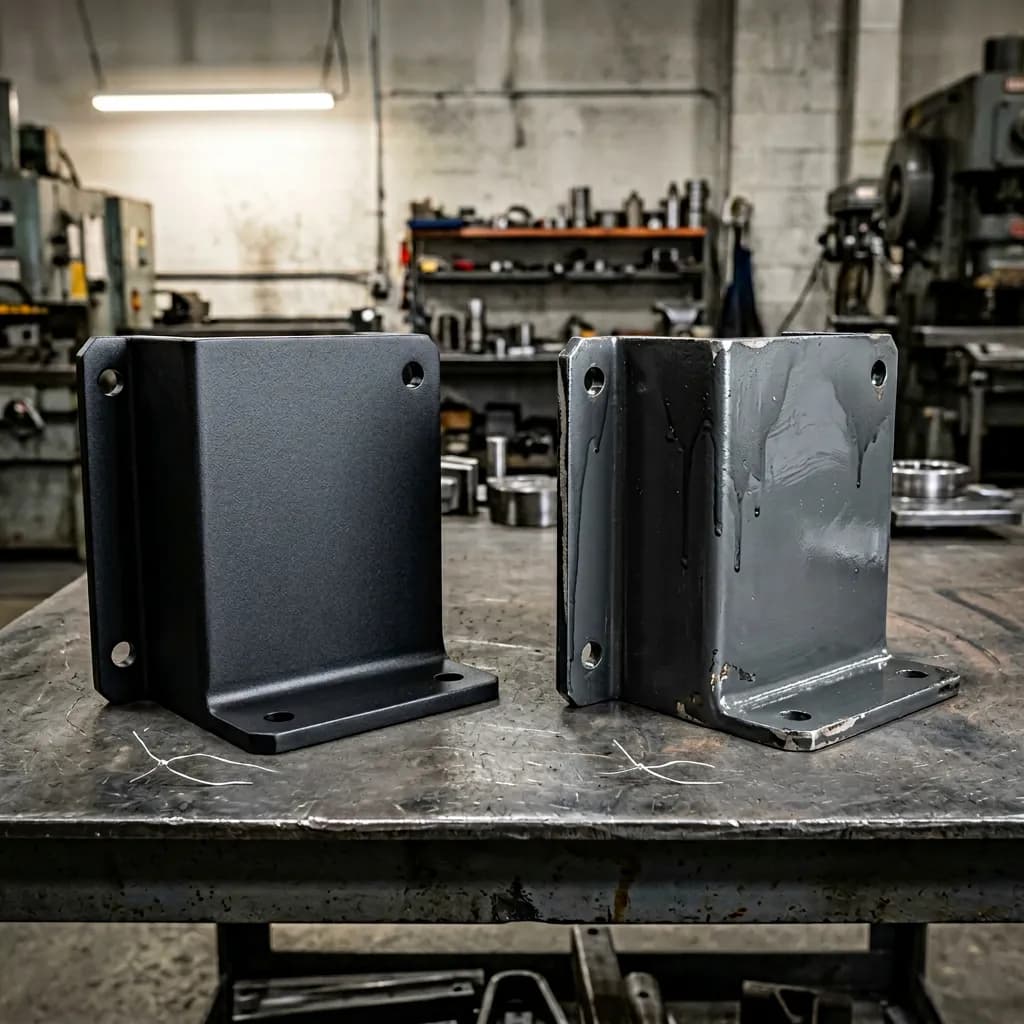
The two dominant coating technologies in industrial and architectural finishing are powder coating and liquid coating. Each has distinct characteristics, advantages, and limitations that make it better suited to certain applications. Understanding these differences is essential for specifiers, manufacturers, and end users who need to make informed decisions about surface finishing.
Ready to Start Your Project?
From one-off customs to 15,000-part production runs — get precise pricing in 24 hours.
On This Page
Introduction: Two Approaches to Surface Finishing
This guide provides a comprehensive comparison of powder and liquid coating technologies across the factors that matter most: durability, environmental impact, cost, color and finish options, application methods, and ideal use cases.
What Is Powder Coating?
Powder coating is a dry finishing process in which finely ground particles of pigment and resin are electrostatically charged and sprayed onto a grounded substrate — typically metal. The charged powder particles adhere to the surface through electrostatic attraction, and the coated part is then placed in a curing oven where the powder melts, flows, and chemically cross-links to form a continuous, durable film.
The most common powder coating chemistries include thermoset polyester (the workhorse for exterior architectural applications), epoxy (excellent chemical and corrosion resistance for interior use), polyester-epoxy hybrids (balanced properties for general industrial use), polyurethane (superior smoothness and chemical resistance), and fluoropolymer (exceptional weathering for premium architectural facades).
Powder coatings are available in virtually any color, including the complete RAL Classic range, and can be formulated in a wide variety of textures and gloss levels — from high gloss to deep matte, and from smooth to heavily textured finishes. Metallic, pearlescent, and special-effect finishes are also achievable.
Leading manufacturers like AkzoNobel (through their Interpon brand) offer comprehensive powder coating portfolios that span architectural, industrial, automotive, and functional applications, with products ranging from standard polyester to superdurable and hyperdurable formulations designed for the most demanding exterior environments.
What Is Liquid Coating?
Liquid coating — commonly known as wet paint — is the traditional method of applying a protective and decorative film to a surface. A liquid coating consists of pigments (for color and opacity), binders or resins (which form the actual film), solvents (which control viscosity and flow), and additives (which modify specific properties like drying time, UV resistance, or anti-settling behavior).
Liquid coatings can be broadly categorized by their solvent system: solvent-based (using organic solvents like xylene, toluene, or mineral spirits), waterborne (using water as the primary carrier with small amounts of co-solvents), and high-solids (formulated with reduced solvent content and increased resin concentration).
Application methods for liquid coatings include conventional air spray, airless spray, HVLP (high volume low pressure) spray, electrostatic spray, dip coating, flow coating, curtain coating, and brush or roller application. This versatility in application methods is one of liquid coating's key advantages.
Liquid coating chemistries span an enormous range, including acrylics, alkyds, epoxies, polyurethanes, fluoropolymers, silicones, and specialty formulations for specific performance requirements. This breadth of chemistry options allows liquid coatings to address applications that powder coatings cannot easily serve.
Durability and Performance
Powder coatings generally deliver superior durability compared to liquid coatings of equivalent chemistry. Because the powder melts and cross-links into a single, continuous film without the porosity that can result from solvent evaporation in liquid coatings, the cured powder film is typically denser, harder, and more resistant to chipping, scratching, and abrasion.
Typical powder coating film thicknesses range from 60-120 micrometers in a single coat, compared to 25-50 micrometers per coat for liquid coatings. This thicker film provides enhanced barrier protection against corrosion, UV degradation, and chemical attack. Achieving equivalent film thickness with liquid coatings typically requires multiple coats with drying time between each, increasing process time and cost.
For exterior architectural applications, superdurable polyester powder coatings can achieve 15-25 years of color and gloss retention, meeting the requirements of standards like Qualicoat Class 2 and GSB Master. Hyperdurable formulations extend this further, approaching the performance of fluoropolymer liquid coatings.
Liquid coatings, however, can offer advantages in specific performance areas. Very thin, precise film builds are easier to achieve with liquid systems. Certain specialty liquid formulations — such as two-component polyurethanes and fluoropolymer coatings like PVDF (Kynar) — can deliver exceptional chemical resistance and weathering performance that is difficult to match with standard powder chemistries.
In terms of flexibility, liquid coatings generally produce more flexible films that can better accommodate substrate movement and thermal expansion, making them preferred for certain applications on flexible substrates or in extreme temperature cycling environments.
Environmental Impact
The environmental comparison between powder and liquid coatings strongly favors powder coating across most metrics.
VOC emissions represent the most significant environmental differentiator. Powder coatings contain virtually zero volatile organic compounds, while traditional solvent-based liquid coatings can contain 300-500 g/L of VOCs. Even modern waterborne liquid coatings typically contain 50-150 g/L of VOCs. This makes powder coating the clear choice for facilities seeking to minimize air emissions and comply with increasingly stringent VOC regulations.
Material efficiency is another area where powder coating excels. Overspray powder can be collected through recovery systems and recycled back into the application process, achieving material utilization rates of 95-98%. Liquid coating overspray, by contrast, is generally not recoverable and becomes waste, with typical transfer efficiencies of 30-70% depending on the application method.
Waste generation follows from material efficiency. Powder coating operations produce minimal solid waste and no liquid waste streams requiring treatment. Liquid coating operations generate waste solvents, contaminated cleaning materials, and wastewater that require proper treatment and disposal.
Energy consumption is more nuanced. Powder coating requires oven curing at temperatures typically between 160-200°C, which consumes significant energy. However, innovations like AkzoNobel's Low-E powder coatings have reduced curing temperatures by 50°C and curing times by 25%, substantially improving energy efficiency. Liquid coatings may cure at lower temperatures or ambient conditions, but the energy required for solvent recovery, waste treatment, and multiple coating passes can offset this advantage.
AkzoNobel's Eco+ portfolio represents the cutting edge of sustainable powder coating, with products that deliver verified environmental gains across energy consumption, waste reduction, and carbon footprint reduction.
Cost Considerations
The cost comparison between powder and liquid coating depends on the scale of operation, production volume, and specific application requirements.
Initial capital investment for powder coating is typically higher than for liquid coating. A powder coating line requires electrostatic spray equipment, a powder recovery system, and a curing oven, which represents a significant upfront investment. Liquid coating can be applied with relatively simple spray equipment and may not require an oven if air-dry formulations are used.
Operating costs, however, generally favor powder coating for medium to high production volumes. The near-complete material utilization (95-98%) means less raw material is wasted. The absence of solvents eliminates the cost of solvent purchase, storage, and disposal. Reduced waste generation lowers disposal costs. And the single-coat application process reduces labor time compared to multi-coat liquid systems.
Per-unit coating cost decreases significantly with volume in powder coating operations, making it highly economical for batch and mass production. For very small quantities or one-off pieces, liquid coating may be more cost-effective due to lower setup costs and the ability to apply without specialized equipment.
Regulatory compliance costs also factor into the equation. Facilities using solvent-based liquid coatings may need to invest in VOC abatement equipment, air quality monitoring, and environmental permits. These ongoing compliance costs can be substantial and are largely avoided with powder coating operations.
Color Range and Finish Options
Both powder and liquid coatings offer extensive color ranges, but with some differences in capability.
Powder coatings are available in the complete RAL Classic range of 216 colors, as well as custom color matching to virtually any specification. Manufacturers like AkzoNobel's Interpon brand offer thousands of standard colors and finishes, with the ability to develop custom formulations for specific project requirements. Powder coatings can achieve gloss levels from ultra-matte to high gloss, and textures ranging from smooth to heavy wrinkle, sand, and leather effects.
Liquid coatings offer somewhat greater flexibility in color matching and small-batch custom colors, as liquid tinting systems allow precise color adjustment at the point of sale or application. This makes liquid coating more practical for very small quantities of custom colors or for touch-up and repair work where exact color matching to an existing finish is critical.
Metallic and special-effect finishes are achievable in both technologies, though the visual characteristics differ. Powder metallic finishes tend to have a more uniform, consistent appearance, while liquid metallics can achieve a wider range of effects including deeper flop (the change in appearance at different viewing angles) and more complex multi-layer effects.
One area where liquid coatings maintain a clear advantage is in very high-gloss, mirror-like finishes. While powder coatings can achieve high gloss levels, the absolute smoothness and depth of gloss achievable with liquid clear coats — particularly in automotive refinishing — remains difficult to match with powder technology.
Application Considerations
The application process differs fundamentally between powder and liquid coating, and these differences influence which technology is appropriate for a given situation.
Powder coating requires the substrate to be electrically conductive (for electrostatic application) and able to withstand curing temperatures of 150-200°C. This effectively limits powder coating to metal substrates in most cases, though specialized low-temperature cure powders and UV-cure powders have expanded the range to include some heat-sensitive substrates like MDF and certain plastics.
Liquid coating can be applied to virtually any substrate — metal, wood, plastic, composite, concrete, fabric, and more — at ambient or low temperatures. This versatility is liquid coating's greatest practical advantage and the primary reason it remains essential for many applications.
Surface preparation requirements are similar for both technologies: the substrate must be clean, dry, and properly pretreated for optimal adhesion and corrosion protection. However, powder coating is somewhat more forgiving of minor surface imperfections, as the thicker film build can bridge small defects that would be visible through a thinner liquid coating.
Rework and repair differ significantly. If a powder coating defect is detected before curing, the powder can simply be blown off and reapplied. After curing, however, repair requires sanding and recoating the entire part. Liquid coatings allow more localized touch-up and repair, which is advantageous for large or complex assemblies where full recoating is impractical.
When to Choose Powder Coating
Powder coating is the optimal choice when the following conditions apply:
The substrate is metal and can withstand curing temperatures of 150-200°C. The production volume justifies the capital investment in powder coating equipment. Maximum durability and corrosion resistance are required. Environmental compliance and VOC reduction are priorities. Material efficiency and waste minimization are important. A single-coat application process is preferred for production efficiency. The required color and finish are available in powder formulations.
Common applications where powder coating excels include architectural aluminum facades and curtain walling, window and door frames, automotive wheels and components, outdoor furniture and playground equipment, industrial equipment and machinery, electrical enclosures and cabinets, agricultural and construction equipment, and general metal fabrication.
For architectural applications, powder coating has become the dominant technology for aluminum building products, with manufacturers like AkzoNobel offering comprehensive ranges that meet the most demanding international quality standards including Qualicoat, GSB, and AAMA specifications.
When to Choose Liquid Coating
Liquid coating remains the preferred choice when the following conditions apply:
The substrate is non-metallic or cannot withstand high curing temperatures. Very thin, precise film builds are required. Ultra-high-gloss, mirror-like finishes are needed. The production volume is very small or involves one-off custom work. On-site application is required (field painting). Touch-up and repair of existing coatings is needed. Specific performance requirements can only be met by liquid-only chemistries.
Common applications where liquid coating excels include wood finishing and furniture, automotive body refinishing, marine and yacht coatings, field-applied protective coatings for bridges and infrastructure, plastic and composite substrates, multi-layer decorative effects, and specialty functional coatings such as anti-fouling, thermal barrier, and intumescent fire protection.
The liquid coating industry continues to innovate toward lower VOC formulations, with waterborne and high-solids technologies closing the environmental gap with powder coatings while maintaining the application versatility that makes liquid coating indispensable for many applications.
The Future: Convergence and Innovation
The boundary between powder and liquid coating technologies continues to blur as both industries innovate.
Low-temperature cure powder coatings are expanding into substrates previously reserved for liquid coatings, including MDF, engineered wood, and certain plastics. UV-curable powder coatings offer near-instant cure at low temperatures, further expanding the addressable market.
On the liquid side, waterborne and high-solids formulations continue to reduce VOC content while improving performance. Some manufacturers now offer waterborne liquid coatings with VOC levels below 10 g/L, approaching the near-zero emissions of powder coatings.
Digital color matching and formulation technologies are improving consistency and reducing waste in both powder and liquid systems. Automated application equipment with real-time monitoring and adjustment is increasing transfer efficiency and reducing material consumption across both technologies.
Sustainability is driving innovation across the entire coatings industry. AkzoNobel's commitment to sustainability through initiatives like their Eco+ powder coating portfolio demonstrates how manufacturers are responding to market demand for coatings that deliver both performance and environmental responsibility.
The future of surface finishing is not about choosing between powder and liquid coating — it is about selecting the right technology for each specific application, with an increasing emphasis on environmental performance alongside traditional measures of quality, durability, and cost.
Frequently Asked Questions
Is powder coating more durable than liquid paint?
In most applications, yes. Powder coating produces a thicker, denser film that is more resistant to chipping, scratching, fading, and corrosion than a single coat of liquid paint. The cured powder film is typically 60-120 micrometers thick compared to 25-50 micrometers for a single liquid coat. However, certain specialty liquid coatings — such as two-component polyurethanes and fluoropolymer systems — can match or exceed powder coating durability in specific performance areas.
Can powder coating be applied to wood or plastic?
Traditional powder coatings require curing temperatures of 160-200°C, which limits them primarily to metal substrates. However, low-temperature cure powder coatings (curing at 120-150°C) can be applied to MDF and some engineered wood products. UV-curable powder coatings offer even lower temperature processing. Some heat-resistant plastics can also be powder coated. For most wood and plastic applications, liquid coating remains the more practical choice.
How much does powder coating cost compared to liquid painting?
Powder coating typically has higher initial equipment costs but lower per-unit operating costs at medium to high production volumes. The near-complete material utilization (95-98%), elimination of solvent costs, reduced waste disposal, and single-coat application process make powder coating more economical for batch production. For very small quantities or one-off pieces, liquid painting may be more cost-effective due to lower setup requirements.
What colors are available in powder coating?
Powder coatings are available in virtually any color, including the complete RAL Classic range of 216 colors, BS, NCS, and Pantone color systems, plus thousands of manufacturer-specific colors. Custom color matching is available from most powder coating manufacturers. Finishes range from high gloss to deep matte, with textures including smooth, sand, wrinkle, leather, and metallic effects.
Is powder coating better for the environment than liquid paint?
Powder coating is significantly better for the environment in most respects. It contains virtually zero VOCs (compared to 50-500 g/L for liquid coatings), achieves 95-98% material utilization (vs. 30-70% for liquid), generates minimal waste, and requires no solvents for cleanup. The main environmental consideration for powder coating is the energy required for oven curing, though innovations like low-energy cure formulations are reducing this impact.
Can you touch up powder coating?
Touching up powder coating is more challenging than liquid paint. Small chips can be repaired with color-matched liquid touch-up paint or aerosol spray. For larger areas, the part typically needs to be stripped and recoated entirely. This is one area where liquid coating has a practical advantage, as it allows more localized repair work. Some manufacturers offer touch-up kits specifically designed for powder-coated surfaces.
Ready to Start Your Project?
From one-off customs to 15,000-part production runs — get precise pricing in 24 hours.