Hydro dipping — also known as hydrographic printing, water transfer printing, or immersion printing — is a decorative process that transfers a printed pattern from a water-soluble film onto a three-dimensional object. The process begins with a printed PVA (polyvinyl alcohol) film that carries the desired pattern — carbon fiber, wood grain, camouflage, marble, skulls, flames, or virtually any graphic design. The film is floated on the surface of a water tank, and an activating chemical is sprayed onto the film, dissolving the PVA carrier and leaving the ink pattern floating on the water surface in a liquid state.
Comparison
Powder Coating vs Hydro Dipping: Aesthetics, Durability, and Custom Graphics
Sundial Powder Coating·April 22, 2026·12 min
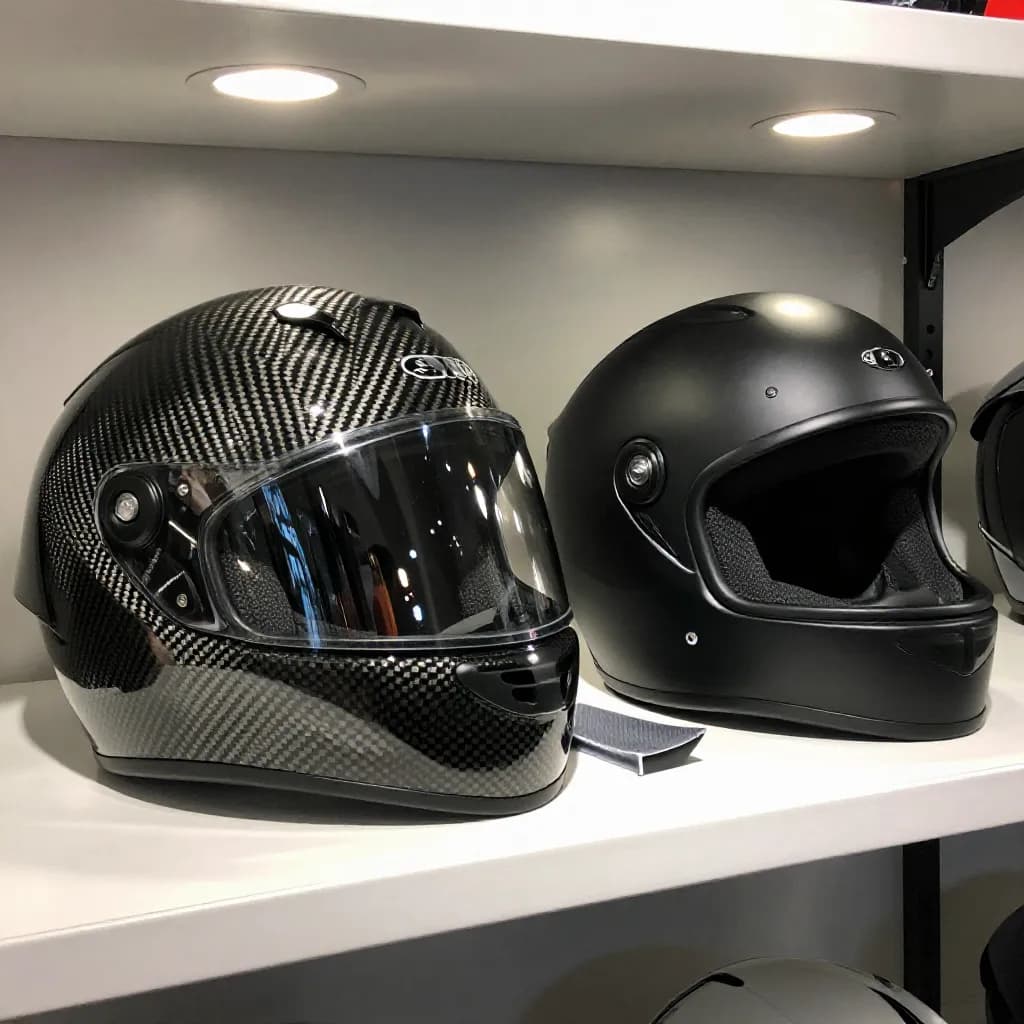
The prepared workpiece — which has been basecoated in a complementary color — is then slowly immersed through the floating ink layer at a controlled angle. The water pressure wraps the ink pattern around the three-dimensional contours of the part, conforming to curves, recesses, and complex geometries. After immersion, the part is rinsed to remove residual PVA and activator, dried, and clearcoated to protect the transferred pattern.
Ready to Start Your Project?
From one-off customs to 15,000-part production runs — get precise pricing in 24 hours.
On This Page
What Is Hydro Dipping and How Does It Work?
The hydro dipping process is remarkable for its ability to apply complex, multi-color graphic patterns to three-dimensional objects that would be impossible to decorate by conventional printing or painting methods. A carbon fiber pattern can be applied uniformly to a motorcycle helmet, a camouflage pattern can wrap around a rifle stock, and a wood grain effect can cover a complex automotive interior trim piece — all in a single immersion step.
However, hydro dipping is fundamentally a decorative process, not a protective one. The transferred ink layer is extremely thin — typically 1-5 microns — and provides no meaningful protection against corrosion, UV radiation, chemical exposure, or mechanical damage. The durability of a hydro-dipped finish depends entirely on the basecoat beneath the pattern and the clearcoat applied over it. This is where the comparison with powder coating becomes particularly interesting, because powder coating can serve as both the basecoat and the protective system for hydro-dipped parts.
Durability: Protective Coating vs Decorative Transfer
The durability comparison between powder coating and hydro dipping is not a fair fight, because they serve fundamentally different purposes. Powder coating is a complete protective and decorative finishing system — the cured film provides corrosion protection, UV resistance, chemical resistance, impact resistance, and aesthetic quality in a single layer. Hydro dipping is a decorative transfer process that adds a graphic pattern but provides no protection on its own.
A powder-coated surface achieves its durability from the crosslinked thermoset film — 60-120 microns of dense, chemically resistant polymer bonded to a pretreated metal substrate. This film withstands years of exterior exposure, mechanical abuse, and chemical contact. In salt spray testing, powder-coated panels achieve 1,000-3,000 hours of corrosion resistance. In accelerated weathering, superdurable polyester powder coatings maintain color and gloss for the equivalent of 10-25 years of Florida exposure.
A hydro-dipped surface depends on its clearcoat for durability. The most common clearcoats used over hydro dipping are two-component polyurethane liquid clearcoats, which provide good UV resistance, chemical resistance, and scratch resistance when properly applied. A quality clearcoat over hydro dipping can last 3-7 years in exterior exposure before showing significant degradation. However, the clearcoat is a liquid-applied film of 30-50 microns — thinner and less robust than a powder coating film.
The weakest link in a hydro-dipped finish is often the adhesion between layers. The system consists of basecoat, transferred ink, and clearcoat — three distinct layers that must adhere to each other and to the substrate. Any adhesion failure between layers causes peeling, bubbling, or delamination. Powder coating, as a single homogeneous layer, eliminates inter-layer adhesion concerns entirely.
For applications where the finish must withstand harsh conditions — outdoor exposure, mechanical abuse, chemical contact — powder coating alone provides superior durability to hydro dipping with clearcoat. For applications where a unique graphic pattern is the primary goal and the item will be used in moderate conditions — indoor display, light handling, protected environments — hydro dipping with quality clearcoat provides adequate durability.
Aesthetic Capabilities: Patterns vs Colors and Textures
The aesthetic comparison between powder coating and hydro dipping reveals complementary rather than competing strengths. Hydro dipping's unique capability is the application of complex, multi-color graphic patterns to three-dimensional surfaces. Carbon fiber weave, realistic wood grain, natural stone, military camouflage, animal prints, abstract art, and custom graphic designs can all be applied through hydro dipping. The pattern wraps around curves and contours, creating a seamless graphic effect that would be impossible to achieve with conventional painting or powder coating.
The range of available hydro dipping films is enormous — hundreds of standard patterns are available from film manufacturers, and custom patterns can be printed for specific projects. This makes hydro dipping the go-to technology for custom automotive interiors, gaming controllers, motorcycle helmets, firearms, sporting goods, and any product where a unique graphic appearance is the primary design objective.
Powder coating's aesthetic strengths are different but equally valuable. Powder coating excels in solid colors (thousands of options), metallic and pearlescent effects, textured finishes (wrinkle, hammer-tone, sand, leather), and controlled gloss levels from ultra-matte to mirror gloss. The depth and richness of a high-quality powder coating finish — particularly in metallic formulations — has a visual quality that hydro dipping cannot replicate. Sublimation transfer on powder coating can produce wood-grain and stone effects with durability far exceeding hydro-dipped equivalents.
Pattern precision and repeatability differ between the technologies. Hydro dipping patterns are inherently variable — the floating ink stretches and distorts during immersion, and no two dipped parts are exactly identical. This variability is part of the aesthetic appeal for many applications (each piece is unique), but it can be a limitation when precise pattern placement or part-to-part consistency is required. Powder coating provides highly consistent, repeatable results — every part coated with the same powder in the same process looks identical.
For projects requiring both the protective performance of powder coating and the graphic capabilities of hydro dipping, the two technologies can be combined — and this combination is increasingly popular in the custom finishing market.
Combining Powder Coating and Hydro Dipping
The most sophisticated approach to custom finishing often combines powder coating and hydro dipping, leveraging the strengths of each technology. In this combined process, powder coating serves as the basecoat and primary protective layer, while hydro dipping adds the decorative graphic pattern. The result is a finish that combines powder coating's durability with hydro dipping's graphic versatility.
The typical combined process follows these steps: the metal substrate is pretreated and powder coated with a solid color basecoat (chosen to complement the hydro dip pattern — white or light gray for patterns with light elements, black for patterns with dark elements). The powder coating is fully cured, creating a durable, well-adhered base layer. The powder-coated part is then hydro dipped with the selected pattern, rinsed, dried, and clearcoated with a two-component polyurethane or powder clearcoat.
Using powder coating as the basecoat provides several advantages over liquid paint basecoats. The thicker powder coating film (60-80 microns for a basecoat application) provides better corrosion protection and impact resistance than a liquid basecoat (20-30 microns). The crosslinked thermoset powder coating is more chemically resistant to the activator chemicals used in the hydro dipping process. And the smooth, uniform powder coating surface provides an excellent foundation for the hydro dip pattern transfer.
The clearcoat selection for the combined system is critical. A two-component polyurethane liquid clearcoat is the most common choice, providing good UV resistance and scratch protection over the hydro-dipped pattern. For maximum durability, some applicators use a powder clearcoat — applying a clear powder coating over the hydro-dipped pattern and curing it in the oven. This powder-over-hydro-dip-over-powder sandwich provides the most durable combined finish, though the clearcoat cure temperature must be carefully controlled to avoid damaging the hydro dip inks.
The combined approach is popular for automotive accessories (valve covers, intake manifolds, interior trim), firearms (receivers, handguards, stocks), gaming and computer equipment (cases, controllers, peripherals), and sporting goods (helmets, equipment housings). For these applications, the combination delivers a unique, eye-catching appearance with durability that hydro dipping alone cannot achieve.
Process Complexity, Cost, and Production Considerations
The process complexity and cost structure of powder coating and hydro dipping differ significantly, affecting their suitability for different production volumes and business models. Powder coating is a well-established industrial process with clear, repeatable steps: pretreat, apply powder, cure. The process is highly automatable, scales efficiently from small batch to high-volume production, and produces consistent results with standard quality control procedures. Material costs are moderate, and the 95-98% material utilization through overspray reclaim minimizes waste.
Hydro dipping is a more craft-oriented process with greater variability and operator dependence. Each part must be individually basecoated, the film must be carefully laid on the water surface and activated, the part must be immersed at the correct angle and speed, and the clearcoat must be applied after rinsing and drying. The process requires skilled operators who can manage the variables — water temperature (typically 25-35°C), activator application, immersion angle, and dwell time — that affect pattern quality and consistency.
Material costs for hydro dipping include the printed film, activator chemical, basecoat, and clearcoat. The film is a consumable — each piece of film is used once and cannot be reclaimed. Film waste from trimming and failed dips adds to material costs. The activator chemicals are solvent-based and produce VOC emissions, requiring ventilation and potentially solvent abatement depending on local regulations.
For production volumes, powder coating scales more efficiently. A conveyorized powder coating line can process thousands of parts per hour with minimal labor. Hydro dipping remains largely a manual process — each part requires individual handling through multiple process steps. Automated hydro dipping systems exist for high-volume applications (automotive interior trim, for example), but they are less common and more complex than automated powder coating lines.
The cost per part for hydro dipping is generally higher than for powder coating alone, reflecting the additional process steps, material consumption, and labor intensity. However, for applications where the graphic pattern is the primary value proposition — custom automotive parts, personalized consumer products, branded merchandise — the additional cost is justified by the unique aesthetic result that powder coating alone cannot achieve.
When to Choose Each Technology
The choice between powder coating and hydro dipping — or the decision to combine both — depends on the specific aesthetic and performance requirements of the application. Choose powder coating alone when the design calls for solid colors, metallic effects, textured finishes, or controlled gloss levels, and when maximum durability, corrosion protection, and UV resistance are priorities. Powder coating is the right choice for architectural elements, industrial equipment, automotive wheels, outdoor furniture, and any application where long-term performance in demanding environments is essential.
Choose hydro dipping when the design requires complex graphic patterns — carbon fiber, camouflage, wood grain, custom graphics — that cannot be achieved with powder coating or conventional painting. Hydro dipping is ideal for custom automotive accessories, gaming equipment, sporting goods, promotional products, and any application where a unique visual appearance is the primary objective and the item will be used in moderate conditions.
Choose the combined approach — powder coating basecoat plus hydro dipping plus clearcoat — when both graphic aesthetics and durability are important. This combination is the best option for items that will be handled, used outdoors, or exposed to moderate environmental stress while requiring a custom graphic appearance. The powder coating base provides the protection, and the hydro dip provides the visual impact.
Avoid hydro dipping for applications requiring extreme durability, long-term exterior exposure, or resistance to harsh chemicals and mechanical abuse. The clearcoat over hydro dipping, while adequate for moderate conditions, does not match the durability of a standalone powder coating system. For items that must survive years of outdoor exposure or heavy industrial use, powder coating alone — in an appropriate color or texture — is the more reliable choice.
The custom finishing market increasingly recognizes that powder coating and hydro dipping are complementary technologies rather than competitors. The most capable custom finishing shops offer both services, selecting the optimal technology — or combination — for each project based on the client's aesthetic vision and performance requirements.
Frequently Asked Questions
Is hydro dipping more durable than powder coating?
No. Powder coating is significantly more durable. Hydro dipping is a decorative transfer process that relies on a clearcoat for protection, typically lasting 3-7 years. Powder coating is a complete protective system lasting 15-25 years. For maximum durability with graphic patterns, use powder coating as a basecoat under hydro dipping.
Can you hydro dip over powder coating?
Yes, and this is the recommended approach for combining graphic patterns with durable protection. The powder coating serves as a protective basecoat, the hydro dip adds the pattern, and a clearcoat seals everything. This combination provides better durability than hydro dipping over liquid paint basecoats.
What patterns can hydro dipping achieve that powder coating cannot?
Hydro dipping can apply complex multi-color patterns including carbon fiber weave, realistic wood grain, camouflage, marble, animal prints, and custom graphic designs. These wrap around three-dimensional surfaces seamlessly. Powder coating is limited to solid colors, metallics, textures, and sublimation transfers (wood grain and stone effects).
Is hydro dipping good for outdoor use?
Hydro dipping with a quality clearcoat can handle moderate outdoor exposure for 3-5 years. For long-term outdoor durability, powder coating alone is superior. If you need graphic patterns on outdoor items, use a powder coating basecoat under the hydro dip for maximum protection, and expect to re-clearcoat periodically.
Which is cheaper, powder coating or hydro dipping?
Powder coating alone is generally less expensive per part due to simpler processing and material reclaim. Hydro dipping involves more process steps (basecoat, dip, clearcoat), consumable film, and manual labor. However, hydro dipping provides unique graphic capabilities that justify the additional cost for custom and decorative applications.
Ready to Start Your Project?
From one-off customs to 15,000-part production runs — get precise pricing in 24 hours.