Liquid epoxy paint is a two-component coating system consisting of an epoxy resin and a hardener that are mixed together immediately before application. When the two components combine, a chemical cross-linking reaction begins that transforms the liquid mixture into a hard, dense, chemically resistant film. This reaction is irreversible — once cured, epoxy paint cannot be re-melted or dissolved by the solvents used in its formulation, which is what gives it such excellent chemical resistance.
Comparison
Powder Coating vs Epoxy Paint: Industrial Coatings Compared
Sundial Powder Coating·April 22, 2026·11 min
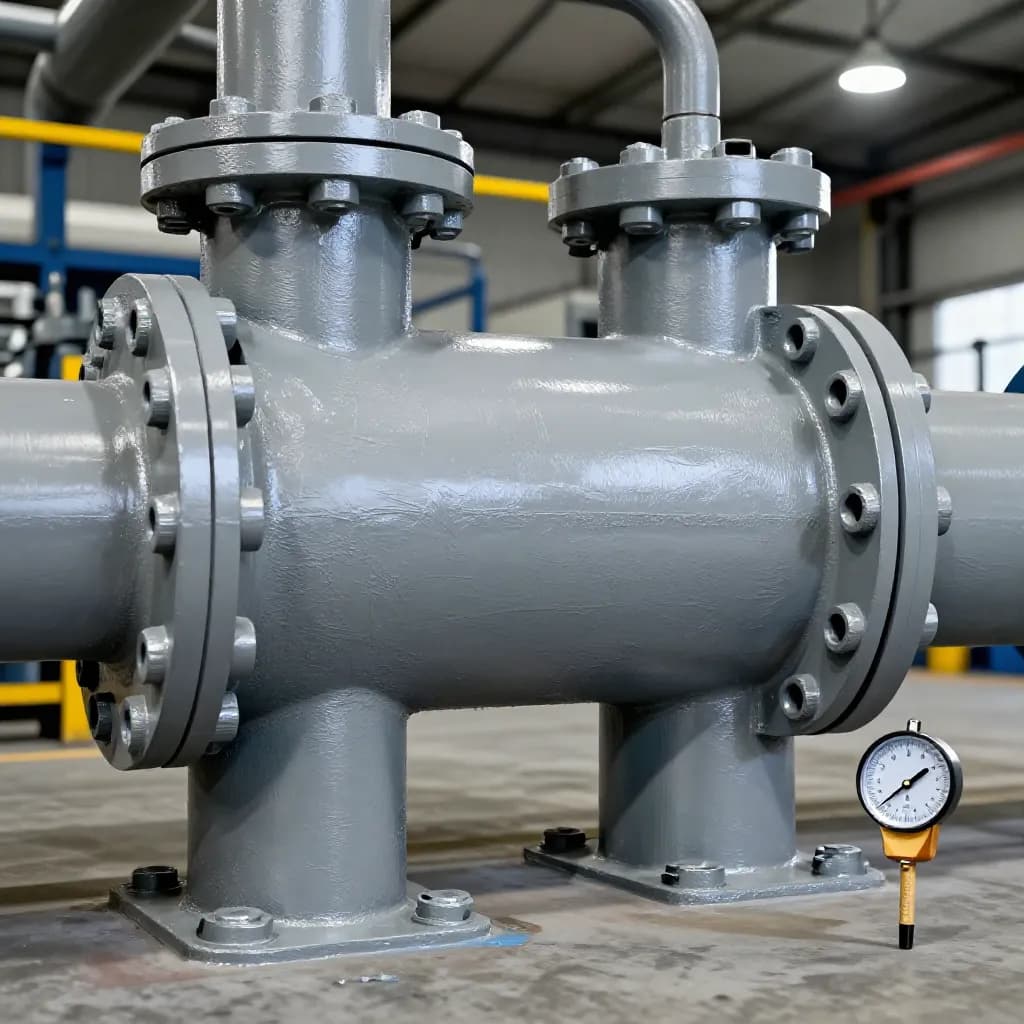
Liquid epoxy paints are used extensively in industrial environments where chemical resistance is paramount. Chemical processing plants, pharmaceutical facilities, food and beverage operations, water treatment plants, and marine environments all rely on epoxy coatings to protect steel and concrete substrates from aggressive chemicals, moisture, and mechanical wear. Epoxy floor coatings are particularly common in warehouses, manufacturing facilities, and commercial kitchens where the floor must withstand heavy traffic, chemical spills, and frequent cleaning.
Ready to Start Your Project?
From one-off customs to 15,000-part production runs — get precise pricing in 24 hours.
On This Page
Understanding Liquid Epoxy Paint
The two-component nature of liquid epoxy paint introduces practical challenges. Once mixed, the coating has a limited pot life — typically two to eight hours depending on the formulation and ambient temperature — after which it begins to gel and becomes unusable. This requires careful planning of batch sizes and application schedules. The mixing process itself must be precise, as incorrect ratios of resin to hardener will result in incomplete curing and compromised performance. These handling requirements add complexity and potential for error that single-component systems like powder coating avoid entirely.
Epoxy Powder Coating: The Best of Both Worlds
It is important to distinguish between liquid epoxy paint and epoxy powder coating, as both use epoxy resin chemistry but differ fundamentally in their application and curing methods. Epoxy powder coating is a single-component dry powder that contains both the epoxy resin and the curing agent in a stable, pre-mixed form. The curing reaction is triggered only by heat in the curing oven, eliminating the pot life limitations, mixing errors, and solvent emissions associated with liquid epoxy paint.
Epoxy powder coatings deliver chemical resistance comparable to liquid epoxy paints while offering all the process advantages of powder coating technology — zero VOC emissions, near-complete material utilization through overspray reclamation, single-coat film builds of 60 to 150 microns, and consistent quality without the variability introduced by manual mixing. For metal substrates that can be oven-cured, epoxy powder coating provides the chemical resistance of epoxy in a cleaner, more efficient application process.
The primary limitation of epoxy powder coatings — shared with liquid epoxy paints — is poor UV resistance. Epoxy resins chalk and degrade when exposed to sunlight, causing the finish to lose gloss and develop a powdery surface. This makes both liquid and powder epoxy coatings unsuitable for exterior applications where UV exposure is significant. For outdoor use, polyester or polyurethane powder coatings are the appropriate choice, while epoxy formulations are reserved for interior, underground, or concealed applications where UV exposure is minimal.
Chemical Resistance Comparison
Chemical resistance is the primary reason specifiers choose epoxy coatings, and both liquid epoxy paint and epoxy powder coating deliver excellent performance in this area. Epoxy's cross-linked molecular structure creates a dense barrier that resists penetration by a wide range of chemicals including acids, alkalis, solvents, fuels, and hydraulic fluids. This makes epoxy coatings essential in environments where chemical exposure is routine.
Liquid epoxy paints can be formulated with specialized additives and fillers to target specific chemical resistance requirements. Novolac epoxy formulations, for example, offer enhanced resistance to concentrated acids and solvents at elevated temperatures, making them suitable for the most demanding chemical processing environments. The ability to customize liquid epoxy formulations for specific chemical exposures is an advantage in highly specialized applications.
Epoxy powder coatings offer chemical resistance that meets or exceeds standard liquid epoxy paints for most common chemical exposures. Fusion-bonded epoxy powder coatings are the standard protective coating for oil and gas pipelines, water transmission lines, and reinforcing steel in concrete — applications where the coating must resist soil chemicals, moisture, and cathodic disbondment for decades. For general industrial chemical resistance on metal substrates, epoxy powder coating provides equivalent protection with the added benefits of zero VOC emissions and superior application efficiency.
For non-metallic substrates like concrete floors, liquid epoxy paint remains the practical choice because powder coating cannot be applied to concrete. However, for metal equipment, tanks, piping, and structural steel in chemical environments, epoxy powder coating offers the same chemical protection with a cleaner, more efficient process.
Floor Coatings: Where Liquid Epoxy Dominates
Floor coatings represent the largest application segment for liquid epoxy paint and an area where powder coating cannot directly compete. Concrete and cementitious floors cannot be powder coated because they are non-conductive, cannot withstand oven curing temperatures, and are far too large to fit in any practical curing oven. Liquid epoxy floor coatings cure at ambient temperature through the chemical reaction between resin and hardener, making them suitable for on-site application to floors of any size.
Epoxy floor coatings transform bare concrete into a seamless, chemical-resistant, easy-to-clean surface that can withstand heavy foot and vehicle traffic, chemical spills, and aggressive cleaning regimes. They are available in a range of systems from thin-film coatings of 200 to 500 microns to heavy-duty self-leveling systems of 2 to 5 millimeters that can incorporate anti-slip aggregates, decorative flakes, and demarcation lines. The versatility of liquid epoxy floor systems is unmatched by any other coating technology for this specific application.
However, for metal floor plates, grating, stair treads, and other removable metal floor components, powder coating is the superior choice. These components can be coated off-site in a controlled environment, achieving more consistent quality than field-applied liquid epoxy. Powder-coated metal floor components also benefit from better edge coverage, more uniform film thickness, and the ability to use polyester or hybrid powder formulations that offer UV resistance for components exposed to sunlight through windows or skylights.
Application Efficiency and Environmental Impact
The application efficiency comparison strongly favors powder coating over liquid epoxy paint. Powder coating achieves material utilization rates of 95 to 98 percent through electrostatic application and overspray reclamation. Liquid epoxy paint applied by spray typically achieves transfer efficiencies of 40 to 65 percent, with the remainder lost as overspray waste. Brush and roller application of liquid epoxy improves material utilization but is slower and produces a less uniform film than spray application.
VOC emissions represent another significant difference. Solvent-based liquid epoxy paints contain 30 to 50 percent solvents that evaporate during application and curing, releasing volatile organic compounds that contribute to air pollution and require emission control systems in enclosed spray operations. Solvent-free liquid epoxy formulations are available and have gained market share, but they have higher viscosity, shorter pot life, and can be more difficult to apply than solvent-containing versions. Powder coating eliminates VOC emissions entirely, regardless of the specific powder chemistry used.
Waste generation also favors powder coating. Liquid epoxy paint operations produce hazardous waste including spent solvents, mixed but unused material that has exceeded its pot life, contaminated mixing equipment, and overspray waste. Powder coating operations generate minimal waste — reclaimed overspray is recycled, and the small amount of non-reclaimable powder is typically classified as non-hazardous. For operations coating metal components at any significant volume, the environmental and waste management advantages of powder coating over liquid epoxy paint are substantial.
Adhesion and Substrate Preparation
Both liquid epoxy paint and powder coating require thorough substrate preparation for optimal adhesion and long-term performance, but the specific requirements differ. For liquid epoxy paint on concrete floors, surface preparation typically involves mechanical profiling through shot blasting, diamond grinding, or scarification to create a surface profile that the liquid epoxy can penetrate and mechanically bond to. Moisture testing is critical because epoxy coatings can blister and delaminate if applied over concrete with excessive moisture vapor transmission.
For powder coating on metal substrates, preparation involves cleaning to remove oils, rust, and mill scale, followed by a chemical conversion coating that promotes adhesion and enhances corrosion resistance. The electrostatic application process requires the substrate to be electrically conductive, which is inherent for metal parts. The combination of chemical pretreatment and electrostatic attraction produces excellent initial adhesion, and the heat-curing process further promotes bonding between the melted powder and the pretreated surface.
Liquid epoxy paint on metal substrates follows a similar preparation protocol to powder coating — cleaning, surface profiling, and often a primer coat before the epoxy topcoat. However, the multi-coat liquid system introduces more opportunities for inter-coat adhesion failure, contamination between coats, and inconsistent film thickness. Powder coating's single-coat application eliminates these inter-coat risks and produces a more consistent, reliable bond to the prepared substrate.
Choosing Between Powder Coating and Epoxy Paint
The choice between powder coating and liquid epoxy paint is largely determined by the substrate and application environment. For metal substrates in manufacturing, industrial, and commercial applications, powder coating — whether epoxy, polyester, or hybrid chemistry — is the superior choice. It delivers equivalent or better chemical resistance, superior application efficiency, zero VOC emissions, and more consistent quality than liquid epoxy paint. Epoxy powder coating specifically provides the chemical resistance of epoxy resin in a cleaner, more efficient process.
For concrete floors, large structures, and field applications where oven curing is not possible, liquid epoxy paint remains the practical and often only choice. No powder coating system can replace liquid epoxy for on-site floor coating, tank lining of very large vessels, or field application to installed structural steel. In these applications, liquid epoxy's ability to cure at ambient temperature is an essential advantage.
For projects involving both metal components and concrete surfaces — such as a manufacturing facility with powder-coated equipment installed on epoxy-coated floors — using both technologies in their respective areas of strength provides the best overall result. Powder coat the metal components for maximum durability and efficiency, and use liquid epoxy for the floor and any non-metallic surfaces that require chemical-resistant coatings. This combined approach leverages the strengths of each technology while minimizing their respective limitations.
Frequently Asked Questions
Is epoxy powder coating the same as liquid epoxy paint?
No. Both use epoxy resin chemistry, but epoxy powder coating is a single-component dry powder applied electrostatically and cured by heat, while liquid epoxy paint is a two-component wet system that cures through a chemical reaction after mixing. Powder coating offers zero VOC emissions and better material efficiency, while liquid epoxy can be applied to non-metallic substrates at ambient temperature.
Can powder coating replace epoxy floor coatings?
No. Concrete floors cannot be powder coated because they are non-conductive and cannot be oven-cured. Liquid epoxy floor coatings cure at ambient temperature and can be applied on-site to floors of any size. However, removable metal floor components like grating and stair treads can and should be powder coated for better quality and durability.
Which has better chemical resistance, powder coating or epoxy paint?
Epoxy powder coatings and liquid epoxy paints offer comparable chemical resistance for most common exposures. For highly specialized chemical environments requiring novolac or custom formulations, liquid epoxy may offer more options. For general industrial chemical resistance on metal substrates, epoxy powder coating provides equivalent protection with better application efficiency.
Why can't epoxy coatings be used outdoors?
Epoxy resins — whether in liquid paint or powder coating form — chalk and degrade when exposed to UV radiation from sunlight. The finish loses gloss and develops a powdery surface. For outdoor applications, polyester or polyurethane powder coatings provide excellent UV resistance and are the appropriate choice for exterior metal finishing.
Is powder coating more environmentally friendly than liquid epoxy paint?
Yes. Powder coating produces zero VOC emissions, achieves 95-98% material utilization, and generates minimal non-hazardous waste. Liquid epoxy paint operations involve solvent emissions (unless solvent-free), lower transfer efficiency, and hazardous waste from spent solvents and overspray. The environmental advantage of powder coating is substantial.
Ready to Start Your Project?
From one-off customs to 15,000-part production runs — get precise pricing in 24 hours.