Dip coating is a family of coating processes in which a workpiece is immersed in a liquid or fluidized coating material, withdrawn, and allowed to drain and cure. The simplicity of the immersion process — no spray guns, no electrostatic charging, no complex booth design — makes dip coating one of the oldest and most straightforward industrial coating methods. However, the term dip coating encompasses several distinct technologies with very different characteristics, and comparing them to powder coating requires understanding each variant.
Comparison
Powder Coating vs Dip Coating: Plastisol, Fluidized Bed, and Applications
Sundial Powder Coating·April 22, 2026·12 min
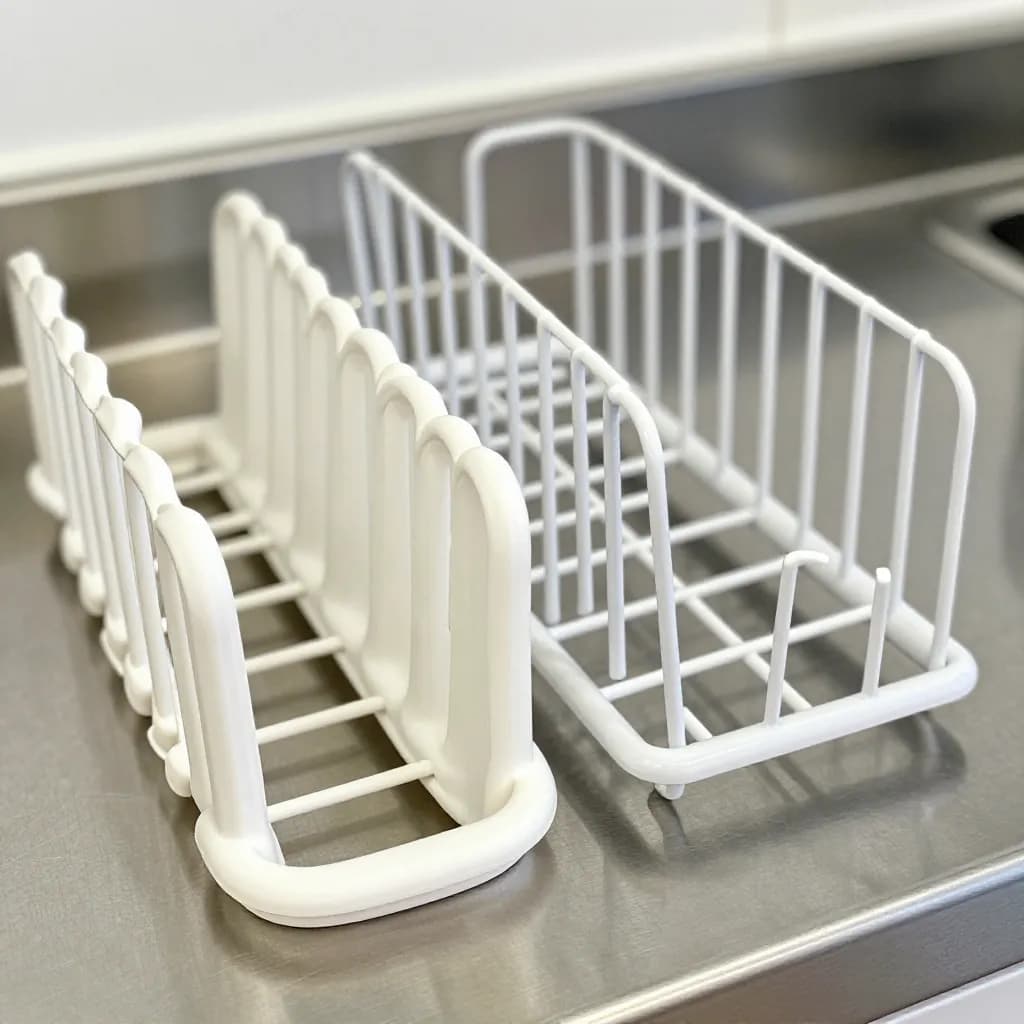
Plastisol dip coating is the most common industrial dip coating process. Plastisol is a suspension of PVC (polyvinyl chloride) resin particles in liquid plasticizer. The workpiece is preheated to 150-250°C, immersed in the liquid plastisol, and withdrawn. The heat from the workpiece causes the plastisol in contact with the surface to gel and fuse, forming a thick, rubbery PVC coating. The coating thickness is controlled by the preheat temperature, immersion time, and plastisol formulation — typical thicknesses range from 200 microns to several millimeters. Plastisol coatings are soft, flexible, and provide excellent grip, cushioning, and chemical resistance.
Ready to Start Your Project?
From one-off customs to 15,000-part production runs — get precise pricing in 24 hours.
On This Page
Understanding Dip Coating Technologies
Fluidized bed dip coating uses thermoplastic or thermoset powder that is suspended in an air stream to create a fluid-like bed. The preheated workpiece is dipped into the fluidized powder, which melts and fuses on contact with the hot surface. Common fluidized bed materials include polyethylene, nylon (polyamide), PVC, and epoxy. Coating thicknesses of 200-1,000+ microns are typical — far thicker than electrostatic powder coating. The process is simple and produces very uniform coatings on parts with regular geometries.
Electrostatic powder coating — the technology most people mean when they say powder coating — applies dry powder at 60-120 microns using electrostatic spray guns, producing a thinner, harder, more precisely controlled film than dip coating methods. The comparison between electrostatic powder coating and dip coating is therefore a comparison between precision thin-film application and heavy-duty thick-film immersion — two approaches optimized for different application requirements.
Thickness Range and Film Properties
The most obvious difference between electrostatic powder coating and dip coating is film thickness. Electrostatic powder coating typically produces films of 60-120 microns — thin enough to maintain dimensional accuracy on precision components while thick enough to provide excellent barrier protection and aesthetic quality. Dip coating processes produce much thicker films: plastisol dip coating at 200-3,000+ microns and fluidized bed coating at 200-1,000+ microns.
This thickness difference translates to fundamentally different film properties. Electrostatic powder coatings are hard, smooth, and decorative — they provide a finished surface with controlled color, gloss, and texture suitable for visible consumer and architectural applications. The crosslinked thermoset film (for polyester, epoxy, and hybrid powders) is rigid, scratch-resistant, and maintains its appearance over years of service.
Plastisol dip coatings are soft, flexible, and functional rather than decorative. The PVC film provides a cushioned, non-slip grip surface, electrical insulation, noise dampening, and chemical resistance. The thick, rubbery coating absorbs impacts and vibration, protects against abrasion, and provides a comfortable tactile surface. These properties make plastisol ideal for tool handles, wire racks, medical equipment handles, and any application where grip, cushioning, or insulation is the primary requirement.
Fluidized bed coatings using nylon or polyethylene are tough, abrasion-resistant, and chemically inert. Nylon coatings provide excellent wear resistance and low friction, making them suitable for conveyor components, bushings, and sliding surfaces. Polyethylene coatings provide outstanding chemical resistance and are used for chemical storage racks, laboratory equipment, and food processing components. The thick film build of fluidized bed coating provides a substantial physical barrier that thin-film electrostatic powder coating cannot match.
For applications requiring both aesthetic quality and functional protection, electrostatic powder coating is the clear choice. For applications requiring thick, functional coatings with specific properties — grip, cushioning, insulation, extreme chemical resistance, or heavy abrasion protection — dip coating methods deliver performance that electrostatic powder coating is not designed to provide.
Application Methods and Process Comparison
The process differences between electrostatic powder coating and dip coating affect production throughput, part geometry limitations, and quality control. Electrostatic powder coating is a spray process — powder is applied to the exterior surfaces of the workpiece using electrostatic guns, and the part is then cured in an oven. The process provides precise control over film thickness, can be automated with reciprocating or robotic guns, and handles a wide range of part sizes and geometries. Color changes are straightforward (though they require booth purging), and the process is well-suited to both batch and continuous production.
Plastisol dip coating requires preheating the workpiece, immersing it in the plastisol tank, withdrawing it at a controlled rate, and allowing excess material to drain before final curing. The process is simple but has inherent limitations: the entire part (or the portion to be coated) must be immersed, making selective coating difficult without masking. Coating thickness varies with geometry — thicker at the bottom of the part (where material accumulates during draining) and thinner at the top. Drip marks and uneven thickness at drainage points require careful process control and sometimes post-coating trimming.
Fluidized bed coating similarly requires preheating and immersion, with the added complexity of maintaining a uniform fluidized bed. The bed must be properly aerated to achieve consistent powder suspension, and the workpiece must be immersed and withdrawn smoothly to avoid disturbing the bed and creating uneven coating. Part size is limited by the dimensions of the fluidized bed container, and very large parts may require impractically large beds.
Both dip coating methods are inherently batch processes — each part is individually preheated, dipped, and cured. While the processes can be automated with conveyorized systems, the throughput is generally lower than conveyorized electrostatic powder coating lines for equivalent part sizes. However, for the specific applications where dip coating excels — dishwasher racks, tool handles, wire forms, and medical devices — the process is well-optimized and highly efficient.
Quality control differs between the processes. Electrostatic powder coating thickness is measured non-destructively with magnetic or eddy-current gauges and can be controlled within ±10-15 microns. Dip coating thickness is less precisely controlled — variations of ±50-100 microns are common — but for the thick-film applications where dip coating is used, this level of variation is acceptable.
Key Applications: Dishwasher Racks, Tools, and Wire Products
Dip coating dominates several specific application categories where its thick-film, functional properties are essential. Dishwasher racks are perhaps the most familiar dip-coated product — the white, gray, or colored coating on dishwasher baskets and racks is almost universally plastisol or PVC-based dip coating. The thick, flexible coating protects dishes and glassware from scratching, provides corrosion protection for the wire rack in the hot, humid, detergent-laden dishwasher environment, and cushions the impact of loading and unloading.
Electrostatic powder coating would be technically possible for dishwasher racks but practically inferior. The thin powder coating film (60-120 microns) would not provide the cushioning needed to protect dishes, would chip more readily at wire crossover points where racks flex during use, and would not offer the same level of corrosion protection in the aggressive dishwasher environment. The thick plastisol coating (500-1,000+ microns) is specifically engineered for this application and has proven its performance over decades of use.
Tool handles represent another dip coating stronghold. Pliers, wire cutters, screwdrivers, and hand tools with dip-coated handles benefit from the thick, cushioned, non-slip grip that plastisol provides. The coating absorbs vibration, insulates against electrical shock (for electrician's tools rated to specific voltage levels), and provides a comfortable grip surface that reduces hand fatigue during extended use. Electrostatic powder coating on tool handles would provide a hard, smooth surface with poor grip characteristics — the opposite of what the application requires.
Wire products — shelving, display racks, refrigerator shelves, shopping carts, and industrial wire baskets — are commonly dip coated for similar reasons. The thick coating protects the wire from corrosion, cushions contact with stored items, and provides a clean, easy-to-clean surface. The immersion process coats all surfaces of complex wire forms uniformly, including wire crossover points and internal surfaces that would be difficult to reach with electrostatic spray.
Medical device handles, exercise equipment grips, and playground equipment are additional applications where dip coating's thick, cushioned, non-slip properties are preferred over powder coating's thinner, harder film. In each case, the application requirement — grip, cushioning, insulation, or extreme corrosion protection — drives the selection of dip coating over electrostatic powder coating.
Where Powder Coating Outperforms Dip Coating
While dip coating excels in thick-film functional applications, electrostatic powder coating is superior across a much broader range of applications where aesthetics, precision, color variety, and moderate-thickness protection are the requirements. The vast majority of industrial metal finishing — furniture, appliances, automotive components, architectural elements, electrical enclosures, agricultural equipment, and consumer products — is better served by electrostatic powder coating than by dip coating.
Aesthetic quality is powder coating's most obvious advantage. The smooth, uniform, precisely controlled film of an electrostatic powder coating provides a finished surface quality that dip coating cannot approach. Dip coatings are inherently thicker, less uniform, and show drainage marks, drip points, and thickness variations that are acceptable for functional applications but unacceptable for decorative surfaces. A powder-coated appliance panel, furniture frame, or architectural profile has a surface quality comparable to the best liquid paint finishes — something no dip coating process can achieve.
Color range and finish variety are dramatically broader for powder coating. Electrostatic powder coatings are available in thousands of colors with matte, satin, gloss, textured, metallic, and specialty finishes. Dip coatings are available in a limited range of colors — typically white, black, gray, red, blue, yellow, and green — with a single finish type (smooth or slightly textured). For any application where specific colors, brand identity, or design aesthetics matter, powder coating is the only viable option.
Dimensional precision favors powder coating. The 60-120 micron film of electrostatic powder coating adds minimal dimensional change to the coated part, maintaining tolerances for mating surfaces, fastener holes, and assembly interfaces. Dip coatings at 200-3,000+ microns add substantial material that must be accounted for in design — and the thickness variation inherent in the dip process makes precise dimensional control difficult. For components that must fit together accurately after coating, electrostatic powder coating is the appropriate technology.
Environmental performance also favors powder coating. Plastisol dip coating uses PVC — a material that raises environmental concerns related to chlorine chemistry, plasticizer migration (particularly phthalate plasticizers), and end-of-life disposal. Electrostatic powder coatings are typically free of PVC, phthalates, and heavy metals, and their zero-VOC application and high material utilization provide a cleaner environmental profile.
Choosing Between Powder Coating and Dip Coating
The choice between electrostatic powder coating and dip coating is usually straightforward because the two technologies serve distinctly different application requirements with minimal overlap. Choose dip coating when the application requires thick, functional coatings (200+ microns) with specific properties: cushioning and grip for handles and racks, electrical insulation for tools, extreme chemical resistance for laboratory and chemical processing equipment, or heavy corrosion protection for wire products in aggressive environments.
Choose electrostatic powder coating for virtually everything else — any application where aesthetic quality, color variety, dimensional precision, and moderate-thickness barrier protection (60-120 microns) are the requirements. This encompasses the vast majority of industrial metal finishing applications, from consumer products and furniture to architectural elements and automotive components.
For applications that might benefit from both technologies, consider whether the primary requirement is functional (grip, cushioning, insulation, extreme thickness) or aesthetic (color, gloss, texture, surface quality). If functional, dip coating is likely the better choice. If aesthetic, powder coating is the clear winner. If both functional and aesthetic requirements are important, consider whether the part can be designed with different coating zones — powder coating on visible surfaces and dip coating on functional surfaces — or whether a single technology can adequately serve both needs.
The market trend is toward powder coating gaining share in applications that were traditionally dip coated, as powder coating formulations with improved flexibility, thicker film capability, and enhanced functional properties expand the technology's application range. Textured powder coatings with non-slip properties, thick-film powder coatings applied at 150-200+ microns, and flexible powder coatings for wire products are examples of this trend. However, for the core dip coating applications — dishwasher racks, tool handles, and heavy-duty wire products — the thick, cushioned, functional properties of plastisol and fluidized bed coatings remain unmatched by any spray-applied powder coating.
Frequently Asked Questions
What is the difference between dip coating and powder coating?
Dip coating involves immersing a preheated part in liquid plastisol or fluidized powder to build a thick functional coating (200-3,000+ microns). Powder coating uses electrostatic spray to apply a thinner decorative and protective film (60-120 microns). Dip coating excels for grip, cushioning, and insulation; powder coating excels for aesthetics, color variety, and precision.
Why are dishwasher racks dip coated instead of powder coated?
Dishwasher racks need a thick (500-1,000+ micron), flexible coating that cushions dishes, resists chipping at wire crossover points, and withstands the hot, humid, detergent-laden dishwasher environment. Plastisol dip coating provides these properties; powder coating's thinner, harder film would chip more readily and not provide adequate cushioning.
Can powder coating replace dip coating for tool handles?
Not effectively for most applications. Tool handles require thick, cushioned, non-slip coatings that absorb vibration and provide comfortable grip. Dip coating delivers these properties at 500-2,000+ microns. Powder coating produces a hard, smooth surface that lacks the grip and cushioning characteristics essential for tool handles.
Is fluidized bed coating the same as powder coating?
Fluidized bed coating uses powder material but applies it differently — by dipping a preheated part into a bed of air-suspended powder rather than spraying it electrostatically. Fluidized bed produces much thicker coatings (200-1,000+ microns) than electrostatic spray (60-120 microns) and is used for different applications requiring heavy-duty functional coatings.
Which is more environmentally friendly, dip coating or powder coating?
Electrostatic powder coating has a cleaner environmental profile. It produces zero VOC emissions and achieves 95-98% material utilization. Plastisol dip coating uses PVC with plasticizers that raise environmental concerns, and fluidized bed processes can generate powder waste. Powder coating is also free of PVC, phthalates, and heavy metals in standard formulations.
Ready to Start Your Project?
From one-off customs to 15,000-part production runs — get precise pricing in 24 hours.