Cerakote is a polymer-ceramic composite coating developed by NIC Industries that has gained significant popularity in the firearms, automotive, and outdoor recreation industries. Unlike powder coating, which is a dry powder applied electrostatically and cured in an oven, Cerakote is a liquid-applied coating that is sprayed using conventional HVLP or airbrush equipment and cured at temperatures ranging from ambient (air-cure variants) to 300°F (150°C) for oven-cure formulations. The coating incorporates ceramic particles within a polymer matrix, creating a thin but exceptionally hard and chemically resistant film.
Comparison
Powder Coating vs Cerakote: Firearms, Thin-Film, and Performance Comparison
Sundial Powder Coating·April 22, 2026·13 min
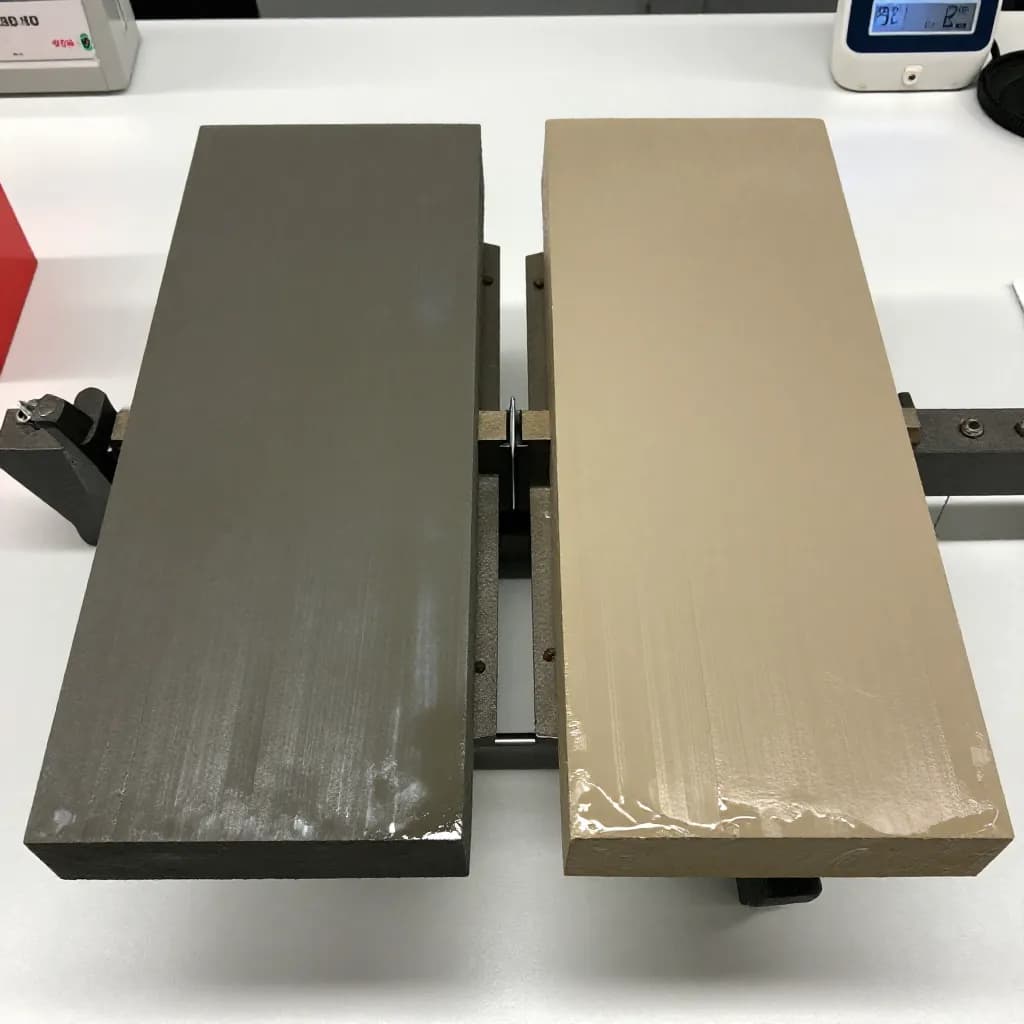
Cerakote is available in several series, each optimized for different applications. The H-Series is the most widely used, requiring oven curing at 250°F (121°C) for one hour and achieving a film thickness of just 25 microns (1 mil) per coat. The C-Series is an air-cure formulation that cures at room temperature, making it suitable for heat-sensitive substrates and field applications. The E-Series is designed for high-volume production with faster cure times. Each series offers hundreds of color options including solid colors, metallics, and specialty effects.
Ready to Start Your Project?
From one-off customs to 15,000-part production runs — get precise pricing in 24 hours.
On This Page
What Is Cerakote and How Does It Compare to Powder Coating?
Powder coating operates at a fundamentally different thickness scale. Standard powder coatings are applied at 60-120 microns (2.4-4.8 mils) — three to five times thicker than a typical Cerakote application. This thickness difference is both an advantage and a limitation depending on the application. For firearms, where dimensional tolerances on slides, frames, and internal components are measured in thousandths of an inch, Cerakote's thin film is a critical advantage. For industrial equipment, outdoor furniture, and architectural applications where maximum barrier protection is the priority, powder coating's thicker film provides superior performance.
The comparison between Cerakote and powder coating is not about which is universally superior — it is about understanding which technology is optimized for which application requirements. Cerakote excels in thin-film, precision applications where dimensional tolerance and surface hardness are paramount. Powder coating excels in thick-film, high-throughput applications where barrier protection, color variety, and cost-effectiveness are the priorities.
Film Thickness and Dimensional Impact
Film thickness is the most consequential difference between Cerakote and powder coating, and it drives the application suitability of each technology. Cerakote H-Series is typically applied at 20-25 microns (0.8-1.0 mil) per coat, with most applications using a single coat. This ultra-thin film adds negligible dimensional change to the coated part — critical for firearms components where slide-to-frame fit, trigger group clearances, and magazine well dimensions must be maintained within tight tolerances. A powder coating at 75 microns would add 0.15mm to each surface, potentially interfering with the function of precision-machined components.
For firearms applications specifically, Cerakote's thin film means that slides still cycle smoothly on frames, magazines insert and release properly, and internal components maintain their designed clearances. Powder coating a firearm slide or frame would require masking critical mating surfaces or post-coating machining to restore tolerances — adding complexity, cost, and risk of coating damage. This is the primary reason Cerakote has become the dominant coating technology in the firearms industry.
However, Cerakote's thin film is a limitation for applications requiring maximum barrier protection. At 25 microns, the coating provides less physical barrier against moisture permeation, UV radiation, and chemical exposure than a 75-100 micron powder coating. In salt spray testing, Cerakote H-Series achieves approximately 500-1,000 hours depending on substrate preparation and application quality — respectable for a 25-micron film, but generally less than the 1,000-3,000 hours achieved by properly applied powder coatings at three to four times the thickness.
The thickness comparison also affects impact resistance. Powder coating's thicker film absorbs more impact energy before the substrate is exposed, making it more resistant to stone chipping, tool drops, and mechanical abuse. Cerakote's thin film can be penetrated by impacts that a powder coating would shrug off. For applications subject to heavy mechanical abuse — industrial equipment, agricultural machinery, playground equipment — powder coating's thickness advantage translates directly to longer service life.
Hardness, Abrasion, and Chemical Resistance
Cerakote's polymer-ceramic composite formulation delivers impressive hardness and abrasion resistance for an organic coating. The H-Series achieves a pencil hardness of 9H — the maximum rating on the pencil hardness scale — compared to 2H-4H for typical powder coatings. This hardness translates to superior scratch resistance in everyday handling: a Cerakote-finished firearm or tool resists holster wear, handling marks, and light abrasion better than a powder-coated equivalent.
Abrasion resistance testing (Taber abrasion, ASTM D4060) confirms Cerakote's advantage in wear applications. The ceramic particles in the coating matrix provide hard points that resist abrasive wear, similar to how aggregate in concrete resists surface wear. For firearms that are repeatedly drawn from holsters, tools that slide against work surfaces, and components subject to repetitive contact wear, Cerakote's abrasion resistance is a meaningful advantage.
Chemical resistance is strong for both technologies but differs in specifics. Cerakote H-Series demonstrates excellent resistance to common solvents, cleaning agents, lubricants, and fuels — important for firearms that are regularly cleaned with aggressive solvents like acetone, brake cleaner, and bore solvents. Powder coatings also offer good chemical resistance, with epoxy formulations excelling against solvents and chemicals while polyester formulations prioritize UV resistance. For applications involving regular chemical exposure, the specific chemistry of the powder coating must be matched to the chemical environment.
Heat resistance is another area where Cerakote offers advantages for specific applications. The H-Series is rated for continuous exposure to 300°F (150°C) with intermittent tolerance to higher temperatures. The C-Series air-cure variant handles continuous temperatures up to 500°F (260°C). Cerakote also offers a dedicated high-temperature series rated to 1,800°F (982°C) for exhaust and engine applications. Standard polyester powder coatings are limited to approximately 150°C continuous, though high-temperature silicone powder coatings extend this to 500-600°C. For components that experience moderate heat — firearm barrels, suppressor bodies, engine accessories — Cerakote's heat tolerance is well-matched to the application.
Color Options, Patterns, and Aesthetic Capabilities
Both Cerakote and powder coating offer extensive color options, but their aesthetic capabilities differ in important ways. Cerakote offers over 300 standard colors including solid colors, metallics, and specialty effects. The liquid application method allows for techniques that are difficult or impossible with powder coating: multi-color camouflage patterns, detailed stencil work, fades and gradients, and hydrographic-style patterns applied with precision. The firearms community has embraced these capabilities, with custom Cerakote finishes becoming a significant market segment — from tactical camouflage patterns to artistic designs and themed builds.
The thin-film nature of Cerakote enables sharp pattern edges and fine detail that powder coating cannot achieve. Because Cerakote is sprayed as a liquid at 25 microns, masking tape produces clean, crisp color transitions. Powder coating's thicker film (60-120 microns) creates a more pronounced edge at masking boundaries, and the electrostatic charge can cause powder to wrap around mask edges, producing less defined transitions. For detailed multi-color work, Cerakote's precision is a clear advantage.
Powder coating counters with its own aesthetic strengths. The range of textures available in powder coating — wrinkle, hammer-tone, sand, leather, and structured finishes — is broader than Cerakote's primarily smooth finish options. Powder coating's thicker film also produces a more substantial, luxurious feel on surfaces, and high-gloss powder coatings achieve a depth of image that thin-film coatings cannot match. For applications where a rich, deep finish is desired — automotive wheels, furniture, architectural panels — powder coating's film build contributes to visual quality.
Sublimation transfer technology gives powder coating the ability to produce photorealistic wood-grain, stone, and custom graphic effects that Cerakote cannot replicate. These effects require the thick, smooth powder coating film as a receptor for the sublimation dye transfer process. For architectural and decorative applications where realistic material simulation is desired, powder coating with sublimation transfer is the only option.
UV stability varies by formulation for both technologies. Cerakote H-Series uses UV-stable pigments and binders that maintain color well in exterior exposure, though long-term weathering data comparable to Qualicoat or AAMA testing is not widely published. Powder coatings formulated with superdurable polyester resins are specifically engineered for decades of exterior exposure and are certified to rigorous weathering standards. For long-term exterior applications, powder coating's proven UV performance and certification infrastructure provide greater confidence.
Application Process and Accessibility
The application processes for Cerakote and powder coating differ significantly in equipment requirements, operator skill, and production throughput. Cerakote is applied using conventional HVLP spray guns or airbrush equipment at low pressures (15-25 PSI), making the basic equipment relatively affordable and accessible. However, achieving consistent, defect-free results requires significant operator skill — controlling film thickness at 25 microns demands precise gun technique, proper atomization, and careful overlap patterns. Too thick an application can cause runs, sags, and adhesion issues; too thin leaves inadequate protection.
Surface preparation for Cerakote is critical and typically involves media blasting to create a surface profile, followed by solvent degreasing and sometimes a phosphate or other conversion coating. The blasting step is essential — Cerakote relies heavily on mechanical adhesion to the roughened surface, and inadequate preparation is the most common cause of coating failure. Some applicators also apply a dedicated Cerakote primer before the topcoat for maximum adhesion and corrosion protection.
Powder coating application uses electrostatic spray guns that are more forgiving of operator technique. The electrostatic attraction between charged powder particles and the grounded workpiece provides a self-leveling effect that helps achieve uniform coverage. Film thickness is controlled by gun settings, powder flow rate, and application time, with typical tolerances of ±10-15 microns — less precise than Cerakote but adequate for the thicker films involved. Automated powder coating with reciprocating or robotic guns achieves highly consistent results at production speeds that manual Cerakote application cannot match.
Curing requirements differ as well. Cerakote H-Series cures at 250°F (121°C) for one hour — a lower temperature than most powder coatings (325-400°F / 160-200°C) but a longer cure time. The lower cure temperature is advantageous for heat-sensitive substrates and components with polymer or rubber elements that cannot withstand powder coating cure temperatures. Cerakote C-Series air-cures at room temperature over 5-7 days (or can be accelerated with moderate heat), eliminating the need for an oven entirely — useful for large assemblies, field repairs, and components that cannot be oven-cured.
For production throughput, powder coating has a decisive advantage. Conveyorized powder coating lines can process thousands of parts per hour with automated application, curing, and quality control. Cerakote application is predominantly manual, with each part requiring individual attention from a skilled applicator. This makes Cerakote well-suited to custom, low-volume, and high-value applications but impractical for high-volume industrial production.
Firearms-Specific Performance Comparison
The firearms industry is where the Cerakote versus powder coating debate is most active, and it is worth examining the specific performance requirements that drive coating selection for firearms. Firearms coatings must withstand a unique combination of stresses: mechanical wear from holster draw and reholster cycles, chemical exposure to aggressive cleaning solvents and lubricants, heat from sustained firing (barrel temperatures can exceed 300°C during rapid fire), impact from recoil and handling, and corrosion from sweat, humidity, and environmental exposure.
Cerakote has become the dominant aftermarket firearms coating because it addresses all these requirements while maintaining the tight dimensional tolerances that firearms demand. The 25-micron film thickness preserves slide-to-frame fit, trigger pull characteristics, and magazine function. The 9H hardness resists holster wear and handling marks. The chemical resistance withstands bore solvents, CLP (cleaner-lubricant-protectant), and other aggressive cleaning agents. The heat tolerance handles barrel and suppressor temperatures during normal use.
Powder coating is used on firearms, but primarily for components where dimensional tolerance is less critical — trigger guards, magazine base plates, handguard rails, scope rings, and accessories. Some manufacturers powder coat complete firearms using specialized thin-film powder formulations and careful masking of critical surfaces, but this requires more process control than Cerakote application. The thicker powder coating film provides better corrosion protection on these non-critical-tolerance components, and the wider range of textures (wrinkle finishes are popular for grip surfaces) adds functional value.
For factory-applied firearms finishes, other technologies compete with both Cerakote and powder coating. Nitride/Melonite treatments, Parkerizing (manganese or zinc phosphate), and DLC (diamond-like carbon) coatings each offer specific advantages for firearms applications. Cerakote and powder coating are primarily aftermarket and custom finishing technologies, chosen for their color options and customization potential as much as their protective performance.
The firearms market illustrates a broader principle: Cerakote excels when thin-film precision, surface hardness, and custom aesthetics are the priorities, while powder coating excels when thick-film protection, production efficiency, and cost-effectiveness are more important. Many firearms enthusiasts and professional applicators use both technologies, selecting the optimal coating for each component based on its specific requirements.
Choosing Between Cerakote and Powder Coating
The choice between Cerakote and powder coating should be guided by the specific requirements of the application rather than brand loyalty or general preference. Choose Cerakote when dimensional tolerance is critical — firearms slides and frames, precision instruments, close-tolerance mechanical assemblies — and when the thin film must not interfere with component function. Choose Cerakote when surface hardness and abrasion resistance are priorities for thin components that cannot accommodate powder coating's thickness. Choose Cerakote when detailed multi-color patterns, camouflage, or fine graphic work is required.
Choose powder coating when maximum barrier protection is the priority — outdoor furniture, architectural panels, industrial equipment, automotive wheels — and when the thicker film provides meaningful performance advantages. Choose powder coating when production volume demands automated, high-throughput application. Choose powder coating when long-term exterior UV resistance is required and must be certified to recognized standards like Qualicoat, GSB, or AAMA. Choose powder coating when textured finishes, sublimation transfers, or deep high-gloss effects are desired.
For many applications, the choice is clear-cut. No one would Cerakote an architectural facade, and no one would powder coat a precision firearm slide. The interesting decisions arise in the middle ground — automotive accessories, motorcycle components, sporting goods, and custom fabrication — where both technologies could technically serve. In these cases, consider the operating environment (temperature, chemical exposure, UV), the dimensional sensitivity of the part, the desired aesthetic, the production volume, and the available applicator expertise.
Both Cerakote and powder coating continue to evolve. Cerakote is developing thicker-film formulations for applications that benefit from greater barrier protection, while powder coating manufacturers are developing thinner-film formulations that improve penetration into recesses and reduce dimensional impact. As these technologies converge in capability, the application-specific advantages of each will narrow, but the fundamental difference — thin-film precision versus thick-film protection — will continue to define their respective strengths.
Frequently Asked Questions
Is Cerakote better than powder coating for guns?
For firearms, Cerakote is generally preferred because its 25-micron thin film preserves critical dimensional tolerances on slides, frames, and internal components. Its 9H hardness resists holster wear, and it withstands cleaning solvents and moderate heat. Powder coating works well for non-critical-tolerance parts like trigger guards, accessories, and handguard rails.
Is Cerakote thinner than powder coating?
Yes, significantly. Cerakote is typically applied at 20-25 microns per coat, while powder coating is applied at 60-120 microns. This makes Cerakote ideal for precision components where dimensional tolerance matters, while powder coating's thicker film provides superior barrier protection for general industrial and architectural applications.
Does Cerakote last longer than powder coating?
Durability depends on the application. Cerakote's superior hardness (9H) provides better scratch and abrasion resistance, but powder coating's thicker film offers better impact resistance and barrier protection against corrosion. In salt spray testing, properly applied powder coating generally outperforms Cerakote due to its greater film thickness.
Can you Cerakote over powder coating?
It is not recommended. Cerakote requires a specific surface profile (typically media-blasted bare metal) for proper adhesion. Applying Cerakote over powder coating would create an adhesion risk at the Cerakote-to-powder-coat interface. If switching finishes, the existing coating should be fully removed before applying the new one.
Which is more expensive, Cerakote or powder coating?
Cerakote is typically more expensive per part due to the manual application process, higher material cost, and skilled labor required. Powder coating benefits from automated application and material reclaim, making it more cost-effective for production volumes. For custom, low-volume work like individual firearms, the cost difference is less significant.
Ready to Start Your Project?
From one-off customs to 15,000-part production runs — get precise pricing in 24 hours.