The choice between powder coating and a brushed or polished metal finish represents a fundamental design decision: should the metal substrate be celebrated as a visible material, or should it be covered with a coating that provides color, texture, and enhanced protection? This is not primarily a technical comparison — both approaches can deliver excellent long-term performance when properly specified — but rather an aesthetic and philosophical choice about how metal surfaces should look and feel in the built environment.
Comparison
Powder Coating vs Brushed and Polished Metal Finishes: Aesthetics and Maintenance
Sundial Powder Coating·April 22, 2026·12 min
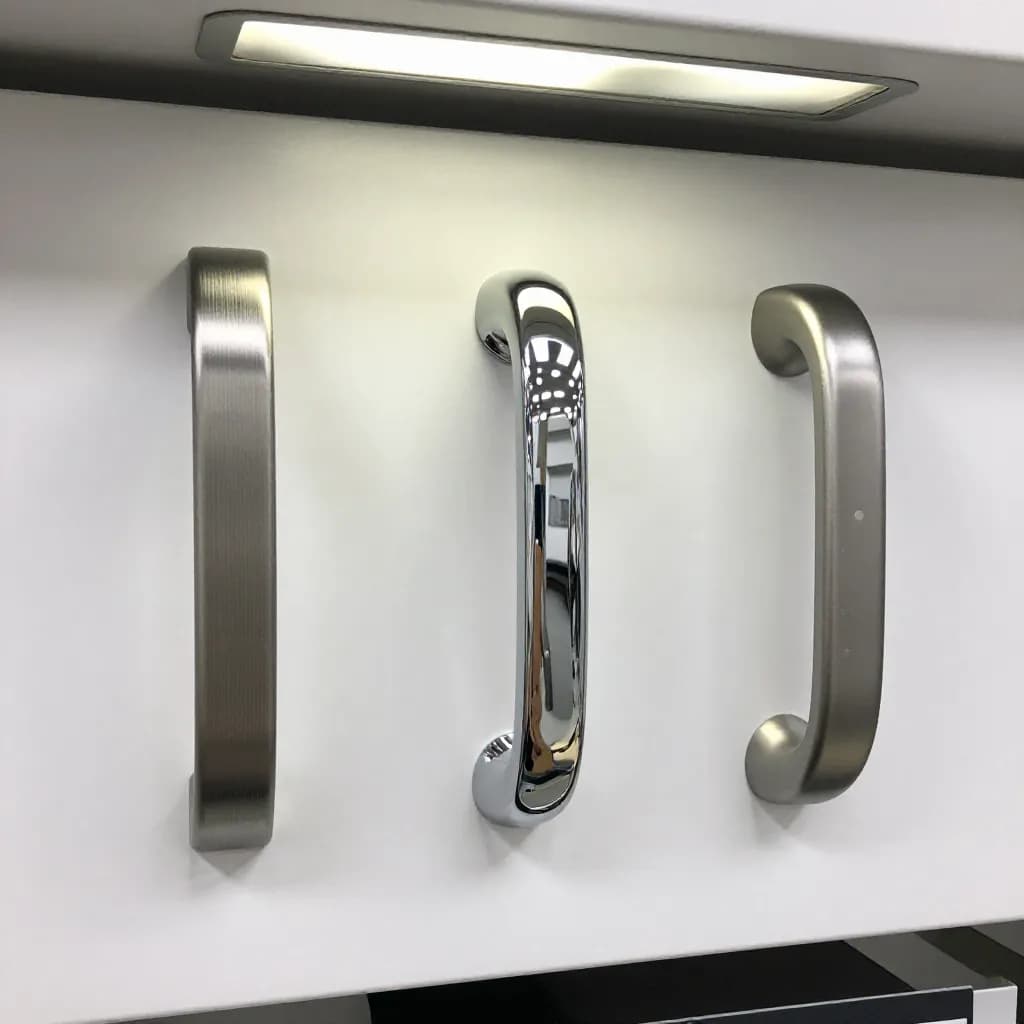
Brushed metal finishes are created by abrading the metal surface with a unidirectional abrasive — typically Scotch-Brite pads, abrasive belts, or wire brushes — to produce a pattern of fine, parallel lines. The result is a satin-like surface with a soft, directional sheen that diffuses light rather than reflecting it sharply. Brushed finishes are most commonly applied to stainless steel (grades 304 and 316), aluminum, brass, copper, and titanium. The brushed texture is designated by grit number — #4 finish (the most common architectural brushed finish) uses 120-180 grit abrasive to produce a medium-fine directional grain.
Ready to Start Your Project?
From one-off customs to 15,000-part production runs — get precise pricing in 24 hours.
On This Page
The Appeal of Bare Metal vs Coated Surfaces
Polished metal finishes range from semi-bright (#6 finish) to mirror-bright (#8 finish), achieved through progressively finer abrasive stages followed by buffing with polishing compounds. A mirror-polished stainless steel surface reflects light with near-perfect clarity, creating a dramatic visual effect that no coating can replicate. The depth and brilliance of a polished metal surface comes from the metal itself — the crystalline structure, the electron behavior at the surface, and the precise flatness achieved through polishing.
Powder coating covers the metal surface entirely, replacing the natural metallic appearance with a controlled color, texture, and gloss. While powder coatings can approximate metallic appearances through metallic pigments and bonded metallic formulations, they cannot truly replicate the depth, luster, and material authenticity of a genuine brushed or polished metal surface. What powder coating offers instead is unlimited color freedom, enhanced corrosion protection, reduced maintenance, and consistent appearance across large surface areas — advantages that are decisive for many applications.
Maintenance: The Decisive Practical Difference
Maintenance requirements represent the most significant practical difference between powder-coated and bare metal finishes, and this difference often drives the specification decision for commercial and architectural applications. Brushed and polished metal surfaces — particularly stainless steel — require regular, careful maintenance to preserve their appearance. Fingerprints, smudges, water spots, and surface contamination are highly visible on bare metal surfaces and must be cleaned frequently to maintain an acceptable appearance.
Fingerprint visibility is the most common complaint about bare metal finishes in high-traffic environments. The oils and salts in human skin leave visible marks on brushed and polished stainless steel that are immediately apparent, particularly under directional lighting. In commercial interiors — elevator panels, reception desks, handrails, door hardware, and kitchen equipment — fingerprint management is a constant maintenance burden. Anti-fingerprint coatings and treatments can reduce but not eliminate this issue.
Powder-coated surfaces are essentially fingerprint-proof. The organic coating does not show fingerprints under normal conditions, and any marks that do appear are easily removed with a damp cloth. This maintenance advantage is particularly valuable in high-traffic commercial environments where cleaning labor costs are significant. A powder-coated elevator interior requires a fraction of the cleaning attention that a brushed stainless steel interior demands.
Corrosion maintenance also differs. While stainless steel is inherently corrosion-resistant, it is not corrosion-proof. In coastal environments, industrial atmospheres, and areas where chloride-containing cleaning agents are used, stainless steel can develop tea staining (brown discoloration from surface corrosion), pitting, and crevice corrosion. Maintaining stainless steel in these environments requires regular cleaning with appropriate agents and periodic passivation treatments. Powder-coated surfaces provide a complete barrier against environmental corrosion, requiring only periodic washing with mild detergent.
For aluminum, the maintenance comparison is even more decisive. Bare brushed aluminum oxidizes rapidly in exterior exposure, developing a dull, uneven gray patina that many find unattractive. Maintaining a consistent brushed aluminum appearance outdoors requires regular cleaning and potentially re-brushing — an impractical maintenance burden for most applications. Powder-coated aluminum maintains its appearance for 15-25 years with minimal maintenance, making it the standard choice for exterior architectural aluminum.
Aesthetic Character: Material Authenticity vs Design Freedom
The aesthetic comparison between bare metal and powder coating comes down to a fundamental design choice: material authenticity versus design freedom. Brushed and polished metal finishes celebrate the inherent beauty of the metal — its color, luster, grain, and tactile quality. A brushed stainless steel panel has a warmth and depth that comes from the metal itself, changing subtly with viewing angle and lighting conditions. A polished brass surface develops a rich patina over time that tells the story of its use and age. These material qualities cannot be replicated by any applied coating.
This material authenticity is highly valued in certain design contexts. High-end commercial interiors, luxury retail environments, premium residential kitchens, and contemporary architectural features often specify brushed or polished metal precisely because the material quality communicates craftsmanship, permanence, and sophistication. The tactile experience of touching real metal — cool, smooth, substantial — adds a sensory dimension that coated surfaces lack.
Powder coating offers a completely different aesthetic proposition: total design freedom. Any color from any color system can be matched. Finishes range from ultra-matte to mirror gloss, from smooth to heavily textured, from solid to metallic, pearlescent, and special-effect. Wood-grain, stone, and custom graphic effects are achievable through sublimation transfer. This design freedom enables architects and designers to realize specific color palettes, brand identities, and design concepts that bare metal finishes cannot accommodate.
For large-scale architectural applications — building facades, curtain walls, cladding systems — powder coating's ability to deliver consistent color across thousands of square meters is a practical necessity. Achieving consistent brushed or polished metal appearance across a large facade is extremely challenging and expensive, as variations in alloy composition, processing history, and finishing technique produce visible differences between panels. Powder coating normalizes these variations, producing a uniform appearance regardless of substrate variations.
The design trend in contemporary architecture increasingly combines both approaches — brushed or polished metal accents alongside powder-coated surfaces — to create visual contrast and material richness. A building might feature brushed stainless steel entrance canopies alongside powder-coated aluminum cladding, or polished brass hardware against matte powder-coated door frames. This combined approach leverages the strengths of each finish for maximum design impact.
Corrosion Protection and Long-Term Performance
Corrosion protection is an area where the comparison depends heavily on the specific metal substrate. Stainless steel — the most common bare metal finish material — has inherent corrosion resistance due to its chromium content (minimum 10.5% by weight), which forms a self-healing chromium oxide passive layer on the surface. In mild environments, stainless steel maintains its appearance indefinitely without any coating. However, in aggressive environments — coastal, industrial, swimming pool, or food processing — even stainless steel can corrode, and the grade selection (304 vs 316 vs duplex) becomes critical.
Aluminum forms a natural oxide layer that provides basic corrosion protection, but this oxide is thin (2-5 nanometers) and provides limited protection in aggressive environments. Bare brushed aluminum in exterior exposure will develop an uneven, dull gray patina within months to years depending on the environment. For exterior architectural aluminum, some form of protective finish — anodizing or powder coating — is essential for long-term appearance and protection.
Powder coating provides a thick (60-120 micron) organic barrier that completely isolates the metal substrate from the environment. This barrier protection is effective on any metal substrate — steel, aluminum, zinc, magnesium — and provides consistent, predictable corrosion resistance regardless of the base metal's inherent corrosion properties. For carbon steel, which has no inherent corrosion resistance, powder coating (over proper pretreatment) is essential for any exterior or corrosive environment application.
The long-term performance comparison for architectural applications favors powder coating in most environments. A powder-coated aluminum facade will maintain its appearance for 20-25 years with minimal maintenance. A brushed stainless steel facade will maintain its structural integrity indefinitely but requires regular cleaning to maintain appearance, and may develop tea staining or discoloration in coastal or polluted environments. The total cost of ownership — including initial finishing cost, maintenance labor, and periodic restoration — typically favors powder coating for large-area architectural applications.
For small-scale, high-value applications — door hardware, handrails, elevator interiors, kitchen equipment — the maintenance cost of bare metal finishes is more manageable, and the aesthetic premium of real metal may justify the additional upkeep. The decision should consider both the initial aesthetic intent and the long-term maintenance commitment.
Substrate Considerations: Which Metals Work Best Bare?
Not all metals are equally suitable for bare brushed or polished finishes, and the substrate choice significantly affects the viability and maintenance requirements of an uncoated metal surface. Stainless steel is the most practical choice for bare metal finishes in most environments. Its self-healing passive layer provides inherent corrosion resistance, and the material is available in a wide range of finishes from rough mill finish to mirror polish. Grade 316 stainless steel (with molybdenum for enhanced chloride resistance) is recommended for coastal and marine environments, while grade 304 is adequate for most interior and mild exterior applications.
Aluminum can be brushed or polished to an attractive finish, but maintaining that finish in exterior exposure is challenging due to the metal's tendency to oxidize unevenly. Anodizing provides a more practical approach to showcasing aluminum's metallic character — the transparent anodic oxide layer preserves the metal's appearance while providing enhanced corrosion protection and surface hardness. For exterior architectural aluminum where a metallic appearance is desired, anodizing is generally preferred over bare brushed aluminum.
Brass and copper develop a natural patina over time — green verdigris on copper, dark brown on brass — that some designers find attractive and others find unacceptable. The patina can be controlled through lacquering or waxing, but these treatments require periodic renewal. For applications where a consistent, unchanging metallic appearance is required, powder coating eliminates the patina issue entirely while sacrificing the material authenticity of bare brass or copper.
Carbon steel cannot be left bare in any environment — it corrodes rapidly and aggressively. Brushed or polished carbon steel finishes are only viable in completely controlled indoor environments with regular oiling or waxing, or behind a clear protective coating. For any practical application, carbon steel requires either powder coating, plating, or another protective finish.
The substrate choice often determines whether a bare metal or powder-coated finish is more practical. Stainless steel and anodized aluminum are the most viable bare metal options for architectural and commercial applications. For all other metals — carbon steel, untreated aluminum, zinc, magnesium — powder coating or another protective finish is necessary for any exterior or corrosive environment application.
Making the Design Decision: Bare Metal or Powder Coating
The choice between bare metal and powder coating should be driven by design intent, maintenance commitment, environmental conditions, and budget. Choose brushed or polished metal when the design celebrates material authenticity — when the metal's inherent color, luster, and tactile quality are essential to the design concept. This is most appropriate for high-end commercial interiors, luxury residential applications, feature elements and accents, and applications where the material quality communicates brand values.
Choose powder coating when the design requires specific colors, consistent appearance across large areas, reduced maintenance, or enhanced corrosion protection. This is appropriate for building facades and cladding, fenestration systems, outdoor furniture and equipment, commercial and institutional interiors where maintenance efficiency matters, and any application on carbon steel or untreated aluminum.
Consider combining both finishes when the design benefits from material contrast — brushed metal accents against powder-coated backgrounds, polished metal hardware on powder-coated doors, or stainless steel feature panels within a powder-coated facade system. This combined approach is increasingly popular in contemporary architecture and interior design, creating visual richness through the interplay of material textures.
Budget considerations should include long-term maintenance costs, not just initial finishing costs. Bare metal finishes may have lower initial cost (no coating to apply) but higher lifetime maintenance costs (regular cleaning, periodic restoration). Powder coating has a moderate initial cost but very low lifetime maintenance costs. For large-area applications with long service lives, powder coating typically delivers lower total cost of ownership.
The trend in architectural and commercial design is toward thoughtful material selection — using bare metal where its unique qualities add genuine value to the design, and powder coating where color, consistency, and low maintenance are the priorities. The most successful projects use both approaches strategically, placing each finish where it contributes most to the overall design intent.
Frequently Asked Questions
Does powder coating show fingerprints like brushed metal?
No. Powder-coated surfaces are essentially fingerprint-proof under normal conditions, while brushed and polished stainless steel shows fingerprints prominently. This maintenance advantage makes powder coating preferred for high-traffic commercial environments like elevators, lobbies, and public spaces where cleaning labor costs are significant.
Can powder coating replicate a brushed metal look?
Metallic powder coatings can approximate a brushed metal appearance, but they cannot truly replicate the depth, luster, and material authenticity of genuine brushed stainless steel or aluminum. For applications where a metallic look is desired without the maintenance of bare metal, metallic powder coatings provide a practical compromise.
Which requires more maintenance, brushed metal or powder coating?
Brushed metal requires significantly more maintenance. Fingerprints, smudges, and water spots must be cleaned regularly, and the surface may need periodic re-brushing or passivation. Powder coating requires only occasional washing with mild detergent. For large commercial installations, the maintenance cost difference is substantial.
Is brushed stainless steel better than powder coating for outdoor use?
It depends on the environment and maintenance commitment. Grade 316 stainless steel performs well outdoors but requires regular cleaning to prevent tea staining in coastal areas. Powder-coated aluminum provides 20-25 years of maintenance-free exterior performance. For most outdoor applications, powder coating offers better value and lower maintenance.
Can you powder coat over brushed stainless steel?
Technically possible but rarely done, as it defeats the purpose of using stainless steel. If a coated finish is desired, it is more cost-effective to use carbon steel or aluminum with powder coating rather than coating expensive stainless steel. Stainless steel is chosen specifically for its bare metal appearance and corrosion resistance.
Ready to Start Your Project?
From one-off customs to 15,000-part production runs — get precise pricing in 24 hours.