Gun bluing is one of the oldest and most traditional metal finishing processes in the firearms industry, dating back centuries to when gunsmiths discovered that controlled oxidation of steel produced an attractive blue-black finish that provided modest corrosion protection. The process creates a thin layer of magnetite (Fe3O4) or selenium dioxide on the steel surface, producing the characteristic deep blue-black color that has defined the appearance of fine firearms for generations.
Comparison
Powder Coating vs Bluing for Firearms: Aesthetics, Protection, and Durability
Sundial Powder Coating·April 22, 2026·10 min
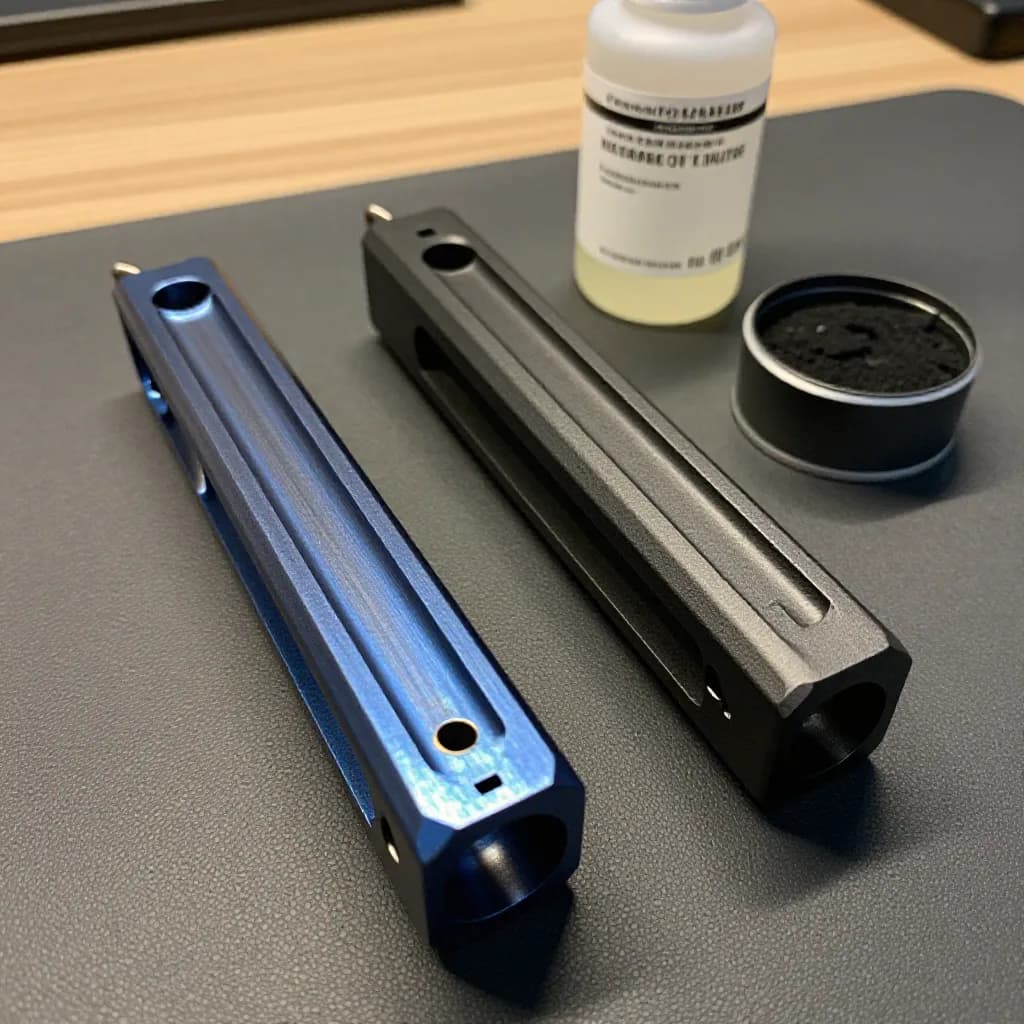
There are several bluing methods, each producing slightly different results. Hot caustic bluing — the most common commercial method — involves immersing steel parts in a boiling solution of sodium hydroxide, sodium nitrate, and sodium nitrite at approximately 150 degrees Celsius. The chemical reaction converts the surface iron into a controlled oxide layer that is typically 0.5 to 2 microns thick. Cold bluing uses selenium dioxide or copper sulfate solutions applied at room temperature for touch-up and small-scale work, producing a less durable finish than hot bluing. Rust bluing and nitre bluing are traditional methods that produce particularly attractive finishes valued by collectors and custom gunsmiths.
Ready to Start Your Project?
From one-off customs to 15,000-part production runs — get precise pricing in 24 hours.
On This Page
The Art and Science of Gun Bluing
The appeal of bluing extends beyond mere protection. A well-executed hot blue on polished steel produces a deep, lustrous blue-black finish with a warmth and depth that many firearms enthusiasts consider the most beautiful of all gun finishes. The finish reveals the underlying steel grain and polish quality, making it a showcase for the gunsmith's metalwork. This aesthetic quality is why bluing remains the preferred finish for high-end sporting firearms, custom revolvers, and collectible weapons despite the availability of more protective modern alternatives.
Powder Coating as a Modern Firearms Finish
Powder coating entered the firearms market as manufacturers and custom builders sought finishes that offered dramatically better protection than traditional bluing while providing the color options and customization that modern shooters demand. The thick, cross-linked polymer film of powder coating provides a level of corrosion, abrasion, and chemical resistance that bluing cannot approach, making it particularly attractive for tactical, duty, and outdoor firearms that must perform reliably in harsh conditions.
Modern powder coating formulations for firearms are specifically engineered to withstand the unique demands of weapon use — heat from sustained firing, chemical exposure from cleaning solvents and propellant residues, mechanical wear from holster draw and reholster cycles, and impact from field use. These formulations maintain adhesion and integrity at temperatures well above those generated by normal firing, and they resist the aggressive solvents used in firearms cleaning without softening or lifting.
The color palette available in powder coating has been a major driver of its adoption in the firearms market. While bluing produces only variations of blue-black, powder coating offers virtually any color — flat dark earth, olive drab, coyote tan, tungsten gray, and hundreds of other tactical and custom colors. Multi-color applications, camouflage patterns, and custom color matching are all achievable with powder coating, giving shooters and builders design freedom that traditional finishes cannot provide.
Corrosion Protection: A Decisive Comparison
The corrosion protection comparison between bluing and powder coating is not close. Bluing provides minimal corrosion protection — the thin oxide layer is porous and offers only a slight improvement over bare steel. Like parkerizing, blued surfaces must be maintained with a film of oil or preservative to prevent rust. In humid environments, a blued firearm left without oil protection can develop surface rust within days. In salt spray testing, blued steel typically shows red rust within 2 to 4 hours.
Powder coating provides corrosion protection that is orders of magnitude better than bluing. The 60 to 120 micron polymer film creates a continuous, impervious barrier against moisture, salt spray, chemicals, and atmospheric corrosion. Properly applied powder coatings on firearms routinely exceed 500 hours of salt spray resistance — more than 100 times the protection provided by bluing. This level of protection means a powder-coated firearm can be exposed to rain, sweat, saltwater, and humidity without developing corrosion, even without regular oil application.
For firearms used in demanding environments — military service, law enforcement duty, marine environments, hunting in wet conditions, and everyday carry where the weapon is exposed to body sweat — powder coating's superior corrosion resistance provides a genuine operational advantage. The weapon maintains its appearance and function without the constant oil maintenance that blued firearms require, reducing the risk of corrosion-related malfunctions and extending the weapon's service life.
Aesthetics and Collector Value
Aesthetics is the one area where bluing retains a strong advantage for specific market segments. The deep, lustrous blue-black finish of a properly blued firearm has an elegance and warmth that powder coating does not replicate. The finish is translucent — it reveals the underlying steel surface, including the polish quality, grain structure, and any engraving or decorative work. This transparency makes bluing the finish of choice for high-end sporting shotguns, custom revolvers, and collectible firearms where the quality of the metalwork is a defining feature.
Powder coating produces an opaque finish that completely covers the underlying metal surface. While this provides uniform, consistent color and excellent protection, it obscures the metal surface beneath. For firearms where the steel quality and surface preparation are part of the value proposition — fine English shotguns, custom 1911 pistols, and collectible revolvers — covering the metal with an opaque coating would diminish rather than enhance the weapon's appeal.
Collector value is another consideration. Original bluing on vintage and collectible firearms is an important factor in determining the weapon's value. Refinishing a collectible firearm with powder coating would typically reduce its collector value, while a proper re-blue that matches the original finish specification can maintain or restore value. For the collector market, bluing is not just a finish — it is part of the weapon's historical authenticity and provenance.
Durability and Wear Characteristics
Wear resistance is another area where powder coating significantly outperforms bluing. The thin bluing layer wears through relatively quickly at contact points — holster wear on carry pistols, handling wear on grip areas, and mechanical wear on action surfaces can expose bare steel within months of regular use. This wear is often considered attractive by firearms enthusiasts — a well-worn blued revolver with honest holster wear has a character that many shooters appreciate — but it does represent a loss of the already minimal corrosion protection.
Powder coating's thick film resists wear far more effectively than bluing. The 60 to 120 micron polymer layer can absorb significant abrasion, holster wear, and handling contact before wearing through to the substrate. For duty weapons that are drawn and reholstered thousands of times, and for tactical weapons that are used hard in training and field operations, powder coating maintains its protective integrity far longer than bluing.
Chemical resistance is also superior for powder coating. Bluing is vulnerable to many common firearms cleaning solvents — aggressive bore cleaners, carbon removers, and copper solvents can strip or damage bluing if left in contact too long. Powder coating resists these solvents without damage, allowing thorough cleaning without concern for the finish. This chemical resistance is particularly valuable for military and law enforcement weapons that undergo frequent and aggressive cleaning regimes.
Application and Practical Considerations
Bluing is a relatively simple process that can be performed by individual gunsmiths and even skilled hobbyists with basic equipment. Hot caustic bluing requires a heated tank, chemical solutions, and proper ventilation, but the equipment investment is modest compared to a powder coating system. Cold bluing can be performed with nothing more than a bottle of bluing solution and cotton swabs, making it accessible for touch-up and small-scale work. This accessibility has helped maintain bluing's popularity in the custom and hobbyist firearms community.
Powder coating requires more specialized equipment — an electrostatic spray gun, a curing oven large enough to accommodate firearm components, and proper ventilation. The equipment investment is higher than for bluing, but the per-part cost can be lower for production volumes because of powder coating's higher material efficiency and faster processing time. Many firearms manufacturers and custom shops have invested in powder coating equipment specifically for the superior protection and color options it provides.
Disassembly and masking requirements are similar for both processes. Both bluing and powder coating require complete disassembly of the firearm and masking of surfaces that must remain uncoated — trigger mechanisms, sear surfaces, barrel bores, and chamber areas. Powder coating requires more careful masking due to its thicker film, particularly on mating surfaces where the added thickness could affect fit and function.
Choosing the Right Finish for Your Firearm
Choose bluing when aesthetics and tradition are the primary considerations — fine sporting firearms, custom revolvers, collectible weapons, and any firearm where the beauty of the steel surface is part of the design intent. Bluing is also appropriate for firearms that will receive regular oil maintenance and are primarily used in controlled environments. The deep, warm blue-black finish of a properly blued firearm remains one of the most attractive metal finishes in any industry.
Choose powder coating when protection, durability, and low maintenance are priorities — tactical firearms, duty weapons, hunting rifles used in wet conditions, marine firearms, and any weapon that must perform reliably in harsh environments without constant maintenance. Powder coating is also the choice when color customization is desired, as it offers virtually unlimited color options compared to bluing's single blue-black tone.
For many modern firearms owners, the practical advantages of powder coating outweigh the aesthetic appeal of bluing. A powder-coated firearm can be carried daily, used in rain and humidity, cleaned with aggressive solvents, and stored without obsessive oil maintenance — all while maintaining its appearance and corrosion protection. For firearms that are tools rather than art objects, powder coating is the finish that best serves the weapon's functional purpose.
Frequently Asked Questions
Is bluing or powder coating better for a carry pistol?
Powder coating is better for a carry pistol. Daily carry exposes the weapon to body sweat, humidity, and holster wear. Powder coating resists all of these far better than bluing, maintaining protection without constant oil maintenance. Bluing on a carry pistol will show wear quickly and requires regular oiling to prevent corrosion.
Does powder coating affect the value of a collectible firearm?
Yes, negatively. Powder coating a collectible firearm would typically reduce its value because it covers the original metal surface and is not a period-correct finish. For collectible weapons, proper re-bluing that matches the original specification is preferred to maintain authenticity and value.
How much more corrosion-resistant is powder coating than bluing?
Powder coating provides roughly 100 times more salt spray resistance than bluing. Blued steel typically shows rust within 2-4 hours of salt spray exposure, while powder coating routinely exceeds 500 hours. This dramatic difference makes powder coating the clear choice for firearms used in corrosive environments.
Can you blue a firearm at home?
Cold bluing can be done at home with commercially available bluing solutions for touch-up work. Hot caustic bluing requires heated chemical tanks and proper safety equipment, making it more suitable for gunsmiths with dedicated workshop space. Powder coating requires an electrostatic gun and curing oven but produces a far more durable result.
Why do high-end shotguns still use bluing instead of powder coating?
High-end sporting shotguns use bluing because the translucent blue-black finish reveals the quality of the underlying steel, polish, and engraving work. The aesthetic warmth and depth of a fine blue finish is part of the weapon's luxury appeal. Powder coating's opaque film would obscure these qualities, diminishing the visual character that defines premium firearms.
Ready to Start Your Project?
From one-off customs to 15,000-part production runs — get precise pricing in 24 hours.