Automotive OEM paint systems are among the most sophisticated coating technologies in any industry. A modern factory-applied automotive paint system consists of four to five distinct layers, each serving a specific function in the overall coating system. The process begins with extensive body preparation including cleaning, phosphate pretreatment, and electrodeposition primer (e-coat), followed by primer surfacer, basecoat, and clearcoat layers applied in a carefully controlled sequence.
Comparison
Powder Coating vs Automotive OEM Paint: Factory Finish vs Aftermarket Powder
Sundial Powder Coating·April 22, 2026·11 min
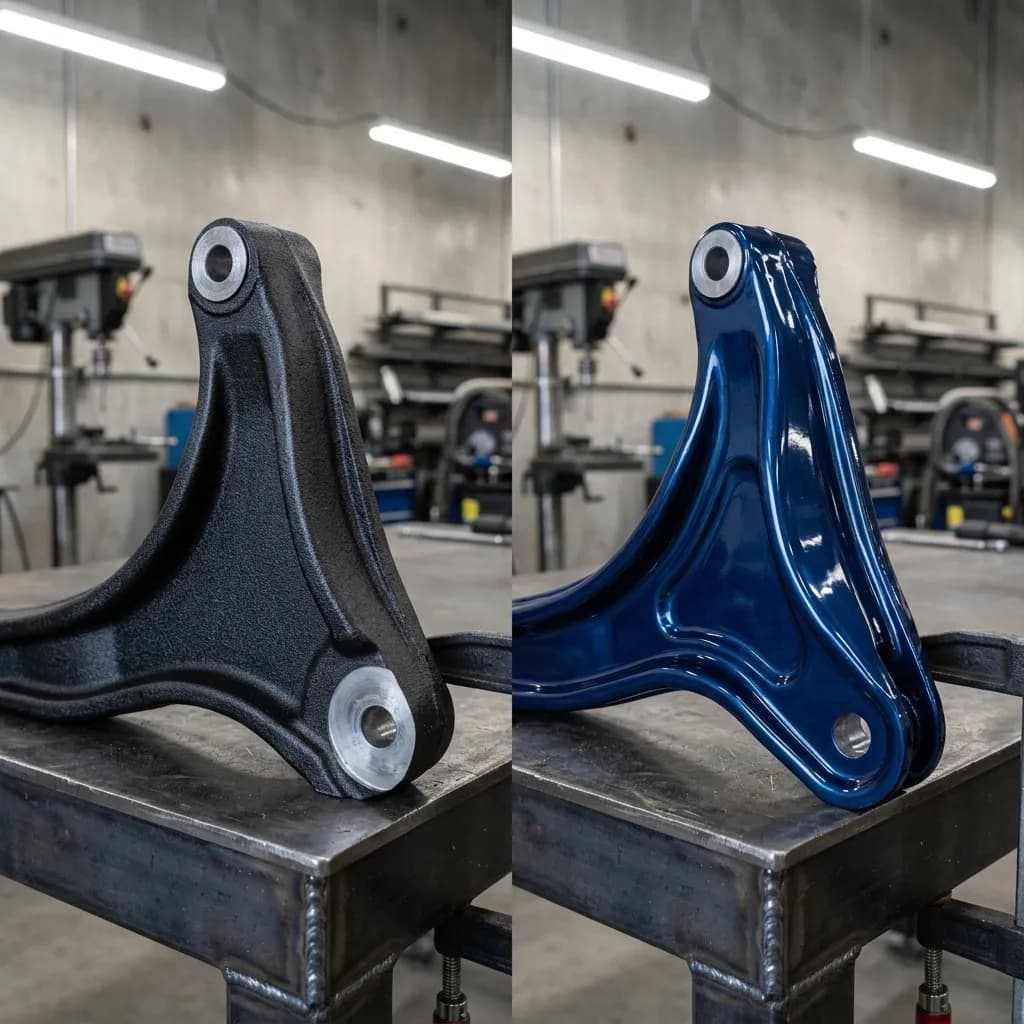
The electrodeposition primer — or e-coat — is applied by immersing the entire vehicle body in a charged paint bath, ensuring complete coverage of all surfaces including interior cavities, box sections, and hidden areas that spray application cannot reach. This e-coat layer provides the primary corrosion protection for the vehicle body and is typically 18 to 25 microns thick. The primer surfacer, applied by spray at 30 to 40 microns, provides a smooth foundation for the color coats and additional stone chip resistance.
Ready to Start Your Project?
From one-off customs to 15,000-part production runs — get precise pricing in 24 hours.
On This Page
How Automotive OEM Paint Systems Work
The basecoat provides the vehicle's color and visual effects — solid colors, metallics, pearlescents, and tri-coat systems are all achieved in the basecoat layer. The clearcoat, typically 40 to 50 microns of polyurethane or acrylic urethane, provides UV protection, gloss, scratch resistance, and chemical resistance. The total system thickness is typically 100 to 150 microns, with each layer optimized for its specific function. This multi-layer approach produces the depth, clarity, and durability that consumers expect from a new vehicle finish.
Where Powder Coating Fits in Automotive
Powder coating has established a significant and growing role in automotive manufacturing, though not as a replacement for the multi-layer OEM body paint system. Instead, powder coating is used on specific vehicle components where its unique advantages — thick single-coat application, superior chip resistance, zero VOC emissions, and high material efficiency — provide better performance than liquid paint alternatives.
Automotive wheels are the most visible powder coating application in the automotive sector. Both OEM and aftermarket wheels are increasingly powder coated because the thick, durable film resists stone chips, brake dust, road salt, and car wash chemicals far better than thin liquid paint systems. Powder-coated wheels maintain their appearance through years of demanding service that would quickly degrade a conventional painted finish.
Beyond wheels, powder coating is used on automotive underbody components, suspension parts, engine brackets, fuel rails, brake components, and structural reinforcements. These components require robust corrosion protection and chip resistance but do not need the optical quality and color-matching precision required for exterior body panels. Powder coating's thick, durable film is ideal for these demanding but less appearance-critical applications. Some automotive manufacturers also use powder coating for primer surfacer layers on body panels, combining powder primer with liquid basecoat and clearcoat for the best of both technologies.
Why OEM Paint Remains Standard for Vehicle Bodies
Despite powder coating's many advantages, automotive OEM liquid paint systems remain the standard for vehicle body panels for several technical reasons. The first is film thickness control. Automotive body panels require thin, precisely controlled coating layers to achieve the high distinctness of image and smooth, flowing appearance that consumers expect. The basecoat layer is typically only 12 to 18 microns thick, and the clearcoat is 40 to 50 microns — thicknesses that are at the lower end of what powder coating can consistently achieve.
Color matching precision is another factor. Automotive manufacturers must achieve exact color matches across multiple body panels — doors, fenders, hoods, and bumpers — that may be painted on different lines or even at different facilities. Liquid paint systems allow precise color adjustment through tinting and blending, enabling the tight color tolerances that automotive quality standards demand. Powder coating color adjustment is more difficult because the dry powder cannot be blended on-site in the same way liquid paint can.
The multi-layer system architecture also favors liquid application. The basecoat-clearcoat system allows metallic and pearlescent effects to be created in the thin basecoat layer, with the clearcoat providing protection and depth. Achieving equivalent metallic effects in a single powder coating layer is technically challenging, and the thicker powder film can affect the orientation and appearance of metallic flakes differently than a thin liquid basecoat.
Aftermarket Powder Coating for Automotive Components
The aftermarket automotive sector has embraced powder coating enthusiastically for component finishing. Custom wheels, valve covers, intake manifolds, brake calipers, suspension components, roll cages, and chassis parts are routinely powder coated by aftermarket shops and enthusiasts seeking durable, attractive finishes that outperform liquid paint in demanding automotive environments.
For aftermarket wheel finishing, powder coating has become the dominant technology. The thick, hard film resists curb rash, stone chips, and brake dust accumulation better than liquid paint, and the wide range of available colors and finishes — including chrome effects, candy colors, metallic finishes, and textured coatings — provides the customization options that enthusiasts demand. A quality powder-coated wheel finish can last the life of the wheel with proper care, while liquid-painted wheels often show wear within a few years.
Engine bay components are another popular aftermarket powder coating application. Valve covers, intake manifolds, brackets, and accessories powder coated in matching or contrasting colors transform the appearance of an engine bay while providing heat resistance and chemical protection that liquid paint cannot match. High-temperature powder coatings based on silicone or ceramic-modified resins withstand the elevated temperatures found in engine compartments, maintaining their appearance through years of heat cycling.
Durability Comparison in Real-World Conditions
In real-world automotive conditions, the durability comparison between OEM paint and powder coating depends on the specific application and exposure. For exterior body panels, OEM paint systems are engineered to provide 5 to 10 years of warranty-level performance and typically maintain acceptable appearance for 10 to 15 years with proper care. The multi-layer system provides excellent UV protection, chemical resistance, and scratch resistance for the relatively protected environment of a vehicle body panel.
For components exposed to more aggressive conditions — wheels, underbody parts, and engine bay components — powder coating provides superior durability. The thicker film absorbs stone impacts that would chip through OEM paint, and the cross-linked polymer resists the chemical exposure from road salt, brake fluid, and engine chemicals that these components encounter. A powder-coated wheel or underbody component will typically outlast a liquid-painted equivalent by a significant margin in these demanding environments.
The chip resistance comparison is particularly relevant. OEM paint systems, despite their sophisticated multi-layer construction, are vulnerable to stone chip damage on leading edges, rocker panels, and wheel arches. Powder coating's thicker film provides substantially better chip resistance, which is why some manufacturers use powder coating for primer layers on body panels and why powder coating is the preferred finish for wheels and underbody components where stone chip exposure is most severe.
Environmental and Manufacturing Considerations
Environmental performance is an area where powder coating holds a clear advantage over liquid automotive OEM paint systems. Automotive paint shops are among the largest industrial sources of VOC emissions, with the basecoat and clearcoat application steps releasing significant quantities of organic solvents. Modern automotive paint shops use thermal oxidizers and other abatement equipment to control these emissions, but the energy and capital costs of emission control are substantial.
Powder coating eliminates VOC emissions entirely for the components it finishes. Automotive manufacturers who have converted wheel lines, underbody coating lines, and primer application from liquid to powder have achieved significant reductions in total plant VOC emissions. The material efficiency advantage of powder coating — 95 to 98 percent utilization versus 60 to 70 percent for liquid spray — also reduces waste generation and raw material consumption.
The automotive industry's ongoing efforts to reduce environmental impact are driving expanded use of powder coating in vehicle manufacturing. Powder-on-powder primer systems, powder clearcoats over liquid basecoats, and full powder coating systems for non-body components are all areas of active development. While liquid paint will likely remain the standard for vehicle body color coats for the foreseeable future, powder coating's role in automotive manufacturing continues to grow as the industry seeks to reduce its environmental footprint.
When to Choose Each Finish
Maintain the original OEM paint system on vehicle body panels. The multi-layer factory paint system is specifically engineered for the vehicle body and provides the appearance quality, color matching, and warranty coverage that the vehicle was designed to deliver. Aftermarket powder coating of vehicle body panels is not recommended because the thick powder film cannot replicate the thin-film optical quality of OEM paint, and the process requires complete disassembly and high-temperature curing that can affect body panel fit and electronic components.
Choose powder coating for aftermarket component finishing — wheels, brake calipers, valve covers, intake manifolds, suspension components, roll cages, and chassis parts. These components benefit from powder coating's superior chip resistance, chemical resistance, and durability in the demanding environments they operate in. The wide range of colors and finishes available in powder coating provides customization options that enhance both appearance and protection.
For professional automotive restoration and custom builds, powder coating is the standard for chassis, suspension, and engine bay components. The durable, consistent finish transforms the appearance of these components while providing long-lasting protection. Combined with proper OEM or refinish paint on body panels, powder-coated components create a vehicle that looks exceptional and maintains its appearance through years of use.
Frequently Asked Questions
Can you powder coat a car body instead of painting it?
It is technically possible but not recommended. Powder coating produces a thicker film that cannot match the thin-film optical quality, color-matching precision, and metallic effects of OEM liquid paint systems. The high curing temperatures can also affect body panel fit and electronic components. Powder coating is best used on automotive components rather than body panels.
Why are automotive wheels powder coated instead of painted?
Powder coating provides superior chip resistance, chemical resistance, and durability for the demanding environment wheels operate in — stone impacts, brake dust, road salt, and car wash chemicals. The thick powder coating film absorbs impacts that would chip through thinner liquid paint, maintaining appearance through years of service.
Is powder coating used in automotive factories?
Yes. Automotive manufacturers use powder coating for wheels, underbody components, suspension parts, engine brackets, and increasingly for primer layers on body panels. Powder coating's zero VOC emissions and high material efficiency align with the industry's environmental goals, driving expanded adoption in vehicle manufacturing.
How does OEM paint achieve better appearance than powder coating?
OEM paint uses thin, precisely controlled layers — a 12-18 micron basecoat for color and a 40-50 micron clearcoat for protection. These thin layers allow metallic flakes to orient properly and the surface to achieve high distinctness of image. Powder coating's thicker film makes it harder to achieve the same optical quality on body panels.
Can powder coating be used for automotive touch-up repairs?
No. Powder coating requires electrostatic application and oven curing at 160-200 degrees Celsius, making it impractical for field repairs on installed vehicles. Touch-up repairs on powder-coated automotive components use compatible liquid touch-up paint. For significant damage, the component can be removed and re-powder coated.
Ready to Start Your Project?
From one-off customs to 15,000-part production runs — get precise pricing in 24 hours.