Buried steel infrastructure — pipelines, piling, ground anchors, culverts, and underground storage tanks — operates in a corrosion environment fundamentally different from atmospheric exposure. Soil is an electrolyte that supports electrochemical corrosion, but its corrosivity varies enormously depending on soil type, moisture content, resistivity, pH, dissolved oxygen, and the presence of sulfate-reducing bacteria.
Technical
Powder Coating for Underground and Buried Applications: Soil Corrosion, FBE Pipelines, and Cathodic Protection
Sundial Powder Coating·April 22, 2026·12 min
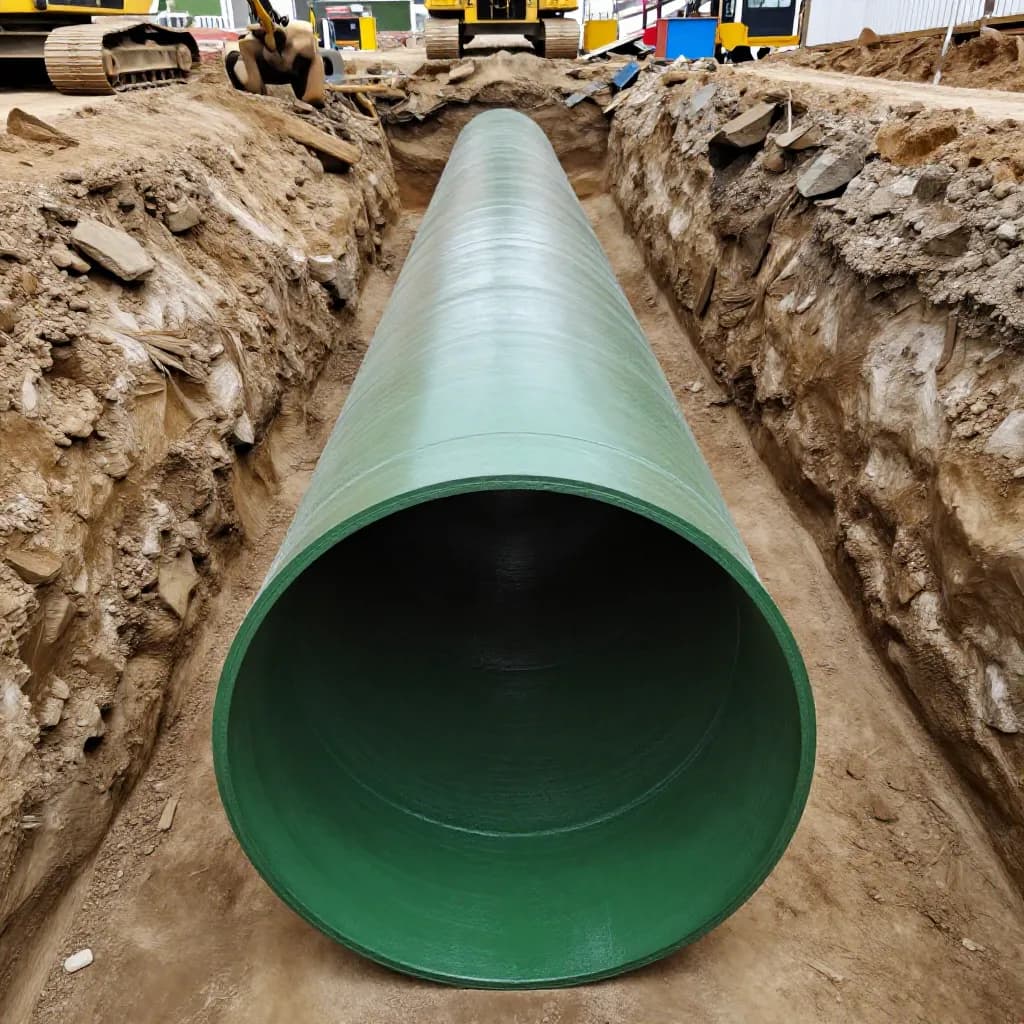
Soil resistivity is the primary indicator of soil corrosivity. Low-resistivity soils (below 1,000 ohm-cm) — typically clay soils with high moisture and dissolved salt content — are highly corrosive and can cause uncoated steel corrosion rates exceeding 0.5 mm/year. High-resistivity soils (above 10,000 ohm-cm) — dry sandy or rocky soils — are much less aggressive, with corrosion rates often below 0.05 mm/year. The variation in soil conditions along a pipeline route can span this entire range, creating differential corrosion cells that concentrate attack at specific locations.
Ready to Start Your Project?
From one-off customs to 15,000-part production runs — get precise pricing in 24 hours.
On This Page
The Underground Corrosion Environment
Soil pH affects both the corrosion mechanism and the coating chemistry. Acidic soils (pH below 5) directly attack steel and can degrade certain coating chemistries through acid hydrolysis. Alkaline soils (pH above 9) can cause cathodic disbondment of coatings when combined with cathodic protection systems. Neutral soils (pH 6-8) are generally the least aggressive, but other factors — particularly bacterial activity and stray electrical currents — can create severe corrosion even in otherwise benign soil conditions.
Sulfate-reducing bacteria (SRB) represent a particularly insidious form of underground corrosion. These anaerobic microorganisms thrive in waterlogged, oxygen-depleted soils and produce hydrogen sulfide as a metabolic byproduct. H2S is highly corrosive to steel and can cause localized pitting corrosion rates of 1-2 mm/year — sufficient to perforate a pipeline wall within a few years. Coating systems for SRB-active soils must provide an impermeable barrier against both moisture and bacterial metabolites.
Fusion-Bonded Epoxy: The Pipeline Standard
Fusion-bonded epoxy (FBE) powder coating is the dominant corrosion protection technology for buried steel pipelines worldwide. Developed in the 1960s and continuously refined since, FBE provides a combination of adhesion, moisture resistance, chemical resistance, and cathodic disbondment resistance that makes it uniquely suited to the underground pipeline environment.
FBE is applied as a single-layer powder coating at film thicknesses of 350-500 microns (14-20 mils) onto steel pipe that has been abrasive blasted to Sa 2.5 or Sa 3 (near-white or white metal) and heated to 230-245°C. The powder melts, flows, and cures on contact with the hot steel surface, forming a dense, highly crosslinked thermoset film with exceptional adhesion to the steel substrate. The high application temperature ensures complete wetting of the steel surface and chemical bonding between the epoxy and the iron oxide interface layer.
The key performance properties of FBE for pipeline service include low moisture permeability (typically less than 0.1 g/m²/day at 65°C), excellent adhesion to steel (pull-off adhesion exceeding 15 MPa), resistance to cathodic disbondment (less than 8 mm radius after 28 days at -1.5V vs. SCE), and chemical resistance to soil acids, alkalis, and bacterial metabolites.
FBE pipeline coatings are specified under several international standards. CSA Z245.20 (Canadian Standards Association) is the most widely referenced specification, defining requirements for material qualification, application, and testing. ISO 21809-2 provides the international framework, while AWWA C213 covers FBE for potable water pipelines. These standards define minimum performance requirements for adhesion, flexibility, cathodic disbondment, hot water soak, and chemical resistance that FBE formulations must meet.
Three-Layer Polyethylene and Polypropylene Systems
Three-layer polyethylene (3LPE) and three-layer polypropylene (3LPP) pipeline coating systems use FBE as the primary adhesion and corrosion protection layer, supplemented with a copolymer adhesive and an outer polyolefin jacket that provides mechanical protection and additional moisture barrier properties.
The 3LPE system consists of an FBE primer (minimum 150 microns), a copolymer adhesive layer (minimum 200 microns), and a high-density polyethylene outer layer (minimum 1.8-3.0 mm depending on pipe diameter). The total system thickness of 2.5-4.0 mm provides outstanding mechanical protection against rock damage during backfilling, soil stress, and third-party interference — the leading cause of pipeline coating damage.
3LPP systems replace the polyethylene outer layer with polypropylene, which offers higher temperature resistance (service temperatures up to 110°C compared to 80°C for 3LPE) and improved mechanical properties. 3LPP is specified for high-temperature pipelines, deep burial applications where soil pressure is significant, and directional drilling installations where the coating must withstand abrasion during pipe pullback.
ISO 21809-1 is the primary international standard for three-layer polyolefin pipeline coatings, defining material requirements, application procedures, and testing methods for both 3LPE and 3LPP systems. The standard specifies minimum peel adhesion values between each layer, cathodic disbondment resistance, impact resistance, and indentation resistance at the maximum service temperature.
The FBE layer within a three-layer system serves a critical function beyond adhesion promotion. If the outer polyolefin layers are damaged — by rock impact, excavation equipment, or soil movement — the FBE layer provides standalone corrosion protection at the damage point until the pipeline can be inspected and repaired. This redundancy is a key advantage of three-layer systems over single-layer FBE or single-layer polyolefin coatings.
Cathodic Protection Compatibility
Cathodic protection (CP) is universally applied to buried steel pipelines as a secondary corrosion protection measure that works in conjunction with the coating system. CP works by making the steel pipeline the cathode of an electrochemical cell, either by connecting it to a more reactive sacrificial anode (typically zinc or magnesium) or by impressing a direct current from an external power source. The resulting negative potential on the pipeline surface suppresses the anodic (corrosion) reaction.
The interaction between cathodic protection and the powder coating is critical and must be carefully managed. CP generates hydroxyl ions (OH⁻) at the steel surface through the cathodic reaction, creating a highly alkaline environment (pH 12-14) at the coating-substrate interface. This alkaline environment can cause cathodic disbondment — the progressive loss of coating adhesion spreading outward from a coating defect under the influence of cathodic protection current.
Cathodic disbondment resistance is one of the most important performance properties for underground powder coatings. FBE coatings are specifically formulated to resist cathodic disbondment through strong chemical bonding to the steel surface and resistance to alkaline attack. Standard cathodic disbondment testing per CSA Z245.20 or ISO 21809-2 involves applying -1.5V vs. SCE (saturated calomel electrode) to a coated panel with a deliberate holiday (defect) immersed in 3% NaCl solution at 65°C for 28 days. Maximum allowable disbondment radius is typically 8-12 mm depending on the specification and test temperature.
Coating systems with poor cathodic disbondment resistance can be progressively stripped from the pipeline by the CP system itself, creating a vicious cycle where increasing bare steel area demands more CP current, which in turn accelerates disbondment of adjacent coating. This failure mode has been observed with certain polyethylene tape wrapping systems and poorly formulated liquid coatings, and is one of the primary reasons FBE has become the preferred pipeline coating technology.
Soil-Specific Coating Selection
Different soil types present different corrosion challenges that influence the optimal coating system selection. A one-size-fits-all approach to underground coating specification can result in either over-specification in benign soils or dangerous under-specification in aggressive conditions.
Clay soils are among the most corrosive soil types due to their low resistivity (often below 2,000 ohm-cm), high moisture retention, and tendency to create differential aeration cells. The shrink-swell behavior of clay soils also imposes mechanical stresses on buried coatings as the soil expands when wet and contracts when dry. For clay soil burial, 3LPE or 3LPP systems with their thick mechanical protection layers are preferred over single-layer FBE, which may be damaged by soil movement.
Sandy soils generally have higher resistivity and lower corrosivity, but the angular sand particles can abrade coating surfaces during installation and soil settlement. FBE coatings at the upper end of the thickness range (450-500 microns) or three-layer systems provide adequate abrasion resistance for sandy soil burial. In coastal sandy soils with saltwater intrusion, the resistivity drops dramatically and corrosivity increases to levels comparable to clay soils.
Peat and organic soils present unique challenges due to their low pH (often 3.5-5.5), high moisture content, and active microbial populations including sulfate-reducing bacteria. The combination of acid attack and microbiologically influenced corrosion (MIC) makes peat soils among the most aggressive underground environments. FBE coatings with enhanced acid resistance and minimum 500 micron thickness are recommended, with cathodic protection designed to account for the low soil resistivity.
Rocky soils and backfill containing sharp aggregate pose primarily mechanical challenges. Coating damage during installation — from rock impact during backfilling or abrasion during directional drilling — is the leading cause of underground coating failure. Three-layer systems with impact resistance exceeding 15 J/mm at the minimum service temperature provide the best protection against installation damage in rocky conditions.
Application and Quality Control for Underground Coatings
The application quality of underground powder coatings is critical because buried coatings cannot be inspected or maintained after installation without excavation — a costly and disruptive operation. Every aspect of the application process must be controlled to ensure defect-free coating that will perform reliably for the 30-50 year design life typical of pipeline infrastructure.
Surface preparation is the foundation of underground coating performance. Steel surfaces must be abrasive blasted to Sa 2.5 minimum (Sa 3 preferred for FBE) per ISO 8501-1, with a surface profile of 50-100 microns (Rz) to provide mechanical keying for the coating. Surface cleanliness must meet SSPC-SP10 (near-white blast) or SSPC-SP5 (white metal blast) standards, with all mill scale, rust, and contaminants removed. Soluble salt contamination — measured by conductivity testing per ISO 8502-6 or Bresle patch testing per ISO 8502-9 — must be below 20 µg/cm² equivalent NaCl to prevent osmotic blistering in service.
FBE application requires precise control of steel temperature (230-245°C), powder flow rate, and line speed to achieve the specified film thickness and cure. Undercure results in reduced crosslink density and poor chemical resistance, while overcure causes thermal degradation of the epoxy resin and reduced flexibility. Differential scanning calorimetry (DSC) testing of cured coating samples verifies that the degree of cure falls within the specified range (typically 95-100% of theoretical).
Holiday detection — the testing of the cured coating for pinholes and defects using high-voltage spark testing — is mandatory for all underground powder coatings. Test voltages are calculated based on film thickness, typically 5 volts per micron of coating thickness for FBE (e.g., 2,000V for a 400-micron coating). Every square centimeter of coated surface must be tested, and any detected holidays must be repaired with approved repair materials before the pipe is released for installation.
Field Joint Coating and Repair
Field joints — the circumferential welds that connect individual pipe sections during pipeline construction — represent the most vulnerable points in the underground coating system. The factory-applied FBE or three-layer coating is cut back 100-150 mm from each pipe end to allow welding, leaving bare steel at each joint that must be coated in the field under conditions far less controlled than the factory environment.
Field joint coating options for FBE-coated pipelines include heat-shrink sleeves, liquid epoxy, field-applied FBE (using portable induction heating), and injection-molded polypropylene (IMPP). Each method has advantages and limitations that must be matched to the project conditions.
Heat-shrink sleeves — polyethylene or polypropylene sleeves with a hot-melt adhesive lining — are the most widely used field joint coating method due to their speed of application and tolerance of field conditions. The sleeve is positioned over the joint, heated with a propane torch to shrink it tightly onto the pipe, and the adhesive melts to bond the sleeve to both the pipe surface and the adjacent factory coating. Proper surface preparation (abrasive blasting to Sa 2.5 and heating to remove moisture) is essential for reliable sleeve performance.
Field-applied FBE using portable induction heating provides the closest match to the factory coating and is increasingly specified for critical pipelines. The joint area is blasted, heated to 230-245°C using an induction coil, and FBE powder is applied using a portable spray system. This method produces a field joint coating with properties essentially identical to the factory coating, but requires specialized equipment and trained operators.
Quality control of field joint coatings is as important as factory coating quality. Holiday detection at the specified voltage, adhesion testing on production test joints, and visual inspection for defects are mandatory. The field joint is often the weakest link in the pipeline coating system, and inadequate field joint quality is a leading cause of pipeline corrosion failures.
Emerging Technologies for Underground Powder Coating
The underground powder coating industry continues to evolve with new technologies that address the limitations of current systems and respond to increasingly demanding pipeline operating conditions.
High-temperature FBE formulations have been developed for pipelines operating at temperatures up to 110°C, compared to the 80-85°C limit of conventional FBE. These formulations use modified epoxy resins with higher glass transition temperatures and enhanced thermal stability, enabling FBE to be used on high-temperature oil and gas pipelines that previously required three-layer polypropylene systems.
Dual-layer FBE systems — combining a high-adhesion inner layer with a tougher, more flexible outer layer — provide improved mechanical protection compared to single-layer FBE while maintaining the excellent corrosion protection and cathodic disbondment resistance of the epoxy chemistry. The inner layer is optimized for adhesion to steel and cathodic disbondment resistance, while the outer layer is formulated for impact resistance, abrasion resistance, and flexibility.
Smart coating technologies incorporating corrosion-sensing capabilities are in development for underground applications. These coatings contain micro-encapsulated indicators or embedded sensors that can detect coating damage, moisture ingress, or corrosion initiation and transmit this information to above-ground monitoring systems. While still largely in the research phase, smart coatings promise to transform pipeline integrity management by enabling real-time monitoring of coating condition without excavation.
Self-healing powder coatings containing micro-encapsulated healing agents are another emerging technology. When the coating is damaged, the capsules rupture and release a reactive resin that flows into the damage site and cures, restoring the barrier function of the coating. Laboratory testing has demonstrated significant improvements in corrosion protection at damage sites, though field validation and commercial-scale production remain ongoing challenges.
Frequently Asked Questions
What is fusion-bonded epoxy (FBE) pipeline coating?
FBE is a thermosetting powder coating applied at 350-500 microns onto steel pipe heated to 230-245°C. It provides excellent adhesion, low moisture permeability, chemical resistance, and cathodic disbondment resistance. FBE is specified under CSA Z245.20, ISO 21809-2, and AWWA C213 and is the dominant pipeline corrosion protection technology worldwide.
How does cathodic protection interact with powder coatings?
Cathodic protection generates alkaline conditions (pH 12-14) at the coating-substrate interface that can cause cathodic disbondment — progressive loss of adhesion spreading from coating defects. FBE coatings are specifically formulated to resist this mechanism, with standard testing requiring less than 8-12 mm disbondment radius after 28 days at -1.5V vs. SCE.
What is a three-layer pipeline coating system?
Three-layer systems (3LPE or 3LPP) combine an FBE primer (150+ microns), copolymer adhesive (200+ microns), and polyethylene or polypropylene outer jacket (1.8-3.0 mm). The total thickness of 2.5-4.0 mm provides outstanding mechanical protection while the FBE layer ensures corrosion protection even if the outer layers are damaged.
How is soil corrosivity assessed for coating specification?
Soil corrosivity is primarily assessed through soil resistivity measurement (low resistivity below 1,000 ohm-cm indicates high corrosivity), pH testing, moisture content, and sulfate/chloride analysis. Sulfate-reducing bacteria testing is recommended for waterlogged soils. These parameters determine the required coating system thickness and chemistry.
How are pipeline coating defects detected before burial?
Holiday (defect) detection uses high-voltage spark testing at typically 5 volts per micron of coating thickness. Every square centimeter of coated surface is tested, and any detected holidays must be repaired with approved materials before installation. This 100% inspection is mandatory because buried coatings cannot be maintained without costly excavation.
Ready to Start Your Project?
From one-off customs to 15,000-part production runs — get precise pricing in 24 hours.