Two-tone and dual-finish powder coating applies two different colors or finishes to a single component, creating design possibilities that single-color coating cannot achieve. This technique has become standard practice in window and door manufacturing, where different colors on interior and exterior faces allow profiles to coordinate with both the building facade and the interior design scheme. Beyond fenestration, two-tone powder coating serves automotive, furniture, architectural, and product design applications where multi-color finishes add visual interest and functional differentiation.
Design
Powder Coating Two-Tone and Dual Finish: Window Profiles, Automotive, Masking Techniques, and Design
Sundial Powder Coating·April 22, 2026·11 min
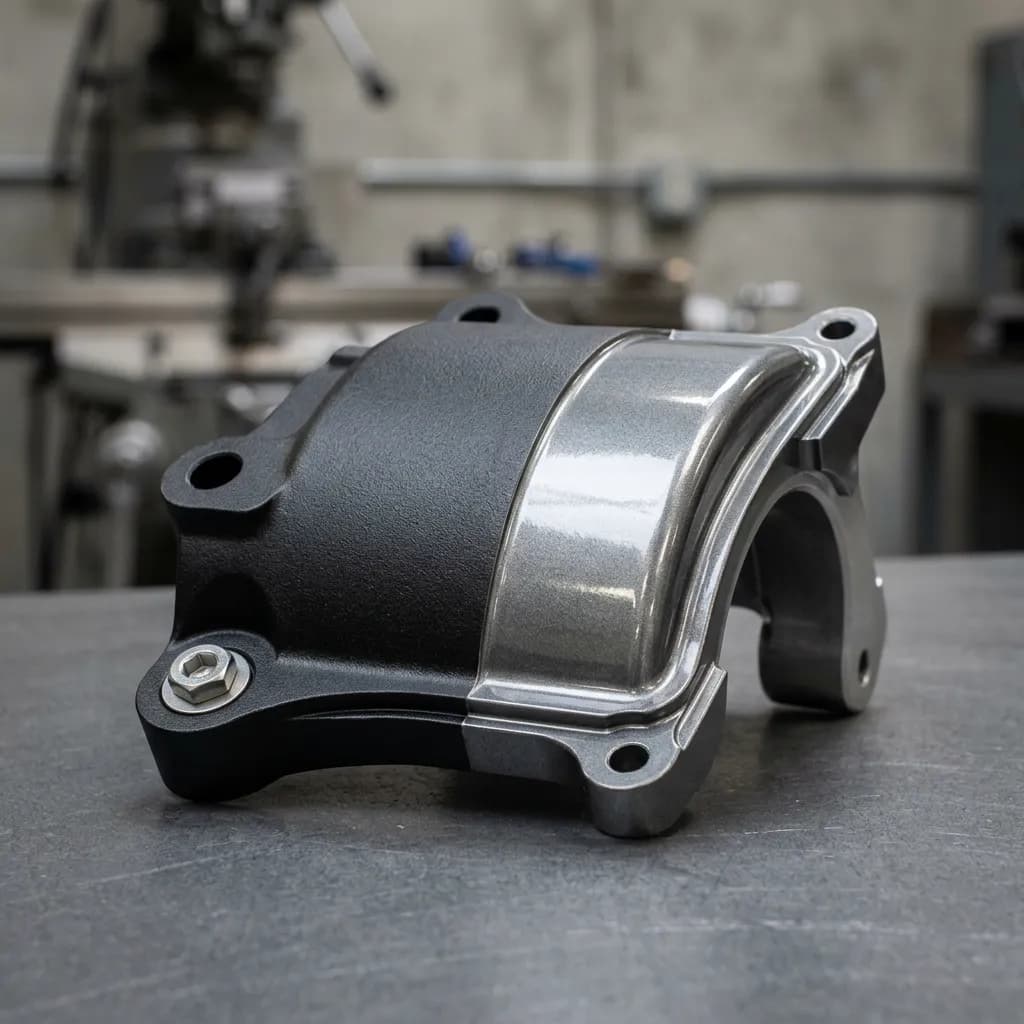
The concept is straightforward: different areas of a component receive different powder coating colors or finishes, with clean, precise demarcation lines between the two zones. In practice, achieving this requires careful masking, precise application technique, and often multiple passes through the coating line. The complexity and cost of two-tone coating are higher than single-color work, but the design flexibility it provides justifies the investment for applications where multi-color finishes are integral to the design intent.
Ready to Start Your Project?
From one-off customs to 15,000-part production runs — get precise pricing in 24 hours.
On This Page
Two-Tone Powder Coating: Expanding Design Possibilities
Advances in masking technology, automated application systems, and powder coating formulations have made two-tone coating more accessible and cost-effective than ever. What was once a specialized, labor-intensive process is now a routine capability offered by many architectural and industrial powder coating facilities, supported by purpose-designed masking systems and application equipment.
Dual-Color Window and Door Profiles
The window and door industry is the largest user of two-tone powder coating, where dual-color profiles have become a standard offering from virtually every major aluminum fenestration manufacturer. The ability to specify different colors on the interior and exterior faces of window and door profiles provides architects and interior designers with unprecedented flexibility in coordinating building facades with interior color schemes.
A typical dual-color window specification might feature RAL 7016 Anthracite Grey on the exterior face to coordinate with the building facade, and RAL 9010 Pure White on the interior face to match the interior wall color. This combination is one of the most commonly specified dual-color configurations in European residential architecture, but the possibilities extend to any combination of colors from the full powder coating palette.
The dual-color process for window profiles typically involves coating the entire profile in the first color, then masking the areas that should retain the first color and applying the second color to the exposed areas. The masking must be precise to create clean demarcation lines at the profile's thermal break or at other defined transition points. Automated masking systems using custom-shaped silicone plugs and magnetic masks have largely replaced manual tape masking for production-volume window coating.
Some window system manufacturers offer tri-color options, where the exterior face, interior face, and profile edges each receive a different color. This level of customization is less common but available for projects where maximum design flexibility is required.
The quality of dual-color window profiles depends on the precision of the masking and the consistency of the demarcation line. The transition between colors should be sharp and straight, following the profile geometry precisely. Any overspray, bleeding, or misalignment of the masking is immediately visible and constitutes a quality defect. Specifiers should request sample profiles demonstrating the dual-color quality before approving production.
Masking Techniques for Two-Tone Powder Coating
Masking is the critical process that enables two-tone powder coating, and the choice of masking technique directly affects the quality, consistency, and cost of the finished result. Several masking approaches are available, each suited to different component geometries and production volumes.
High-temperature masking tape is the most versatile masking method, suitable for both simple and complex geometries. Specialized powder coating masking tapes withstand curing temperatures of 200 degrees Celsius or higher without adhesive failure, residue, or outgassing. The tape is applied manually along the desired demarcation line, creating a barrier that prevents the second color from reaching the masked area. Tape masking is labor-intensive but provides maximum flexibility for custom and low-volume work.
Silicone plugs and caps are used to mask specific features such as holes, threads, and recesses. For two-tone applications, custom-molded silicone masks can be designed to cover specific areas of a component, providing consistent, repeatable masking for production-volume work. Silicone masks are reusable, reducing per-unit masking cost for high-volume applications.
Magnetic masks use magnetic sheets or fixtures to hold masking material in precise positions on ferrous substrates. This approach is particularly effective for flat or gently curved steel components where the magnetic force provides secure, consistent mask positioning without adhesive. Magnetic masking is fast to apply and remove, making it efficient for production environments.
Liquid masking compounds, also known as peelable masks, are applied as a liquid that dries to form a flexible, peelable film. The liquid can be sprayed, brushed, or dipped to cover complex geometries that would be difficult to mask with tape or plugs. After the second color is applied and cured, the masking film is peeled away to reveal the first color beneath. Liquid masking is effective for complex shapes but requires careful application to achieve clean demarcation lines.
Automated masking systems combine robotic application of masking materials with precision positioning systems to achieve consistent, high-speed masking for production-volume two-tone coating. These systems are most common in the window and door industry, where the high volume and standardized profile geometries justify the investment in automated masking equipment.
Automotive Two-Tone Powder Coating
Two-tone powder coating has a strong presence in automotive applications, where multi-color finishes add visual distinction and personalization to wheels, body components, and interior trim. The automotive aftermarket, in particular, has embraced two-tone powder coating as a way to create custom, eye-catching finishes that differentiate vehicles from factory-standard appearances.
Wheel two-tone finishes are the most popular automotive application. Common configurations include contrasting colors on the wheel face and barrel, different colors on the spoke faces and recesses, or a combination of matte and gloss finishes in the same color to create visual depth. Black spokes with a machined or silver lip is a classic two-tone wheel configuration that remains perennially popular.
Brake caliper two-tone finishes combine a primary color on the caliper body with a contrasting color on the raised lettering or logo. This technique highlights the brand identity of the caliper and creates a more detailed, premium appearance. The masking required for caliper lettering is intricate and typically performed manually using fine masking tape or liquid masking compounds.
Motorcycle frames and components frequently receive two-tone powder coating, with different colors on the main frame tubes and the subframe, swingarm, or engine mounting points. These multi-color schemes can reference racing liveries, brand colors, or custom design themes that express the owner's personality.
Automotive two-tone applications require powder coatings with excellent mechanical properties including stone chip resistance, chemical resistance to fuels and cleaning agents, and UV stability for exterior components. The demarcation lines between colors must be precise and durable, maintaining their sharpness through years of use, cleaning, and environmental exposure. For wheels, the two-tone finish must also withstand the thermal cycling and chemical exposure from brake dust that characterizes the wheel environment.
Design Applications: Furniture, Architecture, and Products
Two-tone powder coating opens creative possibilities in furniture, architectural, and product design that extend well beyond the functional dual-color requirements of window profiles.
Furniture design uses two-tone powder coating to create visual interest and highlight structural elements. A chair frame with contrasting colors on the legs and seat support, or a shelving unit with different colors on the frame and shelf brackets, adds design complexity that elevates simple metal furniture from utilitarian to distinctive. Two-tone furniture finishes are popular in hospitality and retail environments where unique, branded furniture contributes to the overall design identity.
Architectural metalwork uses two-tone finishes to differentiate structural and decorative elements, create visual patterns, or highlight specific features. A staircase balustrade with contrasting colors on the handrail and balusters, or a facade screen with different colors on the frame and infill panels, creates layered compositions that add depth and interest to architectural elements.
Signage and wayfinding systems use two-tone powder coating to create contrast between text or symbols and their background. Raised lettering in one color against a contrasting background color creates highly legible signage with a premium, three-dimensional quality that printed or vinyl graphics cannot match.
Lighting fixtures use two-tone finishes to differentiate the exterior housing from the interior reflector surface. A matte black exterior with a white or metallic interior, for example, creates a sophisticated contrast that is revealed when the fixture is viewed from different angles.
Product design uses two-tone powder coating to create visual hierarchy, differentiate functional zones, or add brand-specific color accents to industrial and consumer products. Control panels with contrasting colors on the frame and the panel face, or equipment housings with accent colors on handles and access points, use two-tone finishes to improve both aesthetics and usability.
Process Considerations and Quality Control
Two-tone powder coating involves additional process steps and quality considerations compared to single-color work. Understanding these factors helps specifiers set realistic expectations and quality requirements.
The coating sequence matters. The first color is typically applied and fully cured before the masking and second color application. This means the component passes through the coating line twice, doubling the process time and energy consumption. Some advanced processes apply both colors before a single cure cycle, but this requires specialized equipment and formulations to prevent the colors from mixing during curing.
Inter-coat adhesion between the first and second color layers must be verified. The second color is applied over the cured surface of the first color, which requires the first color surface to provide adequate adhesion for the second layer. Most powder coating formulations provide good inter-coat adhesion when the second coat is applied within a reasonable time frame, but extended delays between coats or contamination of the first coat surface can compromise adhesion.
The demarcation line quality is the primary quality metric for two-tone work. The line should be sharp, straight, and consistent along its entire length. Common defects include overspray of the second color onto the first color area, bleeding of the second color under the masking edge, and misalignment of the masking relative to the intended demarcation position. Establish clear quality criteria for demarcation line sharpness and straightness, and inspect sample components before approving production.
Film thickness at the overlap zone, where the second color overlaps the edge of the first color, is typically higher than on single-color areas. This overlap is necessary to ensure complete coverage at the demarcation line but should be minimized to avoid visible ridges or texture differences. Skilled applicators control the overlap width to create a clean transition without excessive film build.
Color compatibility between the two finishes should be considered. Some color combinations create more visible demarcation line defects than others. High-contrast combinations such as black and white show every imperfection in the demarcation line, while lower-contrast combinations such as two similar greys are more forgiving. Specify the acceptable demarcation line quality with reference to the specific color combination being used.
Specifying Two-Tone Powder Coating: Key Requirements
Two-tone powder coating specification must define both colors, the demarcation line position, the acceptable quality tolerances, and the performance requirements for each color zone. The following parameters should be included in any two-tone specification.
Define both colors precisely using RAL codes, custom color references, or approved sample panels. Each color should be specified with its own gloss level, as different gloss levels on the two zones can be an intentional design feature. For example, a matte exterior face combined with a satin interior face on a window profile creates a subtle but effective visual differentiation.
Specify the demarcation line position with dimensional tolerances. For window profiles, the demarcation typically follows the thermal break line, which provides a natural and logical transition point. For other applications, define the demarcation position with reference to component drawings and specify the acceptable positional tolerance, typically plus or minus 1-2mm for production work.
Define the demarcation line quality requirements. Specify the maximum acceptable overspray width, the maximum acceptable bleeding distance, and the overall straightness tolerance. For premium applications, the demarcation line should be sharp enough that the transition between colors is not visible at normal viewing distances.
Specify the performance standard for each color zone independently. Exterior-facing zones should meet the appropriate exterior durability standard such as Qualicoat Class 2 or AAMA 2605. Interior-facing zones may use a lower performance tier if UV exposure is limited. Both zones should meet the mechanical performance requirements appropriate to the application.
Address the coating sequence and inter-coat adhesion requirements. Specify that inter-coat adhesion must be verified through cross-cut adhesion testing at the overlap zone. Define the maximum acceptable time between first and second coat application to ensure consistent adhesion.
Request sample components demonstrating the two-tone quality before approving production. Evaluate the samples for color accuracy, gloss level, demarcation line quality, and overall visual appearance. For window profiles, request a sample section of sufficient length to evaluate the demarcation line consistency along the full profile length.
Frequently Asked Questions
What is two-tone powder coating?
Two-tone powder coating applies two different colors or finishes to a single component, with clean demarcation lines between the zones. It is most commonly used for window profiles with different interior and exterior colors, but also serves automotive, furniture, and architectural applications.
How is the demarcation line between two colors achieved?
The first color is applied and cured, then specific areas are masked using high-temperature tape, silicone plugs, magnetic masks, or liquid masking compounds. The second color is applied to the exposed areas and cured. The masking creates the sharp demarcation line between the two colors.
Can any two colors be combined in two-tone powder coating?
Yes, any two powder coating colors can be combined. However, high-contrast combinations like black and white show demarcation line imperfections more visibly than lower-contrast combinations. The performance standard for each color zone can be specified independently.
Is two-tone powder coating more expensive than single color?
Yes, two-tone coating requires additional process steps including masking, a second coating pass, and additional curing. This increases labor, material, and energy costs. The premium varies depending on the complexity of the masking and the production volume, but is typically justified by the design flexibility it provides.
What quality should I expect for the demarcation line?
For production-quality two-tone work, the demarcation line should be sharp and straight with minimal overspray or bleeding. Specify acceptable tolerances for line position, overspray width, and straightness. Request sample components for approval before production to establish the quality benchmark.
Ready to Start Your Project?
From one-off customs to 15,000-part production runs — get precise pricing in 24 hours.