Transport hubs — bus stations, train stations, ferry terminals, and intermodal exchanges — are among the most intensively used public buildings in any city. Processing thousands or millions of passengers annually, these facilities must maintain safety, functionality, and a welcoming appearance despite continuous exposure to heavy foot traffic, weather, vehicle emissions, vandalism, and the mechanical stress of luggage, trolleys, and mobility equipment.
Architecture
Powder Coating for Transport Hub Architecture: Bus Stations, Train Stations, and Ferry Terminals
Sundial Powder Coating·April 22, 2026·12 min
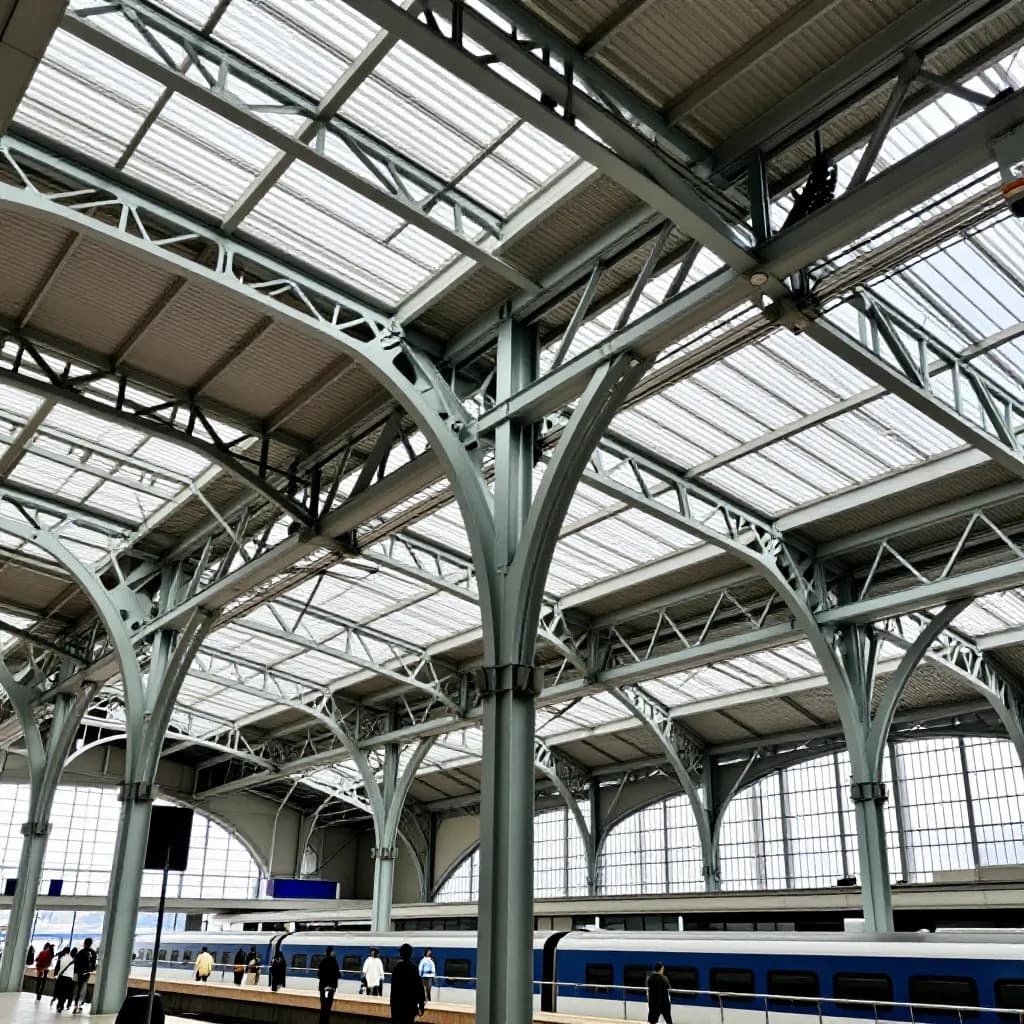
Powder coating has become the standard finishing technology for transport hub metalwork because it delivers the extreme durability these environments demand. The 60-120 micron film thickness — more than double the 25-50 microns of liquid paint — provides the mechanical robustness needed to withstand the relentless wear of public transport environments. The thermoset polymer film resists scratching, impact, and abrasion from the constant flow of passengers and their equipment, maintaining both appearance and protective function under conditions that would rapidly destroy lesser finishes.
Ready to Start Your Project?
From one-off customs to 15,000-part production runs — get precise pricing in 24 hours.
On This Page
Transport Hubs: Public Infrastructure Under Constant Pressure
The public nature of transport infrastructure adds additional requirements. These buildings must be accessible, safe, and navigable for all users, including those with disabilities. They must comply with stringent fire safety regulations. They must resist vandalism and graffiti. And they must project a positive image of the transport network and the city it serves. Powder coating addresses all of these requirements through its combination of durability, safety performance, design flexibility, and environmental credentials.
High-Traffic Durability: Platforms, Concourses, and Waiting Areas
The circulation spaces of transport hubs experience foot traffic densities that exceed almost any other building type. Train station concourses during rush hour, bus station waiting areas during peak periods, and ferry terminal embarkation halls during boarding all subject metalwork to intense, sustained mechanical stress from passengers, luggage, trolleys, wheelchairs, and pushchairs.
Powder-coated metalwork in these high-traffic areas benefits from the coating's superior abrasion resistance. Testing to ISO 7784 (Taber abrasion) demonstrates that powder coatings retain significantly more film thickness after standardized wear cycles than equivalent liquid paint systems, translating into longer service life in real-world traffic conditions. The 60-120 micron starting film thickness provides a substantial reserve of material that maintains protection even as surface wear gradually reduces the film over years of service.
Seating in transport waiting areas is subjected to continuous use by passengers of all sizes, often carrying heavy bags and wearing clothing with metal fasteners. Powder-coated steel and aluminum seating maintains its surface quality through this demanding use, resisting the scratching and polishing that rapidly degrades liquid-painted seating. Anti-vandal seating designs — with smooth profiles that resist damage and concealed fixings that prevent removal — benefit from powder coating's ability to achieve uniform coverage on complex geometries.
Platform edge elements — tactile paving frames, platform edge doors, and safety barriers — are safety-critical components that must maintain their visibility and structural integrity throughout their service life. Powder coating's color retention ensures that safety-colored elements remain clearly visible, while the coating's adhesion and corrosion resistance maintain the structural integrity of these elements in the exposed platform environment. For underground and covered platforms, the coating must also resist the moisture, condensation, and cleaning chemicals typical of these semi-enclosed environments.
Vandal Resistance and Anti-Graffiti Performance
Vandalism is a persistent challenge for transport infrastructure operators. Graffiti, scratching, sticker application, and deliberate damage to surfaces are daily occurrences at many transport hubs, and the cost of remediation — both direct cleaning costs and the indirect impact on passenger perception and network reputation — is substantial. A surface finish that resists vandalism and facilitates rapid remediation is essential for maintaining the quality of the passenger environment.
Anti-graffiti powder coatings provide a permanent, non-sacrificial barrier against graffiti. These formulations create a low-surface-energy finish that prevents paint, marker, and adhesive from bonding permanently to the surface. Graffiti can be removed with standard cleaning agents — typically proprietary graffiti removers or mild solvents — without damaging the underlying coating. Critically, the anti-graffiti properties are maintained through multiple cleaning cycles, unlike sacrificial anti-graffiti systems that must be reapplied after each cleaning event.
The scratch resistance of powder coating is equally important in transport environments. Deliberate scratching with keys, coins, and sharp objects is a common form of vandalism on seating, wall panels, and window frames. Powder coating's H to 2H pencil hardness provides better scratch resistance than most liquid paint systems, and the 60-120 micron film thickness means that even when scratches occur, they rarely penetrate to the substrate, maintaining corrosion protection and reducing the visual impact of damage.
Sticker and poster vandalism is addressed by the smooth, non-porous surface of powder coating, which resists adhesive bonding more effectively than rougher liquid paint surfaces. Stickers can be peeled cleanly from powder-coated surfaces without leaving residue, and any remaining adhesive can be removed with mild solvent without affecting the coating. For transport operators who spend significant resources on sticker removal, this ease of cleaning translates into measurable cost savings and faster restoration of the passenger environment.
Wayfinding, Accessibility, and Safety Color Systems
Effective wayfinding is essential for the safe and efficient operation of transport hubs. Passengers must navigate between entrances, ticket facilities, platforms, and exits — often under time pressure and in unfamiliar environments. Color-coded wayfinding systems, tactile indicators, and safety markings all rely on durable, precisely specified surface finishes that maintain their visibility and contrast throughout the facility's service life.
Powder coating provides the color precision needed for transport wayfinding systems. Custom colors matching the transport operator's brand and wayfinding standards are formulated to exact specifications and verified through spectrophotometric measurement. The resulting colors are consistent across all coated elements — from large wall panels and column casings to small signage frames and handrail sections — creating a coherent visual environment that supports intuitive navigation.
Accessibility compliance requires specific attention to luminance contrast between surfaces. Standards such as BS 8300, ADA, and EN 81-70 (for lifts) define minimum contrast requirements between doors and frames, handrails and walls, and tactile indicators and surrounding surfaces. Powder coating's precise control over Light Reflectance Value (LRV) allows designers to specify exact contrast ratios, ensuring compliance with accessibility standards. The long-term color stability of powder coating maintains these contrast ratios throughout the facility's service life, avoiding the gradual convergence of colors that occurs as liquid paint fades unevenly.
Safety colors defined by ISO 3864 — yellow for hazard, red for fire equipment, green for emergency exits, blue for mandatory actions — must be immediately recognizable and must not fade or become ambiguous. Powder coating's UV-stable polyester chemistry maintains safety color accuracy for 20-25 years, ensuring that safety markings remain compliant and effective throughout the facility's operational life.
Canopies, Shelters, and Weather Protection Structures
Transport hubs include extensive weather protection structures — platform canopies, bus shelters, covered walkways, and entrance canopies — that shield passengers from rain, wind, and sun. The metalwork forming these structures is fully exposed to weather and must maintain both structural integrity and aesthetic quality for decades with minimal maintenance.
Powder-coated steel and aluminum canopy structures provide the long-term weather resistance these exposed elements require. Super-durable polyester formulations certified to Qualicoat Class 2 or AAMA 2605 maintain color and gloss for 20-25 years, ensuring that canopy structures retain their intended appearance throughout their service life. The 60-120 micron film thickness provides robust corrosion protection for structural members, reducing the risk of the corrosion-related structural failures that can occur on poorly maintained canopy steelwork.
Bus shelters represent a particularly demanding application. These structures are fully exposed to weather, subjected to vandalism, and must be maintained to a standard that encourages public transport use. Powder-coated aluminum bus shelter frames combine weather resistance with vandal resistance, and the anti-graffiti capability of specialized powder formulations reduces the maintenance burden on transport operators responsible for hundreds or thousands of shelters across their network.
For large-span canopy structures — such as the dramatic roof forms of major railway stations — powder coating on structural steel provides both corrosion protection and the architectural finish quality expected of landmark public buildings. The ability to achieve consistent color across hundreds of structural members, each coated in factory conditions, ensures the visual coherence that these architecturally ambitious structures demand. Duplex systems combining galvanizing with powder coating provide the enhanced protection needed for canopy steelwork in aggressive environments, with service lives exceeding 40 years.
Ferry Terminals and Marine Transport Infrastructure
Ferry terminals operate in the most corrosive environment of any transport hub type. Salt spray, high humidity, tidal splash zones, and marine atmosphere create conditions that can destroy inadequate coating systems within months. The metalwork of ferry terminals — including passenger gangways, waiting area structures, vehicle marshalling barriers, and navigation aids — must be protected to the highest standards to maintain safety and functionality in this aggressive environment.
Qualicoat Seaside certified powder coatings provide the enhanced marine protection needed for ferry terminal metalwork. These coatings are tested to withstand extended neutral salt spray exposure (ISO 9227) and demonstrate resistance to the specific corrosion mechanisms of marine environments, including chloride-induced pitting, crevice corrosion, and under-film corrosion. Combined with marine-grade pretreatment systems, Qualicoat Seaside certified powder coatings provide 20-25 years of protection in environments that would destroy standard coatings within 3-5 years.
Passenger gangways and boarding bridges at ferry terminals are subjected to the combined stresses of marine atmosphere, heavy foot traffic, luggage impact, and the mechanical movement of the gangway structure as it adjusts to tidal levels and vessel positions. Powder coating on gangway metalwork must resist all of these stresses simultaneously, maintaining both its protective function and its appearance as a passenger-facing element. The thermoset film's combination of chemical resistance, mechanical durability, and flexibility under structural movement makes it well-suited to this multi-stress application.
Vehicle marshalling areas at ferry terminals present additional challenges. Vehicle exhaust, fuel and oil drips, and the mechanical stress of heavy vehicle traffic combine with the marine atmosphere to create an extremely aggressive environment. Powder coating on marshalling barriers, lane markers, and traffic management infrastructure provides the chemical and mechanical resistance needed for this environment, with the 60-120 micron film maintaining protection despite regular vehicle contact and chemical exposure.
Lifecycle Economics and Public Value
Transport infrastructure is publicly funded in most jurisdictions, and the lifecycle cost of building finishes is scrutinized as part of the value-for-money assessment that public procurement requires. The specification of surface finishes must demonstrate that the chosen system delivers the lowest total cost of ownership over the facility's design life, considering initial cost, maintenance frequency, and operational disruption.
Powder coating's lifecycle economics are compelling for transport infrastructure. The 20-25 year service life between recoating cycles reduces maintenance frequency by 50-60% compared to liquid paint's 8-12 year cycle. For a major transport hub with thousands of square meters of coated metalwork, each avoided recoating event saves substantial direct costs plus the indirect costs of facility closures, passenger disruption, and temporary service arrangements during maintenance work.
The predictability of powder coating's degradation pattern supports effective asset management. Transport infrastructure operators can plan recoating interventions years in advance, budgeting accurately and scheduling work during low-traffic periods to minimize passenger impact. This planned approach contrasts with the reactive maintenance often required for liquid paint systems, where unpredictable coating failure can necessitate emergency interventions at premium cost.
The environmental credentials of powder coating also support the public value proposition. Zero VOC emissions, 95-98% material efficiency, and reduced lifecycle environmental impact align with the sustainability objectives of public transport authorities. For transport operators seeking to demonstrate environmental leadership — and for the public authorities that fund them — powder coating's environmental profile strengthens the case for investment in quality infrastructure that serves communities for decades.
Frequently Asked Questions
How does powder coating resist vandalism at transport hubs?
Anti-graffiti powder coatings prevent permanent bonding of paint, marker, and adhesive. Graffiti is removed with standard cleaners without damaging the coating, and anti-graffiti properties are maintained through multiple cleaning cycles. The H to 2H hardness resists deliberate scratching from keys and sharp objects.
Is powder coating suitable for ferry terminal metalwork?
Yes. Qualicoat Seaside certified powder coatings provide 20-25 years of protection in marine environments. Combined with marine-grade pretreatment, these systems resist salt spray, chloride-induced pitting, and the combined stresses of marine atmosphere, heavy traffic, and mechanical movement.
How does powder coating support transport hub wayfinding?
Powder coating provides precise custom colors verified by spectrophotometry, with color stability maintained for 20-25 years. Exact Light Reflectance Values ensure accessibility compliance, and UV-stable formulations maintain safety color accuracy throughout the facility's operational life.
What is the lifecycle cost advantage of powder coating for transport hubs?
Powder coating reduces recoating frequency by 50-60% compared to liquid paint, with 20-25 year versus 8-12 year service life. Each avoided recoating saves direct costs plus indirect costs of facility closures and passenger disruption, delivering the lowest total cost of ownership for public transport infrastructure.
How long do powder-coated bus shelters last?
Powder-coated aluminum bus shelters maintain their appearance and protection for 20-25 years with super-durable polyester formulations. Anti-graffiti capability reduces ongoing maintenance costs, and the 60-120 micron film resists the weather exposure and vandalism typical of street-level transport infrastructure.
Ready to Start Your Project?
From one-off customs to 15,000-part production runs — get precise pricing in 24 hours.