Commercial trailers and truck bodies operate in some of the most demanding corrosion environments of any coated product. These vehicles travel hundreds of thousands of kilometers over their service lives, exposed to road salt, stone impacts, diesel exhaust, cargo chemicals, and the mechanical stresses of loading and unloading operations. The coating system must protect the structural steel and aluminum components that form the body and chassis while maintaining the fleet identity and brand image that commercial operators require.
Industrial
Powder Coating for Trailers and Truck Bodies: Heavy-Duty Corrosion Protection for Commercial Fleets
Sundial Powder Coating·April 22, 2026·12 min
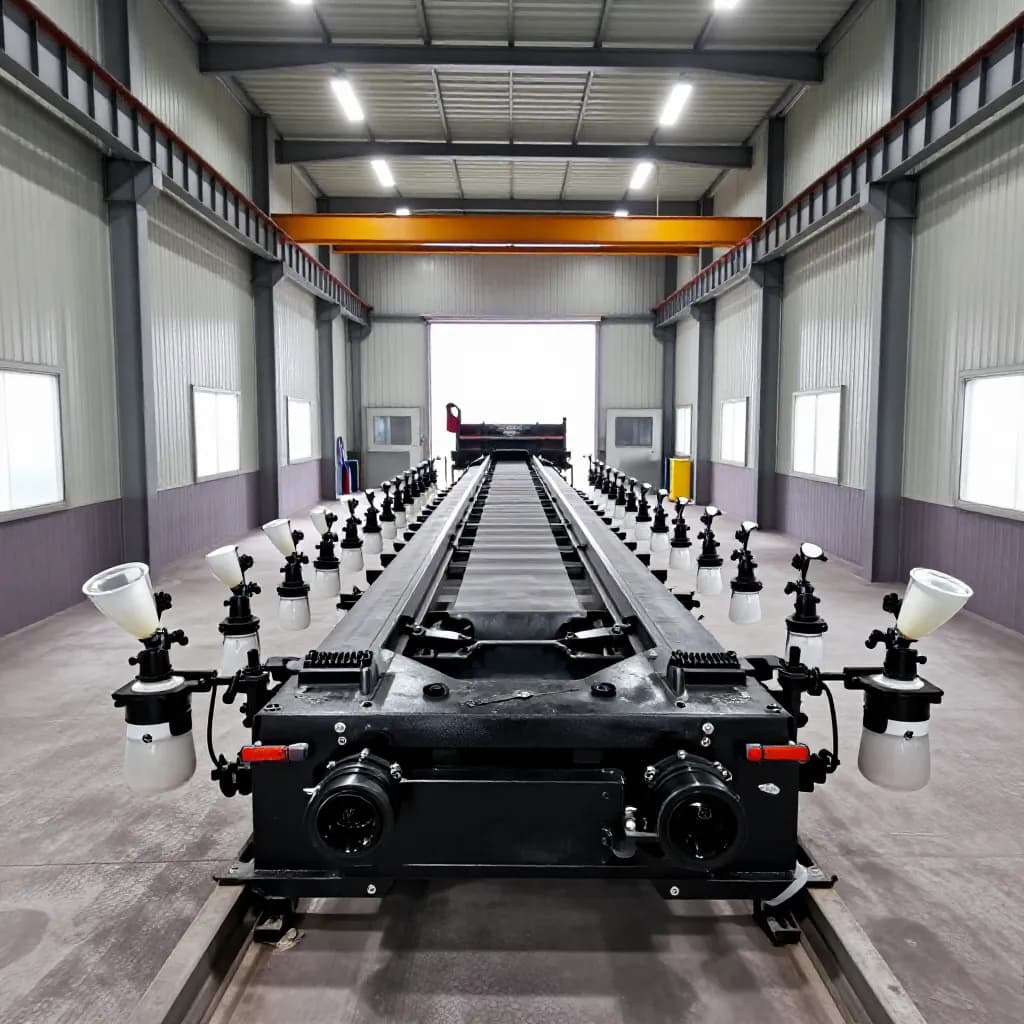
The commercial vehicle industry has progressively adopted powder coating as a replacement for liquid paint systems, driven by the same performance and environmental advantages that have made powder coating dominant in other metal finishing sectors. However, the transition has been more gradual than in industries like appliances or furniture due to the large component sizes involved — trailer bodies can exceed 13 meters in length — which require substantial capital investment in coating line infrastructure.
Ready to Start Your Project?
From one-off customs to 15,000-part production runs — get precise pricing in 24 hours.
On This Page
Commercial Vehicle Coating Demands and Industry Overview
Today, powder coating is standard for trailer chassis members, cross-members, landing gear, and structural brackets. Trailer body panels are increasingly powder coated, particularly for refrigerated trailers and tanker bodies where corrosion protection is critical. Truck cab components, including bumpers, fuel tanks, battery boxes, and step assemblies, are commonly powder coated in both OEM production and aftermarket refurbishment.
The economic case for powder coating commercial vehicles is compelling when lifecycle costs are considered. While the initial coating cost may be higher than liquid paint, the extended service life, reduced maintenance frequency, and higher residual values of powder-coated vehicles deliver lower total cost of ownership over a typical 10-15 year commercial vehicle service life.
Trailer Chassis and Structural Component Protection
The chassis of a commercial trailer is a welded steel structure comprising main rails, cross-members, outriggers, and gooseneck or kingpin assemblies. These components are fabricated from structural steel sections (typically S355 grade) that must maintain their load-bearing capacity throughout the trailer's service life, making corrosion protection a structural safety requirement.
Trailer chassis operate in a particularly aggressive corrosion environment. The underside of a trailer traveling at highway speeds is continuously bombarded by stones, road debris, and salt spray thrown up by the tractor's rear wheels. Water, mud, and road salt accumulate in box sections, crevices, and at weld joints, creating persistent wet conditions that sustain corrosion even during dry weather periods.
The standard powder coating specification for trailer chassis calls for abrasive blast preparation to Sa 2.5, zinc phosphate pretreatment, and a dual-coat system of epoxy primer (50-70 microns) plus polyester topcoat (60-80 microns) for a total system thickness of 110-150 microns. This system provides 1,000-1,500 hours of salt spray resistance per ASTM B117 and stone chip resistance rated at 2 or better per ISO 20567-1.
For trailers operating in severe corrosion environments — including coastal routes, winter salt-belt regions, and chemical transport applications — enhanced protection is achieved through hot-dip galvanizing of the chassis structure followed by powder coating. This duplex system provides sacrificial cathodic protection at damage sites while the powder coating prevents premature zinc consumption, delivering service lives of 20-25 years without major coating maintenance.
Weld joints on trailer chassis deserve particular attention. The heat-affected zone adjacent to welds has altered metallurgy that can be more susceptible to corrosion than the parent metal. Weld spatter, slag inclusions, and undercut defects create coating adhesion challenges. Thorough weld dressing — grinding smooth, removing spatter, and blending weld profiles — before blasting and coating is essential for achieving reliable coating performance at welded joints.
Truck Body Panels and Exterior Surfaces
Truck body panels — the side walls, roof, front wall, and rear doors of box bodies, curtainsiders, and refrigerated units — are the most visible surfaces of a commercial vehicle and serve as mobile billboards for fleet operators. The powder coating on these panels must deliver both protective performance and aesthetic quality, maintaining a professional appearance that reflects positively on the operator's brand.
Steel body panels are typically fabricated from 1.0-2.0 mm cold-rolled or galvanized steel sheet, formed into flat or corrugated profiles. Powder coating these large, flat surfaces requires careful control of film thickness uniformity to avoid visible variations in color and gloss. Automatic spray systems with reciprocating guns and precise powder delivery control achieve the ±10 micron film thickness consistency required for acceptable visual quality on large panels.
Aluminum body panels, increasingly used for weight reduction in payload-sensitive applications, require different pretreatment chemistry than steel. Chromate-free conversion coatings based on zirconium or titanium compounds provide the adhesion foundation for powder coating on aluminum, replacing the hexavalent chromium processes that were standard until environmental regulations drove their elimination.
Refrigerated trailer bodies present unique coating challenges. The exterior surfaces experience temperature cycling between ambient conditions and the cold radiating from the insulated body, creating condensation that can drive corrosion at coating defects. The interior surfaces of refrigerated bodies must resist the cleaning chemicals used for sanitation between loads, including quaternary ammonium compounds, chlorinated cleaners, and caustic wash solutions. Epoxy powder coatings with chemical resistance validated against specific cleaning agents are specified for refrigerated body interiors.
The rear doors and door frames of truck bodies experience the highest levels of mechanical abuse, with daily opening and closing, cargo contact during loading, and impact from dock levelers and loading equipment. Heavy-duty polyester powder coatings at 80-100 microns, combined with stainless steel or rubber wear strips at high-contact points, provide durable protection for these critical areas.
Heavy-Duty Pretreatment for Commercial Vehicle Components
Pretreatment quality is the foundation of coating durability on commercial vehicles, and the heavy-duty nature of these applications demands pretreatment systems that go beyond the standard processes used for lighter-duty products. The combination of thick steel sections, heavy weld deposits, mill scale, and fabrication contamination requires aggressive preparation methods to achieve the surface condition necessary for reliable powder coating adhesion.
Abrasive blasting is the primary preparation method for commercial vehicle components. Steel grit (G25 or G40) propelled at 6-7 bar pressure removes mill scale, rust, and fabrication contamination while creating an angular surface profile of 50-75 microns. The blast profile provides mechanical anchoring for the subsequent conversion coating and powder layers. For large trailer chassis assemblies, automated blast rooms with multiple nozzle arrays process components efficiently while maintaining consistent preparation quality.
After blasting, chemical pretreatment applies a conversion coating that enhances adhesion and provides a secondary corrosion barrier. Zinc phosphate is the preferred conversion coating for commercial vehicle applications due to its superior corrosion resistance compared to iron phosphate. The crystalline zinc phosphate layer (coating weight 2.0-4.0 g/m²) provides both chemical bonding sites for the powder coating and an additional barrier against moisture penetration at the metal-coating interface.
Multi-stage spray wash pretreatment systems for commercial vehicles typically include five to seven stages: alkaline degreasing, water rinse, surface conditioning (titanium-based activator), zinc phosphate conversion, water rinse, chromate-free post-rinse (zirconium or silane-based sealer), and deionized water final rinse. The entire sequence takes 5-8 minutes at conveyor speeds matched to the component size.
For galvanized steel components, pretreatment must address the unique surface chemistry of zinc. Sweep blasting with fine aluminum oxide media removes zinc oxide and creates surface profile without excessive zinc removal. Alternatively, T-wash (mordant solution containing phosphoric acid and copper compounds) chemically etches the zinc surface to promote adhesion. Adhesion testing per ASTM D3359 after pretreatment confirms that the preparation method achieves the required bond strength before production coating begins.
Fleet Identity and Brand Color Management
For commercial fleet operators, vehicle appearance is a direct expression of brand identity and professionalism. A well-maintained fleet with consistent, high-quality finishes projects reliability and competence to customers, while faded, chipped, or mismatched vehicles undermine brand perception. Powder coating's color consistency, durability, and resistance to fading make it the ideal technology for maintaining fleet identity over the vehicle's service life.
Fleet color specifications are typically defined by the operator's brand guidelines, which specify exact color references (RAL, NCS, Pantone, or proprietary formulations), gloss levels, and acceptable color tolerances. Powder coating manufacturers work with fleet operators to develop custom powder formulations that match brand colors precisely, with color approval processes that include laboratory spray-out panels, production trial panels, and formal sign-off before volume production.
Color consistency across vehicles manufactured at different times and potentially by different body builders is a critical requirement for fleet operators. A delivery fleet of 200 vehicles ordered over three years must present a uniform appearance when parked together at a depot. Powder coating achieves this consistency through precise formulation control, spectrophotometric color measurement at every production batch, and acceptance criteria of delta E ≤ 1.0 that ensure batch-to-batch color variation is imperceptible to the human eye.
Gloss retention over the vehicle's service life is equally important for fleet appearance. Standard polyester powder coatings retain at least 50% of their original gloss after 5 years of outdoor exposure, meeting the requirements of most fleet operators. Super-durable polyester formulations extend gloss retention to 10+ years, which is valuable for fleet operators who maintain vehicles for extended service periods.
Multi-color schemes and graphics are common on commercial vehicles for brand differentiation and advertising. While complex graphics are typically applied as vinyl wraps over the base powder coating, the powder coating provides the durable, uniform base color that the vinyl adheres to. The powder coating surface must be smooth and clean to ensure vinyl adhesion, and the coating chemistry must be compatible with the vinyl adhesive system to prevent delamination over time.
Specialized Trailer Types and Coating Requirements
Different trailer types present distinct coating challenges that require tailored powder coating specifications. Understanding these application-specific requirements ensures that the coating system delivers reliable performance throughout the trailer's service life.
Flatbed trailers and platform trailers have exposed deck surfaces that endure direct cargo contact, chain and strap abrasion, and forklift traffic. The deck coating must provide exceptional abrasion resistance and impact toughness. Heavy-duty polyester powder coatings at 100-120 microns, sometimes with anti-slip texture additives, protect flatbed decks while providing the traction needed for safe cargo handling.
Tanker trailers for liquid cargo transport require coatings that resist the specific chemicals being transported. Acid tankers need coatings with resistance to sulfuric, hydrochloric, and nitric acids. Fuel tankers require resistance to diesel, gasoline, and aviation fuel. Chemical resistance testing per ASTM D1308 against the specific cargo chemicals is mandatory before specifying a coating system for tanker applications. Epoxy powder coatings generally provide the broadest chemical resistance, while polyester coatings offer better UV stability for exterior surfaces.
Bulk powder tankers (for cement, flour, plastic pellets, and similar dry bulk materials) experience internal abrasion from the cargo material during loading, transport, and pneumatic discharge. Internal coatings for bulk tankers must combine abrasion resistance with food-grade compliance for edible cargo applications. FDA 21 CFR 175.300 and EU Regulation 1935/2004 compliance is required for tankers carrying food-grade materials.
Tipping trailers and dump bodies endure extreme mechanical abuse during loading by excavators and discharge by hydraulic tipping. The internal surfaces experience impact from rocks, aggregate, and demolition materials that would destroy conventional coatings. While many tipping bodies rely on the inherent thickness of the steel plate for corrosion allowance, powder coating the exterior surfaces and chassis components extends the overall trailer life and maintains fleet appearance.
Car transporter trailers use powder-coated ramp surfaces and deck structures that must resist tire marks, hydraulic fluid drips, and the concentrated loads from vehicle wheels. Non-marking polyester powder coatings in dark colors minimize the visibility of tire marks while providing corrosion protection for the steel deck structure.
Aftermarket Refurbishment and Fleet Maintenance Coating
Commercial vehicles undergo periodic refurbishment during their service lives to maintain appearance, extend structural life, and comply with operator standards. Powder coating plays an increasingly important role in aftermarket refurbishment, offering a cost-effective alternative to complete vehicle replacement for fleets seeking to maximize asset utilization.
Chassis refurbishment typically occurs at 5-7 year intervals for vehicles operating in severe corrosion environments. The process involves removing wheels, axles, and running gear to access the chassis structure, then blasting to remove the deteriorated original coating and any corrosion. After inspection and repair of any structural damage, the chassis is re-powder-coated using the same dual-coat system specified for new production. This refurbishment can extend chassis life by another 5-7 years at a fraction of the cost of a new trailer.
Body panel refurbishment addresses the cosmetic deterioration that affects fleet appearance. Panels with minor damage can be repaired, re-prepared, and re-powder-coated individually without stripping the entire body. For more extensive refurbishment, complete body strip-and-recoat programs restore the vehicle to near-new appearance. The ability to match the original fleet color precisely using the same powder formulation ensures that refurbished vehicles are indistinguishable from new production.
Component-level refurbishment of items such as landing gear, bumpers, fuel tanks, and toolboxes is a high-volume aftermarket activity. These components are removed from the vehicle, blasted, repaired if necessary, and re-powder-coated before reinstallation. Dedicated aftermarket coating shops specializing in commercial vehicle components have developed efficient processes for handling the variety of part sizes and geometries encountered in this market.
The environmental advantages of powder coating are particularly relevant in aftermarket refurbishment operations, which are often located in urban industrial areas subject to strict air quality regulations. Zero VOC emissions from powder coating eliminate the need for solvent abatement equipment and air quality permits that would be required for liquid paint operations, simplifying regulatory compliance for refurbishment facilities.
Emerging Technologies and Future Trends in Commercial Vehicle Coatings
The commercial vehicle coating industry is evolving in response to new vehicle technologies, tightening environmental regulations, and operator demands for improved performance and reduced lifecycle costs. Several emerging trends are shaping the future of powder coating for trailers and truck bodies.
Low-temperature cure powder coatings that crosslink at 140-160°C instead of the traditional 180-200°C are gaining adoption in commercial vehicle manufacturing. Lower cure temperatures reduce energy consumption by 15-25%, decrease cycle times, and enable coating of assemblies that include heat-sensitive components such as rubber bushings, plastic fittings, and adhesive-bonded joints. For large trailer components that require extended oven residence times, the energy savings from lower cure temperatures are particularly significant.
Ultra-high-build powder coatings that achieve 150-250 microns in a single application are being developed for heavy-duty underbody and chassis applications. These thick-film coatings provide enhanced stone chip resistance and corrosion protection without the cost and complexity of dual-coat systems. Achieving uniform film build at these thicknesses without sagging or orange peel defects requires careful formulation of the powder's melt viscosity and gel time characteristics.
Self-healing coating technologies, which incorporate microcapsules of reactive resin that rupture when the coating is damaged and flow into the damage site to restore the barrier, are in advanced development for automotive and commercial vehicle applications. While not yet commercially available in powder coating form, these technologies promise to dramatically extend coating service life by automatically repairing minor damage before corrosion can initiate.
Smart coatings with embedded sensors that monitor coating condition and detect corrosion initiation are being researched for critical structural applications. These coatings could enable condition-based maintenance of commercial vehicle structures, replacing time-based inspection schedules with real-time monitoring that identifies coating degradation before structural damage occurs.
The electrification of commercial vehicles is creating new coating requirements for battery enclosures, high-voltage cable routing, and electric drivetrain components. Dielectric powder coatings that provide both corrosion protection and electrical insulation are being developed for these applications, representing a significant new market segment for the powder coating industry.
Frequently Asked Questions
How long does powder coating last on a commercial trailer?
A dual-coat powder coating system (epoxy primer plus polyester topcoat) typically lasts 8-12 years on trailer chassis in severe salt-belt environments and 15-20 years in moderate climates. Duplex systems with hot-dip galvanizing plus powder coating extend protection to 20-25 years, often matching the trailer's full economic service life.
Can powder coating handle the size of trailer components?
Yes. Modern commercial vehicle coating lines accommodate components up to 14 meters long. Trailer chassis, body panels, and large structural assemblies are processed on overhead conveyor systems with extended spray booths and curing ovens designed specifically for these oversized components.
Is powder coating suitable for refrigerated trailer bodies?
Yes. Exterior surfaces use standard polyester powder coating for UV and corrosion protection. Interior surfaces require epoxy powder coatings with validated chemical resistance to the cleaning agents used for sanitation between loads, including quaternary ammonium compounds and chlorinated cleaners.
How does powder coating support fleet brand identity?
Powder coating matches any brand color reference (RAL, NCS, Pantone, or custom) with delta E ≤ 1.0 accuracy. Batch-to-batch consistency ensures vehicles manufactured over multiple years present a uniform appearance. Super-durable polyester formulations maintain gloss retention for 10+ years, preserving fleet appearance throughout the vehicle's service life.
Can existing trailers be re-powder-coated?
Yes. Aftermarket refurbishment involves removing deteriorated coatings by abrasive blasting, repairing any structural damage, and re-applying the powder coating system. Chassis refurbishment at 5-7 year intervals can extend trailer life significantly. Individual components like landing gear, bumpers, and fuel tanks can also be refurbished independently.
Ready to Start Your Project?
From one-off customs to 15,000-part production runs — get precise pricing in 24 hours.