Powder coating has traditionally been associated with relatively thick films — typically 60-120 microns for decorative applications and even thicker for functional coatings. While this film build provides excellent protection and coverage, it also means higher material consumption per coated part compared to liquid paint systems that routinely achieve acceptable finishes at 25-40 microns. For high-volume applications such as automotive body panels, appliance housings, and metal furniture, the material cost difference between a 70-micron powder coating and a 30-micron liquid paint is commercially significant.
Innovation
Thin Film Powder Coating Technology: Sub-40-Micron Application and Cost Reduction
Sundial Powder Coating·April 22, 2026·11 min
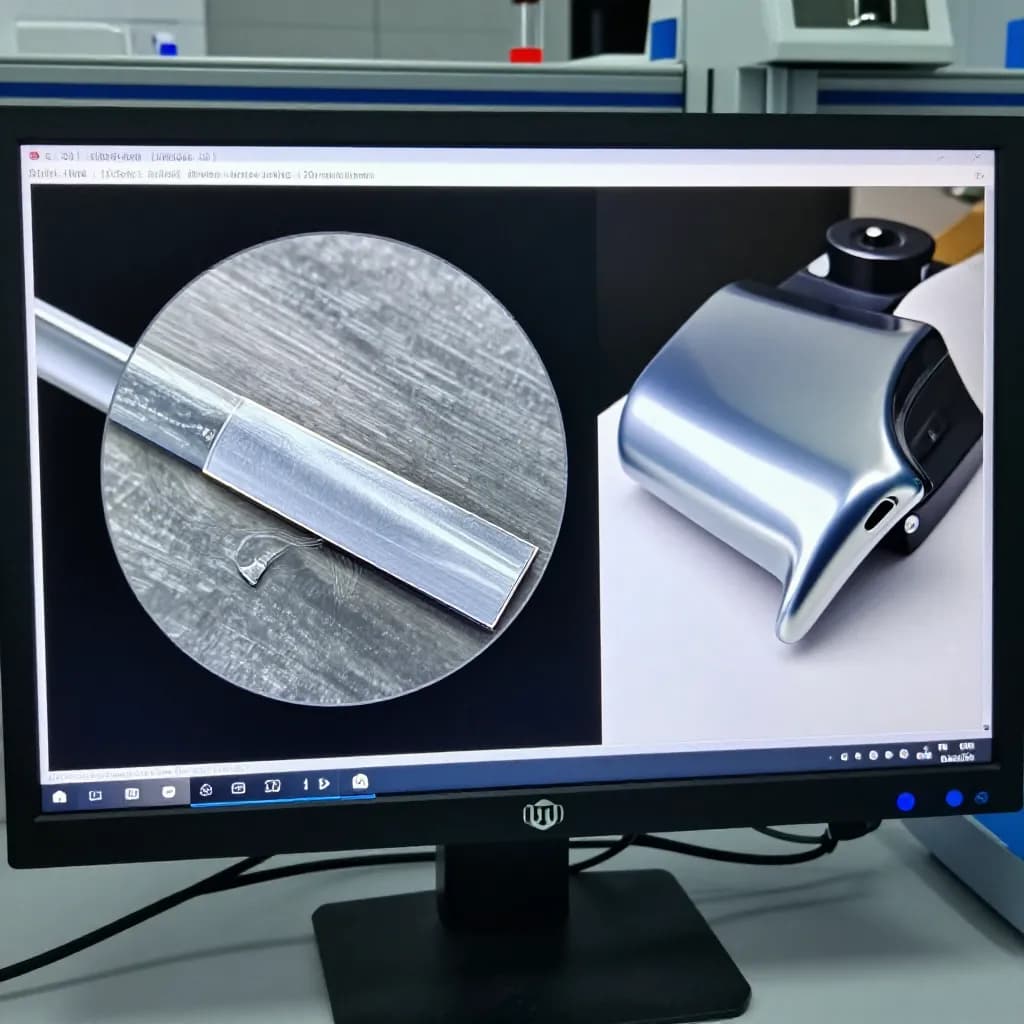
Thin film powder coating technology aims to close this gap by enabling powder coatings to be applied at film thicknesses of 25-40 microns while maintaining the appearance quality, coverage, and protective performance expected of powder coatings. Achieving this requires advances in powder particle size distribution, resin flow characteristics, application equipment, and process control that collectively enable uniform, defect-free films at thicknesses previously considered impractical for powder coating.
Ready to Start Your Project?
From one-off customs to 15,000-part production runs — get precise pricing in 24 hours.
On This Page
The Drive Toward Thinner Powder Coating Films
The commercial motivation is compelling. Reducing average film thickness from 70 microns to 35 microns halves the powder consumption per square meter of coated surface, directly reducing material costs. For a high-volume automotive or appliance coating operation processing millions of square meters annually, this material saving represents substantial cost reduction. Additionally, thinner films cure faster, enabling higher line speeds or shorter ovens, and reduce the weight of the coating on the finished product — a consideration for automotive applications where every gram contributes to fuel efficiency and emissions.
Powder Particle Size Engineering
The key to thin film powder coating is particle size engineering. Standard powder coatings have a median particle size of 30-45 microns, with a distribution ranging from approximately 10 to 100 microns. When applied electrostatically, these particles build a film whose minimum achievable thickness is constrained by the largest particles in the distribution — a single 80-micron particle creates a local film thickness of at least 80 microns, regardless of the target thickness.
Thin film powder coatings use finer particle size distributions, typically with median particle sizes of 15-25 microns and a tighter distribution that eliminates the coarse tail above 40-50 microns. This finer powder can be deposited in thinner, more uniform layers because the maximum particle size is closer to the target film thickness. The resulting films are smoother, with less orange peel texture, and can achieve acceptable coverage and appearance at 25-40 microns.
However, finer powders present processing challenges. Particles below 10 microns tend to agglomerate due to van der Waals forces, reducing flowability and creating application problems including poor fluidization, inconsistent powder delivery, and uneven deposition. Fine powders also have higher surface area relative to their mass, which affects electrostatic charging behavior and can lead to back-ionization at lower film thicknesses than coarse powders. Advanced powder manufacturing techniques — including air classification to remove both the fine and coarse tails of the distribution, surface treatment with flow additives, and optimized grinding parameters — produce thin film powders with the narrow particle size distribution and good flow properties needed for reliable application.
Resin and Formulation Design for Thin Films
Thin film powder coatings require resin systems with enhanced flow and leveling characteristics to produce smooth, uniform films at reduced thickness. At 30-35 microns, the film has less material available to flow and level during the melt phase of curing, making surface defects such as orange peel, craters, and pinholes more visible and more difficult to eliminate than in thicker films.
Low-viscosity resin systems that achieve rapid and complete flow at the onset of curing are essential for thin film applications. The melt viscosity profile — how the resin's viscosity changes with temperature during the cure cycle — must be optimized to provide a sufficiently long flow window before crosslinking increases viscosity and freezes the film surface. Resins with sharp melting points and low minimum viscosity produce the best flow and leveling in thin films.
Opacity is another formulation challenge at reduced film thickness. Standard powder coating formulations achieve full opacity — complete hiding of the substrate — at 60-80 microns. At 30-35 microns, the same formulation may show incomplete hiding, with the substrate color visible through the coating. Thin film formulations address this through higher pigment loading, selection of high-opacity pigments with strong scattering efficiency, and optimization of pigment particle size and dispersion to maximize hiding power per unit of film thickness. For some applications, a tinted primer or substrate preparation step may be used to reduce the hiding burden on the topcoat, enabling thinner application without compromising appearance.
Automotive Body Panel Applications
The automotive industry represents the highest-profile target for thin film powder coating technology. Automotive body panels are currently finished with multi-layer liquid paint systems — electrocoat primer, primer surfacer, basecoat, and clearcoat — with total film builds of 90-120 microns. The industry has long recognized the environmental advantages of powder coating but has been unable to adopt it broadly for body panels due to the thick films, orange peel texture, and limited color-matching capability of conventional powder coatings.
Thin film powder coating technology addresses these barriers. Sub-40-micron powder clear coats applied over powder or liquid basecoats can achieve the smooth, high-gloss appearance required for automotive Class A surfaces. The elimination of solvent-based clear coat — the largest single source of VOC emissions in automotive painting — delivers significant environmental benefits while maintaining the appearance standards that consumers expect.
Several automotive manufacturers have implemented powder clear coat technology on production vehicles, with film thicknesses of 35-50 microns achieving appearance metrics comparable to liquid clear coats. The next frontier is powder basecoat technology, where thin film application at 15-25 microns would enable the color coat to be applied as powder, further reducing VOC emissions and material waste. Powder-on-powder systems — where a powder basecoat is applied and partially cured before a powder clear coat is applied and both layers are fully cured together — represent the ultimate goal of an all-powder automotive finish with zero solvent emissions.
Appliance and Consumer Product Applications
The appliance industry is another major adopter of thin film powder coating technology. Refrigerators, washing machines, dryers, dishwashers, and small appliances require smooth, durable, and aesthetically pleasing finishes that withstand daily use, cleaning chemicals, and food contact. Traditionally finished with liquid paint or standard powder coating at 60-80 microns, appliance manufacturers are transitioning to thin film powder coatings at 35-50 microns to reduce material costs while maintaining or improving finish quality.
The smooth surface finish achievable with thin film powder coatings is actually an advantage for appliance applications, where consumers expect a sleek, modern appearance. The reduced orange peel texture of thin film coatings — a consequence of the finer particle size and enhanced flow characteristics — produces a smoother, more reflective surface than standard powder coatings, improving the perceived quality of the finished appliance.
Metal furniture, office equipment, lighting fixtures, and general industrial products are additional markets where thin film powder coating technology offers material cost savings without compromising performance. For these applications, the transition to thin film is often straightforward because the appearance requirements are less demanding than automotive Class A surfaces, and the existing powder coating infrastructure — spray booths, ovens, and recovery systems — can accommodate thin film powders with relatively minor adjustments to application parameters and quality control procedures.
Application Equipment and Process Control
Applying thin film powder coatings consistently requires application equipment and process control systems optimized for fine powders and tight thickness tolerances. Standard powder application guns and controls designed for 60-80 micron films may not provide the precision needed for 30-40 micron targets, where a variation of plus or minus 10 microns represents a 25-33% deviation from the target.
Advanced electrostatic guns with precise voltage and current control, adjustable powder flow rates, and optimized nozzle geometries for fine powders are essential. Dense-phase powder delivery systems, which transport powder at lower velocities and higher concentrations than conventional venturi-based systems, provide more consistent and controllable powder delivery, particularly for fine powders that are sensitive to air velocity variations. The lower impact velocity of dense-phase delivery also reduces bounce-back of powder from the substrate surface, improving first-pass transfer efficiency.
Inline film thickness measurement is critical for thin film process control. Non-contact measurement systems — based on magnetic induction, eddy current, or thermal principles — can measure film thickness on every part at line speed, providing real-time feedback to the application system. Closed-loop control algorithms adjust gun parameters automatically to maintain the target thickness, compensating for variations in part geometry, line speed, and powder characteristics. This level of process automation is essential for achieving the tight thickness tolerances that thin film applications demand and for maximizing the material savings that motivate the transition to thin film technology.
Powder-on-Powder Multi-Layer Systems
Powder-on-powder application — applying multiple powder coating layers without intermediate curing — is a key enabling technology for thin film systems, particularly in automotive applications where multi-layer coating stacks are required. In a powder-on-powder system, the first layer (typically a primer or basecoat) is applied and heated just enough to gel or partially crosslink, creating a stable surface onto which the second layer (topcoat or clear coat) is applied. Both layers are then fully cured together in a single oven pass.
The technical challenge of powder-on-powder application is achieving adequate adhesion between layers while preventing intermixing that would compromise the distinct functionality of each layer. The first layer must be gelled sufficiently to support the second layer's electrostatic deposition — powder does not adhere well to a fully molten surface — but not so fully cured that inter-layer adhesion is compromised. The gel window — the temperature and time range that produces the optimal first-layer condition — must be precisely controlled.
Successful powder-on-powder systems have been demonstrated for primer-plus-topcoat, basecoat-plus-clearcoat, and even three-layer systems. The combined film thickness of a two-layer powder-on-powder system can be as low as 50-70 microns — comparable to liquid paint systems — while providing the corrosion protection of a dedicated primer layer and the appearance and weathering resistance of a dedicated topcoat. The elimination of intermediate curing steps reduces energy consumption and increases throughput, while the all-powder system maintains zero VOC emissions throughout the process.
Frequently Asked Questions
How thin can powder coatings be applied?
Current thin film powder coating technology enables reliable application at 25-40 microns for decorative topcoats and 15-25 microns for basecoats in multi-layer systems. Below 25 microns, achieving complete substrate hiding and uniform coverage becomes increasingly challenging. The practical minimum depends on the powder formulation, substrate preparation, and application equipment capabilities.
Does thin film powder coating provide adequate protection?
Thin film powder coatings at 30-40 microns provide adequate protection for many interior and moderate exterior applications, particularly when applied over appropriate primers. For demanding corrosion protection requirements, a thin film topcoat over a dedicated primer layer in a powder-on-powder system provides protection comparable to thicker single-coat systems while using less total material.
What equipment changes are needed for thin film application?
Thin film application typically requires upgraded powder delivery systems (dense-phase preferred), precise electrostatic gun controls, and inline film thickness measurement for closed-loop control. Existing spray booths and curing ovens can generally be used with parameter adjustments. The powder recovery system may need optimization for the finer particle sizes used in thin film formulations.
How much material cost can thin film technology save?
Reducing film thickness from 70 microns to 35 microns approximately halves the powder consumption per square meter, translating to material cost savings of 40-50%. Actual savings depend on the specific application, transfer efficiency, and reclaim rates. For high-volume operations, the annual material cost reduction can be substantial and typically justifies the investment in thin film application technology.
What is powder-on-powder application?
Powder-on-powder is a multi-layer application technique where a second powder coat is applied over a first layer that has been gelled but not fully cured. Both layers are then cured together in a single oven pass. This enables multi-layer coating systems with distinct primer and topcoat functionality while maintaining the zero-VOC advantage of powder coating and reducing energy consumption compared to separate curing of each layer.
Ready to Start Your Project?
From one-off customs to 15,000-part production runs — get precise pricing in 24 hours.