Telecommunications infrastructure — cell towers, antenna mounts, equipment cabinets, cable trays, and the rapidly expanding network of 5G small cells — must operate reliably for 20-30 years in uncontrolled outdoor environments with minimal maintenance. These assets are typically installed in locations that are difficult and expensive to access for repair, making the initial coating specification a critical decision that affects the total lifecycle cost of the infrastructure.
Industrial
Powder Coating Telecommunications Infrastructure: Cell Towers, Antenna Mounts, Cable Trays, and 5G Small Cells
Sundial Powder Coating·April 22, 2026·11 min
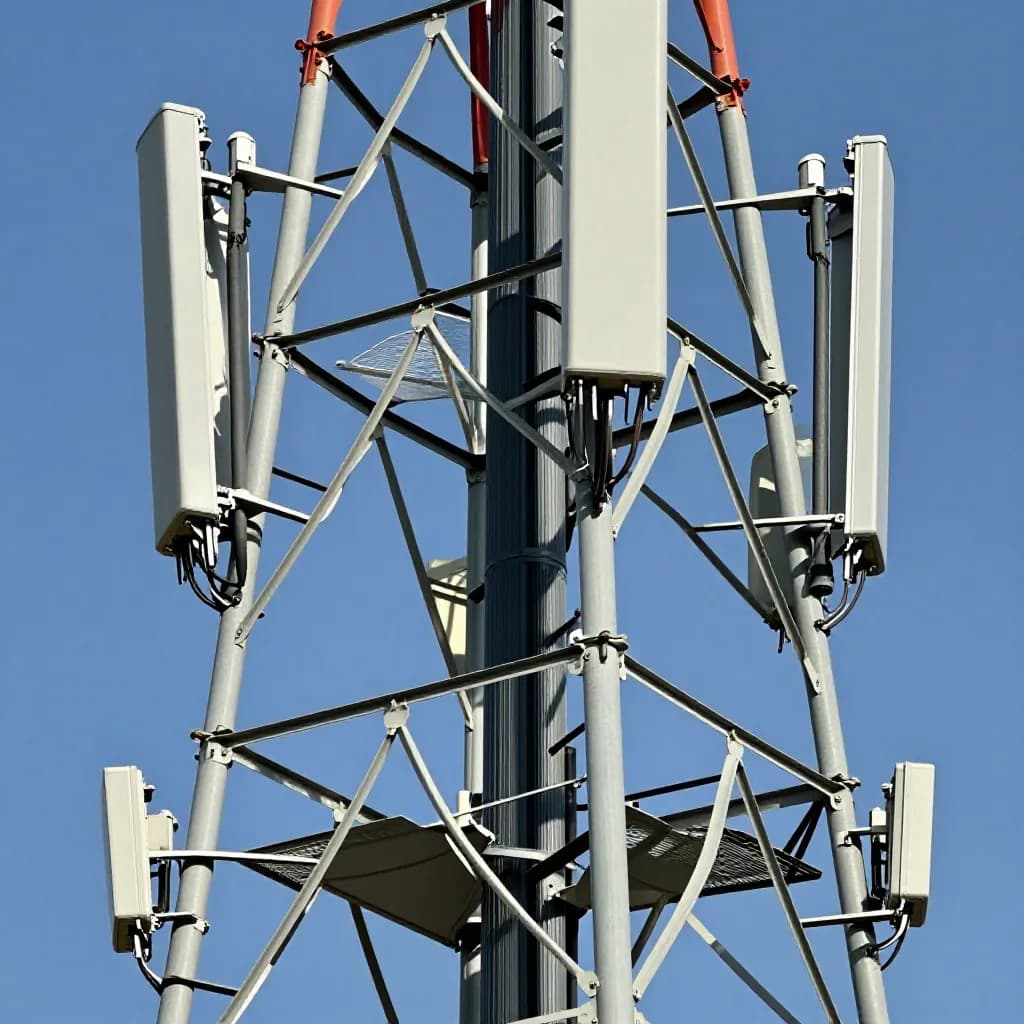
The coating challenges for telecom infrastructure are multifaceted. Structural steel towers and monopoles face atmospheric corrosion from rain, humidity, and industrial pollutants. Antenna mounts and brackets experience galvanic corrosion where dissimilar metals are joined. Equipment cabinets must resist UV degradation, thermal cycling, and vandalism. Cable trays and conduits face chemical exposure from cable lubricants and cleaning agents. And all components must maintain their protective performance through decades of exposure without scheduled recoating.
Ready to Start Your Project?
From one-off customs to 15,000-part production runs — get precise pricing in 24 hours.
On This Page
Telecommunications Infrastructure Coating Requirements
Powder coating addresses these challenges through its dense, uniform film structure, excellent adhesion to properly prepared substrates, and inherent resistance to UV degradation, chemical exposure, and mechanical damage. The telecom industry has increasingly adopted powder coating as the preferred finish for factory-fabricated components, replacing traditional liquid paint systems that require multiple coats, longer production times, and generate significant VOC emissions.
Cell Tower and Monopole Structural Steel Finishing
Cell towers and monopoles are the backbone of wireless telecommunications networks, with over 400,000 tower structures in the United States alone. These structures are fabricated from structural steel (lattice towers) or steel or aluminum tubes (monopoles) and must withstand decades of atmospheric exposure, wind loading, ice accumulation, and temperature extremes ranging from -40°C to +60°C depending on geographic location.
The traditional coating system for cell tower structural steel has been hot-dip galvanizing per ASTM A123, which provides sacrificial zinc protection at 85-100 microns. However, galvanizing alone has limitations: it provides no color choice (only the characteristic grey zinc appearance), it degrades in marine and industrial atmospheres where zinc corrosion rates are accelerated, and it does not meet the aesthetic requirements of many jurisdictions that mandate towers blend with their surroundings.
Powder coating over galvanized steel — a duplex system — provides both the sacrificial protection of zinc and the barrier protection, UV resistance, and color flexibility of the powder coat. The galvanized surface must be properly prepared for powder adhesion: light sweep blasting to create a surface profile without removing the zinc layer, followed by a wash primer or specialized adhesion promoter designed for galvanized substrates. Polyester powder at 60-80 microns over the prepared galvanized surface creates a duplex system with a synergistic corrosion protection factor of 1.5-2.3 times the sum of the individual coating lifetimes.
Color selection for cell towers is increasingly driven by local planning regulations. Many municipalities require towers to be finished in colors that minimize visual impact — sky blue, grey-green, or brown tones depending on the surrounding landscape. FAA regulations in the United States require aviation obstruction marking (alternating orange and white bands) on towers exceeding 200 feet that are not equipped with lighting systems. Powder coating provides precise color matching to FAA-specified orange (similar to RAL 2004) and white (similar to RAL 9003) with the durability to maintain color distinction for the required inspection intervals.
Antenna Mounts, Brackets, and RF-Transparent Enclosures
Antenna mounting hardware — brackets, clamps, sector frames, and tilt mechanisms — must support antenna loads of 20-80 kg at heights of 30-100 meters while resisting wind-induced vibration, ice loading, and corrosion. These components are typically fabricated from hot-dip galvanized steel or aluminum and are powder coated for additional corrosion protection and visual consistency with the tower structure.
The galvanic corrosion risk at antenna mount connections is significant. Antenna mounts frequently join galvanized steel brackets to aluminum antenna housings using stainless steel fasteners, creating a three-metal galvanic system that can accelerate corrosion of the most anodic metal (aluminum or zinc) in the presence of moisture. Powder coating all mating surfaces provides electrical isolation that interrupts the galvanic circuit, while nylon isolation bushings at bolt connections provide secondary protection against coating damage during installation.
RF-transparent enclosures for antennas and small cell equipment present a unique coating consideration. These enclosures are typically fabricated from fiberglass-reinforced plastic (FRP) or ASA (acrylonitrile styrene acrylate) and must not attenuate or distort the radio frequency signals passing through them. Powder coating FRP enclosures is feasible using specialized conductive primers that enable electrostatic powder adhesion to the non-conductive substrate, but the coating formulation must be verified for RF transparency at the operating frequencies (typically 600 MHz to 39 GHz for current cellular bands).
Metallic pigments in powder coatings can affect RF signal propagation and should be avoided for enclosures in the signal path. Standard organic pigments in polyester powder coatings have negligible RF attenuation at cellular frequencies, making them suitable for RF-transparent enclosure finishing. However, any coating specification for RF enclosures should include RF attenuation testing at the relevant frequency bands to verify that the coating does not degrade signal performance.
5G Small Cell Infrastructure and Urban Deployment
The deployment of 5G networks is driving a massive expansion of small cell infrastructure — compact base stations mounted on street light poles, utility poles, building facades, and purpose-built street furniture. Unlike traditional macro cell towers, 5G small cells are installed in dense urban environments where aesthetic integration is as important as technical performance. Powder coating plays a critical role in ensuring these devices blend seamlessly into the urban landscape.
5G small cell enclosures and mounting hardware must meet demanding aesthetic requirements set by municipal design review boards. Many cities require small cell equipment to match the color and finish of the host structure — street light grey, utility pole brown, or building facade colors. Powder coating's ability to match any color reference with precision, combined with its durability in outdoor exposure, makes it the preferred finish for small cell enclosures and mounting brackets.
Thermal management is a critical consideration for 5G small cell enclosures. Active electronics generate significant heat that must be dissipated through the enclosure walls to maintain operating temperatures within the equipment's rated range (typically -40°C to +55°C). Powder coating adds a thin insulating layer to the enclosure surface that can slightly reduce heat dissipation. For thermally critical enclosures, specifying a minimum practical film thickness (40-60 microns) and selecting powder formulations with higher thermal conductivity helps minimize the thermal impact of the coating.
The volume of 5G small cell deployments — projected at millions of units globally — is driving demand for high-throughput powder coating operations that can handle the diverse color requirements and small batch sizes typical of urban deployments. Automated color-change systems that can switch between colors in under 5 minutes are essential for efficient small cell coating operations, as a single deployment project may require 10-20 different colors to match various host structures across a metropolitan area.
Cable Trays, Conduits, and Cable Management Systems
Cable management infrastructure — cable trays, ladder racks, conduits, junction boxes, and fiber optic splice enclosures — forms the nervous system of telecommunications networks, routing power and signal cables from equipment rooms to antenna locations. These components are manufactured in high volumes from steel, aluminum, or fiberglass and require durable, consistent finishes that protect against corrosion while facilitating cable installation and identification.
Steel cable trays are the highest-volume powder coating application in telecommunications infrastructure. Standard cable tray finishes include hot-dip galvanized (for maximum corrosion protection in outdoor and industrial environments), electro-galvanized with powder coat (for indoor and moderate outdoor environments), and powder coat over bare steel (for controlled indoor environments). The powder coating on cable trays must resist abrasion from cable pulling operations, chemical exposure from cable lubricants, and UV degradation for outdoor installations.
Polyester powder coatings at 60-80 microns are the standard specification for indoor cable trays, providing adequate corrosion protection and a smooth surface that facilitates cable pulling without damaging cable jackets. For outdoor cable trays, a duplex system of galvanizing plus polyester powder coat provides the corrosion protection necessary for 20+ year service life in atmospheric exposure. The powder coat color — typically light grey (RAL 7035), dark grey (RAL 7016), or white (RAL 9010) — serves both aesthetic and functional purposes, with lighter colors improving visibility in equipment rooms and facilitating visual inspection of cable routing.
Fiber optic splice enclosures and distribution cabinets require powder coatings with specific properties beyond basic corrosion protection. These enclosures must maintain IP65 or IP66 ingress protection ratings, which requires the coating to be compatible with gasket materials (EPDM, silicone, or neoprene) without causing gasket degradation or adhesion that could compromise the seal. The coating surface must also be smooth enough to allow proper gasket compression without creating leak paths at the coating-gasket interface.
Outdoor Equipment Cabinets and Shelter Finishing
Outdoor equipment cabinets and shelters house the active electronics, power systems, and battery backup equipment that operate telecommunications networks. These enclosures range from small wall-mounted cabinets for fiber distribution to large walk-in shelters housing complete base station equipment. All must provide environmental protection for sensitive electronics while withstanding decades of outdoor exposure, thermal cycling, and potential vandalism.
The coating specification for outdoor telecom cabinets must address multiple performance requirements simultaneously. Corrosion resistance is fundamental — cabinets are fabricated from galvanized steel or aluminum and must resist atmospheric corrosion for 20-30 years. UV resistance is critical for maintaining appearance and preventing coating degradation that could expose the substrate to corrosion. Thermal performance matters because cabinet color affects solar heat gain — lighter colors reflect more solar radiation, reducing cooling energy requirements for the enclosed electronics.
Super-durable polyester powder coatings with solar reflective pigment technology are increasingly specified for outdoor telecom cabinets. These formulations use infrared-reflective pigments that reduce solar heat absorption by 30-40% compared to standard pigments of the same visible color. A dark grey cabinet with solar reflective powder coating can achieve the same thermal performance as a standard light grey cabinet, giving designers more color flexibility without compromising thermal management.
Vandal resistance is a significant concern for ground-level telecom cabinets in urban and suburban locations. Powder coating's inherent hardness (typically 2H-4H pencil hardness) provides good resistance to scratching and casual damage. Anti-graffiti powder coating formulations with low surface energy create a surface that resists paint adhesion, allowing graffiti to be removed with standard cleaning solvents without damaging the underlying powder coat. For high-vandalism areas, sacrificial anti-graffiti clear coats can be applied over the powder coat — the clear coat is removed along with the graffiti and reapplied as needed.
Accelerated Weathering and Durability Testing
Telecommunications infrastructure coatings must demonstrate long-term durability through accelerated weathering and corrosion testing before they are approved for deployment. The testing protocols used by major telecom operators and tower companies are among the most demanding in the powder coating industry, reflecting the high cost of coating failure on infrastructure that is expensive to access and maintain.
Accelerated UV weathering testing per ASTM G154 (fluorescent UV) or ASTM G155 (xenon arc) simulates years of outdoor UV exposure in weeks or months. Telecom specifications typically require 3,000-5,000 hours of accelerated weathering with maximum color change (Delta E) of 3-5 units and gloss retention above 50% of the original value. These requirements correspond to approximately 10-15 years of outdoor exposure in temperate climates, or 7-10 years in high-UV environments such as the American Southwest or tropical regions.
Salt spray testing per ASTM B117 or ISO 9227 evaluates corrosion resistance under accelerated conditions. Telecom specifications typically require 1,000-2,000 hours of neutral salt spray exposure with maximum scribe creep of 2-3 mm for powder-coated galvanized steel, and 500-1,000 hours for powder-coated bare steel. Cyclic corrosion testing per ASTM G85 or ISO 16701, which alternates salt spray, humidity, and drying cycles, is increasingly preferred over continuous salt spray testing because it better correlates with real-world atmospheric corrosion mechanisms.
Mechanical testing for telecom coatings includes impact resistance per ASTM D2794 (minimum 40 inch-pounds direct impact), flexibility per ASTM D522 (no cracking at 1/8 inch mandrel bend), and adhesion per ASTM D3359 (5B rating — no detachment). These mechanical properties ensure the coating survives the handling, transportation, and installation stresses that telecom components experience before entering service, as well as the thermal cycling and wind-induced vibration they endure during operation.
Environmental Compliance and Sustainability in Telecom Coating
Telecommunications companies are increasingly focused on environmental sustainability across their operations, including the coating systems used on their infrastructure. Powder coating aligns naturally with telecom sustainability goals through its zero VOC emissions, high material efficiency, and elimination of hazardous waste streams associated with liquid paint operations.
The environmental advantages of powder coating are quantifiable. A typical telecom equipment cabinet requires approximately 0.5-1.0 kg of powder coating material, with 95-98% of the applied powder either deposited on the part or reclaimed for reuse. The equivalent liquid paint operation would require 1.5-3.0 kg of paint material (due to lower transfer efficiency), generate 0.3-0.6 kg of VOC emissions, and produce 0.5-1.0 kg of paint waste requiring hazardous waste disposal. Over the millions of cabinets, brackets, and cable trays coated annually for the telecom industry, these differences represent significant environmental impact reductions.
REACH compliance (Registration, Evaluation, Authorisation and Restriction of Chemicals) is a mandatory requirement for powder coatings used on telecom infrastructure in the European Union. Modern TGIC-free polyester powders comply with REACH requirements, having eliminated the triglycidyl isocyanurate (TGIC) cross-linker that was classified as a reproductive toxicant. HAP-free (Hazardous Air Pollutant) formulations are similarly required for US operations under EPA regulations.
End-of-life considerations are also relevant for telecom infrastructure coatings. When towers and equipment are decommissioned after 25-30 years of service, the steel and aluminum substrates are recycled. Powder coatings do not contain heavy metals or hazardous substances that would complicate metal recycling, and the thin organic coating film is consumed during the steel melting process without generating toxic emissions. This cradle-to-grave environmental profile supports the circular economy principles that major telecom operators are incorporating into their procurement specifications.
Frequently Asked Questions
How long does powder coating last on cell towers?
Powder coating over galvanized steel (duplex system) provides 25-30+ years of corrosion protection on cell towers. The galvanizing provides sacrificial zinc protection while the powder coat adds barrier protection, UV resistance, and color. The synergistic effect of the duplex system extends protection 1.5-2.3 times beyond the sum of individual coating lifetimes.
Does powder coating affect RF signal performance on antenna enclosures?
Standard polyester powder coatings with organic pigments have negligible RF attenuation at cellular frequencies (600 MHz to 39 GHz). However, metallic pigments should be avoided for enclosures in the signal path. Any coating specification for RF-transparent enclosures should include RF attenuation testing at the relevant frequency bands.
What colors are required for cell tower powder coating?
Color requirements vary by jurisdiction. Many municipalities mandate colors that minimize visual impact — sky blue, grey-green, or brown tones. FAA regulations require aviation orange and white marking on towers over 200 feet without lighting. Powder coating provides precise color matching with long-term color retention for regulatory compliance.
How are 5G small cells powder coated to match urban environments?
5G small cell enclosures are powder coated to match host structures — street light grey, utility pole brown, or building facade colors. Automated color-change systems enable efficient handling of the diverse color requirements, as a single deployment may need 10-20 different colors across a metropolitan area.
What is solar reflective powder coating for telecom cabinets?
Solar reflective powder coatings use infrared-reflective pigments that reduce heat absorption by 30-40% compared to standard pigments of the same visible color. This allows darker cabinet colors without increasing cooling energy requirements for enclosed electronics, giving designers more color flexibility while maintaining thermal performance.
Ready to Start Your Project?
From one-off customs to 15,000-part production runs — get precise pricing in 24 hours.