Surface tension — more precisely, surface free energy — is the thermodynamic driving force behind many of the most critical phenomena in powder coating application and film formation. It governs whether a molten coating wets and spreads on a substrate, how the coating flows and levels during cure, whether surface defects such as craters and fisheyes form, and how the cured coating interacts with its environment in service. A working understanding of surface energy principles is essential for anyone involved in powder coating formulation, application, or troubleshooting.
Technical
Surface Tension and Wetting in Powder Coatings: Flow Additives, Craters, and Contamination Control
Sundial Powder Coating·April 22, 2026·14 min
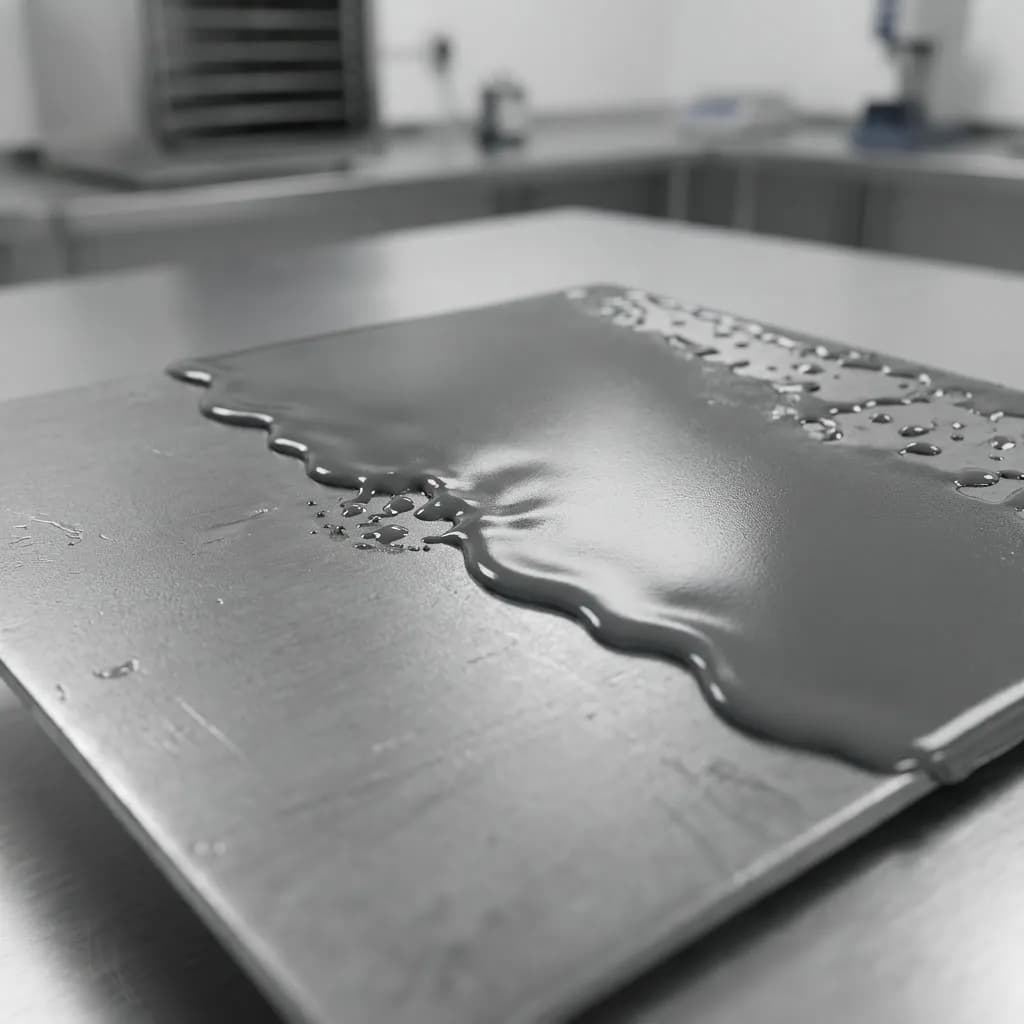
Surface tension arises because molecules at a surface or interface experience an imbalance of intermolecular forces compared to molecules in the bulk. Bulk molecules are surrounded on all sides by neighboring molecules and experience balanced attractive forces. Surface molecules lack neighbors on one side and experience a net inward pull that creates a contractile force — the surface tension — that acts to minimize the surface area. Surface tension is measured in millinewtons per meter (mN/m) and represents the energy required to create a unit area of new surface.
Ready to Start Your Project?
From one-off customs to 15,000-part production runs — get precise pricing in 24 hours.
On This Page
Surface Energy Fundamentals for Coating Scientists
For a liquid coating to wet and spread on a solid substrate, the surface energy of the substrate must be higher than the surface tension of the liquid coating. This thermodynamic requirement — expressed quantitatively by Young's equation and the spreading coefficient — means that high-energy substrates (clean metals, glass, ceramics) are readily wetted by most coating materials, while low-energy substrates (plastics, contaminated surfaces, silicone-treated surfaces) may resist wetting and cause the coating to bead up, crawl, or dewet.
Clean metal surfaces have high surface energies — typically 500-2000 mN/m for bare metals and 40-70 mN/m for metal oxides and conversion coatings. Powder coatings in the molten state have surface tensions of approximately 25-40 mN/m. This large difference in surface energy ensures that molten powder coatings readily wet clean metal substrates. However, surface contamination can dramatically reduce the effective surface energy of the substrate, creating wetting problems that manifest as coating defects.
The Role of Flow Additives in Powder Coatings
Flow additives — also called leveling agents or surface control agents — are essential components of virtually all powder coating formulations. These surface-active materials migrate to the coating surface during melting and modify the surface tension of the molten film to promote uniform flow, prevent surface defects, and improve the final appearance of the cured coating.
Polyacrylate flow additives are the most widely used type in powder coatings. These are low-molecular-weight poly(butyl acrylate) or poly(2-ethylhexyl acrylate) polymers that are incompatible with the bulk coating resin and migrate to the air-coating interface during melting. At the surface, they form a thin layer that reduces and equalizes the surface tension across the entire film. This equalization is critical because surface tension gradients — differences in surface tension between adjacent areas of the film — are the primary driving force for surface defects such as craters, Bénard cells, and orange peel.
The mechanism by which polyacrylate flow additives prevent craters illustrates the importance of surface tension equalization. A crater forms when a low-surface-tension contaminant (such as a silicone particle or oil droplet) creates a localized area of reduced surface tension on the coating surface. The surrounding higher-surface-tension coating is pulled away from the contamination site by Marangoni flow — flow driven by surface tension gradients — creating a circular depression (crater) with a raised rim. A polyacrylate flow additive reduces the overall surface tension of the coating to a level close to or below that of the contaminant, eliminating the surface tension gradient that drives crater formation.
Polysiloxane (silicone) flow additives provide more aggressive surface tension reduction than polyacrylates, achieving surface tensions as low as 20-22 mN/m compared to 28-32 mN/m for polyacrylate-modified coatings. This makes silicone additives more effective at preventing craters from low-surface-tension contaminants. However, silicone additives create their own problems: they can cause intercoat adhesion failure in multi-coat systems, they contaminate reclaim powder and spray equipment, and they can transfer to adjacent surfaces and cause wetting problems in subsequent coating operations. For these reasons, silicone flow additives are used sparingly and only when polyacrylate additives are insufficient.
Crater Formation: Causes and Prevention Strategies
Craters — circular depressions in the cured coating surface, typically 1-10 mm in diameter with raised rims — are among the most common and frustrating surface defects in powder coating operations. They are caused by localized surface tension differences that drive Marangoni flow away from the low-surface-tension site, and they can originate from contamination of the substrate, the powder, the compressed air supply, or the application environment.
Substrate contamination is the most frequent cause of craters. Oils, greases, lubricants, mold release agents, silicone sealants, and other low-surface-tension materials on the substrate surface create localized areas of reduced surface energy that the molten coating cannot wet uniformly. Even trace amounts of silicone contamination — as little as a few parts per billion on the surface — can cause severe cratering. Thorough cleaning and pretreatment of the substrate is the primary defense against substrate-related craters.
Powder contamination can also cause craters. Cross-contamination between powder products containing different levels or types of flow additives creates surface tension inhomogeneities in the molten film. A particle of silicone-containing powder in a batch of polyacrylate-only powder will create a localized low-surface-tension spot that generates a crater. Rigorous equipment cleaning during color changes and product changeovers is essential for preventing powder contamination craters.
Compressed air contamination is an often-overlooked source of craters. Oil from air compressors, lubricants from pneumatic equipment, and moisture in the air supply can deposit low-surface-tension contaminants on the powder or the substrate during application. Proper air filtration — including oil-removal filters, desiccant dryers, and activated carbon filters — is essential for crater-free coating quality.
Environmental contamination from the spray booth surroundings can also cause craters. Silicone sealants, lubricant sprays, mold release agents, and other volatile low-surface-tension materials used in adjacent manufacturing operations can become airborne and deposit on substrates or powder in the coating area. Maintaining a clean, controlled environment around the powder coating operation — and prohibiting the use of silicone-containing products in the vicinity — is a fundamental requirement for consistent coating quality.
When craters persist despite contamination control efforts, increasing the flow additive level in the powder formulation can improve crater resistance by further reducing and equalizing the coating surface tension. However, this approach treats the symptom rather than the cause and may introduce other issues such as reduced intercoat adhesion or increased sensitivity to other defect types.
Substrate Surface Energy and Pretreatment Effects
The surface energy of the substrate after pretreatment is a critical factor in coating adhesion and wetting. Different pretreatment processes produce surfaces with different surface energies, surface chemistries, and surface topographies, all of which influence how the molten powder coating interacts with the substrate.
Chromium-based conversion coatings (chromate and chromate-phosphate) produce surfaces with relatively high surface energy and excellent wetting characteristics. These pretreatments have been the industry standard for decades and provide a reliable foundation for powder coating adhesion. However, environmental and health regulations restricting hexavalent chromium have driven the transition to chrome-free alternatives.
Chrome-free conversion coatings — based on titanium, zirconium, or silane chemistry — produce surfaces with different surface energy characteristics than chromate coatings. Zirconium-based conversion coatings typically produce surface energies of 40-55 mN/m, which is adequate for wetting by most powder coatings but lower than the surface energies achieved with chromate pretreatments. Silane-based pretreatments can produce either hydrophilic or hydrophobic surfaces depending on the silane chemistry, and the surface energy must be verified to ensure compatibility with the intended powder coating.
Anodic oxidation (anodizing) of aluminum produces a porous aluminum oxide surface with high surface energy and excellent mechanical interlocking potential for powder coatings. The porous structure of the anodic oxide layer provides physical anchoring sites that supplement the chemical adhesion between the coating and the substrate. Anodized surfaces are particularly effective substrates for architectural powder coating systems requiring maximum adhesion and corrosion resistance.
Surface energy measurement of pretreated substrates can be performed using contact angle goniometry or simple dyne pen testing. Contact angle measurement provides quantitative surface energy values, while dyne pens provide a rapid, semi-quantitative assessment suitable for production quality control. A minimum surface energy of 38-42 mN/m is generally recommended for reliable wetting by powder coatings, though specific requirements depend on the coating formulation and application method.
Bénard Cells, Orange Peel, and Surface Tension-Driven Defects
Beyond craters, several other common powder coating surface defects are driven by surface tension phenomena. Understanding the surface tension mechanisms behind these defects enables more effective prevention and troubleshooting.
Bénard cells are a pattern of hexagonal convection cells that can appear in the cured coating surface as a regular, honeycomb-like texture. They form when the molten coating develops a temperature gradient through its thickness — the coating surface is cooler than the coating-substrate interface due to radiative and convective heat loss. This temperature gradient creates a surface tension gradient (surface tension increases with decreasing temperature), which drives convective circulation within the molten film. Hot, low-surface-tension coating rises at the cell centers, flows outward along the surface, cools, and sinks at the cell boundaries, creating the characteristic hexagonal pattern.
Bénard cell formation is promoted by thick films, slow heating rates, and low coating viscosity — conditions that allow convective circulation to develop before gelation. Prevention strategies include reducing film thickness, increasing heating rate (using IR boost zones), increasing coating viscosity through formulation adjustment, and using flow additives that equalize surface tension and suppress the surface tension gradient driving the convection.
Orange peel — the most common appearance defect in powder coatings — is a surface texture resembling the skin of an orange, caused by incomplete leveling of the molten coating before gelation. While orange peel is primarily a viscosity and gel time issue (the coating gels before surface tension forces can fully level the surface), surface tension plays a role in determining the leveling rate. Higher surface tension provides a stronger driving force for leveling, but it also increases the sensitivity to surface tension gradients that can create localized flow disturbances.
Picture framing — thicker coating at the edges of flat panels with thinner coating in the center — is another surface tension-related defect. It occurs because the molten coating at panel edges has a different thermal history than the center (edges heat faster due to their lower thermal mass), creating surface tension gradients that drive coating flow from the center toward the edges. Optimizing oven temperature uniformity and using flow additives to minimize surface tension gradients help prevent picture framing.
Contamination Detection and Control in Production
Effective contamination control is the most important practical measure for preventing surface tension-related defects in powder coating operations. A systematic approach to contamination detection and elimination addresses the root causes of craters, fisheyes, and wetting failures rather than relying on formulation adjustments to mask contamination effects.
Substrate cleanliness verification should be performed routinely using water break testing or contact angle measurement. The water break test is the simplest method — a clean, high-energy surface will support a continuous, unbroken film of water, while a contaminated surface will cause the water to bead up or break into droplets. This test should be performed on pretreated substrates before they enter the powder coating booth, and any parts that fail the water break test should be returned for re-cleaning.
Compressed air quality testing should include checks for oil content, moisture content, and particulate contamination. Oil content can be measured using inline oil vapor monitors or by directing the air stream onto a clean white surface and inspecting for oil residue under UV light (many compressor oils fluoresce under UV). Moisture content is measured using dewpoint meters, with a target dewpoint of -40°C or lower for powder coating applications. Particulate filters should be rated at 0.01 microns or finer to remove sub-micron oil aerosols.
Powder contamination testing involves applying a test panel with each new batch of powder and inspecting for craters or other surface defects before releasing the batch for production use. If craters are detected, the contamination source must be identified — possible sources include cross-contamination from previous products in the manufacturing equipment, contaminated raw materials, or contamination during packaging and shipping.
Environmental monitoring of the spray booth area should include regular inspection for potential contamination sources. Silicone sealants, lubricant sprays, aerosol products, and other low-surface-tension materials should be prohibited within a defined exclusion zone around the coating operation. Air filtration systems for the spray booth should include activated carbon stages to remove volatile organic contaminants from the incoming air supply.
When investigating crater problems, a systematic elimination approach is most effective. Test panels should be coated using known-clean substrate, fresh powder from a sealed container, and verified-clean compressed air. If craters persist under these controlled conditions, the contamination source is likely in the application equipment or booth environment. If craters disappear, the contamination is in the production substrate, powder supply, or air system, and each can be tested individually to isolate the source.
Advanced Surface Tension Concepts for Formulation Development
For powder coating formulators, a deeper understanding of surface tension phenomena enables more sophisticated formulation design and more effective troubleshooting of complex surface quality problems.
The critical surface tension of a substrate — the surface tension value below which a liquid will spontaneously spread on the surface — provides a useful framework for predicting wetting behavior. If the surface tension of the molten coating is below the critical surface tension of the substrate, complete wetting and spreading will occur. If the coating surface tension is above the critical surface tension, the coating will not spread spontaneously and may exhibit poor wetting, crawling, or dewetting. For most pretreated metal substrates, the critical surface tension is 35-50 mN/m, well above the 25-35 mN/m surface tension of most molten powder coatings.
Dynamic surface tension — the time-dependent surface tension of a freshly created surface — is relevant to the rapid film formation process in powder coating cure. When powder particles melt and coalesce, new surfaces are created rapidly, and the surface tension of these fresh surfaces may differ from the equilibrium surface tension. Flow additives that migrate quickly to new surfaces and establish equilibrium surface tension rapidly are more effective at preventing defects during the dynamic film formation process.
The concept of surface tension gradient tolerance describes the ability of a coating formulation to resist crater formation in the presence of surface tension contaminants. Formulations with lower surface tension (due to higher flow additive levels or more effective flow additives) have higher gradient tolerance because the absolute difference between the coating surface tension and the contaminant surface tension is smaller. However, reducing coating surface tension below approximately 22-24 mN/m can cause other problems, including poor adhesion to high-energy substrates and difficulty achieving uniform film thickness.
Interfacial tension between the coating and the substrate influences adhesion development during cure. Lower interfacial tension promotes better molecular contact between the coating and the substrate surface, enabling stronger adhesive bonds. Pretreatment processes that produce surfaces with surface chemistry compatible with the coating resin — creating low interfacial tension — generally provide better adhesion than pretreatments that produce chemically dissimilar surfaces, even if the absolute surface energy values are similar.
Frequently Asked Questions
What causes craters in powder coatings?
Craters are caused by localized surface tension differences that drive Marangoni flow away from low-surface-tension contamination sites. Common sources include silicone contamination on substrates, oil in compressed air, cross-contamination between powder products, and environmental contaminants from nearby manufacturing operations.
How do flow additives prevent surface defects?
Flow additives (typically polyacrylates) migrate to the coating surface during melting and reduce and equalize surface tension across the film. By eliminating surface tension gradients — the driving force for craters, Bénard cells, and other defects — flow additives promote uniform flow and smooth surface formation.
Why are silicone flow additives problematic?
While silicone additives provide aggressive surface tension reduction (down to 20-22 mN/m), they cause intercoat adhesion failure in multi-coat systems, contaminate reclaim powder and equipment, and can transfer to adjacent surfaces causing wetting problems. They should only be used when polyacrylate additives are insufficient.
How can I test substrate cleanliness before powder coating?
The water break test is the simplest method — a clean surface supports a continuous water film, while contaminated surfaces cause water to bead up. Contact angle goniometry provides quantitative surface energy values. Dyne pens offer rapid semi-quantitative assessment for production quality control. Minimum surface energy of 38-42 mN/m is recommended.
What is the minimum surface energy needed for powder coating wetting?
A minimum substrate surface energy of 38-42 mN/m is generally recommended for reliable wetting by powder coatings, which have molten surface tensions of 25-40 mN/m. Clean pretreated metals typically exceed this threshold, but contamination or certain chrome-free pretreatments may produce borderline surface energies requiring verification.
Ready to Start Your Project?
From one-off customs to 15,000-part production runs — get precise pricing in 24 hours.