Student accommodation endures a uniquely punishing cycle of use. Each academic year brings a complete turnover of residents, with move-in and move-out days subjecting every surface to the impacts of furniture, boxes, and equipment being carried through corridors, doorways, and stairwells. Between tenancies, deep cleaning and inspection regimes expose finishes to aggressive cleaning chemicals and close scrutiny that reveals every chip, scratch, and mark.
Architecture
Powder Coating for Student Accommodation and University Buildings
Sundial Powder Coating·April 20, 2026·9 min
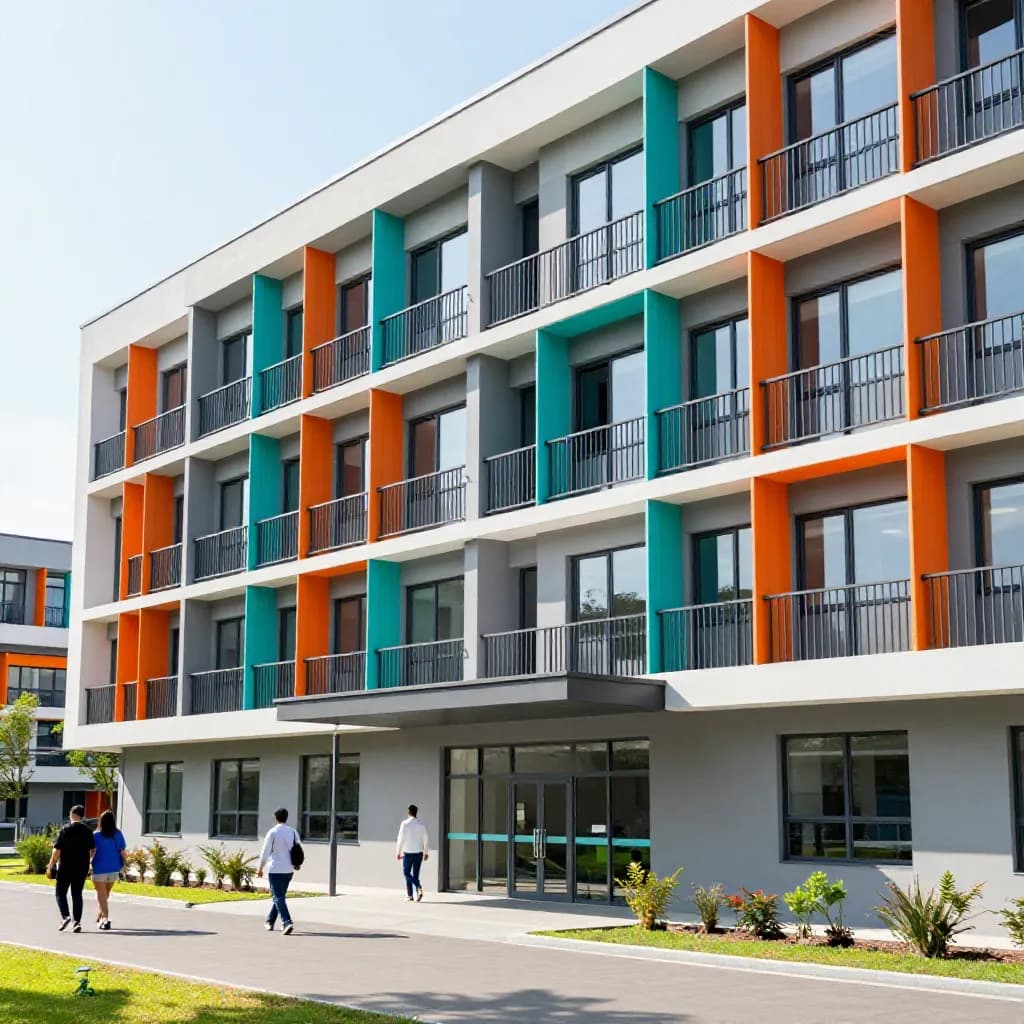
The intensity of daily use within student housing exceeds that of most residential buildings. Communal kitchens, laundry rooms, and social spaces serve dozens of residents simultaneously, with metal fixtures and fittings enduring constant contact, accidental impacts, and the general wear of shared living. Individual study bedrooms, while less heavily trafficked, still experience the concentrated use of a single occupant living, studying, and socializing in a compact space.
Ready to Start Your Project?
From one-off customs to 15,000-part production runs — get precise pricing in 24 hours.
On This Page
Student Housing Demands: Heavy Use and Frequent Turnover
Building managers face the challenge of maintaining presentation standards across hundreds or thousands of rooms and communal spaces, often with limited maintenance budgets and tight turnaround windows between academic terms. The coating system applied to metal components throughout the building must minimize maintenance requirements while withstanding the demanding use patterns that define student accommodation.
Interior Metalwork: Furniture and Fittings
Student accommodation interiors contain extensive metal components that require durable finishes. Bed frames are subject to constant stress from daily use, with students sitting on edges, leaning against headboards, and occasionally using beds as seating for social gatherings. Desk frames and shelving units must withstand the weight of books, equipment, and the inevitable impacts from chairs and other furniture being moved around compact rooms.
Door furniture, including handles, kick plates, and closers, represents some of the most heavily used hardware in any building type. Each door in a student residence may be opened and closed dozens of times daily, with handles gripped by hands carrying bags, food, and cleaning supplies. Powder coating at 60-120 microns provides the mechanical resistance these high-contact components demand, far exceeding the protection offered by liquid paint at 25-50 microns.
Kitchen fittings in communal and individual kitchenettes face exposure to cooking splashes, cleaning chemicals, and the general abuse of shared cooking facilities. Powder-coated steel and aluminum components resist these challenges effectively, maintaining their appearance through years of intensive use and regular deep cleaning between tenancies.
Exterior Applications for University Buildings
The exterior of student accommodation buildings presents conventional architectural coating challenges amplified by the scale of modern university developments. Window systems across hundreds of individual rooms must deliver consistent color and weather performance, with any variation in finish quality immediately visible across the repetitive facade pattern typical of student housing blocks.
Balustrades and balcony railings on upper floors face full weather exposure while also serving as informal gathering spaces where students lean, sit, and socialize. These components must combine structural safety with aesthetic durability, maintaining their appearance and protective finish through years of outdoor exposure and daily physical contact. Powder coating's weather resistance and mechanical toughness make it the natural choice for these dual-demand applications.
Bike storage facilities, increasingly important in university campus design, require robust finishes that resist the constant scraping and impact of bicycle frames, locks, and chains. Entrance systems, including canopies, door frames, and access control housings, create the first impression for residents and visitors. Powder coating delivers the durability and design quality these prominent exterior elements require.
Vandal and Impact Resistance for Communal Areas
Communal areas in student accommodation experience levels of wear and accidental damage that exceed most other residential building types. Corridor walls and railings absorb impacts from luggage, sports equipment, and the general movement of hundreds of young residents through shared circulation spaces. Stairwell handrails and balustrades must withstand both the physical demands of heavy use and the occasional deliberate abuse that occurs in any large residential community.
Powder coating's 60-120 micron film thickness provides a substantial advantage in these demanding communal environments. The thick, cross-linked thermoset film absorbs impacts that would chip through the 25-50 micron films of liquid paint, maintaining the integrity of the protective barrier and the visual appearance of the finish. Anti-graffiti formulations are available for the most vulnerable locations, allowing marker pen and spray paint to be removed without damaging the underlying coating.
The practical benefit for building managers is significant. Powder-coated communal metalwork maintains its appearance through years of heavy use, reducing the frequency of touch-up painting and component replacement that consumes maintenance budgets. When the 20-25 year service life of powder coating is compared to the 8-12 years typical of liquid paint, the reduction in lifecycle maintenance effort across a large student accommodation portfolio is substantial.
Zero VOC for Residential Air Quality
Indoor air quality in student accommodation is a growing concern for university estates teams and student welfare officers. Students spend extended periods in their rooms studying, sleeping, and socializing, making the air quality of these compact living spaces a direct health consideration. Powder coating produces zero volatile organic compound emissions, both during factory application and throughout its installed service life, ensuring that coated metal components contribute no harmful off-gassing to bedroom air quality.
This zero VOC characteristic is particularly important during the refurbishment cycles that student accommodation undergoes between academic years. When rooms are refreshed with newly coated or replaced metal components, there is no off-gassing period required before students can safely occupy the space. This contrasts with liquid paint, which can emit VOCs for weeks after application, potentially exposing incoming students to elevated levels of volatile compounds during their first weeks of residence.
For universities pursuing sustainability certifications for their accommodation buildings, such as BREEAM or SKA Rating, specifying powder-coated metalwork contributes to credits for low-emitting materials and healthy indoor environments. The complete absence of solvent emissions aligns with the duty of care that universities owe to their student residents and supports the broader institutional commitment to environmental responsibility.
Frequently Asked Questions
Why is powder coating better than paint for student accommodation?
Powder coating at 60-120 microns is two to three times thicker than liquid paint at 25-50 microns, providing far superior resistance to the impacts, scratches, and heavy use typical of student housing. It lasts 20-25 years versus 8-12 for liquid paint, significantly reducing maintenance across large accommodation portfolios.
Is powder coating safe for student bedroom air quality?
Yes. Powder coating produces zero volatile organic compound emissions throughout its service life, ensuring no harmful off-gassing in compact student bedrooms. Unlike liquid paint, which can emit VOCs for weeks after application, powder-coated components can be installed immediately before student occupancy without air quality concerns.
Can powder coating withstand the annual turnover in student housing?
Powder coating is specifically suited to the demanding turnover cycle of student accommodation. The thick, cross-linked film resists impacts from move-in and move-out activities, withstands aggressive deep cleaning between tenancies, and maintains its appearance through years of intensive use without the chipping and peeling common with liquid paint.
What student accommodation components benefit most from powder coating?
Bed frames, desk frames, shelving, door furniture, kitchen fittings, corridor railings, stairwell handrails, window systems, balustrades, bike storage, and entrance systems all benefit from powder coating's durability. Communal area components see the greatest advantage due to their exposure to heavy shared use.
Ready to Start Your Project?
From one-off customs to 15,000-part production runs — get precise pricing in 24 hours.