Powder coating is designed to be permanent — a tough, crosslinked polymer film that resists chemicals, abrasion, and weathering for decades. But permanence becomes a challenge when the coating needs to come off. There are several common scenarios that require powder coating removal: rework of defective parts (wrong color, contamination, insufficient coverage), restoration of previously coated items (vintage cars, architectural elements, industrial equipment), preparation for recoating when the existing finish has degraded beyond acceptable limits, and recovery of parts that were accidentally coated or coated with the wrong specification.
Technical
Powder Coating Stripping and Removal Methods: Chemical, Burn-Off, Blasting, and Cryogenic
Sundial Powder Coating·April 22, 2026·13 min
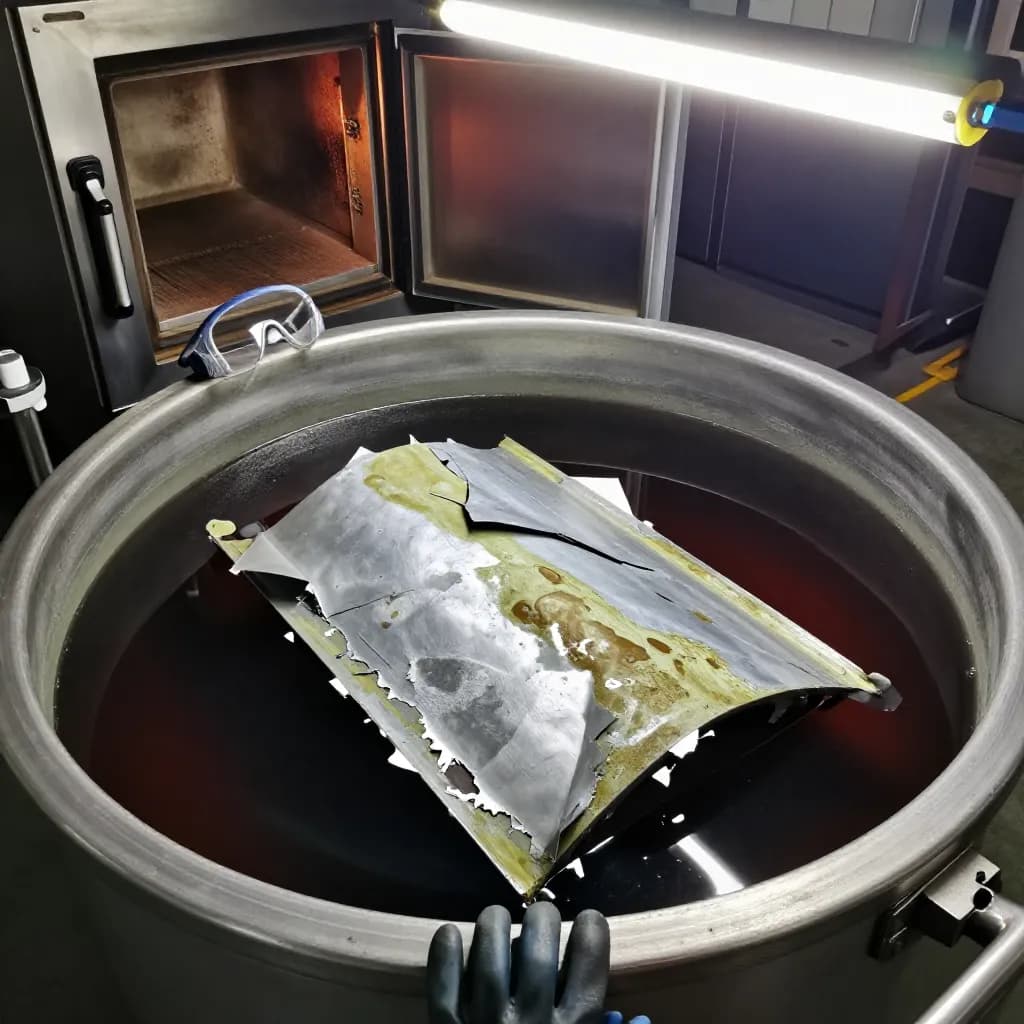
The choice of removal method depends on the substrate material, the part geometry, the coating type and thickness, the volume of parts to be stripped, environmental and safety considerations, and the condition the substrate must be in after stripping. No single removal method is ideal for all situations — each has strengths, limitations, and trade-offs that must be evaluated against the specific requirements of the job.
Ready to Start Your Project?
From one-off customs to 15,000-part production runs — get precise pricing in 24 hours.
On This Page
When and Why Powder Coating Needs to Be Removed
Understanding the available stripping methods and their characteristics helps coating operations, restoration shops, and end users make informed decisions about the most effective and economical approach. In some cases, stripping is not the best option at all — recoating over the existing finish, when technically feasible, can save significant time and cost. This article examines each major stripping method and provides guidance on when to strip versus when to recoat.
Chemical Stripping: Versatile but Chemical-Intensive
Chemical stripping uses aggressive chemical solutions to dissolve or soften the crosslinked powder coating film, allowing it to be washed, scraped, or pressure-rinsed from the substrate. It is the most versatile stripping method, capable of removing virtually any powder coating type from any substrate material without the thermal stress of burn-off or the mechanical impact of blasting.
The most common chemical strippers for powder coatings are based on methylene chloride (dichloromethane), N-methylpyrrolidone (NMP), benzyl alcohol, or hot caustic (sodium hydroxide) solutions. Methylene chloride-based strippers are fast-acting and effective on most coating types but are subject to increasing regulatory restrictions due to health concerns — they are classified as a probable carcinogen in many jurisdictions. NMP and benzyl alcohol-based strippers are less hazardous alternatives that work well but require longer immersion times — typically 2 to 8 hours compared to 30 minutes to 2 hours for methylene chloride.
Hot caustic stripping uses a heated sodium hydroxide solution (typically 20-30% concentration at 80-95°C) to attack the coating chemically. It is effective on most powder coating types and is widely used for stripping racks and hooks in production coating operations. Caustic stripping is relatively inexpensive and does not use volatile solvents, but it requires careful handling due to the corrosive nature of the solution, and it can attack aluminum substrates if concentration, temperature, and immersion time are not carefully controlled.
Chemical stripping is well-suited for parts with complex geometries, internal surfaces, and delicate features that would be damaged by blasting or thermal methods. It is also the preferred method for aluminum parts, which cannot tolerate the high temperatures of burn-off ovens without risk of metallurgical damage.
Burn-Off Ovens: Fast and Effective for Steel
Burn-off ovens — also called pyrolysis ovens or thermal stripping ovens — remove powder coating by heating the part to temperatures high enough to decompose the organic coating into ash and volatile gases. The process is fast, typically requiring 2 to 4 hours depending on the coating thickness and part mass, and it leaves the substrate clean and ready for recoating with minimal additional preparation.
Burn-off ovens operate in two temperature ranges. Controlled-atmosphere ovens (also called clean-burn ovens) operate at 400 to 450°C in a low-oxygen environment that prevents the coating from igniting. The coating decomposes through pyrolysis — thermal decomposition in the absence of sufficient oxygen for combustion — producing gases that are captured and treated by an afterburner before being exhausted. This controlled process minimizes the risk of substrate damage from excessive heat and prevents the fire hazard associated with open-flame burn-off.
Fluidized bed burn-off systems use a bed of heated aluminum oxide particles fluidized by air flow to transfer heat rapidly and uniformly to the parts. Parts are immersed in the fluidized bed, and the hot particles conduct heat to the coating surface, decomposing it quickly and evenly. Fluidized bed systems are faster than conventional burn-off ovens and provide more uniform heating, but they are more expensive to install and operate.
Burn-off is the preferred stripping method for steel parts and racks because steel easily withstands the process temperatures without metallurgical damage. It is not suitable for aluminum, which softens and loses temper at temperatures above 200 to 250°C, or for parts with heat-sensitive components such as bearings, seals, or adhesive bonds. After burn-off, a light residue of ash typically remains on the surface and is removed by water washing or light blasting before recoating.
Media Blasting: Mechanical Removal
Media blasting removes powder coating through mechanical impact — abrasive particles propelled at high velocity against the coated surface strip away the coating through erosion. Blasting is a straightforward, widely available process that does not involve chemicals or high temperatures, making it accessible to operations without specialized stripping equipment.
The choice of blasting media determines the aggressiveness of the process and its effect on the substrate. Aluminum oxide (corundum) is a hard, aggressive media that removes coating quickly but can roughen or damage soft substrates like aluminum. Glass bead is a gentler media that removes coating without significantly altering the substrate surface profile. Plastic media (typically acrylic or melamine particles) is the gentlest option, removing coating with minimal substrate impact — it is the preferred choice for stripping aluminum, composite, and other soft or delicate substrates. Walnut shell and corn cob media are biodegradable options used for gentle stripping of sensitive parts.
Blasting is effective for flat and convex surfaces where the blast stream can reach the coating directly. It is less effective for recessed areas, internal surfaces, and complex geometries where the blast stream cannot maintain direct impingement. Parts with deep pockets, internal channels, or intricate features may require supplemental chemical stripping to remove coating from areas that blasting cannot reach.
The main disadvantage of blasting is that it changes the substrate surface profile. Aggressive media can create a rough surface that may affect the appearance of the subsequent coating, particularly for high-gloss or metallic finishes. For parts that require a smooth substrate surface, blasting may need to be followed by sanding or polishing before recoating. Blasting also generates dust and spent media that must be collected and disposed of properly.
Cryogenic Stripping: Cold-Temperature Removal
Cryogenic stripping uses extreme cold — typically liquid nitrogen at minus 196°C — to embrittle the powder coating, causing it to crack and separate from the substrate. The embrittled coating is then removed by mechanical means such as tumbling, blasting with soft media, or simple flexing of the part. Cryogenic stripping is a niche method with specific advantages for certain applications.
The process works because powder coatings and metal substrates have different coefficients of thermal expansion. When cooled rapidly to cryogenic temperatures, the coating contracts more than the metal substrate, creating stress at the coating-substrate interface that causes the coating to crack and delaminate. The embrittled coating fragments can then be removed with minimal mechanical force, leaving the substrate surface largely undisturbed.
Cryogenic stripping is particularly well-suited for parts where substrate surface integrity is critical — precision-machined surfaces, polished surfaces, and parts with tight dimensional tolerances that would be affected by the surface roughening of blasting or the chemical attack of stripping solutions. It is also useful for removing thick coatings or multiple coating layers that would require extended chemical immersion or multiple blasting passes.
The limitations of cryogenic stripping include the cost of liquid nitrogen, the need for specialized equipment (cryogenic chambers, insulated handling tools), and the fact that it works best on rigid substrates where the differential contraction creates sufficient stress to crack the coating. Thin, flexible parts may simply flex with the coating rather than generating the stress needed for delamination. Cryogenic stripping is also less effective on coatings with very strong adhesion to well-prepared substrates — the mechanical bond may be stronger than the stress generated by differential contraction.
When to Strip vs When to Recoat
Stripping is not always necessary or desirable. In many situations, applying a new powder coating directly over the existing finish — recoating — is a viable and more economical alternative. Understanding when recoating is appropriate and when stripping is required saves time, cost, and environmental impact.
Recoating over existing powder coating is generally feasible when the existing coating is well-adhered to the substrate (no peeling, blistering, or delamination), the existing surface is clean and free of contamination, the total film build after recoating will not exceed the maximum recommended thickness (typically 200 to 250 microns total), and the new coating is compatible with the existing coating chemistry. Light sanding of the existing surface with fine-grit sandpaper (320 to 400 grit) improves adhesion of the new coat by creating mechanical tooth.
Stripping is required when the existing coating has adhesion failures (peeling, blistering, or flaking), when the existing surface is contaminated with substances that cannot be removed by cleaning alone, when the total film build would exceed acceptable limits, when the existing coating is incompatible with the new coating (for example, applying polyester over epoxy can cause inter-coat adhesion problems), or when the specification requires coating directly on the metal substrate with a specific pretreatment.
For restoration work — classic cars, vintage equipment, architectural elements — stripping to bare metal is almost always the preferred approach because it allows full inspection of the substrate condition, proper pretreatment, and a fresh coating system with maximum adhesion and longevity. The additional cost of stripping is justified by the quality and durability of the result.
Environmental and Safety Considerations
Each stripping method carries environmental and safety implications that must be managed responsibly. Chemical stripping generates spent chemical solutions containing dissolved coating residues that must be treated and disposed of as hazardous or regulated waste. The chemicals themselves — particularly methylene chloride and hot caustic solutions — pose health risks to workers through inhalation, skin contact, and eye exposure. Proper ventilation, personal protective equipment, and chemical handling training are essential.
Burn-off ovens generate combustion gases and ash residues. Modern controlled-atmosphere ovens with afterburners minimize air emissions by incinerating volatile decomposition products before they are released. The ash residue is typically non-hazardous and can be disposed of as general industrial waste, but it should be tested to confirm the absence of heavy metals or other regulated substances, particularly if the coating being stripped contains specialty pigments.
Media blasting generates dust containing coating particles and spent media. This dust must be collected by the blast cabinet's ventilation system and disposed of appropriately. Coating dust may contain pigments with regulated substances (certain chromates, lead-based pigments in older coatings), requiring testing and potentially hazardous waste disposal. Silica-containing blast media can generate respirable crystalline silica dust, a serious respiratory hazard — use silica-free media or ensure adequate dust control and respiratory protection.
Cryogenic stripping has the lowest environmental impact of the major stripping methods. Liquid nitrogen is inert and non-toxic, and the process generates only solid coating fragments as waste. However, the energy required to produce liquid nitrogen and the cost of the cryogenic equipment offset some of this environmental advantage. For operations stripping large volumes of parts, a lifecycle assessment comparing the environmental impacts of each method can inform the most responsible choice.
Frequently Asked Questions
What is the fastest way to remove powder coating?
Burn-off ovens are the fastest method for steel parts, typically completing stripping in 2-4 hours. Chemical stripping with methylene chloride-based products can remove coating in 30 minutes to 2 hours. Media blasting speed depends on coating thickness and part complexity. The fastest method depends on the substrate material and part geometry.
Can powder coating be removed from aluminum?
Yes, but thermal methods (burn-off ovens) cannot be used because aluminum softens at temperatures above 200-250°C. Chemical stripping with NMP, benzyl alcohol, or carefully controlled caustic solutions is the preferred method. Plastic media blasting is also effective and gentle on aluminum surfaces.
Can I recoat over existing powder coating without stripping?
Yes, if the existing coating is well-adhered, clean, and compatible with the new coating, and the total film build will not exceed 200-250 microns. Light sanding improves adhesion. Stripping is required if the existing coating is peeling, contaminated, or incompatible with the new coating chemistry.
How do coating shops strip their racks and hooks?
Most production coating operations use burn-off ovens for steel racks, stripping accumulated coating every 5-15 uses to maintain ground path quality. Hot caustic dip tanks are also common for rack stripping. Some operations use a combination of burn-off followed by light blasting to remove residual ash.
Is powder coating stripping environmentally safe?
Each method has environmental considerations. Chemical stripping generates hazardous waste solutions. Burn-off produces combustion gases (controlled by afterburners) and ash. Blasting generates dust requiring collection and disposal. Cryogenic stripping has the lowest environmental impact but higher cost. All methods require proper waste management and worker protection.
Ready to Start Your Project?
From one-off customs to 15,000-part production runs — get precise pricing in 24 hours.