Street furniture — benches, bollards, bike racks, litter bins, planters, tree guards, wayfinding signage, and bus shelters — defines the character and functionality of public spaces. These elements are the physical interface between urban design vision and daily public use, and their finish quality directly affects both the aesthetic experience of the streetscape and the practical durability of the infrastructure investment. Powder coating has become the default finishing technology for street furniture because it delivers the combination of design flexibility, durability, and vandal resistance that urban environments demand.
Architecture
Powder Coating Street Furniture and Urban Design Elements: Benches, Bollards, Bike Racks, and Anti-Graffiti Protection
Sundial Powder Coating·April 22, 2026·11 min
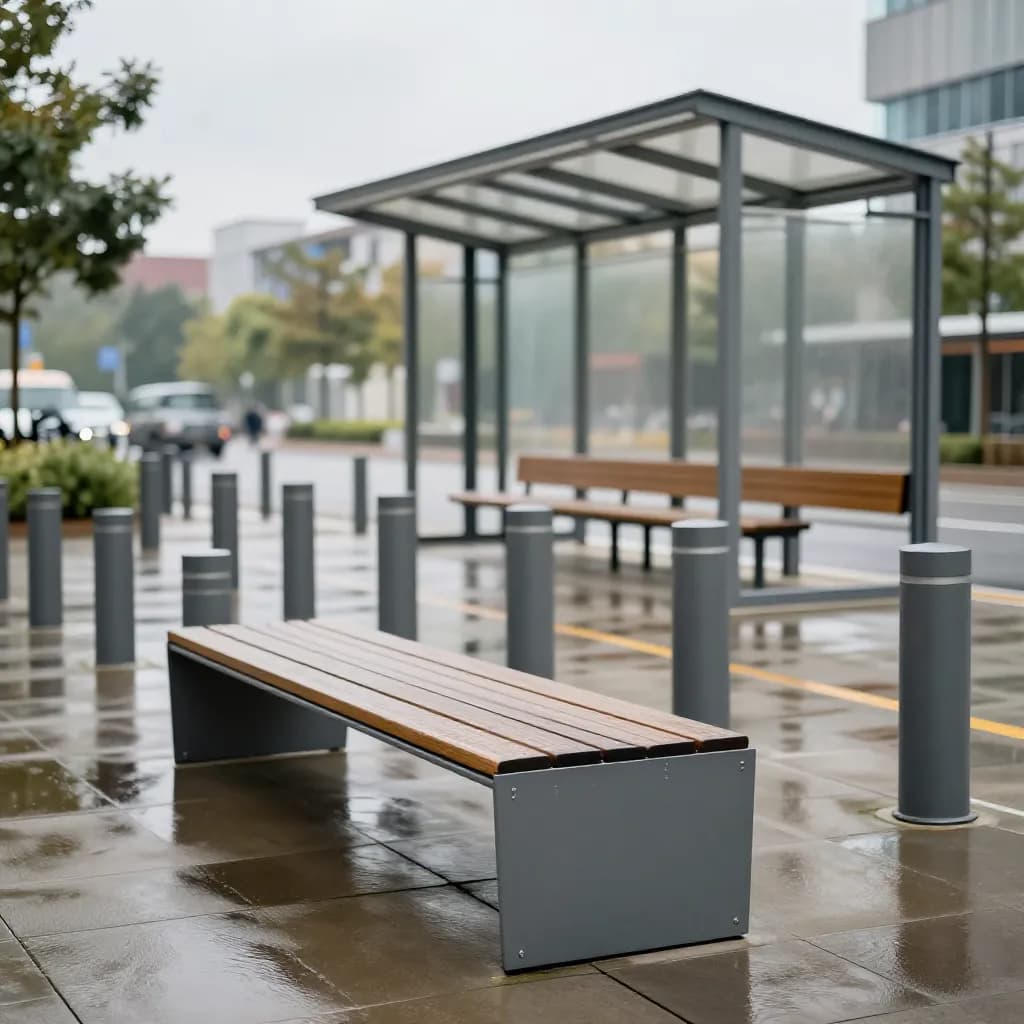
The coating challenges for street furniture are distinct from other powder coating applications. Street furniture operates in an uncontrolled public environment where it is subjected to intentional abuse (graffiti, scratching, kicking, impact from vehicles), environmental stress (UV radiation, rain, freeze-thaw cycling, road salt, de-icing chemicals), and intensive daily use by thousands of people. The coating must withstand all of these stresses simultaneously while maintaining the visual quality that justifies the investment in designed urban spaces.
Ready to Start Your Project?
From one-off customs to 15,000-part production runs — get precise pricing in 24 hours.
On This Page
Street Furniture as Urban Design Infrastructure
Municipal procurement specifications for street furniture increasingly mandate powder coating as the required finish, recognizing its superior lifecycle performance compared to liquid paint alternatives. Cities including London, Paris, New York, Copenhagen, and Singapore have standardized on powder-coated street furniture for their public realm programs, with specifications that define minimum coating performance requirements for corrosion resistance, UV stability, impact resistance, and graffiti resistance.
Benches and Seating: Comfort, Durability, and Thermal Performance
Public seating is the most intimate category of street furniture — people sit directly on the coated surface, making coating quality a matter of personal comfort as well as durability. The coating on bench seats and backrests must be smooth enough for comfortable seating, resistant to clothing abrasion and body chemistry (sweat, sunscreen, insect repellent), and thermally appropriate for direct skin contact in both summer heat and winter cold.
Steel bench frames are typically powder coated with super-durable polyester at 80-100 microns over zinc phosphate pretreatment, providing 15-20 years of corrosion protection in urban atmospheric exposure. Cast iron benches — still popular for heritage and traditional streetscapes — require careful preparation due to the porous nature of cast iron. Pre-baking at cure temperature to outgas trapped moisture and foundry contaminants is essential before powder application, identical to the outgassing procedure used for automotive cast components.
Thermal comfort is an important but often overlooked coating consideration for seating. Dark-colored metal benches in direct sunlight can reach surface temperatures exceeding 65°C — hot enough to cause skin burns. Solar reflective powder coatings with infrared-reflective pigments can reduce surface temperatures by 15-20°C compared to standard pigments of the same visible color, significantly improving summer comfort without restricting color choice. Conversely, in cold climates, the thermal conductivity of the metal substrate (not the coating) is the primary factor in winter discomfort, which is why many bench designs incorporate timber or recycled plastic seating surfaces over powder-coated metal frames.
Textured powder coatings are popular for bench seating surfaces because they provide a non-slip surface, hide minor scratches and wear marks, and create a more comfortable tactile experience than high-gloss smooth finishes. Fine texture (similar to leather grain) and medium texture (similar to sand) are the most common choices, with the texture also providing enhanced abrasion resistance due to the thicker film build at texture peaks.
Bollards: Impact Resistance and High-Visibility Finishing
Bollards serve critical functions in urban environments — traffic management, pedestrian protection, security perimeter definition, and streetscape delineation. The coating on bollards must withstand vehicle impact (for protective bollards), pedestrian contact, and the full range of urban environmental stresses while maintaining the high visibility that is essential for their traffic management function.
Fixed protective bollards are typically fabricated from schedule 40 or schedule 80 steel pipe filled with concrete, designed to stop vehicles at speeds of 30-50 mph. The powder coating on these bollards must survive the deformation that occurs during a vehicle impact — a requirement that standard rigid powder coatings cannot meet. Flexible powder coating formulations with elongation values of 15-25% are specified for impact-rated bollards, maintaining film integrity even when the bollard deforms under vehicle impact. These flexible formulations sacrifice some hardness and chemical resistance compared to standard polyester powders, but the trade-off is justified by the critical need for coating integrity after impact.
Reflective elements are often incorporated into bollard finishing for nighttime visibility. Retroreflective tape (ASTM D4956 Type III or higher) is applied over the powder coat, or retroreflective powder coating formulations incorporating glass microspheres can provide integrated reflectivity without separate tape application. The powder coat must provide a smooth, clean surface for retroreflective tape adhesion, with surface energy high enough to ensure long-term tape bond strength.
Removable and retractable bollards require coating systems that withstand the mechanical wear of repeated installation and removal cycles. The bollard sleeve (the in-ground receiver) and the bollard shaft both require powder coating with enhanced abrasion resistance at the contact interface. Nylon or UHMWPE guide sleeves are typically used between the coated surfaces to reduce wear, but the powder coat must still withstand occasional metal-to-metal contact during installation without chipping or delaminating.
Bike Racks and Cycle Infrastructure
The global expansion of cycling infrastructure has created significant demand for powder-coated bike racks, cycle stands, repair stations, and bike shelter structures. These components must withstand the mechanical abuse of daily bicycle locking and unlocking, chain and cable lock abrasion, and the impact of bicycles being leaned, dropped, and maneuvered into position. The coating must also resist the chemical exposure from bicycle lubricants, brake fluid, and the road grime that accumulates on bicycle frames.
Standard bike rack designs — Sheffield stands (inverted U), wave racks, post-and-ring, and artistic/custom designs — are fabricated from steel tube (typically 48.3 mm OD schedule 40 pipe for Sheffield stands) and powder coated with polyester at 80-100 microns. The coating must be particularly robust at the contact points where bicycle frames, locks, and chains make repeated contact. Specifying a minimum pencil hardness of 2H and Taber abrasion resistance below 80 mg loss per 1,000 cycles (CS-17 wheels, 1,000g load) ensures adequate wear resistance for high-use urban bike racks.
Color coding is increasingly used in cycle infrastructure to distinguish different types of parking (short-term vs. long-term), indicate bike-share station locations, or integrate with citywide wayfinding color systems. Powder coating's precise color matching capability enables consistent color reproduction across hundreds or thousands of bike racks deployed throughout a city. RAL 6018 (yellow green), RAL 5015 (sky blue), and RAL 1023 (traffic yellow) are popular choices for cycle infrastructure due to their high visibility and association with cycling and sustainability.
E-bike charging stations represent an emerging category of cycle infrastructure with specific coating requirements. These stations incorporate electrical components (charging outlets, payment terminals, LED indicators) that must be protected from moisture ingress. The powder coating on e-bike charging stations must be compatible with the gaskets and seals used to achieve IP54 or IP65 ingress protection ratings, and must not interfere with the electrical grounding of the station's safety systems.
Anti-Graffiti and Vandal-Resistant Coating Systems
Graffiti and vandalism are persistent challenges for street furniture in urban environments, with graffiti removal costs estimated at billions of dollars annually worldwide. Powder coating technology offers two distinct approaches to graffiti management: permanent anti-graffiti coatings that resist paint adhesion, and sacrificial anti-graffiti systems that are removed along with the graffiti and reapplied.
Permanent anti-graffiti powder coatings achieve their graffiti resistance through low surface energy chemistry — typically silicone-modified or fluoropolymer-modified polyester formulations that create a surface with a water contact angle above 90° and a surface energy below 30 mN/m. Spray paint, marker ink, and adhesive stickers cannot form a strong bond with this low-energy surface and can be removed using mild solvents (isopropyl alcohol, mineral spirits) or even hot water pressure washing without damaging the underlying coating. Permanent anti-graffiti coatings can withstand 50-100+ graffiti removal cycles without significant degradation of their anti-graffiti performance.
Sacrificial anti-graffiti systems use a clear wax or polyurethane coating applied over the powder coat. When graffiti is applied, the sacrificial layer is removed along with the graffiti using a specialized chemical remover or hot water pressure washing, and a new sacrificial layer is applied. This approach is less expensive than permanent anti-graffiti powder coatings but requires reapplication after each graffiti removal event, adding ongoing maintenance cost.
Anti-scratch and anti-sticker properties complement anti-graffiti performance for comprehensive vandal resistance. Hard powder coatings (4H+ pencil hardness) resist scratching from keys, coins, and sharp objects, while the low surface energy of anti-graffiti formulations also resists adhesive sticker bonding. For the highest level of vandal resistance, ceramic-reinforced powder coatings incorporating alumina or silica nanoparticles achieve pencil hardness values of 6H-9H, providing exceptional scratch resistance for street furniture in high-vandalism locations.
Planters, Tree Guards, and Green Infrastructure
Urban greening initiatives have driven demand for powder-coated planters, tree guards, raised beds, and green wall structures that integrate vegetation into the streetscape. These components face unique coating challenges related to soil contact, moisture retention, fertilizer and soil amendment chemicals, and the biological activity of plant root systems and soil microorganisms.
Steel planters require interior coating systems that resist continuous soil and moisture contact — conditions that are significantly more aggressive than atmospheric exposure. The interior surfaces of steel planters should be coated with epoxy powder at 150-200 microns, providing the moisture barrier and chemical resistance needed to prevent corrosion from the inside out. The exterior surfaces receive the standard super-durable polyester topcoat for UV resistance and aesthetic appearance. Drainage holes must be properly detailed to prevent coating damage and water pooling at the steel-coating interface.
Corten (weathering) steel planters and tree guards have become popular in contemporary urban design for their distinctive rust-orange patina. These components are intentionally left uncoated to develop their characteristic weathered appearance. However, Corten steel elements are sometimes combined with powder-coated steel elements in integrated streetscape designs, requiring careful detailing at the interface to prevent galvanic corrosion between the Corten and the coated mild steel.
Tree guards — the protective frames installed around street trees — must withstand vehicle impact, pedestrian contact, dog urine (which is surprisingly corrosive due to its ammonia and salt content), and the mechanical forces of tree growth. Powder-coated tree guards are typically fabricated from galvanized steel with polyester powder coat at 80-100 microns, providing the duplex corrosion protection needed for ground-level urban service. The coating must be particularly robust at the base of the tree guard where it contacts the ground surface and is exposed to standing water, de-icing salt, and soil splash.
Wayfinding Signage and Information Systems
Wayfinding signage — directional signs, information panels, map displays, and digital information kiosks — forms the navigational layer of the urban environment. The coating on wayfinding elements must provide a precise, consistent color background for graphic content, maintain legibility through years of outdoor exposure, and resist the vandalism and weathering that can render signage unreadable.
Powder coating provides an ideal base for wayfinding signage because it delivers consistent, uniform color across large flat surfaces without the drips, runs, and orange peel that can affect liquid paint on sign panels. The coating surface must be smooth enough for high-quality vinyl graphic application (surface roughness Ra below 1.5 micrometers) while providing adequate surface energy for long-term vinyl adhesion. Most standard polyester powder coatings meet these requirements, but high-gloss formulations (above 80 GU at 60°) provide the smoothest surface for graphic application.
Color consistency across wayfinding systems is critical for brand recognition and navigational effectiveness. A citywide wayfinding system may include hundreds of signs manufactured in multiple batches over several years, all of which must match the specified color within tight tolerances. Powder coating's batch-to-batch color consistency (typically Delta E below 1.0 within a production run and below 1.5 between production runs) ensures that signs installed years apart maintain visual consistency across the wayfinding network.
Digital information kiosks and interactive wayfinding displays require powder coatings that are compatible with touchscreen technology, electronic displays, and communication antennas. The coating must not interfere with capacitive touchscreen sensitivity, NFC (near-field communication) readers, or Wi-Fi/cellular antennas integrated into the kiosk housing. Standard polyester powder coatings are RF-transparent and do not affect electronic component performance, but metallic pigments should be avoided near antenna locations as they can attenuate radio signals.
Specification and Procurement for Municipal Street Furniture Programs
Municipal procurement of powder-coated street furniture requires clear, performance-based specifications that ensure consistent quality across multiple suppliers and installation phases. Well-written specifications protect the municipality's investment by defining minimum coating performance requirements while allowing suppliers flexibility in meeting those requirements through their preferred coating systems and processes.
A comprehensive street furniture coating specification should address: substrate preparation (minimum blast profile, conversion coating type and weight), powder coating type (resin chemistry, UV performance tier), film thickness (minimum and maximum per surface), mechanical properties (adhesion, hardness, impact resistance, flexibility), corrosion resistance (salt spray hours, scribe creep limits), weathering resistance (accelerated weathering hours, color change and gloss retention limits), and special properties (anti-graffiti performance, antimicrobial activity, solar reflectance) as required by the specific application.
Reference to established quality standards simplifies specification writing and provides independent verification of coating performance. Qualicoat Class 2 or Class 3 certification ensures that the coating system meets demanding European architectural quality requirements. GSB Master certification provides equivalent assurance under the German quality system. AAMA 2604 or AAMA 2605 specifications define North American performance tiers. Specifying one of these established standards, rather than writing custom test requirements, leverages decades of industry experience in defining appropriate performance levels for outdoor architectural coatings.
Warranty requirements for street furniture coatings typically range from 10 to 25 years depending on the municipality's expectations and the coating performance tier specified. A 10-year warranty is achievable with standard polyester powder coatings and good pretreatment. A 15-20 year warranty requires super-durable polyester with enhanced UV stabilizers. A 25-year warranty typically requires fluoropolymer-modified powder coatings or full PVDF systems. The warranty should clearly define the failure criteria (maximum color change, gloss loss, corrosion, adhesion loss) and the remediation obligations of the coating supplier.
Frequently Asked Questions
How does anti-graffiti powder coating work?
Permanent anti-graffiti powder coatings use low surface energy chemistry (silicone or fluoropolymer-modified polyester) that prevents spray paint and marker ink from bonding to the surface. Graffiti can be removed with mild solvents or hot water pressure washing. These coatings withstand 50-100+ removal cycles without losing their anti-graffiti properties.
What powder coating specification is best for urban street furniture?
Super-durable polyester powder at 80-100 microns over zinc phosphate pretreatment provides 15-20 years of protection. For premium installations, specify Qualicoat Class 2 or AAMA 2604 performance. Anti-graffiti formulations add vandal resistance. Solar reflective pigments reduce surface temperatures on seating.
How long does powder coating last on outdoor benches and bollards?
With proper pretreatment and super-durable polyester powder coating, street furniture typically maintains acceptable appearance for 15-20 years in urban atmospheric exposure. High-contact surfaces may show wear sooner. Duplex systems (galvanizing plus powder coat) extend protection to 25+ years.
Can powder-coated street furniture withstand road salt and de-icing chemicals?
Yes, with appropriate specification. Zinc phosphate pretreatment with polyester powder coat at 80-100 microns provides good resistance to de-icing chemicals. For heavy salt exposure, a duplex system of hot-dip galvanizing plus powder coat provides maximum protection. Salt spray testing of 1,000+ hours is typical for street furniture specifications.
What colors are recommended for bike racks and cycle infrastructure?
High-visibility colors like RAL 6018 (yellow green), RAL 5015 (sky blue), and RAL 1023 (traffic yellow) are popular for cycle infrastructure. Color coding can distinguish parking types or integrate with citywide wayfinding systems. Powder coating ensures consistent color across hundreds of installations deployed over multiple years.
Ready to Start Your Project?
From one-off customs to 15,000-part production runs — get precise pricing in 24 hours.