Street furniture and public realm infrastructure face the most unrelenting combination of environmental and human challenges of any architectural application. These items stand outdoors 24 hours a day, 365 days a year, fully exposed to UV radiation, rain, frost, snow, and temperature extremes. There is no shelter, no controlled environment, and no respite from the continuous assault of weather on every surface.
Architecture
Powder Coating for Street Furniture and Public Realm Infrastructure
Sundial Powder Coating·April 20, 2026·9 min
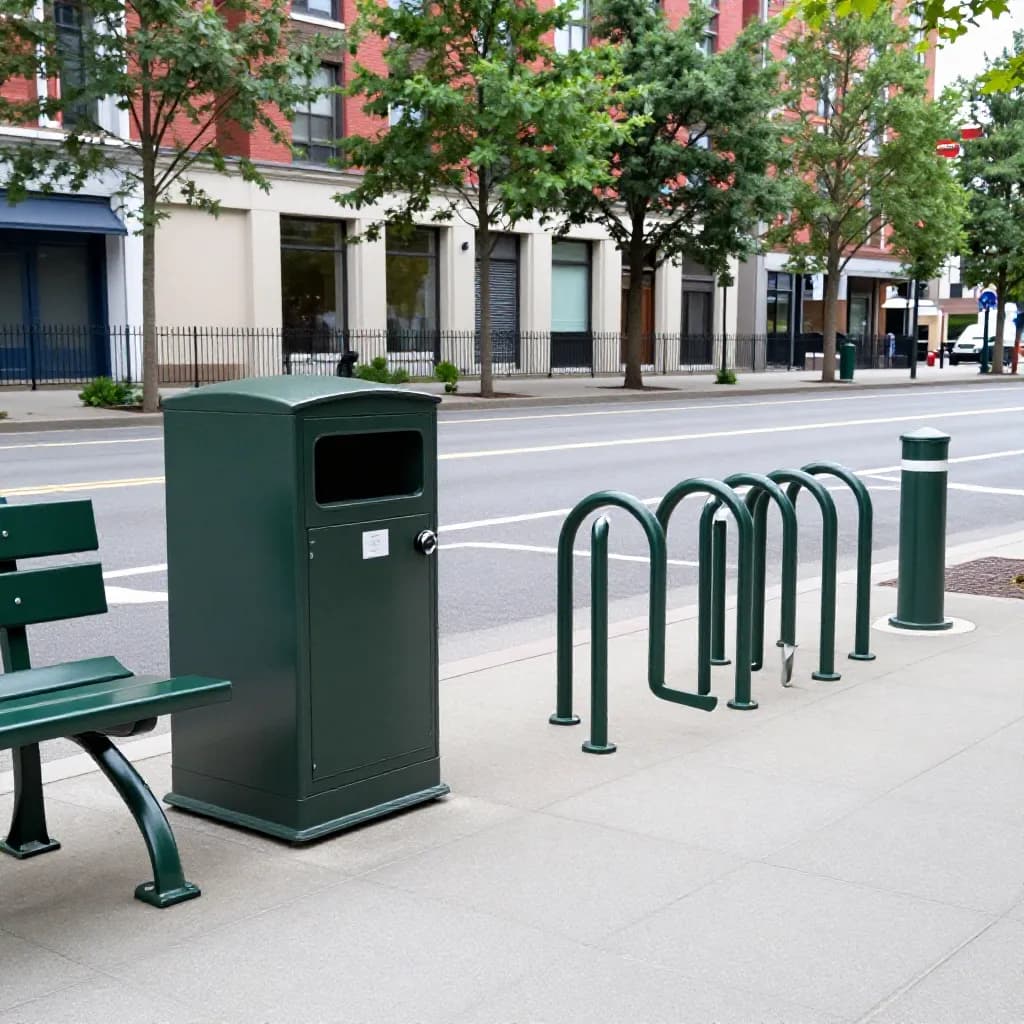
Human interaction adds another dimension of wear. Public benches are sat on, leaned against, and stood upon. Litter bins receive impacts from thrown waste and are subject to aggressive emptying procedures. Bollards absorb vehicle impacts, bicycle chain abrasion, and the general contact of pedestrian traffic. Every item of street furniture is touched, bumped, scraped, and used in ways that its designers may never have anticipated.
Ready to Start Your Project?
From one-off customs to 15,000-part production runs — get precise pricing in 24 hours.
On This Page
Public Realm Coating Demands
Vandalism is a persistent reality in public spaces. Graffiti, sticker application, scratched surfaces, and deliberate damage are daily occurrences in urban environments. The coating system must either resist these attacks or allow easy remediation, maintaining the visual quality of the public realm despite the constant pressure of antisocial behavior.
Common Street Furniture Items
The range of powder-coated street furniture in a typical urban environment is extensive. Benches and seating, from simple park benches to contemporary sculptural seats, require finishes that resist both weather exposure and the physical demands of continuous public use. The 60-120 micron film thickness of powder coating provides the robust protection these heavily used items demand, far exceeding the 25-50 microns achievable with liquid paint.
Litter bins and recycling containers face particularly aggressive conditions. They receive impacts from thrown waste, exposure to food residues and liquids, and the mechanical stress of regular emptying by collection vehicles. Bollards, whether protecting pedestrian zones from vehicle incursion or delineating parking areas, must withstand direct vehicle contact while maintaining their visibility and structural integrity.
Cycle stands, planters, tree guards, and wayfinding totems complete the street furniture palette. Each of these items serves a specific functional purpose while contributing to the overall character and quality of the public realm. Powder coating provides the consistent, durable finish that allows these diverse elements to present a cohesive visual identity across streetscapes, parks, and public spaces.
Anti-Graffiti and Vandal-Resistant Finishes
Anti-graffiti powder coatings are essential for street furniture in urban environments. These specialist formulations feature a low surface energy that prevents spray paint, marker pen, and adhesive materials from bonding permanently to the coated surface. When graffiti is applied, it sits on the surface rather than penetrating the coating, allowing removal with standard cleaning solvents without damaging the underlying finish.
The durability of anti-graffiti performance through multiple cleaning cycles is a critical specification consideration. Some anti-graffiti systems lose their effectiveness after a few cleaning events, requiring reapplication of a sacrificial protective layer. High-quality permanent anti-graffiti powder coatings maintain their graffiti-release properties indefinitely, providing ongoing protection without the need for periodic retreatment.
The inherent toughness of powder coating at 60-120 microns also provides resistance to scratched vandalism, a form of damage that anti-graffiti properties alone cannot address. The thick, hard thermoset film is far more difficult to scratch through than thin liquid paint, and minor surface scratches do not penetrate to the metal substrate. This combination of graffiti resistance and scratch resistance provides comprehensive vandal protection for street furniture in challenging urban environments.
Color for Placemaking and Identity
Street furniture color is a powerful placemaking tool that contributes to the identity and character of public spaces. Distinctive color palettes can define neighborhoods, mark cultural quarters, identify transit corridors, or simply create visual interest in the urban landscape. Powder coating's virtually unlimited color range supports any placemaking vision, from bold primary colors that energize public spaces to subtle heritage tones that complement historic streetscapes.
Consistency of color across all street furniture elements is essential for effective placemaking. When benches, bins, bollards, and cycle stands within a defined area all share the same color palette, they create a cohesive visual identity that reinforces the sense of place. Powder coating's batch-to-batch consistency ensures this uniformity, even when items are manufactured by different suppliers or installed at different times.
The long-term color stability of powder coating sustains placemaking investments over decades. A carefully designed color scheme that fades and deteriorates within a few years fails to deliver the lasting identity that placemaking strategies intend. Powder coating maintains its color intensity for 20-25 years, ensuring that the placemaking vision remains vibrant and effective throughout the street furniture's operational life, compared to the 8-12 year color life of liquid paint.
Why Powder Coating Reduces Municipal Maintenance Burden
Municipal authorities and public realm managers are responsible for maintaining thousands of items of street furniture across their jurisdictions. The maintenance burden associated with these assets is significant, involving regular inspection, cleaning, graffiti removal, and periodic recoating. Any reduction in maintenance frequency delivers direct benefits to stretched municipal budgets and allows resources to be redirected to other public services.
Powder coating's 20-25 year service life dramatically reduces the recoating frequency for street furniture compared to liquid paint's 8-12 year lifespan. Over a 25-year period, a powder-coated bench may require no recoating at all, while a liquid-painted equivalent would need two or three complete refinishing cycles. Across a municipal portfolio of thousands of items, this difference represents a substantial reduction in maintenance expenditure and operational effort.
The day-to-day maintenance advantages compound the lifecycle savings. Powder-coated surfaces resist dirt accumulation, graffiti adhesion, and cleaning chemical damage more effectively than liquid paint, reducing the frequency and intensity of routine cleaning operations. Anti-graffiti formulations allow rapid graffiti removal without specialist contractors or aggressive cleaning methods. Together, these advantages create a compelling case for powder coating as the standard specification for municipal street furniture procurement.
Frequently Asked Questions
How long does powder coating last on outdoor street furniture?
Powder coating on street furniture typically lasts 20-25 years, compared to 8-12 years for liquid paint. This extended service life significantly reduces the recoating frequency for municipal authorities, delivering substantial maintenance savings across large portfolios of benches, bins, bollards, and other public realm items.
Can powder coating resist graffiti on street furniture?
Yes. Anti-graffiti powder coatings feature a low surface energy that prevents spray paint and marker pen from bonding permanently. Graffiti can be removed with standard solvents without damaging the finish, and high-quality permanent formulations maintain their graffiti-release properties indefinitely without retreatment.
What colors are available for public realm street furniture?
Powder coating offers virtually unlimited color options, from bold primary colors for energetic public spaces to subtle heritage tones for historic streetscapes. Custom color matching to RAL, NCS, or bespoke references ensures precise reproduction of placemaking palettes across all street furniture elements.
Why is powder coating better than paint for municipal street furniture?
Powder coating at 60-120 microns is two to three times thicker than liquid paint, providing superior resistance to weather, impacts, vandalism, and cleaning chemicals. Its 20-25 year service life versus 8-12 for paint dramatically reduces municipal maintenance burden, and anti-graffiti formulations simplify graffiti management across public realm portfolios.
Ready to Start Your Project?
From one-off customs to 15,000-part production runs — get precise pricing in 24 hours.