Powder coatings are precision-engineered materials whose performance depends on maintaining their physical and chemical properties from manufacture through application. Unlike liquid paints that are relatively tolerant of storage conditions, powder coatings are sensitive to temperature, humidity, contamination, and mechanical handling — and degradation of any of these parameters can cause defects ranging from poor fluidization and application problems to surface defects, color shifts, and reduced film performance in the cured coating.
Technical
Powder Coating Storage and Handling Best Practices: Temperature, Humidity, Shelf Life, and Contamination
Sundial Powder Coating·April 22, 2026·13 min
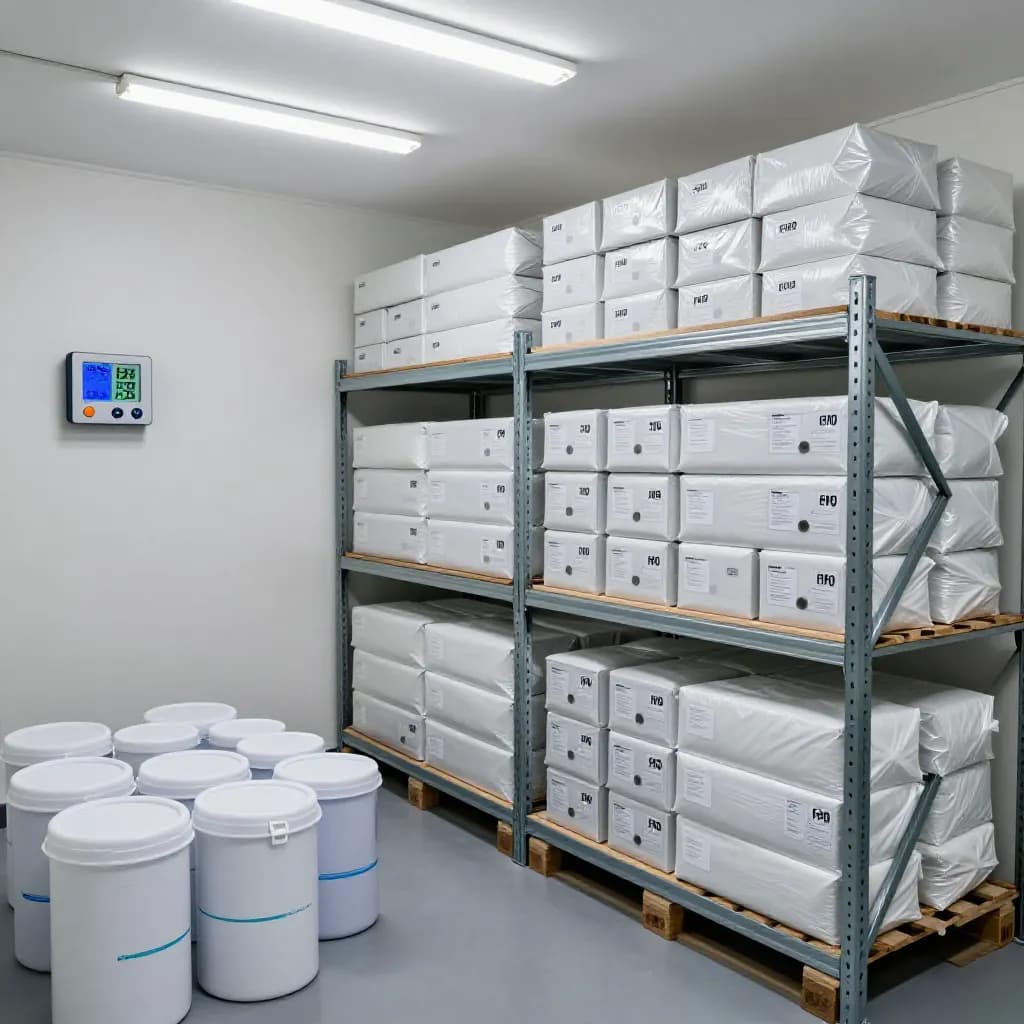
The sensitivity of powder coatings to storage conditions stems from their physical nature. Powder coatings are finely ground thermosetting polymer particles, typically 20-50 microns in diameter, that must remain as free-flowing, discrete particles until they are applied and cured. Any condition that causes the particles to stick together (blocking), absorb moisture (hygroscopic uptake), undergo chemical change (advancement), or become contaminated with foreign material will compromise the powder's ability to fluidize, charge, deposit, flow, and cure as intended.
Ready to Start Your Project?
From one-off customs to 15,000-part production runs — get precise pricing in 24 hours.
On This Page
Why Proper Storage and Handling Are Critical for Coating Quality
The economic consequences of improper storage and handling are significant. Blocked powder must be sieved or scrapped. Moisture-contaminated powder produces surface defects that require rework or rejection. Advanced powder with reduced gel time produces rough, poorly leveled coatings. Contaminated powder causes craters, specks, and color inconsistencies. Each of these problems generates direct material waste, labor cost for rework, production delays, and potential customer complaints.
Implementing systematic storage and handling practices is one of the most cost-effective quality improvement measures available to powder coating operations. The investment in climate-controlled storage, proper material handling procedures, and contamination prevention protocols is minimal compared to the cost of quality problems caused by degraded powder.
Temperature Requirements and Blocking Prevention
Temperature control is the single most important factor in powder coating storage. The glass transition temperature (Tg) of most commercial powder coatings is 45-55°C, and blocking — the sintering and agglomeration of powder particles — begins at temperatures 10-15°C below the Tg. This means that storage temperatures above 30-35°C can initiate blocking in standard powder products, and temperatures above 40°C will cause significant blocking in most formulations.
The recommended storage temperature for powder coatings is 15-25°C, with an absolute maximum of 30°C. This range provides a safety margin below the blocking onset temperature for standard products while being achievable with conventional climate control systems. Storage areas should be equipped with temperature monitoring (continuous recording preferred) and alarm systems that alert personnel when temperatures approach the upper limit.
Seasonal temperature variations present the greatest challenge for powder storage. In temperate climates, summer temperatures in non-climate-controlled warehouses can easily reach 35-45°C, well above the blocking threshold. In tropical and subtropical climates, year-round temperatures may exceed safe storage limits without active cooling. Climate-controlled storage — air conditioning or at minimum, insulation with ventilation — is essential for any powder coating operation that stores significant inventory.
Shipping and receiving are particularly vulnerable points in the temperature control chain. Powder shipped in non-refrigerated trucks or containers during hot weather can experience temperatures of 50-60°C for hours or days. Receiving inspection should include temperature verification (infrared thermometer on the container or pallet surface) and visual/tactile assessment of the powder for signs of blocking. Powder received at elevated temperatures should be allowed to cool to ambient before opening containers, as opening hot containers exposes the warm powder to ambient humidity, which can cause moisture condensation on the powder particles.
For operations in hot climates, several additional measures help maintain powder quality. Insulated shipping containers or thermal blankets reduce temperature exposure during transit. Expedited shipping minimizes transit time. Higher-Tg powder formulations (55-65°C) provide greater blocking resistance. Enhanced dry-flow additive treatment (higher levels of fumed silica) improves resistance to sintering. And first-in-first-out (FIFO) inventory management ensures that powder is used before extended storage at marginal temperatures can cause degradation.
Humidity Control and Moisture Absorption
Moisture is the second major environmental threat to powder coating quality. Powder coatings can absorb moisture from humid air, and this absorbed moisture affects virtually every aspect of powder behavior — fluidization, electrostatic charging, transfer efficiency, film formation, and cured film properties.
The hygroscopic behavior of powder coatings varies with the coating chemistry. HAA-cured polyester systems are particularly moisture-sensitive because the HAA crosslinker is hygroscopic. Epoxy systems absorb moisture through the polar hydroxyl groups generated during cure. Polyurethane systems with caprolactam-blocked isocyanate crosslinkers can absorb moisture that catalyzes premature deblocking. Even relatively non-hygroscopic formulations will absorb surface moisture in high-humidity environments, affecting powder flow and charging.
The recommended storage humidity for powder coatings is below 60% relative humidity (RH), with an ideal range of 40-55% RH. At humidity levels above 65-70% RH, moisture absorption becomes significant for most powder chemistries, and at levels above 80% RH, severe moisture-related problems are likely. Storage areas should be equipped with humidity monitoring and, in humid climates, dehumidification systems.
Moisture absorption affects powder behavior through several mechanisms. Surface moisture on powder particles reduces the electrical resistivity of the particle surface, impairing electrostatic charge retention and reducing transfer efficiency during application. Moisture between particles increases inter-particle adhesion, reducing fluidization quality and causing clumping in the feed hopper and delivery system. Moisture absorbed into the particle bulk can cause outgassing during cure, producing pinholes and surface porosity in the cured film. And moisture can catalyze premature crosslinking reactions in some chemistries, reducing gel time and shelf life.
Practical measures for humidity control include storing powder in sealed containers (original packaging with lids tightly closed), using desiccant packs in storage containers for long-term storage, maintaining dehumidified storage areas, and conditioning the compressed air supply to the application equipment with desiccant dryers (target dewpoint -40°C or lower). Powder that has been exposed to high humidity should be tested for fluidization quality and gel time before use, and severely moisture-contaminated powder may need to be discarded.
Shelf Life and Aging Effects
Powder coatings have a finite shelf life — the period during which the powder maintains its specified properties when stored under recommended conditions. Typical shelf life for standard powder coatings is 12-24 months from the date of manufacture, though this varies by chemistry, formulation, and storage conditions.
The primary aging mechanism is advancement — the slow progression of the crosslinking reaction at ambient temperature. While the crosslinking reaction is designed to occur rapidly at cure temperature (160-200°C), it proceeds at a very slow rate even at room temperature. Over months of storage, this slow advancement gradually reduces the gel time of the powder, increases its melt viscosity, and reduces its flow and leveling capability. The rate of advancement increases with storage temperature — powder stored at 30°C advances approximately twice as fast as powder stored at 20°C, following Arrhenius kinetics.
The practical consequences of advancement are progressive degradation of surface quality (increasing orange peel and roughness), reduced gloss, and potentially incomplete cure if the remaining reactive groups are insufficient for full crosslink development. Powder that has advanced significantly may produce coatings that meet film thickness and adhesion requirements but fail appearance and gloss specifications.
Shelf life monitoring should include periodic gel time testing of stored powder. A gel time reduction of more than 15-20% from the original value indicates significant advancement, and the powder should be evaluated on test panels before production use. Color stability should also be monitored, as some pigments and additives can undergo slow chemical changes during storage that affect the final color of the cured coating.
First-in-first-out (FIFO) inventory management is essential for minimizing aging-related quality problems. Powder should be date-coded upon receipt, and older stock should always be used before newer stock. Inventory levels should be managed to ensure that powder is consumed well within its shelf life — maintaining excessive inventory increases the risk of using aged powder and the associated quality problems.
For powder that has exceeded its nominal shelf life, a comprehensive evaluation should be performed before use. This evaluation should include gel time measurement, particle size distribution analysis, fluidization assessment, and test panel coating with full appearance and performance testing. Powder that passes this evaluation can be used for production, while powder that fails should be scrapped or returned to the manufacturer.
Fluidization and Powder Flow Management
Proper fluidization — the suspension of powder particles in an air stream to create a fluid-like state — is essential for consistent powder delivery to the spray guns and uniform coating application. Fluidization quality depends on the powder's physical properties (particle size distribution, moisture content, surface treatment) and the fluidization equipment (hopper design, air distribution, air quality).
The fluidized bed in the powder feed hopper should exhibit uniform, gentle bubbling across the entire surface, with no dead zones, channels, or rat-holes. Dead zones — areas where the powder is not fluidized — result in inconsistent powder delivery and can cause surging or pulsing in the spray pattern. Channels — preferential air paths through the powder bed — bypass the bulk of the powder and provide inadequate fluidization. Rat-holes — vertical cavities that form as powder is drawn from the hopper — can cause sudden loss of powder feed when the cavity collapses.
Fluidization air quality is critical. The air must be clean (filtered to remove oil, moisture, and particulates), dry (dewpoint -40°C or lower), and supplied at consistent pressure and flow rate. Oil contamination in the fluidization air deposits on powder particles, reducing their electrostatic charging capability and potentially causing surface defects in the cured coating. Moisture in the fluidization air is absorbed by the powder, causing the problems described in the humidity section above.
Fluidization air pressure and flow rate must be optimized for the specific powder being used. Too little air results in poor fluidization and inconsistent powder delivery. Too much air causes excessive turbulence, powder entrainment in the exhaust, and potential impact fusion (powder particles colliding at high velocity and fusing together). Typical fluidization air pressure is 0.5-2.0 bar, with the optimal setting determined by observing the fluidization behavior and adjusting until uniform, gentle bubbling is achieved.
Powder particle size distribution affects fluidization behavior. Standard powder coatings with a D50 of 30-45 microns fluidize readily under normal conditions. Fine powders (D50 below 25 microns) are more difficult to fluidize due to increased inter-particle cohesion and may require higher air pressure, vibration assistance, or mechanical agitation. Coarse powders (D50 above 55 microns) fluidize easily but may settle rapidly when air flow is interrupted.
Regular cleaning of the fluidization system — hopper, fluidization plate, air distribution manifold, and powder delivery hoses — prevents buildup of compacted powder, contamination, and blockages that degrade fluidization quality. Cleaning frequency depends on production volume and the number of color changes, but a minimum of weekly cleaning is recommended for continuous production operations.
Contamination Prevention and Color Change Procedures
Contamination — the introduction of foreign material into the powder — is a persistent quality threat in powder coating operations. Contamination sources include cross-contamination between powder colors and chemistries, environmental contaminants (dust, oil, moisture), equipment wear debris, and packaging materials. Even trace levels of contamination can cause visible defects in the cured coating.
Cross-contamination between powder products is the most common contamination source. During color changes, residual powder from the previous color remains in the spray guns, hoses, feed hoppers, reclaim system, and spray booth surfaces. If this residual powder is not completely removed before the next color is applied, it contaminates the new color and causes specks, color inconsistencies, or (in the case of acrylic-polyester cross-contamination) craters and surface defects.
Effective color change procedures are essential for preventing cross-contamination. The procedure should include purging all powder delivery hoses with clean compressed air, cleaning spray gun nozzles and electrodes, vacuuming or blowing out the feed hopper and fluidization plate, cleaning the reclaim system (cyclone, filters, sieve, and return lines), and wiping or vacuuming all booth surfaces that may have accumulated powder. The thoroughness of cleaning required depends on the color change — changing from a dark color to a light color requires more thorough cleaning than the reverse, because dark pigment specks are more visible in light coatings.
Dedicated equipment for specific colors or color families can reduce cross-contamination risk and color change time. Dedicated feed hoppers, hose sets, and spray guns for high-volume colors eliminate the need for cleaning between runs of the same color. For operations with frequent color changes, quick-change hopper systems and self-cleaning booth designs can significantly reduce changeover time and contamination risk.
Reclaim powder management is a critical aspect of contamination control. Reclaimed powder — overspray collected by the booth recovery system — is typically mixed with virgin powder and reused. However, reclaim powder can accumulate contaminants over multiple reclaim cycles, including fine particles from equipment wear, moisture, and trace amounts of other colors. The reclaim ratio (percentage of reclaim powder in the feed mix) should be controlled — typically 20-40% maximum — and the reclaim powder should be sieved through a 150-micron mesh before reuse to remove agglomerates and oversized contaminants.
Packaging and handling practices also affect contamination risk. Powder containers should be kept sealed when not in use. Scoops and tools used for powder handling should be clean and dedicated to specific colors. Gloves should be worn when handling powder to prevent skin oil contamination. And the powder storage area should be kept clean and free of dust, debris, and other potential contaminants.
Incoming Material Inspection and Quality Verification
A systematic incoming material inspection program verifies that each batch of powder received from the manufacturer meets the specified quality requirements before it is released for production use. This inspection catches quality deviations early — before they cause defects on production parts — and provides data for monitoring supplier consistency over time.
Visual inspection of the packaging should check for damage (torn bags, dented containers, broken seals) that could indicate exposure to moisture, contamination, or temperature extremes during shipping. The labeling should be verified against the purchase order to confirm the correct product, color, batch number, and quantity.
Particle size distribution analysis (laser diffraction) verifies that the powder has been ground to the specified size range. Deviations in particle size affect application behavior (transfer efficiency, film thickness uniformity, penetration into recesses) and cured film appearance (surface smoothness, orange peel). Typical specifications require D10, D50, and D90 values within defined ranges.
Gel time measurement (hot plate method at specified temperature) verifies the reactivity of the powder. Gel time deviations indicate changes in raw material reactivity, extrusion conditions, or storage-related advancement. Gel time should be within ±15% of the target value for the specific product.
Color measurement (spectrophotometer, CIE Lab* color space) verifies that the powder color matches the approved standard within the specified tolerance (typically Delta E less than 1.0 for critical colors). Color measurement should be performed on cured test panels prepared under standardized conditions.
Gloss measurement (60° specular gloss meter) on cured test panels verifies that the powder produces the specified gloss level. Gloss deviations can indicate changes in formulation, raw materials, or cure behavior.
Application testing on standardized test panels provides the most comprehensive incoming quality verification. Panels should be coated at the specified film thickness and cured at the standard schedule, then evaluated for appearance (color, gloss, surface quality), adhesion (cross-cut tape pull), hardness (pencil hardness), and any other properties specified for the product. This application test catches problems that individual parameter measurements might miss, such as interactions between multiple marginal parameters that individually pass specification but collectively produce unacceptable results.
Frequently Asked Questions
What is the ideal storage temperature for powder coatings?
The recommended storage temperature is 15-25°C, with an absolute maximum of 30°C. Storage above 30-35°C can initiate blocking (particle agglomeration) in standard products. Climate-controlled storage with temperature monitoring is essential, particularly in hot climates or during summer months.
How long can powder coatings be stored?
Typical shelf life is 12-24 months from manufacture when stored at recommended conditions (15-25°C, below 60% RH). Shelf life decreases at higher temperatures due to accelerated advancement of the cure reaction. Powder exceeding its shelf life should be tested for gel time, appearance, and performance before production use.
What humidity level is acceptable for powder storage?
Storage humidity should be below 60% relative humidity, with an ideal range of 40-55% RH. Above 65-70% RH, moisture absorption becomes significant for most chemistries, affecting fluidization, charging, and potentially causing surface defects in the cured film. Dehumidification may be needed in humid climates.
How can I tell if powder has been damaged by heat or moisture?
Signs of heat damage include clumping, poor flow through a 150-micron sieve, and reduced gel time. Signs of moisture damage include poor fluidization, clumping, reduced electrostatic charging, and pinholes in cured test panels. Gel time testing and application testing on test panels provide definitive assessment.
What is the recommended reclaim ratio for powder coatings?
The reclaim ratio (percentage of reclaimed overspray in the feed mix) should typically be limited to 20-40% maximum. Reclaim powder should be sieved through a 150-micron mesh before reuse. Higher reclaim ratios increase the risk of contamination accumulation, particle size drift, and inconsistent coating quality.
Ready to Start Your Project?
From one-off customs to 15,000-part production runs — get precise pricing in 24 hours.