Stainless steel is prized for its inherent corrosion resistance, but there are many situations where applying a powder coating over stainless steel delivers significant advantages. Color customization is one of the most common drivers — architects and designers frequently specify powder-coated stainless steel for handrails, cladding panels, elevator interiors, and kitchen equipment where a specific RAL or custom color is required to match a design scheme. The natural silver-grey appearance of stainless steel, while attractive in some contexts, does not suit every application.
Technical
Powder Coating Stainless Steel: Complete Guide to Adhesion, Pretreatment, and Best Practices
Sundial Powder Coating·April 22, 2026·14 min
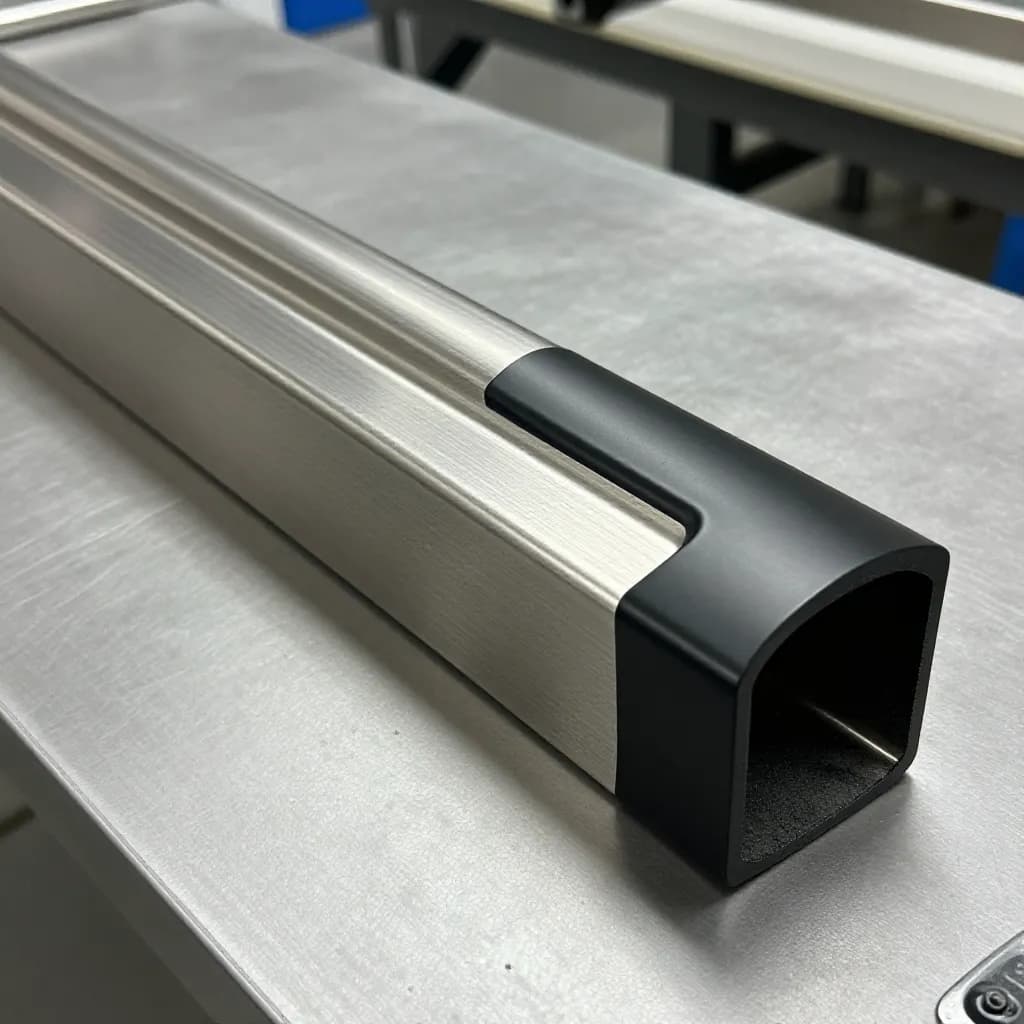
Beyond aesthetics, powder coating adds a supplementary barrier against specific corrosive environments that can challenge even high-grade stainless alloys. Chloride-rich coastal atmospheres, chemical processing environments, and food production facilities with aggressive cleaning regimes can all cause pitting, crevice corrosion, or stress corrosion cracking in uncoated stainless steel. A well-applied powder coating provides an additional line of defense, extending the functional life of the component.
Ready to Start Your Project?
From one-off customs to 15,000-part production runs — get precise pricing in 24 hours.
On This Page
Why Powder Coat Stainless Steel?
Powder coating also addresses the issue of tea staining — the unsightly brown discoloration that occurs on stainless steel surfaces exposed to marine or industrial atmospheres. Tea staining does not compromise structural integrity, but it is aesthetically unacceptable in architectural and consumer-facing applications. Coating the surface eliminates this problem entirely. Additionally, powder coating can reduce fingerprint visibility on stainless steel surfaces in high-traffic areas, a persistent maintenance concern in commercial interiors.
Understanding Stainless Steel Grades and Their Coating Behavior
Not all stainless steels behave the same way under powder coating, and understanding grade-specific characteristics is essential for achieving reliable results. The most commonly coated grades are 304 (1.4301) and 316 (1.4401), both austenitic stainless steels with chromium contents of 18-20% and nickel contents of 8-14%. These grades form a tenacious, self-healing chromium oxide passive layer on their surface — the very property that makes stainless steel corrosion-resistant also makes it difficult to achieve strong coating adhesion.
Grade 304 is the workhorse of the stainless steel family, used in kitchen equipment, architectural trim, and general fabrication. It responds well to mechanical pretreatment methods such as grit blasting, which disrupts the passive layer and creates a surface profile for mechanical adhesion. Grade 316, with its added molybdenum content for enhanced chloride resistance, is specified for marine, chemical, and pharmaceutical applications. The 316 passive layer reforms more aggressively after disruption, which can reduce the working window between pretreatment and coating application.
Ferritic grades such as 430 (1.4016) are occasionally powder coated for appliance panels and decorative trim. These grades have lower nickel content and are magnetic, which can affect electrostatic powder deposition patterns. Duplex stainless steels, combining austenitic and ferritic microstructures, present intermediate adhesion challenges. Martensitic grades like 410 and 420 are less commonly coated but may be encountered in cutlery, surgical instruments, and valve components. Each grade requires its pretreatment parameters to be validated independently — a process qualified on 304 should not be assumed to work identically on 316 or duplex grades.
The Adhesion Challenge: Overcoming the Passive Layer
The central challenge in powder coating stainless steel is achieving durable adhesion to a surface that is chemically designed to resist bonding. The chromium oxide passive layer that forms spontaneously on stainless steel is extremely thin — typically 1-5 nanometers — but remarkably stable and chemically inert. This layer reforms within seconds of being removed, meaning that any pretreatment process must either create sufficient mechanical keying before the layer regenerates, or chemically modify the surface to promote adhesion.
Adhesion failures on stainless steel typically manifest as delamination — the coating lifts away from the substrate in sheets, often triggered by thermal cycling, mechanical impact, or moisture ingress at edges and cut lines. Unlike adhesion failures on carbon steel, where corrosion undercutting is the primary mechanism, stainless steel failures are almost always caused by insufficient surface preparation. The coating simply does not form a strong enough bond with the passive layer to withstand service stresses.
Cross-hatch adhesion testing per ISO 2409 or ASTM D3359 is the standard method for evaluating coating adhesion on stainless steel. A classification of 0 (ISO) or 5B (ASTM), indicating no detachment, should be the target. Any result showing flaking along cut lines indicates inadequate pretreatment. Pull-off adhesion testing per ISO 4624 or ASTM D4541 provides quantitative data, with values above 5 MPa generally considered acceptable for architectural and industrial applications. Testing should be performed both immediately after coating and after accelerated aging — adhesion that passes initial testing but fails after humidity exposure or thermal cycling indicates a latent pretreatment deficiency.
Pretreatment Methods: Grit Blasting vs. Chemical Approaches
Grit blasting is the most widely used and reliable pretreatment method for stainless steel prior to powder coating. The process uses compressed air to propel abrasive media against the surface, simultaneously removing the passive layer, creating a roughened surface profile for mechanical adhesion, and cleaning the surface of contaminants. For stainless steel, angular aluminum oxide grit in the 80-120 mesh range is the preferred media, producing a surface profile of 25-50 micrometers (1.0-2.0 mils) Ra. Steel grit must never be used on stainless steel, as embedded ferrous particles will cause rust staining and galvanic corrosion beneath the coating.
Blasting pressure should be controlled at 4-6 bar (60-90 psi) with a nozzle distance of 150-300 mm. Over-blasting can work-harden the surface excessively and embed abrasive particles, while under-blasting leaves insufficient profile. The blasted surface should appear uniformly matte with no shiny spots indicating residual passive layer. Critically, the time between blasting and coating application should be minimized — ideally less than four hours — because the passive layer begins reforming immediately. In humid environments, this window may be even shorter.
Chemical pretreatment offers an alternative for components where blasting is impractical — thin-gauge sheet, polished surfaces, or complex geometries. Acid etching with phosphoric or citric acid solutions can activate the stainless steel surface, while proprietary adhesion-promoting primers based on silane or organosilane chemistry create a chemical bridge between the metal and the powder coating. Iron phosphate conversion coatings, commonly used on carbon steel, are generally ineffective on stainless steel because the passive layer inhibits the phosphating reaction. Specialized stainless steel pretreatment chemicals that combine etching and conversion coating in a single step are available from major chemical suppliers and represent the most practical chemical approach for production environments.
Outgassing at Cure Temperatures
Outgassing is a secondary but important concern when powder coating stainless steel, particularly for fabricated assemblies with welds, crevices, or trapped volumes. During the curing cycle — typically 180-200°C for 10-20 minutes — gases trapped in weld porosity, lap joints, or blind holes expand and escape through the curing powder film, creating pinholes, craters, or bubbles in the finished coating. While stainless steel is less prone to outgassing than cast iron or die-cast aluminum, it is not immune, especially in welded fabrications.
Weld areas are the primary source of outgassing on stainless steel. TIG (GTAW) welds are generally cleaner than MIG (GMAW) welds, but both can trap gases if welding parameters are not optimized. Back-purging with argon during welding reduces oxide formation and gas entrapment on the root side. Post-weld cleaning — grinding, pickling, or passivation — removes surface oxides but does not address subsurface porosity. For critical coating applications, a pre-bake or degas cycle at 200-220°C for 20-30 minutes before powder application allows trapped gases to escape from the bare metal surface, preventing them from disrupting the coating during cure.
Design considerations can also mitigate outgassing risk. Continuous seal welds are preferable to intermittent or tack welds, which create crevices that trap air and moisture. Drain holes in hollow sections allow trapped air to escape during heating. Lap joints should be minimized or sealed, and fastener holes should be designed to allow gas escape. When outgassing defects do occur despite precautions, the affected areas must be stripped, the substrate re-prepared, and the coating reapplied — there is no effective repair method for pinhole defects in powder coatings.
Powder Selection and Application Parameters
Powder selection for stainless steel applications should be guided by the service environment and performance requirements. Polyester powders are the standard choice for architectural and exterior applications, offering excellent UV resistance and color retention with cure schedules of 180-200°C for 10-15 minutes. Epoxy-polyester hybrids provide superior chemical resistance for interior industrial applications but will chalk and fade under UV exposure. Pure epoxy powders offer the best chemical and corrosion resistance but are limited to interior or underground use.
For stainless steel specifically, powders with good flow and leveling characteristics are preferred because the relatively smooth substrate (even after blasting) can reveal orange peel and surface texture defects more readily than rougher substrates like hot-rolled steel. Fine particle size powders in the 25-40 micrometer range produce smoother finishes but may require adjusted electrostatic settings to avoid back-ionization. Film thickness targets of 60-80 micrometers are typical for single-coat applications, providing adequate protection without excessive build that could compromise adhesion on this challenging substrate.
Electrostatic application parameters require attention because stainless steel's electrical conductivity and surface characteristics differ from carbon steel. Corona charging guns should be operated at moderate voltage — 60-80 kV rather than the maximum — to reduce the risk of back-ionization, which causes orange peel and crater defects. Tribo-charging guns can produce superior finishes on stainless steel because they avoid the Faraday cage effect in recessed areas and do not generate the ionic bombardment that causes back-ionization. Grounding is critical — stainless steel parts must make clean metal-to-metal contact with the hanging system, and any residual passive layer at the contact point should be scraped or abraded to ensure a reliable ground path.
Common Defects and Troubleshooting
Adhesion failure is the most frequent defect encountered when powder coating stainless steel, and it almost always traces back to inadequate pretreatment. If cross-hatch testing reveals flaking or delamination, the first investigation should focus on surface preparation: Was the blast profile adequate? Was the time between blasting and coating too long? Was the surface contaminated by handling, oil, or moisture after pretreatment? Systematic elimination of these variables will identify the root cause in the majority of cases.
Orange peel — an uneven, textured surface resembling the skin of an orange — is common on stainless steel because the smooth substrate amplifies any flow or leveling deficiency in the powder. Reducing electrostatic voltage, increasing powder flow rate, and ensuring the substrate reaches cure temperature quickly can all improve surface smoothness. Switching to a finer particle size powder or a formulation with enhanced flow additives may also be necessary.
Pinholes and craters from outgassing have been discussed, but contamination-related craters deserve separate attention. Silicone contamination — from lubricants, mold releases, sealants, or even hand creams — is the most common cause of crater defects on stainless steel. Silicone is extremely difficult to remove and can contaminate an entire coating line. Prevention through strict contamination control protocols is far more effective than attempting to clean contaminated surfaces. If silicone contamination is suspected, solvent wiping with isopropanol or acetone followed by re-blasting may be necessary, though complete removal is never guaranteed. Color inconsistency between parts can occur if blast profiles vary, as surface roughness affects the optical appearance of the cured coating. Standardizing blast parameters and verifying profile with a surface roughness gauge ensures batch-to-batch consistency.
Applications and Industry Best Practices
Powder-coated stainless steel is specified across a wide range of industries where the combination of corrosion resistance and aesthetic customization is valued. In architecture, powder-coated stainless steel is used for exterior cladding, handrails, column covers, and entrance canopies where color matching to the building design is required. The marine industry uses coated stainless steel for deck hardware, railing systems, and equipment housings where the base alloy provides corrosion resistance and the coating adds UV protection and color coding.
The food and beverage industry increasingly specifies powder-coated stainless steel for equipment exteriors, control panels, and non-contact surfaces where color coding supports hygiene zoning and the coating facilitates cleaning. Medical and laboratory equipment manufacturers coat stainless steel housings and enclosures for aesthetic consistency and to provide surfaces that are easier to clean and disinfect than bare metal. The automotive industry uses powder-coated stainless steel for exhaust trim, grille inserts, and decorative components where the material's heat resistance is combined with color customization.
Best practices for production environments include establishing a dedicated pretreatment validation protocol for each stainless steel grade processed, maintaining strict time controls between pretreatment and coating, and implementing incoming material inspection to verify alloy grade and surface condition. Quality control should include cross-hatch adhesion testing on every batch, with pull-off testing performed at regular intervals. Environmental monitoring of the coating area — temperature, humidity, and contamination levels — provides early warning of conditions that could compromise adhesion. Documentation of all process parameters creates a traceable quality record and supports continuous improvement of the coating process.
Frequently Asked Questions
Can you powder coat stainless steel successfully?
Yes, stainless steel can be powder coated successfully, but it requires specialized pretreatment to overcome the chromium oxide passive layer that naturally resists coating adhesion. Grit blasting with aluminum oxide media to create a 25-50 micrometer surface profile is the most reliable method. The time between pretreatment and coating must be minimized because the passive layer reforms within hours.
Why does powder coating peel off stainless steel?
Peeling is almost always caused by inadequate surface preparation. The chromium oxide passive layer on stainless steel is chemically inert and prevents strong adhesion. If the surface is not properly blasted or chemically treated to disrupt this layer and create mechanical keying, the coating will delaminate under thermal cycling, impact, or moisture exposure.
What grit blast media should be used on stainless steel?
Angular aluminum oxide in the 80-120 mesh range is the preferred blast media for stainless steel. Steel grit must never be used because embedded ferrous particles will cause rust staining and galvanic corrosion beneath the coating. Garnet and glass bead are alternatives but produce less aggressive profiles that may not provide adequate adhesion for demanding applications.
Does stainless steel need to be degassed before powder coating?
Solid stainless steel plate and sheet generally do not require degassing, but welded fabrications should be pre-baked at 200-220°C for 20-30 minutes to release trapped gases from weld porosity and crevices. Without degassing, these gases can escape during the cure cycle and create pinholes or bubbles in the finished coating.
Is there a difference between coating 304 and 316 stainless steel?
Yes. Grade 316 has a more aggressive passive layer due to its molybdenum content, which can reduce the working window between pretreatment and coating application. Both grades require the same general approach — grit blasting with aluminum oxide — but 316 may need slightly more aggressive blast parameters and a shorter time-to-coat to achieve equivalent adhesion results.
Ready to Start Your Project?
From one-off customs to 15,000-part production runs — get precise pricing in 24 hours.