Sports stadiums are among the largest and most visually prominent buildings in any city. Their facades, structural steelwork, seating systems, and ancillary structures present enormous surface areas that must be protected and finished to the highest standards. The combination of massive scale, full weather exposure, intense periodic use by tens of thousands of spectators, and the requirement for distinctive brand identity creates a unique set of demands on surface finishing technology.
Architecture
Powder Coating for Sports Stadium Architecture: Large-Scale Facades, Structural Steel, and Brand Identity
Sundial Powder Coating·April 22, 2026·12 min
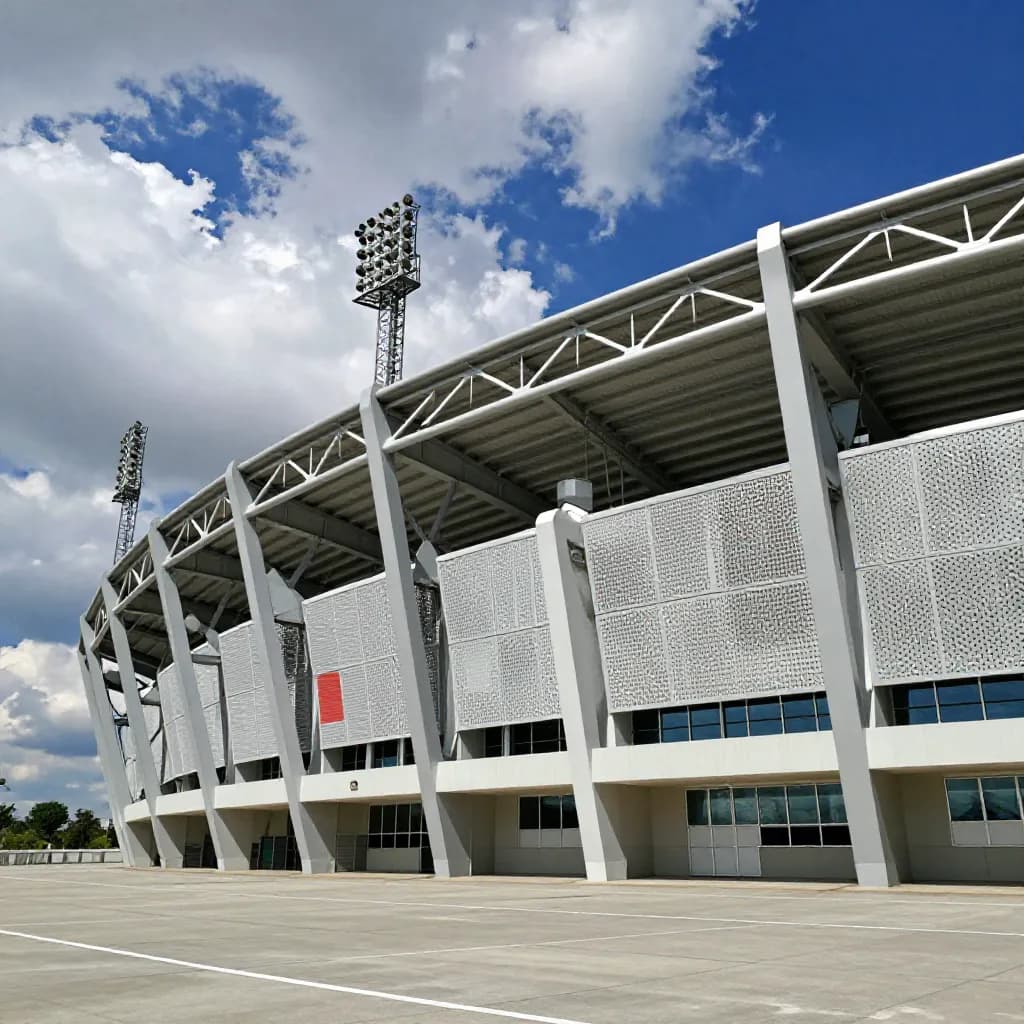
Powder coating has become the preferred finishing system for stadium metalwork because it delivers the performance, efficiency, and design flexibility that these landmark buildings require. Applied at 60-120 microns in a single coat — more than double the 25-50 micron film thickness of liquid paint — powder coating provides the robust protection needed for structures that may be fully exposed to UV radiation, wind-driven rain, temperature extremes, and atmospheric pollutants for decades between major maintenance interventions.
Ready to Start Your Project?
From one-off customs to 15,000-part production runs — get precise pricing in 24 hours.
On This Page
Sports Stadiums: Architectural Scale Meets Coating Performance
The scale of stadium projects also favors powder coating from a production efficiency standpoint. The 95-98% material utilization rate of powder application means that coating thousands of square meters of cladding panels, structural members, and seating components generates minimal waste compared to liquid painting operations with their 30-70% transfer efficiency. For projects where sustainability credentials are increasingly scrutinized by public authorities and sporting bodies, this efficiency advantage is both an environmental and a commercial benefit.
Structural Steel: Protection at Monumental Scale
The structural steel frameworks of modern stadiums are engineering achievements of extraordinary complexity, with primary members spanning distances of 100 meters or more to create column-free spectator bowls. Protecting this steelwork against corrosion is essential to maintaining structural integrity over the building's 50-60 year design life, and the surface finish must also meet aesthetic requirements when structural elements are architecturally exposed.
Powder coating on structural steel provides both decorative finish and corrosion protection in a single application. For exposed structural steelwork, the 60-120 micron powder film creates a continuous barrier against moisture and atmospheric corrosion, while the thermoset polymer matrix resists UV degradation, chalking, and color change. Super-durable polyester formulations certified to Qualicoat Class 2 maintain their appearance for 20-25 years, aligning with the planned maintenance cycles of major stadium facilities.
Duplex coating systems — combining hot-dip galvanizing with powder coating topcoat — provide the highest level of corrosion protection for stadium steelwork. The galvanized zinc layer provides sacrificial cathodic protection at any coating damage points, while the powder topcoat provides barrier protection and the desired aesthetic finish. This combination can deliver corrosion protection exceeding 50 years in moderate atmospheric environments, effectively matching the structural design life of the building.
The application of powder coating to large structural steel members requires specialized equipment, including oversized spray booths and curing ovens capable of accommodating members up to 15 meters in length. The investment in this capability is justified by the superior finish quality and corrosion protection achieved compared to on-site liquid painting, which is subject to environmental variables including temperature, humidity, and contamination that can compromise coating quality.
Facade Cladding: Visual Impact and Weather Resistance
Stadium facades are designed to create iconic visual identities that become landmarks in the urban landscape. The cladding systems that form these facades — including flat panels, cassette systems, perforated screens, and three-dimensional formed elements — must deliver both the aesthetic precision demanded by architects and the weather resistance required for fully exposed building envelopes.
Powder-coated aluminum cladding meets both requirements. The electrostatic application process produces a uniform, defect-free finish across large panel areas, with consistent color and gloss that liquid spray application struggles to match on flat surfaces where any variation is immediately visible. For metallic and special-effect finishes — increasingly popular on stadium facades for their dynamic visual properties — powder coating technology offers bonded metallic formulations that provide consistent sparkle distribution without the settling and orientation issues that affect liquid metallic paints.
Perforated cladding panels, widely used on stadium facades for their combination of visual screening, natural ventilation, and dynamic light effects, present specific coating challenges. The thousands of perforations in each panel create complex edge geometry that must be uniformly coated to prevent corrosion initiation at unprotected cut edges. Electrostatic powder application excels in this regard, with charged particles wrapping around perforation edges to achieve consistent coverage that liquid spray methods cannot reliably replicate.
The weather resistance of powder-coated stadium facades is verified through accelerated weathering testing and real-world exposure programs. Qualicoat Class 2 and AAMA 2605 certified coatings must demonstrate color retention within specified Delta E limits after 10 years of South Florida exposure, providing confidence that the facade will maintain its intended appearance through decades of service. For stadiums in particularly aggressive environments — coastal locations, tropical climates, or areas with high atmospheric pollution — enhanced pretreatment systems and marine-grade powder formulations provide additional protection.
Spectator Areas: Seating, Barriers, and Concourse Metalwork
The spectator experience in a modern stadium depends significantly on the quality and condition of the metalwork that surrounds them. Seating structures, safety barriers, handrails, concourse cladding, and wayfinding elements must all maintain their appearance and structural integrity despite exposure to weather, UV radiation, food and beverage spills, and the mechanical stress of thousands of spectators moving through the facility during events.
Powder-coated seating systems are standard in modern stadium construction. The hard, smooth powder film resists scratching from clothing fasteners and bags, withstands cleaning with pressure washers and chemical detergents, and maintains its color despite continuous UV exposure. The 60-120 micron film thickness provides substantially better protection than the 25-50 micron liquid paint films used on older stadium seating, which typically show visible degradation within 5-7 years of installation.
Safety barriers and handrails in spectator areas must meet stringent structural and safety requirements defined by standards such as the Green Guide to Safety at Sports Grounds and local building regulations. The surface finish on these elements must not create sharp edges, must provide adequate grip, and must maintain its integrity under crowd loading conditions. Powder coating's smooth, continuous film meets all of these requirements, and its resistance to chipping and flaking ensures that safety-critical elements do not develop hazardous surface defects over time.
Concourse areas experience the highest traffic densities in the stadium, with tens of thousands of spectators passing through during pre-event, interval, and post-event periods. Powder-coated metalwork in these areas — including wall cladding, column casings, service counters, and signage — must withstand this intense periodic use while remaining easy to clean and maintain. The chemical resistance of powder coating allows aggressive cleaning agents to be used for post-event cleaning without degrading the finish, maintaining hygiene and appearance throughout the venue's operational life.
Brand Colors and Corporate Identity
Sports stadiums are powerful expressions of team and corporate identity, and color is central to that expression. Club colors, sponsor branding, and event-specific theming all rely on precise, consistent, and durable color application across the building's metalwork. The ability to achieve exact color matches and maintain them over time is a critical specification requirement for stadium projects.
Powder coating delivers the color precision that stadium branding demands. Custom color matching to any reference sample — including Pantone, RAL, NCS, and proprietary brand color specifications — is standard practice in architectural powder coating. Spectrophotometric color measurement ensures that the applied coating matches the target color within tight Delta E tolerances, and batch-to-batch consistency is maintained through rigorous quality control throughout the production run.
The color durability of powder coating is equally important. Stadium facades and metalwork are fully exposed to UV radiation, and color fading would undermine the brand identity that the building is designed to project. Super-durable polyester powder coatings retain their color within specified limits for 20-25 years, ensuring that brand colors remain vibrant and recognizable throughout the building's service life. This performance contrasts sharply with liquid paint systems, which typically show noticeable fading within 8-12 years of exterior exposure.
Multi-color applications are common on stadium projects, with different colors used for seating zones, wayfinding systems, and decorative patterns. Powder coating supports efficient multi-color production through rapid color changes in the spray booth, with minimal material waste during changeover. For complex color schemes involving dozens of different colors — as found in gradient seating layouts or pixel-pattern facades — powder coating's production flexibility and material efficiency provide significant advantages over liquid painting.
Retractable Roofs, Canopies, and Moving Structures
Modern stadiums increasingly incorporate moving architectural elements — retractable roofs, operable facades, and deployable canopy systems — that must function reliably under all weather conditions throughout the building's service life. The surface finishes on these moving elements must withstand not only weather exposure but also the mechanical stresses of repeated operation, including flexing, sliding contact, and vibration.
Powder coating's combination of hardness and flexibility makes it well-suited to moving structural elements. The thermoset polymer film can accommodate the minor surface strains that occur during roof retraction and canopy deployment without cracking or delaminating, maintaining both its protective and aesthetic function through thousands of operational cycles. This performance is verified through flexibility testing to ISO 1519 (mandrel bend) and impact resistance testing to ISO 6272, which confirm that the coating maintains adhesion under mechanical deformation.
For retractable roof systems, the coating must also resist the abrasion that occurs at sliding interfaces and guide rail contact points. While these high-wear zones typically require specialized tribological coatings, the surrounding structural and cladding surfaces benefit from powder coating's superior abrasion resistance compared to liquid paint, reducing the maintenance burden on these complex mechanical systems.
Canopy structures — including tensile fabric support frames, cable net systems, and ETFE cushion frames — are fully exposed to weather and UV radiation. Powder-coated aluminum or steel frames for these systems provide 20-25 years of protection without recoating, compared to the 8-12 year recoating cycles typical of liquid-painted canopy structures. Given the difficulty and cost of accessing elevated canopy structures for maintenance, this extended service life represents a significant operational advantage for stadium operators.
Environmental Performance and Legacy Planning
Major sporting events increasingly require host venues to demonstrate environmental responsibility, and the sustainability credentials of building materials are scrutinized as part of event bidding and legacy planning processes. The International Olympic Committee, FIFA, and other governing bodies have established sustainability frameworks that influence stadium design and material specification.
Powder coating contributes to stadium sustainability across multiple dimensions. Zero VOC emissions during application eliminate a significant source of air pollution during construction, supporting compliance with environmental impact assessments and construction environmental management plans. The 95-98% material utilization efficiency reduces waste generation, with reclaimed overspray powder reused rather than disposed of as waste.
The lifecycle environmental performance of powder coating supports the long-term legacy value of stadium investments. A coating system that maintains its appearance and protective function for 20-25 years reduces the frequency of maintenance interventions, each of which carries its own environmental footprint in terms of material consumption, waste generation, and energy use. Over the 50-60 year design life of a major stadium, the cumulative environmental benefit of fewer recoating cycles is substantial.
End-of-life considerations also favor powder-coated systems. Aluminum cladding and structural elements can be fully recycled through standard smelting processes, with the organic powder coating consumed as fuel during recycling. Steel elements are similarly recyclable. This full recyclability supports circular economy principles and contributes to the material recovery targets increasingly required by stadium sustainability frameworks. For legacy planning purposes, the combination of long service life, low maintenance requirements, and full end-of-life recyclability makes powder-coated metalwork the most sustainable finishing option for stadium architecture.
Frequently Asked Questions
How long does powder coating last on stadium facades?
Super-durable polyester powder coatings certified to Qualicoat Class 2 or AAMA 2605 maintain color and gloss for 20-25 years on stadium facades, compared to 8-12 years for liquid paint. This extended service life is critical for stadiums where facade maintenance access is complex and costly.
Can powder coating match exact team and brand colors?
Yes. Custom color matching to Pantone, RAL, NCS, and proprietary brand specifications is standard practice. Spectrophotometric measurement ensures tight Delta E tolerances, and super-durable formulations maintain brand colors for 20-25 years without noticeable fading.
Is powder coating suitable for stadium structural steel?
Yes. Powder coating provides both decorative finish and corrosion protection for exposed structural steel. Duplex systems combining hot-dip galvanizing with powder coating topcoat can deliver corrosion protection exceeding 50 years, matching the structural design life of major stadiums.
How does powder coating perform on retractable stadium roofs?
Powder coating's combination of hardness and flexibility allows it to withstand the mechanical stresses of repeated roof operation without cracking or delaminating. The coating maintains adhesion through thousands of operational cycles, verified through ISO 1519 flexibility and ISO 6272 impact testing.
Does powder coating support stadium sustainability requirements?
Yes. Zero VOC emissions, 95-98% material efficiency, and 20-25 year service life support sustainability frameworks required by the IOC, FIFA, and other governing bodies. Full recyclability of powder-coated aluminum and steel supports circular economy and material recovery targets.
Ready to Start Your Project?
From one-off customs to 15,000-part production runs — get precise pricing in 24 hours.