Renewable energy infrastructure — solar panel frames, ground and rooftop mounting systems, inverter and combiner box enclosures, wind turbine components, and battery storage systems — must deliver reliable performance for 25-30 years with minimal maintenance. This service life requirement, combined with continuous outdoor exposure to UV radiation, moisture, temperature cycling, and atmospheric pollutants, places extraordinary demands on the protective coatings used throughout the renewable energy supply chain.
Industrial
Powder Coating for Solar and Renewable Energy: Panel Frames, Mounting Systems, and Wind Turbine Components
Sundial Powder Coating·April 22, 2026·12 min
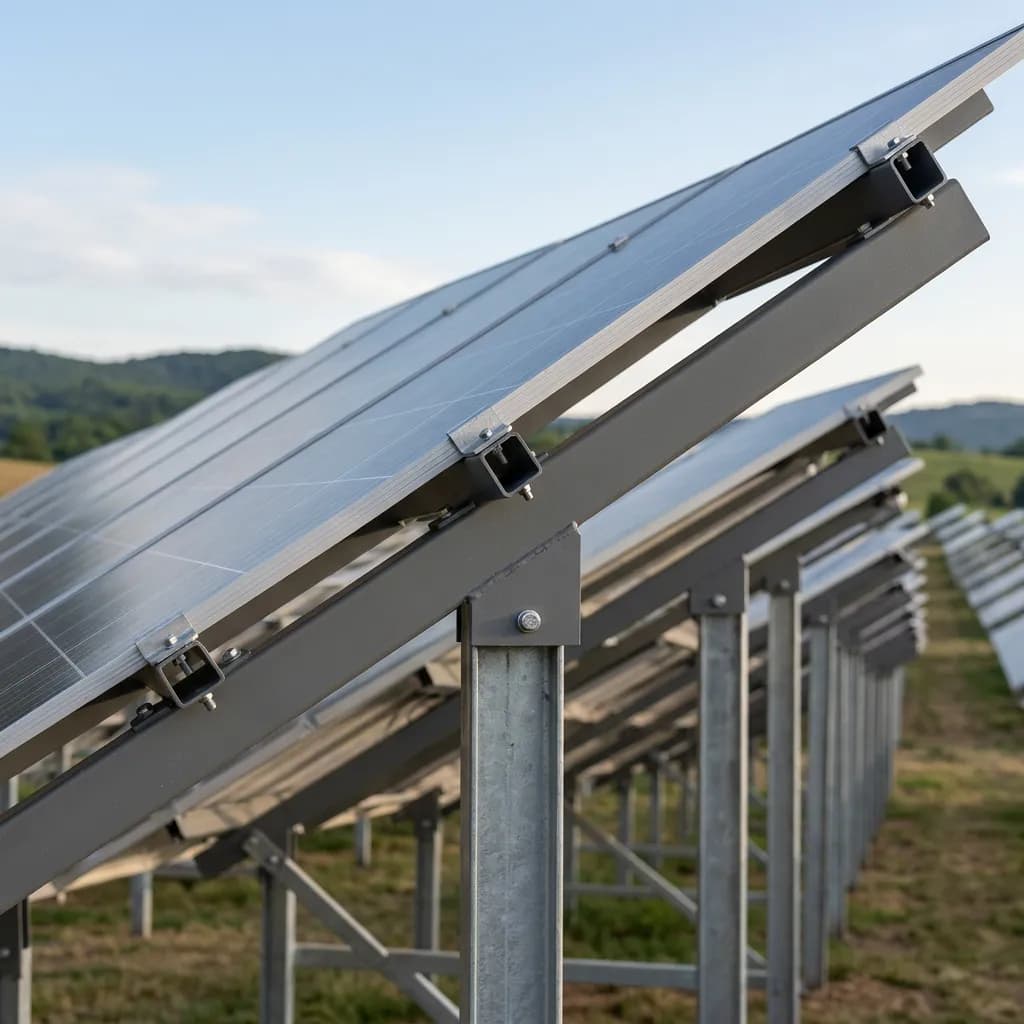
Powder coating has become the dominant finishing technology for renewable energy components because it delivers the combination of corrosion protection, UV resistance, and environmental sustainability that the industry requires. Solar panel manufacturers, mounting system fabricators, and wind turbine OEMs have standardized on powder coating for aluminum and steel components, driven by its proven 25+ year durability record, zero VOC emissions, and compatibility with the high-volume automated production processes used in renewable energy manufacturing.
Ready to Start Your Project?
From one-off customs to 15,000-part production runs — get precise pricing in 24 hours.
On This Page
Renewable Energy's Unique Coating Demands
The scale of the renewable energy coating market is substantial and growing rapidly. Global solar PV installations exceeded 400 GW in 2024, with each megawatt of installed capacity requiring approximately 15-25 tonnes of aluminum and steel structural components — virtually all of which are powder coated. Wind energy adds further volume, with each turbine tower requiring coating of 100-300 tonnes of structural steel. This represents one of the largest and fastest-growing market segments for industrial powder coatings worldwide.
Solar Panel Frame Finishing: Aluminum Extrusion Coating
Solar panel frames are extruded from 6063-T5 or 6005-T5 aluminum alloy and serve both structural and aesthetic functions — they provide the mechanical support for the glass-encapsulated PV cells and define the visual appearance of the installed array. Each standard 60-cell or 72-cell solar panel requires approximately 2.5-3.5 kg of aluminum frame material, making solar panel frames one of the highest-volume aluminum extrusion applications in the world.
The coating specification for solar panel frames must satisfy a 25-year performance warranty that is standard in the solar industry. This warranty requires the coating to maintain corrosion protection, adhesion, and acceptable appearance throughout the panel's warranted power output period. Anodizing (15-20 microns of anodic oxide) and powder coating (40-60 microns of polyester) are the two primary finishing options, with powder coating gaining market share due to its wider color range, lower energy consumption in production, and superior performance in marine and industrial atmospheres where anodized aluminum can suffer accelerated corrosion.
The pretreatment process for solar panel frames follows the standard architectural aluminum sequence: alkaline cleaning, acid etch, and chrome-free conversion coating (typically zirconium or titanium-based). Chrome-free pretreatment is now standard in the solar industry due to both environmental regulations restricting hexavalent chromium and the sustainability expectations of solar energy customers. The conversion coating must provide consistent adhesion promotion across the full length of the extruded frame, including cut ends and mitered corners where the bare aluminum is exposed.
Color selection for solar panel frames has evolved from the traditional silver anodized appearance to predominantly black frames that provide a more aesthetically integrated appearance on residential rooftops. Black powder-coated frames (RAL 9005 or similar) now account for the majority of residential solar panel production, with silver and dark grey options available for commercial and utility-scale installations where aesthetic requirements are less stringent.
Ground-Mount and Rooftop Mounting Systems
Solar mounting systems — the structural frameworks that support solar panels at the correct angle and orientation — represent a larger volume of coated material than the panels themselves. Ground-mount systems for utility-scale solar farms use galvanized steel piles, beams, and purlins, while rooftop systems typically use aluminum rails, clamps, and brackets. Both substrate types require coating systems that deliver 25-30 year corrosion protection in outdoor exposure.
Galvanized steel mounting structures for ground-mount solar farms are typically finished with a duplex coating system: hot-dip galvanizing per ASTM A123 (minimum 85 microns zinc) plus polyester powder coating at 60-80 microns. The duplex system provides synergistic corrosion protection that significantly exceeds the sum of the individual coating lifetimes, with field performance data from early solar installations confirming 25+ year durability in temperate and subtropical climates. For installations in marine or high-corrosivity industrial environments, the galvanizing specification is increased to 100+ microns and the powder coat to 80-100 microns.
Aluminum rooftop mounting rails and clamps are powder coated with polyester at 40-60 microns over chrome-free conversion coating pretreatment. The coating must resist the specific corrosion challenges of rooftop environments, including standing water in rail channels, galvanic corrosion at aluminum-to-steel fastener interfaces, and chemical exposure from roofing materials (bitumen, EPDM, TPO). Mounting system manufacturers test their coating systems per IEC 62817 (solar tracker design qualification) and UL 2703 (mounting system safety standard), which include corrosion resistance requirements.
The tracker segment of the ground-mount market — single-axis trackers that follow the sun's daily path to increase energy yield by 15-25% — adds mechanical complexity to the coating requirement. Tracker systems include rotating torque tubes, bearing housings, and drive mechanisms that experience continuous mechanical motion and must maintain coating integrity through millions of rotation cycles over the system's 30-year design life. Flexible polyester powder coatings with enhanced abrasion resistance are specified for tracker components to prevent coating wear at bearing and contact surfaces.
Inverter Enclosures and Electrical Balance of System
Solar inverters, combiner boxes, disconnect switches, and other electrical balance-of-system (BOS) components are housed in powder-coated steel or aluminum enclosures that must provide environmental protection (IP65 or IP66 rating), thermal management, and corrosion resistance for 25 years of outdoor service. These enclosures represent a critical coating application because any coating failure that compromises the enclosure's environmental seal can lead to electrical equipment failure, safety hazards, and costly system downtime.
Inverter enclosures are particularly demanding because they must dissipate significant heat generated by power conversion electronics. String inverters generate 2-5 kW of waste heat, while central inverters can generate 20-50 kW. The enclosure coating must not significantly impede heat transfer from the enclosure walls to the ambient air. Powder coating at standard film thicknesses (50-80 microns) has minimal impact on thermal conductivity, but the coating color significantly affects solar heat gain. Light colors (RAL 7035 light grey or RAL 9002 grey white) are standard for inverter enclosures to minimize solar heating, with solar reflective pigment technology available for applications where darker colors are required for aesthetic reasons.
EMI (electromagnetic interference) shielding is another consideration for inverter and combiner box enclosures. While standard powder coatings are electrically insulating, the enclosure's EMI shielding performance depends on the metal-to-metal contact at joints, seams, and access panels rather than the coating. Coating must be excluded from EMI gasket contact surfaces and grounding points to maintain the enclosure's shielding effectiveness. Masking these areas during powder application is standard practice for electrical enclosure coating.
The rapid growth of battery energy storage systems (BESS) is creating a new category of renewable energy enclosure coating. BESS enclosures house lithium-ion battery modules and must meet stringent fire safety requirements (UL 9540A, NFPA 855) in addition to standard environmental protection. Powder coatings for BESS enclosures must demonstrate fire resistance performance, with intumescent powder coating formulations available that expand when exposed to fire to provide thermal insulation for the enclosure structure.
Wind Turbine Component Finishing
Wind turbine manufacturing consumes significant volumes of powder coating for tower internals, nacelle components, hub assemblies, and balance-of-plant equipment. While the exterior surfaces of wind turbine towers and blades are typically finished with liquid coatings due to field application requirements and the size of components, factory-fabricated internal components and subassemblies are increasingly powder coated for their superior corrosion protection, consistency, and environmental benefits.
Wind turbine tower internal surfaces face a unique corrosion challenge: condensation. The temperature differential between the tower's exterior (exposed to ambient conditions) and interior (heated by electrical equipment) creates condensation on internal steel surfaces, particularly in the lower tower sections and foundation transition piece. This condensation, combined with the salt-laden atmosphere in offshore installations, creates a corrosive environment that can degrade unprotected steel. Epoxy powder coating at 150-250 microns on tower internal surfaces provides effective condensation corrosion protection without the VOC emissions and confined-space safety concerns associated with liquid paint application inside tower sections.
Nacelle components — the generator housing, gearbox mounting frame, yaw bearing support, and electrical cabinets — are powder coated in the factory before assembly. These components must withstand the vibration, temperature cycling, and lubricant exposure typical of the nacelle environment. Epoxy-polyester hybrid powders provide a good balance of chemical resistance and mechanical durability for nacelle components, with film thicknesses of 80-120 microns.
Offshore wind turbine components face the most demanding coating requirements in the wind energy sector. The combination of saltwater spray, high humidity, and limited maintenance access requires coating systems that can provide 25+ year protection in C5-M (very high marine) corrosivity environments per ISO 12944. For factory-coated offshore wind components, epoxy powder primers at 200-300 microns provide the primary corrosion barrier, with polyester or polyurethane topcoats for UV-exposed surfaces.
25-Year Warranty Requirements and Accelerated Testing
The renewable energy industry's standard 25-year performance warranty creates a unique challenge for coating specification and qualification. Coating manufacturers must demonstrate that their products will maintain protective performance for a quarter century of continuous outdoor exposure — a timeframe that exceeds the accelerated testing capabilities of most standard coating test methods.
Accelerated weathering testing for renewable energy coatings typically requires 4,000-6,000 hours of xenon arc exposure per ASTM G155 or ISO 11341, which correlates to approximately 15-25 years of outdoor exposure depending on geographic location and exposure conditions. Performance requirements at the end of accelerated testing typically include Delta E color change below 5, gloss retention above 50%, no blistering or delamination, and scribe creep below 2 mm in concurrent salt spray testing.
Real-world exposure testing supplements accelerated testing for coating qualification. Major solar mounting system manufacturers maintain outdoor exposure test sites in high-UV locations (Arizona, Florida, Australia) and high-corrosivity locations (coastal, industrial) where coated test panels are exposed for 5-10 years and periodically evaluated. This real-world data provides validation of accelerated test correlations and builds confidence in 25-year performance projections.
The IEC 61730 standard for photovoltaic module safety includes requirements for frame coating durability, specifying that the coating must maintain adhesion and corrosion protection after exposure to damp heat (85°C, 85% RH for 1,000 hours), thermal cycling (-40°C to +85°C for 200 cycles), and UV exposure (15 kWh/m² of UV-B). These tests simulate the specific environmental stresses that solar panel frames experience during operation and are mandatory for module safety certification.
Sustainability Alignment: Powder Coating and Clean Energy Values
The renewable energy industry is founded on environmental sustainability, and the coating systems used on renewable energy infrastructure must align with these values. Powder coating's environmental profile — zero VOC emissions, 95-98% material utilization, no hazardous waste generation, and energy-efficient application — makes it the natural coating choice for an industry committed to minimizing environmental impact across its entire supply chain.
Life cycle assessment (LCA) data consistently shows that powder coating has a lower environmental footprint than liquid paint systems across all major impact categories: global warming potential, ozone depletion potential, acidification potential, and eutrophication potential. For solar mounting system manufacturers, specifying powder coating over liquid paint can reduce the coating-related carbon footprint by 40-60%, contributing to the overall carbon intensity reduction of solar energy production.
Environmental Product Declarations (EPDs) per ISO 14025 and EN 15804 are increasingly required for renewable energy components, particularly for projects seeking green building certifications or participating in carbon-conscious procurement programs. Powder coating manufacturers are responding by developing EPDs for their product lines that quantify the environmental impact of the coating from raw material extraction through end-of-life. These EPDs enable renewable energy manufacturers to include accurate coating environmental data in their own product EPDs and sustainability reports.
The circular economy potential of powder-coated renewable energy components is another sustainability advantage. At end of life (typically 25-30 years for solar installations), aluminum frames and steel mounting structures are recycled. Powder coatings do not contain heavy metals or persistent organic pollutants that would complicate recycling, and the thin organic film is consumed during the metal melting process. The recycled aluminum and steel re-enter the manufacturing supply chain, potentially returning as new renewable energy components in a closed-loop material cycle.
Emerging Technologies: Bifacial Modules and Floating Solar
Emerging solar technologies are creating new coating requirements that push the boundaries of powder coating performance. Bifacial solar modules, which generate electricity from both front and rear surfaces, require mounting systems with high-reflectance coatings on structural members beneath the modules to maximize rear-side energy capture. White or light-colored powder coatings with high total solar reflectance (TSR > 80%) are specified for bifacial mounting systems, with the coating's reflectance stability over 25 years becoming a performance-critical specification parameter.
Floating solar (floatovoltaic) installations on reservoirs, lakes, and industrial water bodies present extreme coating challenges. Mounting system components are partially or fully submerged in fresh or brackish water for their entire service life, requiring coating systems with exceptional water immersion resistance and resistance to biological fouling. Epoxy powder primers with polyester topcoats, applied at total film thicknesses of 150-200 microns, provide the immersion resistance needed for floating solar applications. Anti-microbial and anti-fouling powder coating additives are being developed to reduce biological growth on submerged components.
Agrivoltaic systems — solar installations integrated with agricultural land use — require mounting system coatings that are compatible with agricultural chemicals (fertilizers, herbicides, pesticides) and resistant to the mechanical damage from farming equipment operating beneath the elevated solar arrays. The coating specifications for agrivoltaic mounting systems combine the UV and corrosion resistance requirements of standard solar installations with the chemical and abrasion resistance requirements of agricultural equipment coatings.
Building-integrated photovoltaics (BIPV) represent another growth area where powder coating plays a dual role. BIPV systems integrate solar cells into building envelope components — facades, roofing, and shading systems — where the coating must meet both architectural aesthetic standards and solar energy performance requirements. Powder-coated aluminum frames and mounting elements for BIPV must comply with architectural quality standards (Qualicoat, AAMA 2605) while maintaining the dimensional precision and surface quality required for PV module integration.
Frequently Asked Questions
How does powder coating support 25-year solar panel warranties?
Powder coating on solar panel frames and mounting systems is qualified through accelerated weathering (4,000-6,000 hours xenon arc), salt spray testing (1,000+ hours), and real-world exposure testing at high-UV and high-corrosivity sites. IEC 61730 safety certification includes specific coating durability tests. Field data from early installations confirms 25+ year performance.
Why are solar panel frames switching from anodizing to powder coating?
Powder coating offers wider color range (especially the popular black frames), lower production energy consumption, superior performance in marine and industrial atmospheres, and better environmental credentials with zero VOC emissions. Chrome-free pretreatment processes align with the solar industry's sustainability values.
What coating system is used for solar ground-mount structures?
The standard is a duplex system: hot-dip galvanizing (85+ microns zinc) plus polyester powder coating (60-80 microns). This provides synergistic corrosion protection exceeding the sum of individual coating lifetimes. Marine and industrial environments require increased specifications of 100+ microns galvanizing and 80-100 microns powder coat.
How are wind turbine components powder coated?
Factory-fabricated components — tower internals, nacelle parts, hub assemblies — are powder coated before assembly. Tower internals use epoxy powder at 150-250 microns for condensation corrosion protection. Nacelle components use epoxy-polyester hybrid at 80-120 microns. Offshore components require epoxy primers at 200-300 microns for C5-M marine protection.
Does powder coating color affect solar inverter performance?
Yes. Darker enclosure colors absorb more solar radiation, increasing internal temperatures and potentially reducing inverter efficiency or lifespan. Light colors (RAL 7035, RAL 9002) are standard for inverter enclosures. Solar reflective pigment technology allows darker colors with 30-40% less heat absorption when aesthetics require non-white finishes.
Ready to Start Your Project?
From one-off customs to 15,000-part production runs — get precise pricing in 24 hours.