Solar photovoltaic installations represent one of the fastest-growing sectors in global construction, with utility-scale solar farms now covering hundreds of hectares and incorporating millions of square meters of structural metalwork. The mounting systems, tracker frames, inverter enclosures, cable management systems, and perimeter infrastructure that support solar panels must deliver reliable performance for the 25-30 year operational life of the installation — matching the warranty period of the panels they support.
Architecture
Powder Coating for Solar Farm Structures: Mounting Systems, Tracker Frames, and 25-Year Warranty Matching
Sundial Powder Coating·April 22, 2026·11 min
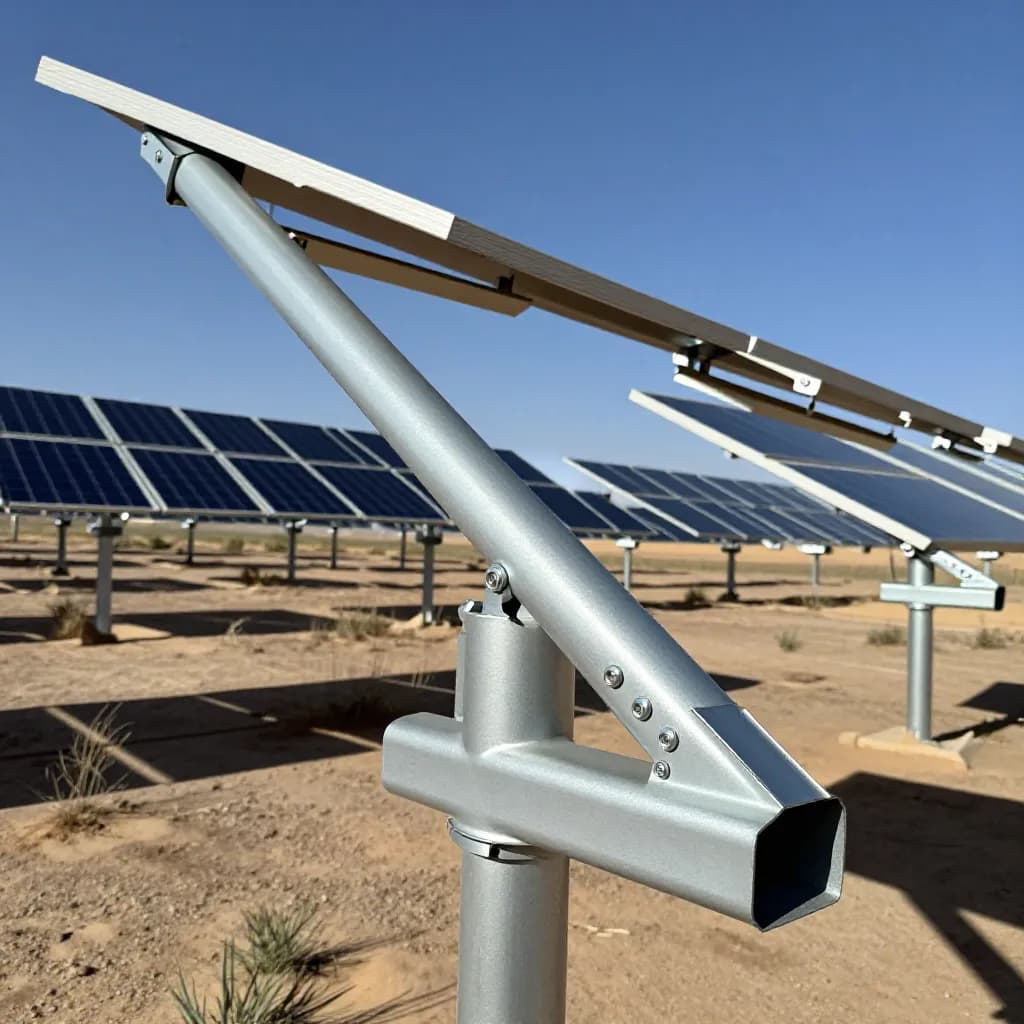
Powder coating has emerged as the preferred finishing technology for solar farm metalwork because its 20-25 year service life aligns naturally with the operational life of the solar installation. This alignment is critical: a coating system that fails before the panels reach end-of-life forces costly mid-life maintenance on structures that are designed for minimal intervention. The 60-120 micron film thickness provides robust protection against the UV radiation, temperature cycling, moisture, and atmospheric corrosion that solar farm metalwork endures in fully exposed outdoor environments.
Ready to Start Your Project?
From one-off customs to 15,000-part production runs — get precise pricing in 24 hours.
On This Page
Solar Farm Infrastructure: Coating Life Must Match Panel Life
The scale of solar farm construction also favors powder coating. A utility-scale solar farm may incorporate thousands of tonnes of structural steel and aluminum, and the 95-98% material utilization efficiency of powder application translates into significant material savings and waste reduction at this scale. Zero VOC emissions support the environmental credentials that are fundamental to the renewable energy sector's social license to operate.
Fixed Mounting Systems: Ground-Mount and Rooftop Structures
Fixed mounting systems — the structural frameworks that support solar panels at their optimal tilt angle — represent the largest volume of metalwork on a solar farm. These structures must maintain their structural integrity and corrosion protection for the full 25-30 year operational life of the installation, typically with no planned coating maintenance during this period.
Powder coating on fixed mounting systems provides the maintenance-free protection that solar farm economics require. The 60-120 micron film creates a continuous barrier against atmospheric corrosion, UV degradation, and moisture ingress. Super-durable polyester formulations maintain their protective properties through 25 years of outdoor exposure, with color and gloss retention within specified limits throughout this period. This performance is verified through accelerated weathering testing to ISO 11341 and real-world exposure programs in representative climatic zones.
For ground-mount systems, the lower sections of mounting posts are exposed to soil contact, vegetation growth, and splash zone moisture that create particularly aggressive corrosion conditions. Duplex coating systems — combining hot-dip galvanizing with powder coating topcoat — provide the enhanced protection needed for these buried and splash zone sections. The galvanized zinc layer provides sacrificial cathodic protection at any coating damage points, while the powder topcoat provides barrier protection and UV resistance for the above-ground sections.
Rooftop solar mounting systems present different challenges. The coating must be compatible with the roofing materials and must not cause galvanic corrosion at contact points between dissimilar metals. Powder coating's electrically insulating properties provide a barrier against galvanic interaction, protecting both the mounting system and the roof structure. The lightweight nature of powder-coated aluminum mounting systems also minimizes the additional structural load on the roof, an important consideration for retrofit installations on existing buildings.
Solar Tracker Frames: Protection Under Dynamic Loading
Single-axis and dual-axis solar trackers increase energy yield by orienting panels to follow the sun's path across the sky. The structural frames, drive mechanisms, and bearing assemblies of tracker systems are subjected to dynamic loading — wind forces, motor-driven rotation, and the cyclic stresses of daily tracking movement — in addition to the static environmental exposure that all solar farm metalwork endures.
Powder coating on tracker frames must accommodate the mechanical stresses of tracking operation without degradation. The thermoset polymer film's combination of hardness and flexibility allows it to withstand the minor surface strains that occur at structural connections and bearing points during tracking movement, maintaining its integrity through thousands of daily tracking cycles over the installation's 25-30 year life. Flexibility testing to ISO 1519 and impact resistance testing to ISO 6272 verify that the coating maintains adhesion under mechanical deformation.
The torque tube — the primary structural member of single-axis trackers — is a critical application for powder coating. This large-diameter steel tube rotates daily and must resist the combined stresses of torsional loading, wind forces, and environmental exposure. Powder coating on torque tubes provides both corrosion protection and a low-friction surface that reduces the energy required for tracking rotation, contributing to the overall energy efficiency of the tracker system.
Drive mechanism housings and motor enclosures require powder coating that provides both corrosion protection and the IP-rated sealing needed to protect electrical and mechanical components from moisture and dust ingress. The smooth, continuous powder film contributes to the enclosure's environmental sealing, and the coating's resistance to UV degradation ensures that the enclosure maintains its protective properties throughout the installation's operational life.
Inverter Enclosures and Electrical Infrastructure
Solar farm electrical infrastructure — including inverter enclosures, transformer housings, combiner boxes, and cable tray systems — must provide reliable environmental protection for sensitive electrical equipment throughout the installation's operational life. The coating on these enclosures contributes to their IP rating, thermal management, and corrosion resistance, making it a critical component of the electrical system's reliability.
Powder-coated steel and aluminum inverter enclosures provide the environmental protection needed for power conversion equipment operating in outdoor conditions. The dense, non-porous powder film contributes to the enclosure's resistance to moisture ingress, dust penetration, and insect entry — all of which can cause electrical faults and equipment failure. The coating's UV resistance prevents the surface degradation that can compromise sealing gasket interfaces on liquid-painted enclosures, maintaining IP65 or IP66 protection ratings throughout the equipment's service life.
Thermal management of inverter enclosures is influenced by the coating's solar reflectance properties. Light-colored powder coatings reflect a higher proportion of incident solar radiation, reducing the internal temperature of the enclosure and improving inverter efficiency. Solar-reflective powder formulations — available in a range of colors including medium and dark shades — achieve higher reflectance values than conventional coatings of the same color, providing thermal management benefits without constraining the color specification.
Cable tray systems on solar farms route DC and AC power cables across large distances, often at ground level or on elevated structures. Powder-coated steel cable trays provide corrosion protection in the outdoor environment while facilitating cable installation and maintenance. The smooth powder surface reduces cable friction during installation, and the coating's long-term durability eliminates the need for cable tray maintenance during the installation's operational life — an important consideration given the vast linear extent of cable routing on utility-scale solar farms.
Corrosion Protection in Diverse Climatic Zones
Solar farms are deployed across an extraordinary range of climatic zones — from desert environments with extreme UV and temperature cycling to tropical regions with high humidity and salt-laden coastal air, to temperate zones with freeze-thaw cycles and atmospheric pollution. The coating system must be specified to address the specific corrosion challenges of each deployment environment.
For desert environments, the primary challenges are extreme UV exposure, temperature cycling between daytime highs exceeding 50°C and night-time lows near freezing, and abrasion from wind-blown sand. Super-durable polyester powder coatings provide the UV resistance needed for desert deployment, while the thermoset film's flexibility accommodates the thermal cycling without cracking. Sand abrasion resistance is enhanced by the coating's hardness, with the 60-120 micron film thickness providing a substantial reserve against gradual surface erosion.
Tropical and coastal environments present different challenges. High humidity, salt spray, and biological growth (algae, lichen, and mold) create conditions that accelerate corrosion and coating degradation. Qualicoat Seaside certified powder coatings with marine-grade pretreatment provide the enhanced protection needed for coastal solar installations. The smooth, non-porous powder surface also resists biological colonization more effectively than rougher liquid paint surfaces, reducing the maintenance burden in tropical environments.
For solar farms in temperate zones with freeze-thaw cycles, the coating must resist the mechanical stress of ice formation and thawing on metalwork surfaces. Powder coating's flexibility at low temperatures — maintained down to -40°C for appropriately formulated products — prevents the embrittlement and cracking that can affect liquid paint films during freeze-thaw events. The impervious film also prevents moisture penetration that could cause sub-surface ice formation and coating delamination.
Perimeter Security and Site Infrastructure
Solar farm perimeter infrastructure — including security fencing, gates, CCTV mounting poles, and access road barriers — must maintain its structural integrity and appearance for the full operational life of the installation. This infrastructure is fully exposed to weather and is often located in remote areas where maintenance access is limited and costly.
Powder-coated steel perimeter fencing provides the combination of security performance and corrosion resistance needed for solar farm boundaries. The 60-120 micron powder film on galvanized steel fence posts and mesh panels creates a duplex protection system that resists corrosion for 25 years or more, matching the operational life of the solar installation. The coating's UV resistance maintains the fence's appearance, avoiding the faded, neglected look that can attract vandalism and unauthorized access.
CCTV and security system mounting infrastructure must maintain its structural integrity to ensure continuous surveillance coverage. Powder-coated steel poles and brackets resist the corrosion that can weaken mounting structures, maintaining the precise alignment of cameras and sensors throughout the installation's operational life. The coating's resistance to UV degradation also prevents the surface deterioration that can interfere with the operation of sensors and communication equipment mounted on coated structures.
Access road infrastructure — including gates, barriers, signage, and drainage structures — benefits from powder coating's combination of durability and low maintenance. These elements are subjected to vehicle traffic, weather exposure, and occasional impact, and the coating must maintain its protective function without the regular maintenance that would be impractical for remote solar farm locations. The 20-25 year service life of powder coating aligns with the installation's operational period, eliminating the need for mid-life infrastructure maintenance.
Environmental Credentials and Renewable Energy Alignment
The renewable energy sector's credibility depends on demonstrating genuine environmental responsibility across all aspects of project development and operation — not just the clean energy generation itself. The environmental profile of construction materials, including surface finishes, is increasingly scrutinized by investors, regulators, and communities as part of the environmental impact assessment process.
Powder coating's environmental credentials align naturally with the values of the renewable energy sector. Zero VOC emissions during application eliminate a source of air pollution during construction. The 95-98% material utilization efficiency minimizes waste generation, with reclaimed overspray reused in the production process. The absence of solvents eliminates hazardous waste streams and reduces the environmental risk associated with coating operations on sensitive rural and agricultural sites where many solar farms are located.
The lifecycle environmental impact of powder coating supports the overall sustainability case for solar energy. A coating system that provides 25 years of maintenance-free protection eliminates the environmental footprint of mid-life recoating — including material production, transport, application energy, and waste disposal. When the full lifecycle is assessed, powder coating delivers the lowest environmental impact per year of protection among available coating technologies for solar farm metalwork.
For solar farm developers seeking to maximize the environmental credentials of their projects, powder coating specification can be documented as part of the project's environmental management plan. The quantifiable benefits — zero VOC, 95-98% efficiency, 25-year life — provide concrete data for environmental impact assessments, community engagement, and investor reporting. In a sector where environmental authenticity is a commercial asset, powder coating's genuine sustainability credentials strengthen the project's overall environmental narrative.
Frequently Asked Questions
Does powder coating life match solar panel warranty periods?
Yes. Powder coating's 20-25 year service life aligns with the 25-30 year warranty period of modern solar panels. This eliminates the need for costly mid-life coating maintenance on mounting structures, matching the minimal-intervention operational model of solar farm economics.
How does powder coating perform on solar tracker frames?
Powder coating's combination of hardness and flexibility withstands the dynamic loading of daily tracking movement. The thermoset film maintains integrity through thousands of tracking cycles over 25-30 years, verified through ISO 1519 flexibility and ISO 6272 impact testing.
Can powder coating improve inverter enclosure thermal management?
Yes. Light-colored and solar-reflective powder coatings reduce enclosure internal temperatures by reflecting incident solar radiation. This improves inverter efficiency and extends equipment life, with reflectance benefits maintained throughout the installation's operational period.
What protection does powder coating provide for coastal solar farms?
Qualicoat Seaside certified powder coatings with marine-grade pretreatment provide 20-25 years of protection against salt spray and marine atmosphere. The smooth, non-porous surface also resists biological colonization, reducing maintenance in coastal and tropical environments.
How does powder coating support solar farm environmental credentials?
Zero VOC emissions, 95-98% material efficiency, and 25-year maintenance-free life provide quantifiable environmental benefits for impact assessments and investor reporting. These credentials align with the renewable energy sector's commitment to genuine environmental responsibility.
Ready to Start Your Project?
From one-off customs to 15,000-part production runs — get precise pricing in 24 hours.