Silane-based pretreatment technology represents a fundamentally different approach to metal surface preparation for powder coating. Unlike phosphate conversion coatings that form a distinct mineral layer on the substrate, or zirconium systems that deposit a nano-ceramic oxide, silane pretreatments create a molecular-level organic-inorganic hybrid film that chemically bridges the metal substrate and the organic powder coating. This bridging mechanism provides exceptional adhesion by forming covalent bonds to both the metal surface and the coating resin.
Technical
Powder Coating Silane Pretreatment Technology: Organosilane Adhesion Promotion and Chemistry
Sundial Powder Coating·April 23, 2026·13 min
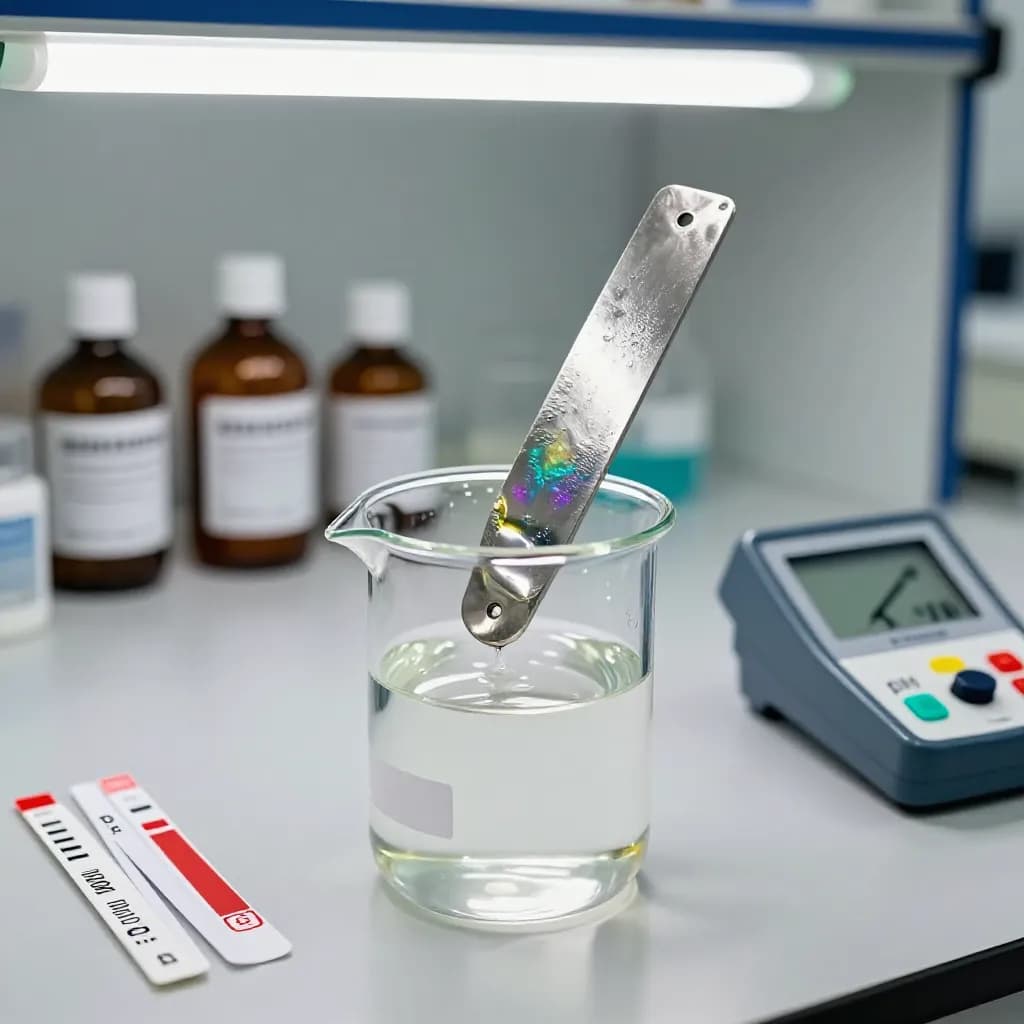
Organosilane pretreatments are based on silicon-containing organic molecules with the general structure R-Si(OR')₃, where R is an organic functional group (amino, epoxy, vinyl, or methacrylate) and OR' is a hydrolyzable alkoxy group (typically methoxy or ethoxy). When applied to a metal surface, the alkoxy groups hydrolyze to form silanol groups (Si-OH) that condense with hydroxyl groups on the metal oxide surface, creating strong Si-O-Metal covalent bonds. The organic functional group R extends outward from the surface and reacts with the powder coating resin during cure, forming covalent bonds to the coating as well.
Ready to Start Your Project?
From one-off customs to 15,000-part production runs — get precise pricing in 24 hours.
On This Page
Silane Pretreatment: Molecular-Level Adhesion Promotion
This dual-bonding mechanism — covalent attachment to both the substrate and the coating — provides adhesion that is fundamentally stronger than the mechanical interlocking and van der Waals forces that dominate adhesion on phosphate-pretreated surfaces. Silane pretreatments have been used as adhesion promoters in the glass fiber, sealant, and adhesive industries for decades and are now gaining significant traction in the metal finishing and powder coating markets.
Organosilane Chemistry and Hydrolysis Mechanism
The performance of silane pretreatments depends on the correct execution of a multi-step chemical process: hydrolysis of the alkoxy groups, application to the metal surface, condensation with surface hydroxyl groups, and crosslinking of the silane film. Each step must be controlled to produce an effective adhesion-promoting layer.
Hydrolysis is the first step, where the alkoxy groups (Si-OCH₃ or Si-OC₂H₅) react with water to form reactive silanol groups (Si-OH) and release alcohol (methanol or ethanol). This reaction is pH-dependent — it proceeds fastest at pH 3–5 for most silanes, which is why silane pretreatment solutions are typically adjusted to mildly acidic pH. The hydrolysis must be controlled to produce predominantly monomeric silanol species rather than oligomeric or polymeric condensation products, which are less effective at bonding to the metal surface.
Once hydrolyzed, the silanol groups condense with metal hydroxyl groups (M-OH) on the substrate surface through a dehydration reaction: Si-OH + HO-M → Si-O-M + H₂O. This reaction forms the covalent bond that anchors the silane molecule to the metal surface. Simultaneously, adjacent silane molecules condense with each other (Si-OH + HO-Si → Si-O-Si + H₂O), forming a crosslinked siloxane network on the surface. The resulting film is typically 10–100 nanometers thick — a true molecular monolayer to multilayer structure.
The organic functional group (R) is selected to be chemically compatible with the powder coating resin. Amino-functional silanes are the most versatile, reacting with epoxy, polyester, and hybrid powder chemistries. Epoxy-functional silanes provide excellent bonding to epoxy and hybrid powders. The choice of functional group is a key formulation decision that affects adhesion performance with specific powder coating systems.
Application Methods and Process Parameters
Silane pretreatments are applied as dilute aqueous solutions, typically at concentrations of 1–5% by volume in water. The application methods are the same as for other pretreatment chemistries — spray, immersion, or roll coating — making silane systems compatible with existing pretreatment equipment. Application temperature is typically ambient to 40°C, and contact time is 30–120 seconds for spray or 1–3 minutes for immersion.
The pH of the application solution is critical and must be maintained within the range specified by the silane supplier, typically pH 3.5–5.5. Below this range, the silane hydrolyzes too rapidly and may polymerize in solution before reaching the metal surface. Above this range, hydrolysis is too slow and the silane does not form reactive silanol groups efficiently. pH is monitored by meter and adjusted with dilute acid (typically acetic acid or phosphoric acid) as needed.
After application, the silane film must be dried to drive the condensation reactions to completion and remove residual water. Drying is typically performed in the existing dry-off oven at 80–120°C for 2–5 minutes. Inadequate drying leaves unreacted silanol groups that can absorb moisture and weaken the film. Excessive drying temperature (above 150°C) can degrade the organic functional group, reducing its reactivity with the powder coating. The drying step is more critical for silane pretreatments than for phosphate or zirconium systems, where the conversion coating is fully formed in the wet stage.
Bath life and stability vary by silane type and formulation. Some silane solutions have limited pot life (8–24 hours) once hydrolyzed, requiring frequent bath preparation. Modern commercial silane pretreatment products have been formulated for extended bath life (weeks to months) through stabilization chemistry, making them practical for continuous production operations.
Performance Characteristics and Adhesion Testing
The adhesion performance of silane pretreatments under powder coating is exceptional, often exceeding that of phosphate conversion coatings in both dry and wet adhesion testing. In cross-cut adhesion testing per ASTM D3359, silane-pretreated panels consistently achieve 5B ratings (no coating removal) on steel, aluminum, and galvanized substrates. More importantly, silane pretreatments maintain adhesion after exposure to moisture and humidity — a critical differentiator from some conversion coatings that lose adhesion under wet conditions.
Wet adhesion testing — where coated panels are immersed in water at 40°C for 240 hours and then tested for adhesion — is a demanding test that reveals the quality of the coating-substrate bond. Silane-pretreated panels typically retain 5B adhesion after water immersion, while iron phosphate-pretreated panels may degrade to 3B or 4B. This superior wet adhesion is attributed to the covalent Si-O-Metal bonds, which are hydrolytically stable, compared to the weaker hydrogen bonds and van der Waals forces that contribute to adhesion on phosphate surfaces.
Corrosion resistance in salt spray testing per ASTM B117 depends on the silane formulation and the powder coating system. Standalone silane pretreatments on steel typically achieve 300–750 hours of salt spray resistance — better than iron phosphate but generally below zinc phosphate. However, silane pretreatments combined with a thin zirconium or phosphate conversion coating (hybrid systems) can achieve 750–1,200 hours, approaching or matching zinc phosphate performance. Many commercial pretreatment products now incorporate both silane and zirconium chemistry in a single application step, leveraging the adhesion benefits of silane with the barrier properties of zirconium oxide.
Environmental Advantages and Regulatory Compliance
Silane pretreatments offer a compelling environmental profile that aligns with increasingly stringent regulations and corporate sustainability goals. The technology is completely free of heavy metals (no chromium, nickel, manganese, or zinc), phosphates, and regulated hazardous substances. The wastewater from silane pretreatment contains only trace amounts of silicon and organic compounds, both of which are readily biodegradable and non-toxic to aquatic organisms.
The absence of heavy metals eliminates the need for metals precipitation in wastewater treatment — a significant simplification compared to zinc phosphate systems that require pH adjustment, chemical precipitation, flocculation, and sludge dewatering to remove dissolved zinc and other metals. Silane pretreatment wastewater can often be discharged directly to the municipal sewer system after simple pH adjustment, subject to local permit requirements. This dramatically reduces wastewater treatment equipment, chemical consumption, and sludge disposal costs.
Sludge generation is essentially zero — silane pretreatments do not produce insoluble reaction byproducts that accumulate in the bath or settle in tanks. This eliminates sludge removal, dewatering, and disposal, which represent significant operating costs for zinc phosphate systems. The low operating temperature (ambient to 40°C) reduces energy consumption for bath heating by 50–70% compared to phosphate systems operating at 50–60°C.
Regulatory compliance is simplified because silane pretreatments do not contain substances regulated under REACH (EU), TSCA (US), or other chemical management frameworks as substances of very high concern (SVHC). This future-proofs the pretreatment process against anticipated regulatory tightening on phosphate discharge, nickel exposure, and other environmental and occupational health concerns associated with traditional pretreatment chemistries.
Multi-Metal Applications and Substrate Compatibility
Like zirconium pretreatments, silane systems offer excellent multi-metal compatibility. The silane bonding mechanism — condensation of silanol groups with surface metal hydroxyl groups — is effective on any metal that forms a stable oxide layer with surface hydroxyl groups. This includes steel, galvanized steel, aluminum (all common alloy series), zinc die castings, magnesium alloys, and copper alloys.
The multi-metal capability is particularly valuable for operations that process mixed substrates on the same pretreatment line. A single silane bath can treat steel and aluminum parts simultaneously without chemistry adjustments, producing effective adhesion-promoting films on both substrates. This eliminates the need for separate pretreatment lines, reduces chemical inventory, and simplifies process control.
Aluminum substrates respond particularly well to silane pretreatment. The aluminum oxide surface is rich in hydroxyl groups that react readily with silanol groups, forming a dense, well-bonded silane film. Adhesion and corrosion resistance on aluminum with silane pretreatment are typically equal to or better than chromate conversion coating — the traditional aluminum pretreatment that is being phased out due to hexavalent chromium health and environmental concerns. For facilities transitioning away from chromate on aluminum, silane pretreatment is a proven, high-performance alternative.
Galvanized steel and zinc die castings also respond well to silane pretreatment, though the zinc surface may require a mild acid activation step to remove zinc oxide and expose fresh hydroxyl groups for silane bonding. Some commercial silane products include this activation chemistry in the formulation, providing a single-step treatment for galvanized substrates.
Hybrid Systems and Future Developments
The most advanced pretreatment systems now combine silane chemistry with zirconium, titanium, or other inorganic components in hybrid formulations that leverage the strengths of each technology. These hybrid systems deposit a composite film containing both the covalent-bonding silane network and the barrier-forming inorganic oxide, providing adhesion and corrosion resistance that exceeds either component alone.
Silane-zirconium hybrid pretreatments are the most commercially developed hybrid systems, offered by major chemical suppliers as single-step application products. The silane component provides the adhesion-promoting covalent bonds to both substrate and coating, while the zirconium oxide component provides the dense barrier layer that inhibits corrosion. In salt spray testing, these hybrid systems routinely achieve 750–1,200 hours on steel — performance that matches zinc phosphate while maintaining the environmental and operational advantages of chrome-free, phosphate-free chemistry.
Future developments in silane pretreatment technology are focused on several areas: self-healing formulations that incorporate corrosion inhibitors released when the coating is damaged, providing active corrosion protection in addition to the passive barrier; sol-gel hybrid coatings that combine silane chemistry with ceramic nanoparticles for enhanced hardness and scratch resistance; and bio-based silane precursors derived from renewable feedstocks to further improve the environmental profile. The integration of silane pretreatment with Industry 4.0 monitoring — real-time bath analysis, automated chemical dosing, and predictive maintenance — is also advancing, enabling tighter process control and more consistent coating quality in high-volume production environments.
Frequently Asked Questions
How does silane pretreatment promote adhesion?
Silane molecules form covalent Si-O-Metal bonds to the substrate surface and covalent bonds to the powder coating resin through their organic functional group. This dual-bonding mechanism provides stronger adhesion than the mechanical interlocking and van der Waals forces that dominate on phosphate-pretreated surfaces.
What metals can be treated with silane pretreatment?
Silane pretreatment is effective on steel, galvanized steel, aluminum alloys, zinc die castings, magnesium alloys, and copper alloys. The bonding mechanism works on any metal with a stable oxide layer containing surface hydroxyl groups. Mixed substrates can be treated in the same bath.
How does silane compare to zinc phosphate in corrosion resistance?
Standalone silane pretreatments achieve 300–750 hours of salt spray resistance — better than iron phosphate but below zinc phosphate. Silane-zirconium hybrid systems achieve 750–1,200 hours, matching zinc phosphate performance while offering simpler process control and zero sludge generation.
Does silane pretreatment generate sludge?
No. Silane pretreatments produce essentially zero sludge because they do not generate insoluble reaction byproducts. This eliminates sludge removal, dewatering, and disposal costs that are significant operating expenses for zinc phosphate systems.
How critical is the drying step for silane pretreatment?
Very critical. The drying step at 80–120°C for 2–5 minutes drives the condensation reactions that form the covalent bonds to the substrate. Inadequate drying leaves unreacted silanol groups that absorb moisture and weaken the film. Excessive temperature above 150°C can degrade the organic functional group.
Ready to Start Your Project?
From one-off customs to 15,000-part production runs — get precise pricing in 24 hours.