Signage and wayfinding systems are the visual communication infrastructure of the built environment, guiding people through buildings, campuses, transportation networks, and public spaces. The finish quality of these systems directly affects their legibility, brand representation, and perceived quality — a faded, chalked, or corroded sign communicates neglect regardless of its informational content.
Commercial
Powder Coating for Signage and Wayfinding Systems: UV-Stable, Brand-Accurate Finishes
Sundial Powder Coating·April 22, 2026·11 min
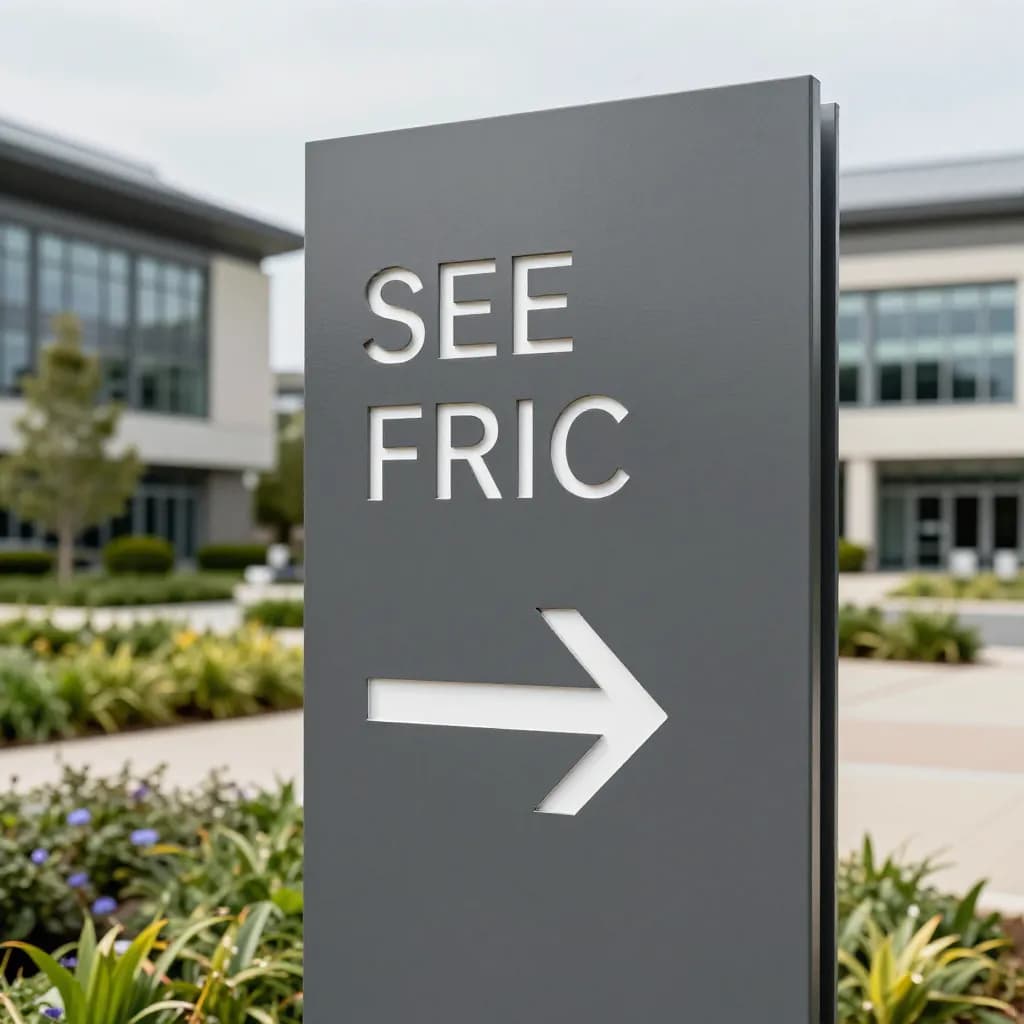
Powder coating has become the finish of choice for metal signage and wayfinding components, offering the color accuracy, UV stability, and durability that these high-visibility applications demand. From monumental exterior building signs to interior directional wayfinding, powder coating delivers consistent, long-lasting finishes that maintain their appearance and legibility for years without the fading and degradation that plague liquid-painted signage.
Ready to Start Your Project?
From one-off customs to 15,000-part production runs — get precise pricing in 24 hours.
On This Page
Powder Coating's Role in Modern Signage and Wayfinding
The signage industry encompasses an enormous range of product types, sizes, and installation environments. Exterior building identification signs may be 10 meters wide and exposed to full weather. Interior wayfinding directories operate in climate-controlled lobbies. Illuminated channel letters experience thermal cycling from internal lighting. Transit wayfinding must withstand vandalism and aggressive cleaning. Each application presents distinct coating requirements that powder coating technology can address through appropriate chemistry selection and application techniques.
Brand color accuracy is a non-negotiable requirement for corporate signage. A company's sign is often the first physical touchpoint a customer encounters, and color deviation from the brand standard undermines brand recognition and perceived quality. Powder coating's ability to match any color reference with spectrophotometric precision, and maintain that color over years of outdoor exposure, makes it the ideal technology for brand-critical signage applications.
Exterior Signage: Monument Signs, Pylons, and Building Letters
Exterior signage operates in the most demanding environment for any coating system, with continuous exposure to UV radiation, rain, temperature cycling, wind-borne debris, and atmospheric pollutants. The coating must maintain color accuracy and surface integrity for 10-15 years or more to justify the significant investment in fabrication and installation of exterior sign structures.
Monument signs — freestanding ground-level signs typically constructed from aluminum or steel panels on a structural frame — are among the most common exterior signage applications for powder coating. The large, flat panel surfaces of monument signs demand uniform color and gloss across the entire sign face, with no visible variation between panels fabricated at different times. Polyester powder coating at 60-80 microns, applied with automated spray equipment for consistent film thickness, delivers the visual uniformity these applications require.
Pylon signs — tall, pole-mounted signs visible from roadways — experience higher wind loads and greater UV exposure than ground-level signs. The structural steel poles and aluminum sign cabinets are powder coated for both corrosion protection and brand color presentation. Super-durable polyester powder coatings are recommended for pylon signs due to their elevated position and full-sky UV exposure, which accelerates color fade and gloss loss compared to partially shaded ground-level installations.
Dimensional building letters — individual cut-out letters mounted on building facades — are fabricated from aluminum, stainless steel, or painted steel and powder coated to the brand color specification. The complex geometry of letter forms, with their curves, angles, and return edges, benefits from powder coating's electrostatic wrap-around effect, which provides more uniform coverage than liquid spray application. Letter returns (the side faces of dimensional letters) are particularly challenging to coat uniformly with liquid paint but receive consistent coverage with electrostatic powder application.
Post-and-panel sign systems for campus and park wayfinding use powder-coated aluminum or steel posts with interchangeable panel inserts. The posts must withstand years of outdoor exposure while maintaining a professional appearance. The panel inserts may be powder-coated aluminum with applied vinyl graphics, or directly screen-printed onto the powder-coated surface. In either case, the powder coating provides the durable, UV-stable base finish that protects the substrate and provides the background color for the sign's graphic content.
Interior Wayfinding and Directional Signage Systems
Interior wayfinding systems — the directories, directional signs, room identification plaques, and informational displays that guide people through buildings — operate in controlled environments but face their own set of coating challenges related to aesthetics, tactile requirements, and integration with architectural finishes.
Modular wayfinding systems use powder-coated aluminum extrusions as the structural framework for interchangeable sign panels. These systems are designed for buildings where signage content changes frequently — office buildings with rotating tenants, hospitals with evolving department layouts, and educational institutions with changing room assignments. The powder-coated frame must maintain its appearance through years of panel changes, with the coating resisting scratching and wear at panel insertion points.
The color palette for interior wayfinding is typically coordinated with the building's interior design scheme and the organization's brand identity. Neutral tones (silver, grey, white, black) are common for wayfinding frames, with brand accent colors used for directional arrows, department coding, and highlighting. The ability to match specific brand colors with delta E ≤ 1.0 accuracy ensures that wayfinding signage reinforces rather than conflicts with the organization's visual identity.
Surface finish selection for interior signage balances aesthetics with practicality. Matte and satin finishes (gloss levels of 20-40 at 60° geometry) are preferred for wayfinding because they minimize glare that can reduce legibility under artificial lighting. These lower-gloss finishes also show fingerprints and handling marks less readily than high-gloss alternatives, maintaining a clean appearance in high-traffic areas.
Suspended wayfinding signs — overhead directional signs hung from ceilings in corridors, lobbies, and transit stations — are viewed from below and at a distance, making color consistency and surface quality critical. Any variation in color or gloss between adjacent suspended signs is immediately apparent. Powder coating's batch-to-batch consistency and uniform application ensure visual harmony across multi-sign installations.
Digital integration is an emerging trend in wayfinding, with powder-coated metal housings enclosing digital displays for dynamic content. The coating on these housings must be compatible with the thermal management requirements of the electronic components, providing adequate heat dissipation while maintaining the desired aesthetic finish.
Illuminated Signage and Channel Letter Applications
Illuminated signage — including channel letters, light boxes, and backlit panels — presents unique coating challenges related to thermal management, light interaction, and the need for both opaque and translucent finishes within the same sign assembly.
Channel letters are three-dimensional letter forms with internal LED illumination that creates a glowing face or halo effect. The letter returns (sides) and backs are typically fabricated from aluminum and powder coated in the brand color or a neutral finish. The coating on channel letter returns must withstand the thermal cycling caused by LED operation — internal temperatures can reach 50-70°C during illumination and drop to ambient when the sign is off. Standard polyester powder coatings handle this temperature range without difficulty, but the repeated cycling over years of operation tests adhesion and flexibility.
Front-lit channel letters use translucent acrylic or polycarbonate faces that transmit the internal LED illumination. The powder-coated aluminum returns frame these translucent faces, and the coating color and finish must complement the illuminated appearance of the letter. Dark-colored returns (black, dark grey, dark bronze) create a strong contrast that makes the illuminated face appear brighter, while color-matched returns create a more integrated daytime appearance.
Halo-lit (reverse channel) letters mount with the open face against the building wall, projecting light backward to create a glowing halo effect around each letter. The front face of these letters — the visible surface facing the viewer — is powder coated to the brand color and must present a flawless finish because it is viewed at close range in daylight. The interior surface, which reflects LED light toward the wall, is typically coated in white to maximize light reflection and halo brightness.
Light box signs use powder-coated aluminum or steel frames to house illuminated panels. The frame coating must resist the UV radiation emitted by fluorescent or LED light sources within the box, in addition to external UV from sunlight. While LED sources emit minimal UV, older fluorescent-lit boxes can cause internal coating degradation if UV-sensitive powder chemistries are used.
The electrical safety of illuminated signage requires that metal components be properly grounded, and the powder coating must not interfere with grounding connections. Grounding points are typically left uncoated or have the coating removed at specific locations to ensure metal-to-metal contact for electrical continuity.
UV Stability and Color Retention for Outdoor Applications
UV stability is the most critical performance parameter for exterior signage coatings. Solar UV radiation breaks down the chemical bonds in organic coatings, causing color fade, gloss loss, and chalking that progressively degrade the sign's appearance and legibility. For brand-critical signage, maintaining color accuracy over the sign's service life is essential for consistent brand presentation.
Standard polyester powder coatings provide good UV resistance for most exterior signage applications, maintaining acceptable color and gloss for 8-12 years in moderate UV environments. The polyester resin backbone is inherently more UV-stable than epoxy or acrylic chemistries, and the addition of UV absorbers (benzotriazole or triazine types) and hindered amine light stabilizers (HALS) further extends UV resistance.
Super-durable polyester powder coatings, formulated with UV-stabilized resins and enhanced stabilizer packages, extend color retention to 15-20 years in moderate environments and 10-15 years in high-UV locations. These formulations meet AAMA 2604 requirements (5 years South Florida exposure) and approach AAMA 2605 performance (10 years South Florida exposure), making them suitable for premium signage applications where long-term color accuracy is critical.
Fluoropolymer powder coatings (PVDF/FEVE-based) offer the ultimate UV resistance, maintaining color and gloss for 20-30 years in full outdoor exposure. These coatings are specified for the most demanding signage applications — high-profile corporate headquarters signs, transportation infrastructure signage, and installations in extreme UV environments such as desert and tropical locations.
Color selection affects UV performance. Dark colors and saturated hues generally show fade more noticeably than light colors and pastels because the organic pigments used to achieve deep colors are more susceptible to UV degradation. Red and yellow pigments are particularly vulnerable, while blues and greens tend to retain color better. For brand colors that include UV-sensitive pigments, specifying super-durable or fluoropolymer powder coatings provides the additional UV protection needed to maintain color accuracy.
Orientation and shading significantly influence UV exposure and coating degradation rate. South-facing signs (in the Northern Hemisphere) receive 2-3 times more UV radiation than north-facing signs, and unshaded signs degrade faster than those partially shaded by building overhangs or adjacent structures. These factors should be considered when specifying coating durability for specific sign locations.
ADA Compliance and Tactile Signage Requirements
The Americans with Disabilities Act (ADA) and equivalent accessibility regulations in other jurisdictions impose specific requirements on signage that affect both the design and coating of wayfinding elements. Powder coating plays a direct role in meeting several of these requirements.
ADA-compliant room identification signs must include raised characters and Grade 2 Braille to be readable by touch. These tactile elements are typically fabricated as raised features on a powder-coated aluminum or acrylic substrate. When the tactile elements are metal, they are powder coated along with the sign background, and the coating must maintain a consistent, smooth surface on the raised characters that is comfortable to touch and does not obscure the character edges that enable tactile reading.
Color contrast between text and background is an ADA requirement for visual accessibility. The standard specifies a minimum 70% contrast ratio between the lightest and darkest elements of the sign. Powder coating's precise color control enables designers to achieve exact contrast ratios, and the coating's resistance to fading ensures that the contrast is maintained over the sign's service life. Light text on a dark background (e.g., white on dark blue or black) provides the highest contrast and is the most common configuration for ADA-compliant signage.
Non-glare finishes are recommended by ADA guidelines to prevent reflections that reduce legibility for people with low vision. Matte powder coating finishes (gloss levels below 20 at 60° geometry) minimize specular reflection and improve readability under various lighting conditions. Eggshell and satin finishes (gloss 20-40) offer a compromise between glare reduction and aesthetic appeal.
Mounting height and projection requirements for ADA signage (signs must be mounted at 48-60 inches above the floor with characters raised at least 1/32 inch) do not directly affect the coating specification but influence the sign's design and fabrication, which in turn determine the coating application requirements.
Tactile wayfinding maps and directional indicators for visually impaired users are increasingly specified in public buildings, transit stations, and healthcare facilities. These three-dimensional map elements are fabricated from powder-coated metal with raised features representing corridors, rooms, and landmarks. The coating must provide consistent color coding that assists partially sighted users while maintaining the tactile clarity required for users who read by touch.
Brand Color Accuracy and Quality Control for Signage
Brand color accuracy in signage is not merely an aesthetic preference — it is a business requirement with measurable impact on brand recognition, customer trust, and corporate identity consistency. Major brands invest heavily in defining and protecting their signature colors, and signage is one of the most visible applications where color accuracy is scrutinized.
The color matching process for brand signage begins with the brand's color specification, which may be defined in Pantone, RAL, NCS, or proprietary color systems. Powder coating manufacturers use spectrophotometric measurement to formulate powders that match the target color within agreed tolerances. For critical brand colors, the typical acceptance tolerance is delta E ≤ 0.5 (measured with a multi-angle spectrophotometer for metallic colors), tighter than the delta E ≤ 1.0 standard for general architectural applications.
Metamerism — the phenomenon where two colors appear to match under one light source but differ under another — is a particular concern for signage that is viewed under both daylight and artificial illumination. A sign that matches the brand color perfectly in daylight may appear noticeably different under the sodium or LED lighting used for nighttime illumination. Powder coating manufacturers address metamerism by formulating with pigment combinations that minimize spectral differences across common illuminant types (D65 daylight, F11 fluorescent, A incandescent).
Production quality control for brand signage coatings includes spectrophotometric measurement of every powder batch against the approved master standard, with release only if all measurements fall within the agreed tolerance. Coated sign components are measured at multiple points to verify color uniformity, and retained samples from each production batch provide traceability for warranty and quality investigation purposes.
Multi-location brand rollouts — where identical signage is produced for hundreds or thousands of locations — require exceptional color consistency across production runs that may span months or years. Centralized powder supply from a single manufacturer, combined with standardized application parameters and regular inter-site color audits, ensures that signs produced at different times and locations present a consistent brand image.
The interaction between powder coating color and applied graphics (vinyl lettering, digital prints, screen printing) must be considered in the sign design. The powder coating provides the background color, and any graphics applied over it must be compatible with the coating surface. Smooth polyester powder coatings provide excellent adhesion for pressure-sensitive vinyl and screen-printed inks, while heavily textured finishes may require mechanical fastening of graphic elements.
Frequently Asked Questions
How long does powder coating maintain color accuracy on outdoor signs?
Standard polyester powder coatings maintain acceptable color for 8-12 years outdoors. Super-durable polyester extends this to 15-20 years. Fluoropolymer coatings provide 20-30 years of color retention. Actual performance depends on UV exposure, orientation, and the specific pigments used — reds and yellows fade faster than blues and greens.
Can powder coating match exact brand colors for signage?
Yes. Powder coating matches any brand color reference (Pantone, RAL, NCS, or custom) with spectrophotometric accuracy of delta E ≤ 0.5 for critical applications. Metamerism is minimized through careful pigment selection to ensure consistent appearance under daylight and artificial illumination.
Is powder coating suitable for ADA-compliant tactile signage?
Yes. Powder coating provides the consistent, smooth surface needed for raised characters and Braille, maintains the 70% minimum contrast ratio between text and background over time, and is available in non-glare matte finishes that improve legibility for people with low vision.
How does powder coating perform on illuminated channel letters?
Powder coating handles the 50-70°C thermal cycling from LED illumination without difficulty. Standard polyester coatings are rated for continuous service at 80-120°C. The coating provides durable color on letter returns and faces, with white interior coatings maximizing light reflection for halo-lit applications.
What finish is best for wayfinding signage to reduce glare?
Matte finishes with gloss levels below 20 at 60° geometry minimize specular reflection and improve readability. Satin finishes (gloss 20-40) offer a good compromise between glare reduction and aesthetic appeal. These low-gloss finishes also show fingerprints less readily in high-traffic areas.
Ready to Start Your Project?
From one-off customs to 15,000-part production runs — get precise pricing in 24 hours.