Car wash facilities subject their equipment to one of the most aggressive corrosion environments in commercial operations. The combination of continuous water exposure, concentrated cleaning chemicals, UV radiation on outdoor components, mechanical wear from moving parts, and the salt and road chemicals carried in on vehicles creates conditions that destroy unprotected metal within months. Powder coating is the primary defense against this multi-factor assault, providing the barrier protection and chemical resistance needed to maintain equipment integrity and appearance through years of car wash operations.
Commercial
Powder Coating for Car Wash Equipment: Water, Chemical, UV, and Mechanical Wear Protection
Sundial Powder Coating·April 22, 2026·10 min
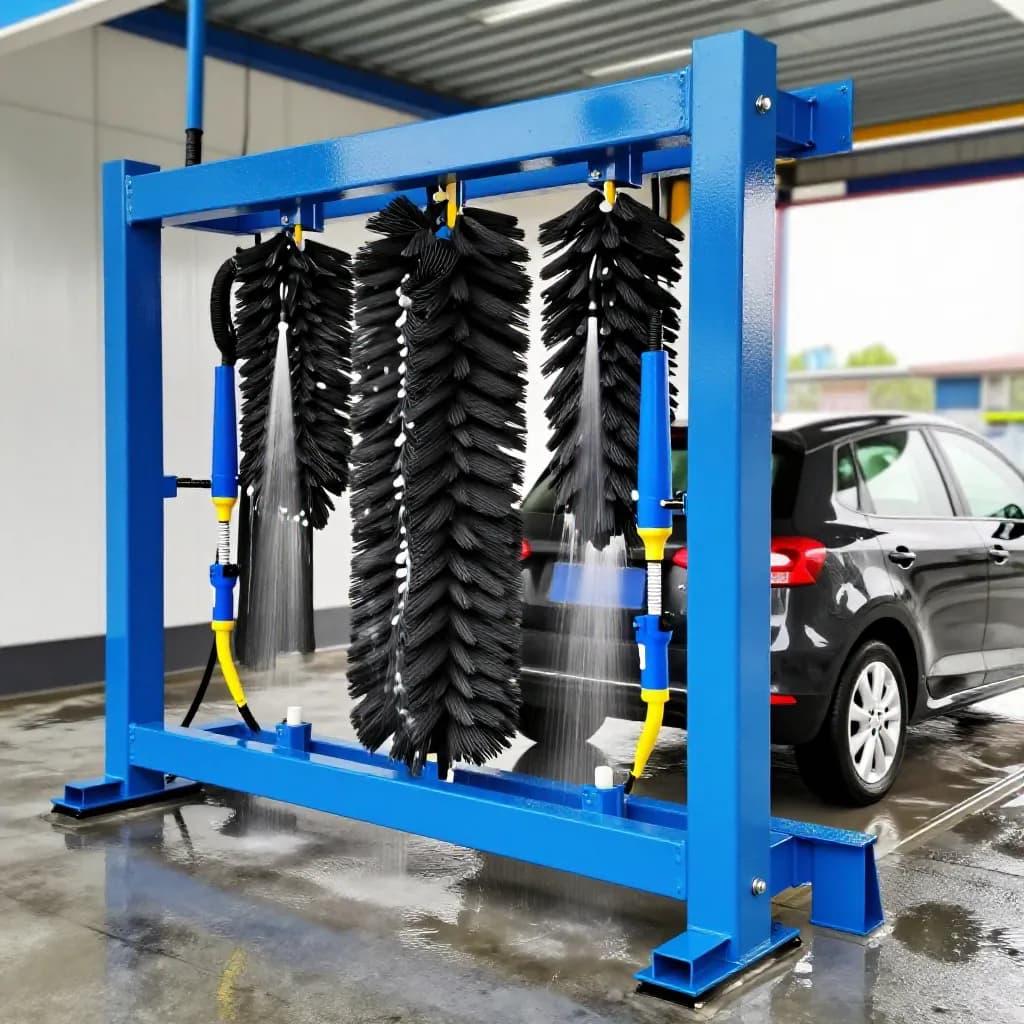
The car wash industry operates equipment worth hundreds of thousands of dollars per location, with expected service lives of 15-20 years for major components. The coating system on this equipment directly affects maintenance costs, equipment longevity, and the facility's visual presentation to customers. A well-maintained car wash with clean, bright equipment communicates quality and care, while corroded, peeling equipment suggests neglect that undermines customer confidence.
Ready to Start Your Project?
From one-off customs to 15,000-part production runs — get precise pricing in 24 hours.
On This Page
Car Wash Equipment: The Ultimate Corrosion Challenge
Car wash chemicals are formulated for maximum cleaning effectiveness, which often means maximum aggressiveness to surfaces. Pre-soak solutions are highly alkaline (pH 12-13), tire cleaners contain strong acids, drying agents contain surfactants and silicones, and spot-free rinse systems use deionized water that is surprisingly corrosive to some metals. The powder coating must resist this full spectrum of chemical exposure without degradation.
This article examines the specific powder coating technologies, specifications, and maintenance strategies that deliver optimal performance in car wash environments, covering everything from the tunnel equipment to the vacuum stations to the facility signage.
Tunnel Equipment and Wash Bay Components
The car wash tunnel contains the most intensively exposed equipment in the facility. Conveyor frames, arch structures, brush mounts, nozzle manifolds, and chemical dispensing equipment operate in a continuous spray of water and chemicals throughout every operating hour. The coating on tunnel equipment must provide absolute moisture barrier performance combined with resistance to the full range of car wash chemicals.
Conveyor system frames and guide rails are the structural backbone of tunnel car washes. These heavy steel components are submerged in or continuously splashed with water containing car wash chemicals, road salt washed from vehicles, and the grit and debris removed during the wash process. Zinc-rich epoxy primer under a polyester topcoat provides the maximum corrosion protection for conveyor components, with the zinc primer providing cathodic protection at any coating breach.
Wash arch structures that support brushes, nozzles, and blowers are exposed to direct chemical spray from multiple angles. The coating on arch structures must resist chemical attack from above (dripping chemicals), from the sides (spray deflection), and from below (splash-back from the vehicle surface). Complete coating coverage with no holidays or thin spots is essential — any uncoated area will develop corrosion rapidly in the tunnel environment.
Chemical dispensing equipment including pump housings, manifold assemblies, and injection systems handles concentrated car wash chemicals before dilution. The coating on these components must resist the concentrated chemical formulations, which are far more aggressive than the diluted solutions that contact the vehicle. Epoxy powder coatings provide the chemical resistance needed for concentrated chemical contact.
Drying system components including blower housings, nozzle assemblies, and air knife structures operate in a high-velocity air environment that accelerates moisture evaporation but also drives water droplets into coating defects with force. The coating on drying system components must be free from pinholes and holidays that could allow moisture penetration under the pressure of high-velocity air.
Lighting fixtures within the tunnel must withstand the constant water and chemical spray while providing the illumination needed for equipment operation and customer visibility. Powder-coated lighting housings with appropriate IP ratings (minimum IP65 for tunnel environments) protect both the lighting components and the coating from the aggressive tunnel atmosphere.
Chemical Resistance for Car Wash Products
Car wash chemical resistance is the defining specification requirement for powder coating in this application. The range of chemicals used in modern car wash operations spans the full pH spectrum from strongly acidic to strongly alkaline, with additional challenges from surfactants, solvents, and specialty additives.
Pre-soak and detergent solutions are strongly alkaline (pH 12-13) and contain high concentrations of surfactants designed to penetrate and lift road film, bug residue, and other contaminants from vehicle surfaces. These alkaline solutions attack ester bonds in some coating systems and can penetrate micro-pores in the coating surface. Epoxy-polyester hybrid powder coatings provide the alkali resistance needed for continuous pre-soak exposure.
Tire and wheel cleaners are often acidic (pH 1-3), containing hydrofluoric acid, phosphoric acid, or other strong acids that dissolve brake dust and road film from wheels. These acids are among the most aggressive chemicals in the car wash chemical lineup and can etch or dissolve some coating systems on contact. Equipment in the tire cleaning zone requires epoxy-based powder coating with verified acid resistance.
Triple foam and polish products contain surfactants, waxes, and colorants that deposit on equipment surfaces. While these products are less chemically aggressive than pre-soaks and tire cleaners, the wax and colorant content can stain some coating systems if allowed to accumulate. Regular cleaning of equipment in the polish application zone prevents staining buildup.
Spot-free rinse systems use reverse osmosis or deionized water that, counterintuitively, is more corrosive to some metals than tap water. The absence of dissolved minerals makes deionized water an aggressive solvent that can leach ions from metal surfaces and some coating systems. Equipment in the spot-free rinse zone should be coated with formulations tested for resistance to deionized water exposure.
Rust inhibitor and protectant chemicals applied as final treatments contain organic acids and surfactants that provide temporary corrosion protection to vehicles but can affect equipment coatings with prolonged exposure. These chemicals are typically less aggressive than the cleaning chemicals but add to the cumulative chemical load on equipment coatings.
Outdoor Equipment and UV Protection
Car wash facilities include significant outdoor equipment — vacuum stations, mat cleaning machines, vending equipment, signage, and canopy structures — that must withstand UV radiation, weather exposure, and the same chemical environment as tunnel equipment. The coating on outdoor car wash equipment must combine the chemical resistance needed for car wash operations with the UV stability needed for outdoor durability.
Vacuum station islands are the most visible outdoor equipment at most car wash facilities. These stations include vacuum machine housings, hose reels, fragrance dispensers, and the structural island that houses them. Powder coating on vacuum stations must resist UV fading to maintain the bright, clean appearance that attracts customers, while also withstanding the chemical overspray and water exposure from adjacent wash operations.
Super-durable polyester powder coatings provide the UV resistance needed for outdoor car wash equipment, maintaining color and gloss for 10-15 years in most climates. For facilities in high-UV environments — the American Southwest, tropical regions, or high-altitude locations — fluoropolymer-modified formulations provide enhanced UV protection that extends the coating's aesthetic life.
Canopy and building structures at car wash facilities serve both functional and branding purposes. Steel canopy columns, beam structures, and fascia panels are powder coated in brand colors that identify the facility from the road. These structural elements require both the UV resistance of outdoor coatings and the chemical resistance of car wash coatings, as chemical overspray and wind-carried mist contact canopy surfaces throughout operations.
Pay station kiosks and customer interface equipment are outdoor electronics housings that must protect sensitive payment and control systems from weather and chemical exposure. Powder coating on these housings provides corrosion protection, UV resistance, and the electrical insulation needed to protect electronic components. The finish quality on pay stations contributes to the customer's first impression of the facility.
Fencing, gates, and perimeter structures define the car wash property and control vehicle flow. These elements are exposed to weather and chemical overspray and are often the first elements to show corrosion in a car wash facility. Powder coating on perimeter structures with appropriate pretreatment and film thickness prevents the unsightly corrosion that undermines the facility's professional appearance.
Mechanical Wear and Impact Protection
Car wash equipment experiences mechanical wear from multiple sources — moving parts in contact with each other, vehicles contacting guide rails and equipment, and the abrasive action of water carrying grit and debris at high velocity. The powder coating must withstand these mechanical forces while maintaining its barrier protection against water and chemicals.
Conveyor guide rails and vehicle guide structures experience direct contact with vehicle tires, wheels, and body panels. The coating on these components must resist the abrasion of tire rubber, the impact of wheel contact, and the scratching from vehicle body panels that contact the guides. Thick-film powder coating at 125-175 microns provides the material depth needed to absorb this wear without exposing the substrate.
Brush and cloth wash media mounting hardware experiences the vibration and mechanical stress of rotating wash media. The coating at mounting points must withstand the fatigue stress of continuous vibration during operating hours. Flexible powder coating formulations that accommodate vibration-induced flexing without cracking provide the best performance at these dynamic stress points.
High-pressure nozzle assemblies and spray bar structures experience the erosive force of high-pressure water (800-1,500 PSI) that can wear coating surfaces over time. While the water is not directed at the equipment, deflection and overspray create erosive conditions on nearby surfaces. Hard, erosion-resistant powder coating formulations minimize the wear from high-pressure water contact.
Vehicle entry and exit equipment — including tire sensors, gate arms, and traffic control devices — experience direct vehicle contact and the mechanical stress of repeated operation. The coating on these components must withstand both the impact of vehicle contact and the fatigue of thousands of operation cycles per month. High-impact-resistance powder coating with reinforced thickness at contact points provides the durability needed for this demanding application.
Maintenance access panels, equipment covers, and service doors are opened and closed frequently during equipment maintenance. The coating on these components must withstand the handling wear of maintenance operations, including tool contact, hinge wear, and the impact of panels being opened against stops. Reinforced coating at hinge points and handle areas extends the service life of maintenance access components.
Brand Identity and Customer Experience
Car wash facilities compete for customers based on convenience, quality, and visual appeal. The facility's appearance — including the condition and color of equipment, structures, and signage — directly influences customer choice and willingness to pay premium pricing. Powder coating is the primary tool for creating and maintaining the branded visual environment that drives car wash business success.
Brand color consistency across all facility elements — from the tunnel equipment to the vacuum stations to the building facade — creates the professional, cohesive appearance that customers associate with quality service. Powder coating enables this consistency because the same color can be applied to diverse substrates and component types, ensuring visual unity across the entire facility.
Signage and wayfinding elements guide customers through the car wash process and reinforce brand recognition. Powder-coated sign structures, directional arrows, and informational displays maintain their visual impact through years of outdoor exposure, unlike printed or vinyl signs that fade and deteriorate. Three-dimensional powder-coated lettering and logos create premium signage that communicates quality and permanence.
Safety markings and traffic control elements use powder coating in high-visibility colors to guide vehicles and protect pedestrians. Yellow bollards, red emergency stop housings, and reflective-striped guide posts all benefit from powder coating that maintains color accuracy and visibility through years of outdoor exposure and chemical contact.
Customer waiting areas and lounge spaces in premium car wash facilities feature powder-coated furniture and fixtures that create a comfortable, branded environment. These customer-facing elements should be finished to a higher aesthetic standard than operational equipment, with design-forward colors and finishes that communicate the premium positioning of the facility.
Nighttime visibility is important for car wash facilities that operate during evening hours. Powder-coated equipment and structures in light or bright colors reflect artificial lighting effectively, maintaining the facility's visual appeal after dark. Reflective powder coating formulations that incorporate glass bead or prismatic elements enhance nighttime visibility of safety-critical elements like bollards and traffic guides.
Maintenance and Recoating Strategies
Maintaining powder-coated car wash equipment requires a proactive approach that accounts for the accelerated wear rate of the car wash environment. Regular inspection, prompt repair of coating damage, and planned recoating cycles maximize equipment life and maintain the facility's visual standards.
Daily operational checks should include visual inspection of tunnel equipment for coating damage caused by vehicle contact, chemical exposure, or mechanical wear. Any coating breach in the tunnel environment will develop corrosion rapidly due to the continuous water and chemical exposure. Identifying and marking damage for repair during the next maintenance window prevents corrosion from spreading beneath the intact coating.
Weekly cleaning of all equipment surfaces removes chemical residue that accumulates during operations. Car wash chemicals that remain on equipment surfaces between cleaning cycles create concentrated chemical exposure that accelerates coating degradation. Rinsing equipment with clean water at the end of each operating day removes the bulk of chemical residue, with weekly detailed cleaning addressing areas that daily rinsing misses.
Monthly inspection should evaluate coating condition on high-wear components including conveyor guides, brush mounts, and chemical dispensing equipment. Measure film thickness at representative locations to track coating wear over time. When film thickness drops below 50% of the original specification, plan for recoating before the coating fails to provide adequate protection.
Touch-up procedures for minor coating damage should use two-component epoxy or polyurethane repair coatings that provide chemical resistance comparable to the original powder coating. Color-matched touch-up paint applied to clean, dry, abraded surfaces provides adequate protection for small damaged areas. For larger damaged areas, professional repair with localized media blasting and spray application of liquid coating provides a more durable repair.
Recoating planning should anticipate the need for professional refinishing of tunnel equipment every 5-8 years and outdoor equipment every 8-12 years, depending on the specific chemical program and environmental conditions. Scheduling recoating during planned equipment overhauls minimizes operational disruption. Some car wash equipment manufacturers offer factory recoating services that restore original finish quality.
End-of-life assessment for heavily corroded equipment should evaluate whether recoating is cost-effective compared to replacement. If substrate corrosion has compromised structural integrity, replacement is necessary regardless of coating condition. If the substrate is sound but the coating has failed, professional stripping and recoating can restore the equipment at 30-50% of replacement cost.
Frequently Asked Questions
What powder coating chemistry works best for car wash equipment?
Epoxy-polyester hybrid coatings provide the best balance of chemical resistance and UV stability for most car wash applications. Pure epoxy coatings offer maximum chemical resistance for tunnel equipment not exposed to UV. Super-durable polyester is needed for outdoor equipment requiring UV resistance. Zinc-rich epoxy primer adds cathodic protection for the most critical structural components.
How long does powder coating last on car wash tunnel equipment?
Properly specified and maintained powder coating on tunnel equipment typically lasts 5-8 years before recoating is needed. Outdoor equipment with super-durable polyester coatings lasts 8-12 years. These service lives assume regular cleaning to remove chemical residue and prompt repair of any coating damage to prevent corrosion spread.
Can powder coating resist the strong acids in tire cleaners?
Epoxy-based powder coatings provide the best resistance to the hydrofluoric and phosphoric acids used in tire and wheel cleaners. Equipment in the tire cleaning zone should be specified with epoxy coating and verified acid resistance. Even resistant coatings benefit from prompt rinsing to minimize acid contact time.
How should car wash equipment coating damage be repaired?
Minor damage can be repaired with color-matched two-component epoxy or polyurethane touch-up paint applied to clean, dry, abraded surfaces. Larger damaged areas require professional repair with localized media blasting and spray application. Any coating breach in the tunnel environment should be repaired promptly to prevent rapid corrosion development.
What film thickness is recommended for car wash equipment?
Tunnel equipment should be coated at 100-150 microns minimum, with 125-175 microns on high-wear surfaces like conveyor guides. Outdoor equipment needs 80-100 microns of super-durable polyester. Zinc-rich epoxy primer adds 25-50 microns to the total system thickness for maximum corrosion protection on critical structural components.
Ready to Start Your Project?
From one-off customs to 15,000-part production runs — get precise pricing in 24 hours.