Schools and universities present a distinctive combination of challenges for architectural surface finishes. These buildings must withstand intense daily use by large populations — often thousands of students, staff, and visitors — while maintaining a safe, attractive, and inspiring learning environment. The metalwork in educational buildings, from external cladding and window systems to internal handrails, lockers, and furniture, is subjected to levels of mechanical abuse that exceed most other building types.
Architecture
Powder Coating for School and University Buildings: Durability, Safety, and Sustainability
Sundial Powder Coating·April 22, 2026·12 min
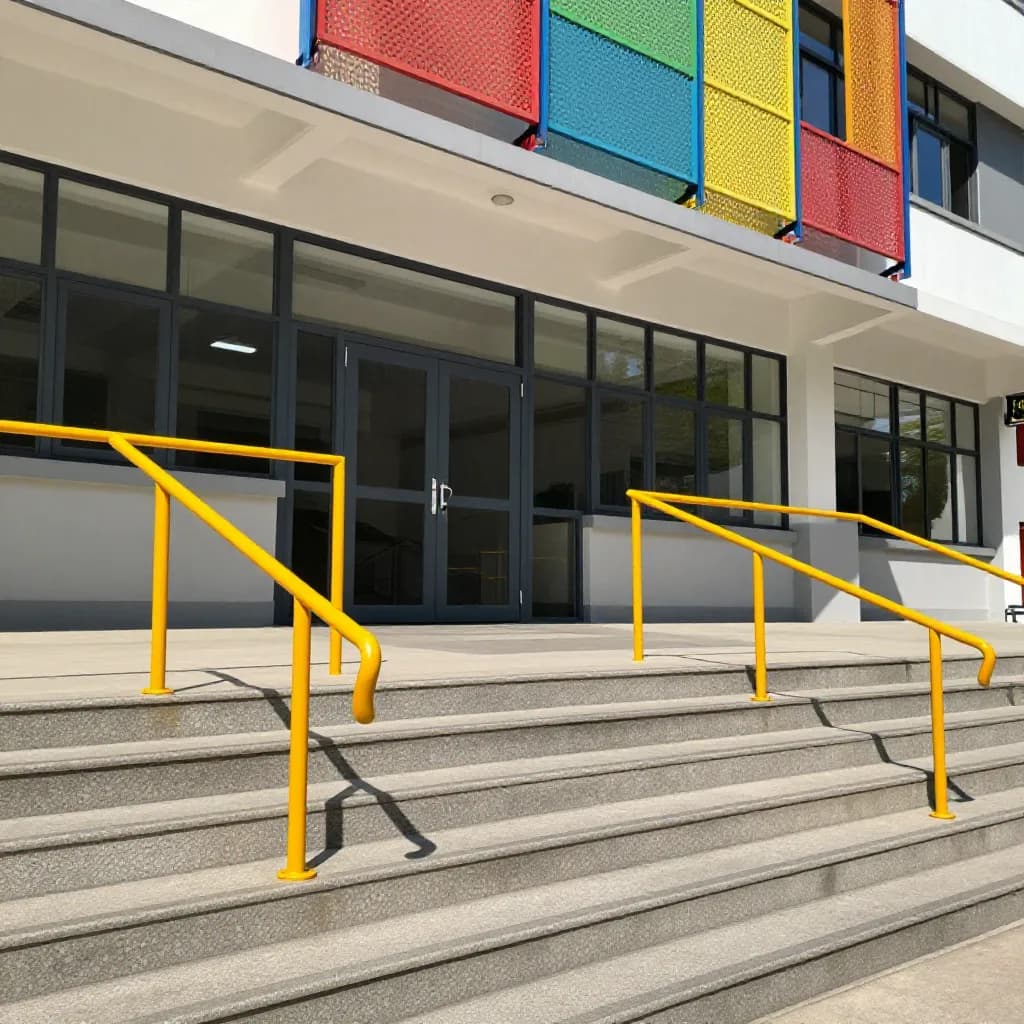
Powder coating has become the standard specification for metalwork in educational architecture precisely because it meets these demands. Applied at 60-120 microns — more than double the 25-50 micron film thickness of liquid paint — powder coating provides the mechanical robustness needed to resist scratching, impact damage, and deliberate vandalism. The thermoset polymer film is harder and more abrasion-resistant than liquid paint, maintaining its appearance through years of heavy use.
Ready to Start Your Project?
From one-off customs to 15,000-part production runs — get precise pricing in 24 hours.
On This Page
Educational Buildings: Unique Demands on Surface Finishes
Beyond durability, educational buildings must comply with stringent safety regulations, support inclusive design principles, and increasingly demonstrate environmental responsibility. Powder coating addresses all of these requirements: achieving A1/A2 Euroclass fire ratings on aluminum substrates, providing consistent safety colors for wayfinding and hazard identification, and contributing zero VOC emissions to support green building certifications. This article examines how powder coating technology serves the specific needs of schools, colleges, and universities across both new construction and renovation projects.
Vandal Resistance and Anti-Graffiti Performance
Vandalism is an unavoidable reality in educational environments, and surface finishes must be specified with this in mind. Graffiti, scratching, impact damage from kicked doors and thrown objects, and deliberate attempts to peel or chip coatings are all common occurrences. A finish that cannot withstand this treatment quickly becomes unsightly, undermining the learning environment and requiring costly remediation.
Powder coating's inherent hardness — typically rated at H to 2H on the pencil hardness scale — provides excellent scratch resistance compared to liquid paints, which are generally softer and more easily marked. The 60-120 micron film thickness means that even when surface scratches occur, they rarely penetrate to the substrate, maintaining corrosion protection and reducing the visual impact of damage.
Anti-graffiti powder coatings take vandal resistance further. These formulations create a low-surface-energy finish that prevents paint, marker, and adhesive from bonding permanently to the surface. Graffiti can be removed with standard cleaning agents without damaging the underlying coating, and the anti-graffiti properties are maintained through multiple cleaning cycles — unlike sacrificial anti-graffiti systems that must be reapplied after each cleaning event.
For high-risk areas such as external walls, toilet partitions, locker banks, and stairwell handrails, specifying anti-graffiti powder coating eliminates the cycle of damage and repainting that plagues liquid-painted surfaces in schools. The long-term cost savings are substantial: a single anti-graffiti powder coating application can outlast five or more liquid paint recoating cycles in a typical school environment, each of which involves not only material and labor costs but also disruption to the educational program.
Safety Colors, Wayfinding, and Inclusive Design
Color plays a critical functional role in educational buildings beyond aesthetics. Safety colors defined by ISO 3864 and EN ISO 7010 must be applied consistently to hazard identification elements including fire equipment, emergency exits, and safety barriers. Wayfinding systems rely on color differentiation to help students, staff, and visitors navigate complex campus layouts. Inclusive design principles require sufficient color contrast between surfaces to support users with visual impairments.
Powder coating delivers the color precision and long-term consistency that these applications demand. The full RAL Classic and RAL Design color systems are available, along with custom color matching to any reference standard. Critically, powder coating maintains its color accuracy over time — accelerated weathering tests to ISO 11341 confirm that super-durable polyester formulations retain color within Delta E values of less than 5 after the equivalent of 10 years of exterior exposure. This means safety colors remain clearly identifiable and wayfinding systems remain functional throughout the building's service life.
For inclusive design compliance with standards such as BS 8300 and the Equality Act 2010, powder coating provides the precise control over luminance contrast ratios needed to differentiate doors from frames, handrails from walls, and stair nosings from treads. The ability to specify exact RAL or NCS colors with defined lightness values allows designers to achieve the minimum 30-point difference in Light Reflectance Value (LRV) required for visual accessibility.
The durability of powder-coated safety colors is particularly important in schools, where high traffic and frequent cleaning can rapidly degrade liquid paint finishes. Faded or worn safety markings create compliance risks and potential liability — a concern eliminated by powder coating's superior color retention and abrasion resistance.
High-Traffic Durability: Corridors, Stairwells, and Common Areas
The circulation spaces in educational buildings experience foot traffic densities comparable to transport hubs. School corridors, university stairwells, and common areas may see thousands of passages per day, with metalwork subjected to continuous contact from bags, equipment, wheelchairs, and cleaning machinery. Surface finishes in these areas must maintain both appearance and protective function under sustained mechanical stress.
Powder coating's performance advantage in high-traffic areas stems from its film properties. The thermoset cross-linked polymer matrix is inherently harder and more elastic than thermoplastic liquid paint films, allowing it to absorb impact energy without cracking or delaminating. Abrasion resistance testing to ISO 7784 (Taber abrasion) demonstrates that powder coatings retain significantly more film thickness after standardized wear cycles than equivalent liquid paint systems.
Handrails and balustrades in stairwells are particularly demanding applications. These elements are gripped, leaned on, slid along, and impacted by bags and equipment throughout the school day. Powder-coated handrails maintain their smooth, hygienic surface through years of this treatment, while liquid-painted handrails typically show visible wear patterns within 2-3 years, exposing substrate metal and creating both aesthetic and corrosion concerns.
Door frames and kick plates represent another critical application. In schools, doors are subjected to far more aggressive use than in most building types — kicked open, slammed shut, propped with furniture, and impacted by trolleys. Powder coating's combination of hardness and flexibility allows it to withstand this abuse without the chipping and flaking that rapidly degrades liquid paint on door furniture. The result is metalwork that maintains its intended appearance and protective function throughout the typical 5-7 year redecoration cycle of educational buildings, often extending well beyond it.
Sustainability Credits and Environmental Education
Educational institutions are increasingly expected to demonstrate environmental leadership, both in their operations and in the design of their buildings. Green building certifications such as LEED, BREEAM, and Green Star have become standard requirements for new school and university construction, and the specification of building materials directly influences the credits achievable under these schemes.
Powder coating contributes to multiple sustainability credit categories. The zero VOC emission characteristic supports credits for low-emitting materials and indoor environmental quality — particularly important in schools where children and young people may be more susceptible to the health effects of poor indoor air quality. The 95-98% material utilization efficiency of powder coating application supports waste reduction credits, contrasting sharply with the 30-70% transfer efficiency of liquid paint systems.
The lifecycle environmental impact of powder coating also compares favorably. A 2024 lifecycle assessment comparing powder and liquid coating systems for architectural aluminum found that powder coating generated 40-60% lower greenhouse gas emissions per square meter of coated surface over a 30-year assessment period, primarily due to higher material efficiency, elimination of solvent production and disposal, and reduced recoating frequency.
Beyond certification credits, the visible sustainability of powder-coated buildings supports the educational mission of schools and universities. Buildings that demonstrably incorporate low-impact materials and technologies serve as teaching tools, reinforcing environmental awareness among students. Some institutions have incorporated their building's sustainability features — including powder coating specification — into curriculum materials, using the built environment as a practical case study in sustainable design and materials science.
External Envelope: Facades, Windows, and Solar Shading
The external envelope of educational buildings must balance energy performance, daylighting, acoustic control, and aesthetic quality within typically constrained budgets. Powder-coated aluminum systems — including curtain walls, window frames, rainscreen cladding, and solar shading devices — provide the performance and design flexibility needed to meet these competing requirements.
For facades, super-durable polyester powder coatings certified to Qualicoat Class 2 or AAMA 2605 deliver 20-25 years of color and gloss retention, ensuring that the building maintains its intended appearance throughout its service life. This is particularly important for educational institutions where building condition directly influences community perception and enrollment decisions. The wide color palette available in powder coating allows architects to create vibrant, engaging facades that reflect institutional identity and create welcoming environments for students.
Solar shading systems — including brise-soleil, external louvres, and perforated screens — are increasingly specified on educational buildings to control solar gain and reduce cooling energy consumption. These elements are fully exposed to weather and UV radiation, making coating durability critical. Powder coating's 60-120 micron film thickness and UV-stable polyester chemistry provide the long-term protection these exposed elements require, maintaining both appearance and corrosion resistance without the frequent maintenance that liquid-painted shading systems demand.
Window systems in schools must meet demanding thermal performance standards while providing adequate ventilation and daylighting. Powder-coated aluminum window frames achieve the required thermal break performance while offering the color flexibility to coordinate with facade design. The ability to specify different colors on interior and exterior faces of window profiles allows architects to maintain a cohesive external appearance while using lighter, more reflective colors internally to maximize daylight distribution in classrooms.
Sports Facilities, Playgrounds, and External Metalwork
Educational campuses include extensive external metalwork beyond the main building envelope. Sports facilities, playground equipment, bicycle shelters, fencing, gates, signage, and outdoor furniture all require durable, safe surface finishes that can withstand weather exposure, heavy use, and the particular demands of environments used by children and young people.
For playground equipment and sports facilities, powder coating must meet specific safety requirements. EN 1176 (playground equipment safety) and EN 15312 (free access multi-sports equipment) include requirements for surface finish quality, including absence of sharp edges, resistance to finger entrapment, and non-toxic composition. Powder coatings meet all of these requirements, and the smooth, continuous film formed by the electrostatic application process eliminates the drips, runs, and brush marks that can create rough surfaces on liquid-painted equipment.
Corrosion protection is critical for external metalwork in educational settings, where maintenance budgets are often limited and equipment is expected to remain in service for 15-20 years. Powder coating on galvanized steel — a duplex system combining the sacrificial protection of zinc with the barrier protection of the powder film — provides exceptional corrosion resistance even in aggressive environments. This system is widely specified for fencing, gates, and structural steelwork on school campuses.
The color durability of powder coating is also important for external educational metalwork. Safety colors on playground equipment, school zone markings on fencing, and institutional branding on signage must remain clearly visible throughout their service life. Powder coating's superior UV resistance ensures that these colors maintain their intended appearance, avoiding the faded, neglected look that develops on liquid-painted external metalwork within a few years of installation.
Renovation and Refurbishment of Existing Educational Buildings
The majority of educational building work involves renovation and refurbishment of existing structures rather than new construction. Upgrading surface finishes during renovation projects presents specific challenges: work must often be completed during school holidays, disruption to adjacent occupied areas must be minimized, and the finishes must integrate with existing building elements that are being retained.
Powder coating offers significant advantages for renovation projects. Because powder coatings contain no solvents, there are no VOC emissions during application — eliminating the need for extensive ventilation and air quality monitoring that solvent-based liquid paints require. This is particularly important when coating work is performed in or adjacent to occupied educational spaces, where student and staff health must be protected.
For metalwork that can be removed from the building — such as window frames, door furniture, handrails, and locker systems — off-site powder coating provides the highest quality finish with zero on-site disruption. Components are stripped of existing coatings, pretreated to ensure adhesion, powder coated, and returned for reinstallation. This approach delivers factory-quality finishes that are impossible to achieve with on-site liquid painting.
The lifecycle economics of powder coating are particularly compelling in renovation contexts. The higher durability of powder coating means that the next recoating cycle is pushed further into the future, reducing the frequency of disruptive renovation work. For a school that might otherwise repaint metalwork every 8-10 years with liquid paint, switching to powder coating during a renovation can extend the interval to 20-25 years — potentially eliminating an entire recoating cycle within the building's remaining service life. The 95-98% material efficiency of powder application also minimizes waste generation on renovation projects, supporting the waste management plans required by most educational construction procurement frameworks.
Frequently Asked Questions
How does powder coating resist vandalism in schools?
Powder coating's 60-120 micron film thickness and H to 2H pencil hardness provide excellent scratch and impact resistance. Anti-graffiti powder coatings create a low-surface-energy finish that prevents paint and marker from bonding permanently, allowing removal with standard cleaners without damaging the coating.
Does powder coating help schools achieve green building certification?
Yes. Powder coating contributes to LEED, BREEAM, and Green Star credits through zero VOC emissions, 95-98% material utilization efficiency, and reduced lifecycle environmental impact. These credentials support credits for low-emitting materials, waste reduction, and indoor environmental quality.
How long does powder coating last on school buildings?
Powder coating on architectural aluminum lasts 20-25 years before recoating is needed, compared to 8-12 years for liquid paint. In high-traffic school environments, this extended service life significantly reduces maintenance costs and disruption to educational programs.
Is powder coating safe for playground equipment?
Yes. Powder coatings meet EN 1176 playground equipment safety requirements, providing smooth, non-toxic surfaces free from drips and rough edges. The durable film resists chipping that could create sharp edges, and the coating contains no harmful solvents or volatile compounds.
Can powder coating be applied during school renovation projects?
Yes. Powder coating produces zero VOC emissions, eliminating air quality concerns when work occurs near occupied spaces. Metalwork can be removed for off-site powder coating during holidays, delivering factory-quality finishes with minimal on-site disruption to the educational program.
What safety colors are available in powder coating for schools?
The full RAL Classic and RAL Design color systems are available, including all ISO 3864 safety colors. Powder coating maintains color accuracy with Delta E values below 5 after equivalent of 10 years exposure, ensuring safety markings and wayfinding systems remain clearly identifiable throughout the building's life.
Ready to Start Your Project?
From one-off customs to 15,000-part production runs — get precise pricing in 24 hours.