Scandinavian architecture — encompassing the building traditions and contemporary design of Norway, Sweden, Denmark, Finland, and Iceland — has evolved in direct response to one of the world's most challenging climates for building envelopes. The Nordic climate is characterized by long, dark winters with limited daylight (as few as 4-6 hours at 60°N latitude in December), temperatures ranging from -10°C to -30°C in winter, moderate summers with extended daylight, and annual precipitation of 500-1,200 mm including significant snowfall.
Architecture
Powder Coating in Scandinavian Architecture: Dark Winters, Reflective Finishes, Sustainability, and Passive House
Sundial Powder Coating·April 22, 2026·11 min
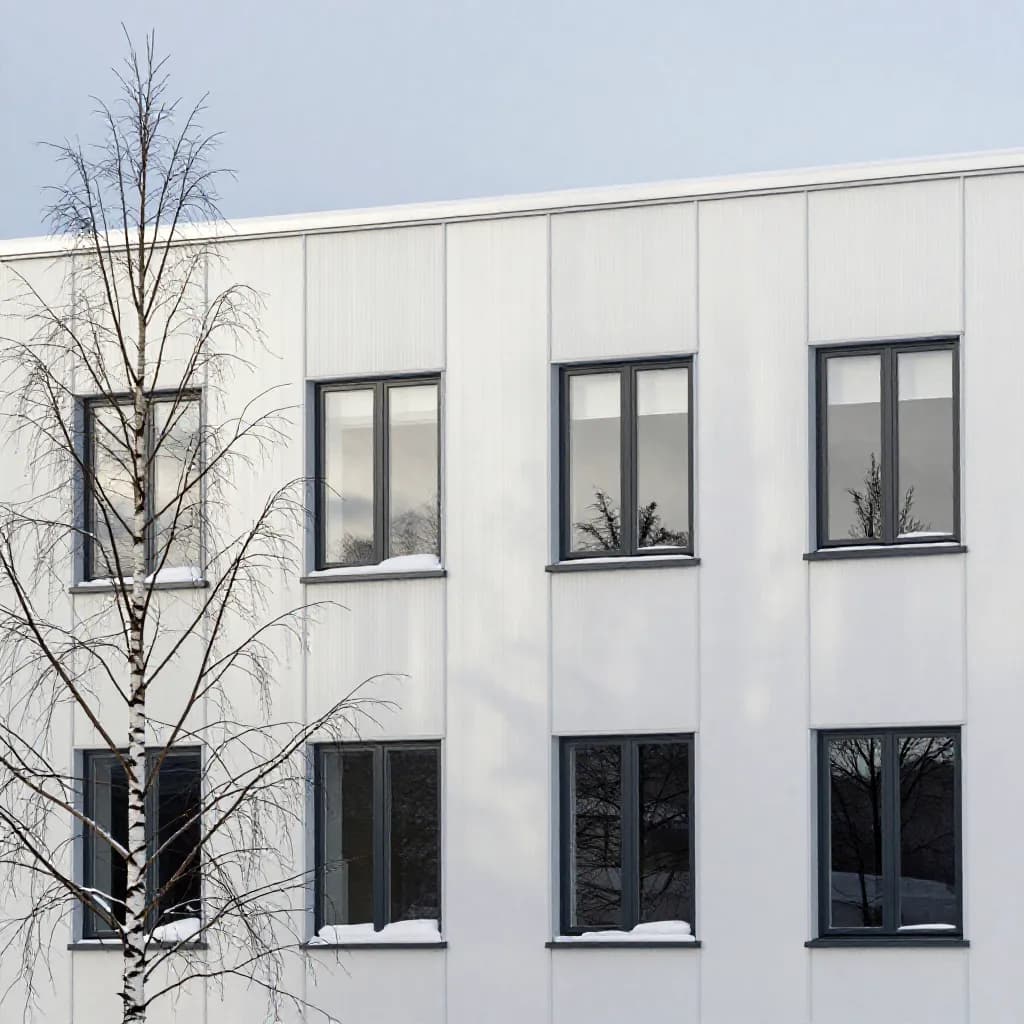
This climate creates specific demands on powder-coated building components that differ from both tropical and continental environments. The limited winter daylight makes reflective and light-colored finishes architecturally important for maximizing natural light in urban environments. The cold temperatures require coating flexibility and impact resistance at sub-zero conditions. The wet, maritime climate of coastal Scandinavia demands robust corrosion protection. And the strong Nordic commitment to sustainability and energy efficiency drives specification toward environmentally responsible coating systems.
Ready to Start Your Project?
From one-off customs to 15,000-part production runs — get precise pricing in 24 hours.
On This Page
Scandinavian Architecture and the Nordic Climate
Powder-coated aluminum has become the dominant facade material in contemporary Scandinavian architecture, replacing traditional timber cladding on commercial buildings and increasingly on residential projects. The combination of design flexibility, durability, fire safety, and environmental credentials aligns perfectly with Scandinavian architectural values of functional beauty, longevity, and environmental responsibility.
The Scandinavian powder coating industry is among the most technically advanced in the world, with applicators routinely achieving Qualicoat Class 2 and Class 3 certification and a strong culture of quality control and environmental management. This technical excellence supports the demanding specifications required by Nordic architects and building regulations.
Reflective Finishes for Dark Winter Environments
The extended darkness of Scandinavian winters — with the sun barely rising above the horizon for months in northern regions — has profoundly influenced architectural design and, consequently, powder coating specification. Maximizing the reflection and diffusion of available natural and artificial light is a core design objective that directly affects color and finish selection for powder-coated facades.
Light-colored powder coatings with high visible light reflectance (VLR) are widely specified for Scandinavian urban buildings. White and light gray facades with VLR values of 70-85% reflect ambient light into streets and courtyards, significantly improving the perceived brightness of outdoor spaces during the dark months. This light-reflecting function is particularly important in dense urban environments where building facades form the primary reflective surfaces.
Metallic and pearlescent powder coating finishes are popular in Scandinavian architecture for their ability to interact dynamically with changing light conditions. The aluminum or mica flake pigments in these finishes create directional reflectance that changes appearance with viewing angle and light direction — an effect that adds visual interest to facades during the low-angle winter sunlight and the long twilight periods characteristic of Nordic latitudes.
Matte and low-gloss finishes (below 30 GU at 60°), while reducing specular reflection, provide diffuse light scattering that can be equally effective at brightening urban spaces without the glare associated with high-gloss surfaces. Scandinavian architects frequently specify matte finishes for their understated aesthetic, which aligns with the Nordic design tradition of restrained elegance.
The interaction between powder coating finish and artificial lighting is also considered in Scandinavian facade design. Buildings in northern cities are often illuminated during the dark months, and the powder coating finish affects how artificial light is reflected and perceived. Warm-toned metallic finishes can create a welcoming glow under artificial illumination, while cool-toned matte finishes provide a calm, contemporary appearance.
Sustainability and Environmental Credentials
Sustainability is not merely a marketing consideration in Scandinavian construction — it is a fundamental design principle embedded in building regulations, procurement practices, and cultural expectations. The Nordic countries consistently lead global sustainability rankings, and their construction industries reflect this commitment through rigorous environmental requirements for building materials and systems.
Powder coating's environmental credentials align strongly with Scandinavian sustainability values. The zero-VOC application process eliminates solvent emissions, contributing to indoor and outdoor air quality. The 95-98% material utilization rate minimizes waste. The absence of hazardous solvents simplifies waste management and eliminates the need for solvent abatement equipment. And the long service life of properly specified powder coatings reduces the lifecycle environmental impact of facade maintenance.
Environmental Product Declarations (EPDs) — standardized documents quantifying the environmental impact of building products across their lifecycle — are increasingly required for powder-coated aluminum systems in Scandinavian projects. EPDs following EN 15804 provide data on global warming potential, ozone depletion, acidification, eutrophication, and resource depletion, enabling architects to make informed material selections based on quantified environmental performance.
The Nordic Swan Ecolabel and EU Ecolabel certification for powder coatings provide additional environmental assurance. These labels require compliance with criteria covering hazardous substance content, energy efficiency of the coating process, waste management, and product performance. Specifying ecolabeled powder coatings demonstrates environmental commitment and can contribute to green building certification credits.
Circular economy principles are increasingly applied to powder-coated aluminum in Scandinavian construction. Aluminum is infinitely recyclable with only 5% of the energy required for primary production, and powder coatings do not prevent aluminum recycling. Design for disassembly — using mechanical fasteners rather than adhesives to enable future separation and recycling of facade components — is a growing practice in Scandinavian architecture that powder-coated aluminum systems readily accommodate.
Passive House Compatibility and Thermal Performance
The passive house (Passivhaus) standard — which originated in Germany but has been widely adopted across Scandinavia — sets extremely demanding requirements for building envelope thermal performance. Passive house buildings achieve heating energy demand below 15 kWh/m²/year through super-insulation, airtight construction, and elimination of thermal bridges. Powder-coated aluminum facade components must be designed and specified to support these performance targets.
Thermal break technology in aluminum window and curtain wall profiles is essential for passive house compliance. Modern thermally broken profiles use polyamide (PA66) or polyurethane foam insulating bars to separate the interior and exterior aluminum sections, achieving frame U-values of 0.8-1.2 W/m²K. The powder coating must maintain adhesion and integrity across the thermal break, where differential thermal movement between the warm interior and cold exterior sections creates cyclic stress at the coating-profile interface.
Airtightness requirements for passive house construction (maximum 0.6 air changes per hour at 50 Pa pressure) demand precise sealing of all facade joints and penetrations. Powder-coated aluminum profiles must be compatible with the sealants and gaskets used to achieve airtightness, and the coating surface must provide adequate adhesion for sealant bonding. Smooth, clean powder coating surfaces generally provide good sealant adhesion, but compatibility testing with the specific sealant system is recommended.
The color and finish of powder-coated facades can contribute to passive house energy performance through solar heat gain management. In Scandinavian climates, where heating demand dominates over cooling, dark-colored south-facing facades can provide beneficial solar heat gain during the heating season. Conversely, light-colored finishes on east and west facades minimize unwanted solar gain during summer. This selective use of color for thermal management is an emerging design strategy in Nordic passive house architecture.
Moisture management at the facade-insulation interface is critical for passive house buildings in Scandinavian climates. The thick insulation layers (300-500 mm) required for passive house performance create cold zones within the wall assembly where condensation can occur. Ventilated rainscreen facades with powder-coated aluminum cladding provide an effective moisture management strategy, with the ventilated cavity removing moisture before it can damage the insulation or structure.
Cold-Climate Performance Requirements
Scandinavian winter conditions impose specific performance requirements on powder coatings that go beyond standard architectural specifications designed for temperate climates. Temperatures of -20°C to -30°C are common across much of Scandinavia, with extreme lows reaching -40°C in northern Finland and Sweden.
Low-temperature flexibility is essential for powder coatings on Scandinavian buildings. Window and door profiles are subject to mechanical stress during operation in cold weather — opening, closing, and locking forces are transmitted through the coated profile. If the coating is brittle at low temperatures, these mechanical stresses can cause cracking at stress concentration points such as corners, screw holes, and gasket grooves. Polyurethane powder coatings, with their superior low-temperature flexibility, are preferred for operable fenestration components in Scandinavian applications.
Ice and snow loading on powder-coated surfaces creates both mechanical and chemical challenges. The weight of accumulated ice can deform thin-gauge aluminum components, stressing the coating at bend points. Ice removal — whether by mechanical scraping, chemical de-icers, or thermal methods — can damage the coating if not performed carefully. Specifying smooth, high-gloss finishes reduces ice adhesion and facilitates gentler removal methods.
De-icing chemicals used on Scandinavian roads and walkways — primarily sodium chloride and calcium chloride — splash onto building facades at ground level, creating a localized corrosive environment. Powder coatings on ground-floor facade elements and entrance systems should be specified with enhanced salt spray resistance (minimum 1,000 hours per ISO 9227) and regular cleaning to remove salt deposits before they cause damage.
Freeze-thaw cycling is a persistent stress in Scandinavian climates, with 50-100+ freeze-thaw cycles per year in many locations. Water that penetrates joints, drainage channels, or coating defects expands by approximately 9% upon freezing, generating forces that can delaminate coatings and propagate cracks. Design details that prevent water accumulation and ensure complete drainage are essential for long-term coating performance in Scandinavian conditions.
Nordic Color Palettes and Design Trends
Scandinavian architectural color palettes reflect the Nordic landscape, light conditions, and cultural aesthetic — and these preferences directly influence powder coating specification and production. The dominant trend in contemporary Scandinavian architecture is toward muted, nature-inspired colors that integrate buildings with their surroundings while providing visual warmth during the dark winter months.
Grays — from warm silver-grays to cool blue-grays — are the most widely specified colors for Scandinavian commercial and institutional buildings. RAL 7016 (Anthracite Grey), RAL 7021 (Black Grey), RAL 7035 (Light Grey), and RAL 7040 (Window Grey) are perennial favorites, along with custom gray formulations that incorporate subtle warm or cool undertones. These neutral colors provide a sophisticated backdrop that complements both the natural landscape and the clean lines of Nordic architectural design.
Black powder coatings — RAL 9005 (Jet Black) and RAL 9017 (Traffic Black) — are increasingly popular for Scandinavian residential and small commercial buildings, creating a dramatic contrast with snow-covered landscapes and light-colored interiors. The challenge with black coatings in Scandinavian conditions is maintaining deep, consistent color over time; even slight chalking or fading is highly visible on black surfaces. Super-durable or fluoropolymer formulations are essential for black exterior applications.
Warm earth tones — terracotta, ochre, and warm brown — are used to reference traditional Scandinavian building colors, particularly the iconic Falu red (Falun red) of Swedish timber architecture. Powder coating formulations that replicate these traditional colors on modern aluminum facades allow architects to create contemporary buildings that resonate with regional building traditions.
Wood-effect sublimation transfer finishes on powder-coated aluminum are gaining popularity in Scandinavian residential architecture, providing the warm aesthetic of timber cladding with the durability and fire performance of aluminum. These finishes are particularly valued in urban areas where fire regulations restrict the use of combustible timber cladding on multi-story buildings.
Quality Standards and Specification Practice
Scandinavian powder coating specification practice is characterized by high quality expectations, rigorous standard compliance, and a strong emphasis on documented performance. The Nordic construction industry's culture of quality and transparency creates a demanding but well-defined specification environment for powder coating applicators and suppliers.
Qualicoat certification is the baseline quality requirement for architectural powder coating in Scandinavia. Qualicoat Class 1.5 is the minimum for standard architectural applications, with Class 2 specified for premium facades and Class 3 (fluoropolymer) for landmark buildings and applications requiring maximum longevity. Qualicoat Seaside certification is required for coastal locations — a significant consideration given Scandinavia's extensive coastline.
GSB International certification is also widely recognized in Scandinavian markets, with GSB Master representing the highest quality tier. Some Scandinavian specifications require dual certification (both Qualicoat and GSB) to provide maximum assurance of coating quality and performance.
Nordic building regulations impose specific requirements for fire performance of facade materials. Powder-coated aluminum achieves Euroclass A2-s1,d0 (limited combustibility, no smoke, no flaming droplets), meeting the most stringent facade fire requirements without additional fire-retardant treatments. This fire performance is a significant advantage over combustible cladding materials in the Nordic regulatory environment.
Environmental management certification (ISO 14001) and occupational health and safety certification (ISO 45001) are increasingly required for powder coating applicators serving the Scandinavian market. These certifications demonstrate systematic management of environmental impacts and worker safety — values that align with the Nordic emphasis on responsible business practices.
Warranty expectations in Scandinavian markets are typically 15-25 years for architectural powder coatings, with warranty terms covering color retention (maximum Delta E 3-5), gloss retention (minimum 50% of initial), adhesion, and freedom from cracking, peeling, and blistering. These warranty terms are backed by the Qualicoat or GSB certification system, which provides an independent framework for performance verification and dispute resolution.
Frequently Asked Questions
Why are reflective powder coating finishes important in Scandinavia?
Scandinavian winters have as few as 4-6 hours of daylight at northern latitudes. Light-colored and metallic powder coatings with high visible light reflectance (70-85%) reflect available natural and artificial light into streets and courtyards, significantly improving perceived brightness in urban environments during the dark months.
How does powder coating support passive house construction?
Powder-coated thermally broken aluminum profiles achieve frame U-values of 0.8-1.2 W/m²K for passive house compliance. The coating maintains integrity across thermal breaks despite differential movement. Ventilated rainscreen facades with powder-coated cladding provide effective moisture management for the thick insulation layers (300-500 mm) required.
What sustainability credentials does powder coating offer for Nordic projects?
Zero VOC emissions, 95-98% material utilization, no hazardous solvents, and 20-25 year service life. Environmental Product Declarations (EPDs) per EN 15804 quantify lifecycle impacts. Nordic Swan and EU Ecolabel certifications are available. Aluminum substrate is infinitely recyclable at 5% of primary production energy.
What quality certifications are required for Scandinavian architectural powder coating?
Qualicoat Class 1.5 minimum for standard applications, Class 2 for premium facades, and Class 3 for landmark buildings. Qualicoat Seaside for coastal locations. GSB Master certification is also widely recognized. Dual Qualicoat/GSB certification provides maximum quality assurance. ISO 14001 environmental management is increasingly required.
How do powder coatings perform in Scandinavian winter conditions?
Coatings must maintain flexibility at -20°C to -30°C. Polyurethane formulations offer superior low-temperature flexibility for operable fenestration. Smooth, high-gloss finishes reduce ice adhesion. Ground-level facades need enhanced salt spray resistance (1,000+ hours) due to de-icing chemical splash. Design must prevent water accumulation to avoid freeze-thaw damage.
Ready to Start Your Project?
From one-off customs to 15,000-part production runs — get precise pricing in 24 hours.