The sample approval process is the bridge between what you envision for your coated product and what the coating supplier delivers in production. It is the point at which abstract specifications — color numbers, gloss ranges, texture descriptions — become physical reality that can be seen, touched, and measured. Skipping or rushing this process is one of the most common causes of coating quality disputes, project delays, and costly rework.
Guides
Powder Coating Sample Approval Process: From Color Panels to Production Trials
Sundial Powder Coating·April 22, 2026·11 min
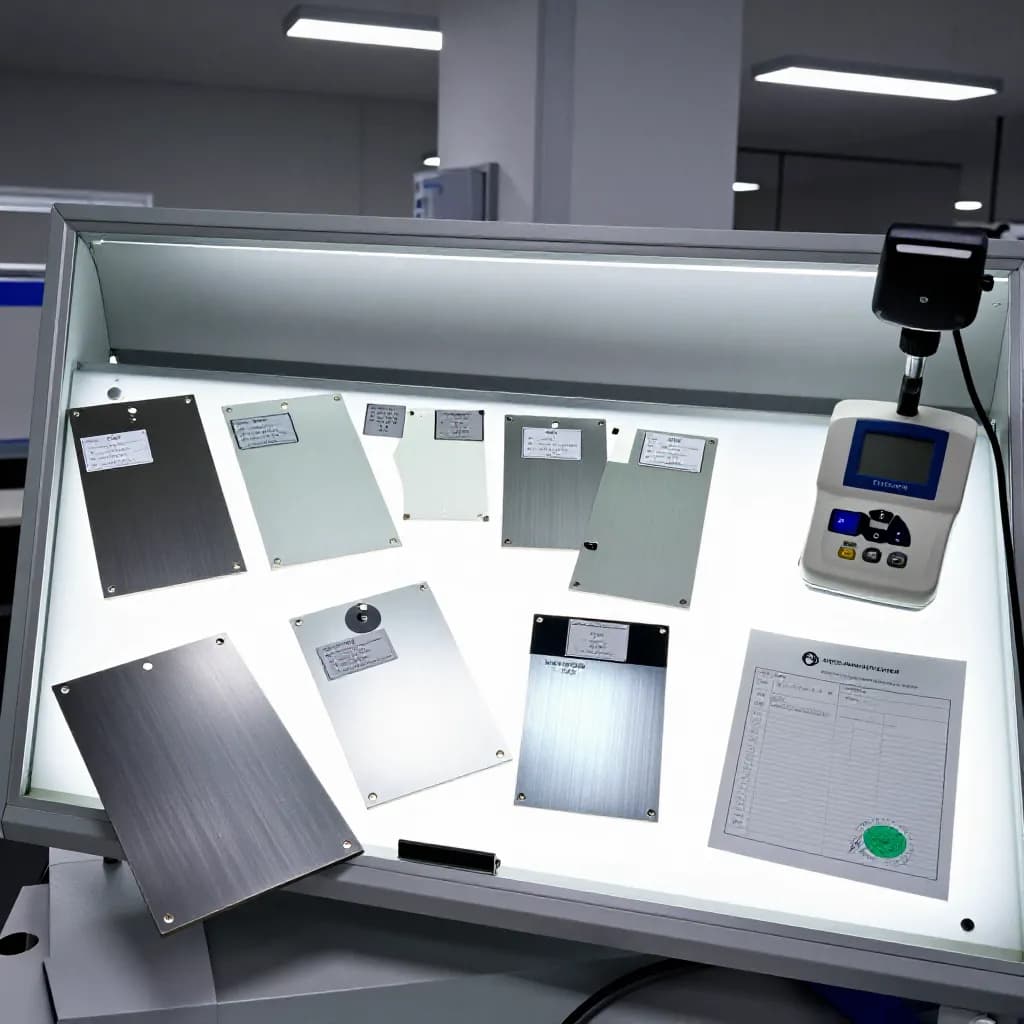
A robust sample approval process serves several essential functions. It confirms that the specified color, gloss, and texture can be achieved on the actual substrate material with the intended powder product. It establishes a physical reference standard against which production output will be judged. It identifies potential issues — such as color metamerism, texture inconsistency, or substrate-related defects — before they affect production quantities. And it creates a documented agreement between buyer and supplier that prevents subjective disputes about what constitutes acceptable quality.
Ready to Start Your Project?
From one-off customs to 15,000-part production runs — get precise pricing in 24 hours.
On This Page
Why Sample Approval Is Critical for Coating Quality
The level of formality required in the sample approval process should match the criticality of the application. A decorative interior component may need only a simple color check against a RAL fan deck. An architectural facade visible from a public thoroughfare demands formal sample panels evaluated under controlled conditions with signed approval documentation. This guide covers the full spectrum of sample approval practices, from basic color verification to comprehensive production trial protocols.
Color Sample Panels: Production and Evaluation
Color sample panels are the foundation of the approval process. These are test panels coated with the specified powder on a substrate representative of the production parts, allowing the buyer to evaluate the actual appearance of the coating before committing to production.
Request sample panels on the same substrate material and alloy as the production parts. Color appearance is influenced by substrate type, surface roughness, and alloy composition — a sample on a smooth aluminum panel may look noticeably different from the same powder on a textured steel surface or a cast aluminum component. Specify the panel size — larger panels (minimum 150mm x 300mm, preferably 300mm x 300mm for architectural applications) provide a more representative impression of how the color will appear at scale than small swatches.
Evaluate sample panels under the lighting conditions in which the finished product will be viewed. Daylight (north-facing window light or D65 standard illuminant), fluorescent, LED, and incandescent lighting can all cause the same color to appear different — a phenomenon called metamerism. For products that will be viewed under multiple light sources, evaluate samples under each relevant illuminant and note any significant color shifts. Use a light booth with standardized illuminants for the most objective evaluation. Compare the sample against the specified color reference (RAL fan deck, NCS atlas, or custom reference) and measure the color difference instrumentally using a spectrophotometer to obtain Delta E values.
Texture and Gloss Evaluation
Texture and gloss are as important as color in determining the visual character of a coated product, yet they are often given less attention in the approval process. Gloss should be measured with a calibrated gloss meter at the specified angle (typically 60° for semi-gloss and gloss finishes, 85° for matte finishes) and compared against the specified range. Gloss variation across a single panel and between panels should also be assessed — inconsistent gloss is often more visually objectionable than a slight deviation from the target level.
Texture evaluation is inherently more subjective than color or gloss measurement because there is no universally adopted instrumental method for quantifying powder coating texture. The most reliable approach is to establish an approved texture reference panel — a physical sample that represents the acceptable texture — and evaluate production samples by visual and tactile comparison against this reference. For critical applications, consider producing a set of boundary samples that define the acceptable range: a target sample representing the ideal texture, and limit samples representing the minimum and maximum acceptable texture levels.
When evaluating texture samples, view them at the angle and distance at which the finished product will normally be seen. A texture that appears coarse when examined at arm's length may be imperceptible at the normal viewing distance of a building facade. Conversely, a texture that seems fine on a small sample may create an unintended visual pattern when repeated across a large surface area. For architectural applications, request large-format texture samples and evaluate them mounted vertically at the intended viewing distance.
Production Trial Runs
For new products, new colors, or new supplier relationships, a production trial run provides a higher level of confidence than sample panels alone. A production trial involves coating a small quantity of actual production parts (rather than flat test panels) through the supplier's normal production process, allowing evaluation of the coating on the real part geometry with all the challenges that entails — edge coverage, recess penetration, hanging mark location, and overall appearance consistency.
Production trials reveal issues that flat panel samples cannot predict. How does the color look on curved surfaces versus flat areas? Is the texture consistent across different orientations of the part? Are there thin spots on edges or in recesses? Does the hanging mark fall in an acceptable location? Are there any outgassing defects from the substrate material? These questions can only be answered by coating actual parts.
Define the scope of the production trial in advance — how many parts will be coated, what tests will be performed, and what constitutes a pass or fail result. Conduct a thorough inspection of the trial parts, including film thickness measurements at multiple locations, adhesion testing, visual assessment under specified lighting conditions, and dimensional verification of any critical features that might be affected by coating thickness. Document the trial results formally and retain trial parts as reference standards alongside the approved sample panels.
Approval Documentation and Record Keeping
Formal approval documentation transforms a verbal agreement into a contractual reference that protects both buyer and supplier. The approval record should include the project or product identification, the color reference and powder product details (manufacturer, product code, batch number), measured color data (Lab* values and Delta E from the reference), gloss measurement results, texture description and reference panel identification, film thickness achieved on the sample, the substrate material and pretreatment used, the date of approval, and the signatures of all approving parties.
Retain approved sample panels in a controlled environment — away from direct sunlight, heat sources, and chemical exposure — to prevent degradation that would compromise their value as reference standards. Label each panel clearly with the approval date, project reference, and color details. For long-running projects, consider producing duplicate reference panels so that one can be retained in pristine condition while the other is used for day-to-day production comparisons.
Establish a clear protocol for what happens when production samples deviate from the approved reference. Define the measurement method, the acceptable tolerance (Delta E for color, gloss unit range for gloss), and the decision process for borderline cases. Specify who has authority to approve, reject, or grant concessions for production that falls outside the agreed tolerance. This protocol prevents delays caused by ambiguous authority and ensures consistent quality decisions throughout the production run.
Tolerance Agreements: Defining Acceptable Variation
No manufacturing process produces perfectly identical output, and powder coating is no exception. Color, gloss, texture, and film thickness all vary within a range determined by the process capability of the coating line, the consistency of the powder material, and the skill of the operators. Tolerance agreements define the acceptable range of variation, providing a realistic framework for quality acceptance that acknowledges process variability while protecting product quality.
Color tolerance is typically expressed as a maximum Delta E value using the CIE Lab* color space. A Delta E of 1.0 is a common tolerance for standard commercial applications — this represents a color difference that is perceptible to a trained observer under controlled conditions but is generally acceptable in normal viewing situations. For critical color-matching applications, Delta E 0.5 may be specified, though this tighter tolerance increases rejection rates and may require premium powder products with enhanced batch-to-batch consistency.
Gloss tolerance should specify an acceptable range rather than a single target value — for example, '40-60 GU at 60°' rather than '50 GU at 60°.' Film thickness tolerances should define both minimum and maximum values, with the minimum driven by performance requirements and the maximum by dimensional constraints or aesthetic considerations. For texture, tolerance is best defined by reference to boundary samples rather than numerical values. Document all tolerances in the quality agreement and ensure that both buyer and supplier have calibrated measurement equipment that produces consistent results.
Managing Sample Approval Across Multiple Stakeholders
Architectural and large-scale commercial projects often involve multiple stakeholders in the sample approval process — the architect, the client, the main contractor, the facade consultant, and the coating applicator. Managing this multi-party approval process efficiently requires clear communication, defined responsibilities, and realistic timelines.
Establish the approval chain at the start of the project. Define who initiates sample requests, who evaluates samples at each stage, who has final approval authority, and what documentation is required at each step. A common arrangement is for the coating applicator to produce samples, the facade consultant or architect to conduct the technical evaluation, and the client or architect to give final aesthetic approval. Each party should understand their role and the timeline for their review.
Circulating physical sample panels between multiple parties is time-consuming and risks damage or loss. Consider producing multiple sets of identical samples so that all parties can evaluate simultaneously rather than sequentially. For geographically dispersed stakeholders, digital color measurement data (spectrophotometric readings) can supplement physical samples for technical evaluation, though final aesthetic approval should always be based on physical samples viewed under appropriate lighting conditions. Set clear deadlines for each approval stage and escalate promptly if reviews are delayed — sample approval is frequently on the critical path for coating production, and delays at this stage cascade directly into project delivery delays.
Frequently Asked Questions
How many sample panels should I request for approval?
Request at least three panels: one for the approving party to retain as a reference, one for the coating supplier to retain as a production reference, and one spare for any additional stakeholders or as a backup. For multi-stakeholder projects, request additional sets so all parties can evaluate simultaneously.
What is an acceptable Delta E tolerance for powder coating color?
Delta E 1.0 (CIE L*a*b*) is the standard tolerance for most commercial applications. Delta E 0.5 is used for critical color-matching applications but increases rejection rates and costs. Delta E 1.5-2.0 may be acceptable for non-critical or textured finishes where color variation is less perceptible.
Should samples be produced on flat panels or actual parts?
Both serve different purposes. Flat panels are suitable for initial color and gloss evaluation. Actual production parts are essential for assessing coating appearance on real geometry, including edge coverage, recess penetration, and texture consistency on curved surfaces. For critical applications, approve both panel samples and production trial parts.
How long should I retain approved sample panels?
Retain approved samples for the duration of the production run plus the warranty period — typically five to fifteen years for architectural applications. Store panels in a controlled environment away from sunlight, heat, and chemicals to prevent degradation. Replace reference panels if they show signs of aging that could affect comparison accuracy.
What happens if production color drifts from the approved sample?
The quality agreement should define the procedure: measure the deviation instrumentally, compare against the agreed tolerance, and follow the defined acceptance or rejection process. Minor deviations within tolerance are accepted. Deviations outside tolerance require corrective action — powder batch adjustment, process parameter modification, or in some cases a formal concession from the buyer.
Ready to Start Your Project?
From one-off customs to 15,000-part production runs — get precise pricing in 24 hours.