Retail fixtures and displays are the physical expression of brand identity in the store environment. Every shelving unit, gondola, mannequin stand, checkout counter, and point-of-purchase display communicates brand values through its color, texture, and finish quality. Powder coating has become the dominant finishing technology for metal retail fixtures because it delivers the precise color matching, consistent finish quality, and physical durability that retail environments demand — all at production speeds that support the rapid turnaround cycles of retail fixture manufacturing.
Commercial
Powder Coating Retail Fixtures and Displays: Shelving, Gondolas, POP Displays, and Brand Color Matching
Sundial Powder Coating·April 22, 2026·11 min
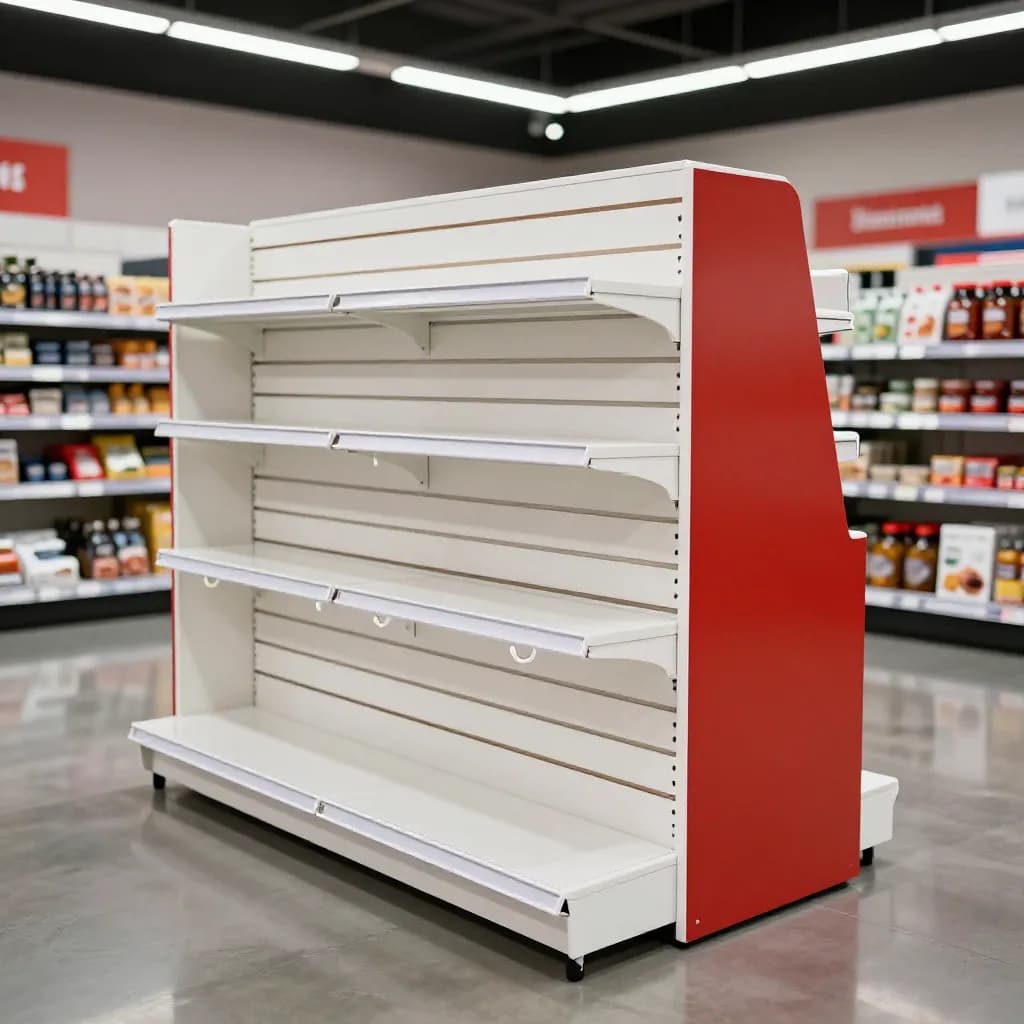
The retail fixture industry operates on compressed timelines. Store openings, seasonal resets, and brand refreshes require fixture manufacturers to produce large quantities of precisely color-matched components in weeks rather than months. Powder coating's single-coat application process, rapid cure cycle (10-20 minutes at 180-200°C), and immediate handling capability after cooling enable production throughput that liquid paint systems cannot match. A typical retail fixture powder coating line can process 500-2,000 components per shift, with color changes completed in 15-30 minutes using quick-change booth systems.
Ready to Start Your Project?
From one-off customs to 15,000-part production runs — get precise pricing in 24 hours.
On This Page
Retail Fixtures: Where Brand Identity Meets Functional Durability
The durability requirements for retail fixtures differ from outdoor applications but are no less demanding. Fixtures must withstand daily handling by store staff during restocking, contact with merchandise and shopping carts, cleaning with commercial detergents and disinfectants, and the occasional impact from hand trucks and pallet jacks. The coating must maintain its appearance through 5-10 years of this daily abuse, as fixture replacement is a significant capital expense for retailers.
Gondola Shelving Systems: High-Volume Production Finishing
Gondola shelving — the freestanding, double-sided shelving units that form the backbone of retail store layouts — represents the highest-volume category of retail fixture powder coating. A typical grocery store contains 200-400 gondola sections, each comprising uprights, base decks, shelves, back panels, and end caps, all of which must be powder coated in matching colors with consistent finish quality.
Gondola components are manufactured from cold-rolled steel (CRS) in thicknesses of 0.8-1.5 mm, formed by roll forming, stamping, and spot welding. The standard pretreatment for gondola components is a five-stage iron phosphate process: alkaline cleaning, rinse, iron phosphate conversion coating, rinse, and non-chrome seal rinse. This pretreatment provides adequate corrosion protection for the controlled indoor environment of a retail store while keeping processing costs aligned with the high-volume, cost-sensitive nature of gondola manufacturing.
The standard powder coating specification for gondola shelving is TGIC-free polyester at 50-70 microns in a semi-gloss finish (40-60 GU at 60°). Semi-gloss is preferred over high-gloss for gondola shelving because it hides minor surface imperfections in the steel substrate, shows fingerprints and handling marks less visibly, and provides a professional appearance that complements merchandise displays without competing for visual attention. Common gondola colors include white (RAL 9010 or RAL 9003), light grey (RAL 7035), warm grey (RAL 7044), and black (RAL 9005), though custom brand colors are increasingly specified by retailers seeking differentiated store environments.
Edge coverage is a critical quality parameter for gondola shelving. Shelf edges, slot perforations, and panel edges are the most visible surfaces and the most prone to thin coating coverage due to the Faraday cage effect at sharp edges. Powder formulations with good edge coverage characteristics — typically achieved through controlled particle size distribution and optimized charging parameters — are essential for gondola production. Many gondola manufacturers also specify a minimum edge radius of 0.5 mm on all formed edges to improve powder deposition and reduce the risk of bare metal exposure at edges.
Point-of-Purchase Displays and Promotional Fixtures
Point-of-purchase (POP) displays and promotional fixtures are the most design-intensive category of retail powder coating. These fixtures are designed to attract attention, communicate brand messaging, and drive impulse purchases, requiring coating finishes that are visually striking, precisely color-matched to brand standards, and available in a wide range of effects including metallics, textures, candy colors, and specialty finishes.
Brand color matching for POP displays requires exceptional precision. Major consumer brands specify their colors using Pantone, RAL, NCS, or proprietary color systems, with tolerance requirements of Delta E 1.0 or less between the powder-coated fixture and the brand color standard. Achieving this precision requires spectrophotometric color measurement at every stage — powder manufacturing, test panel approval, and production quality control. Powder manufacturers maintain libraries of pre-matched brand colors for major retail clients, enabling rapid production without the lead time of custom color development.
Metallic and special-effect powder coatings are heavily used in POP display finishing. Bonded metallic powders — where aluminum, mica, or glass flake pigments are bonded to the surface of the powder particles — provide consistent metallic effects without the separation and inconsistency issues of dry-blended metallic formulations. Chrome-look, copper, bronze, gold, and colored metallic effects are popular for premium brand displays, cosmetics fixtures, and electronics retail environments.
The production timeline for POP displays is often extremely compressed — 2-4 weeks from design approval to delivery for seasonal promotions and product launches. This timeline demands coating operations that can produce first-article samples within 48 hours, achieve production color approval within a week, and complete full production runs within 1-2 weeks. Powder coating's rapid processing cycle and quick color-change capability make it the only finishing technology that can consistently meet these aggressive timelines.
Mannequin Stands, Garment Racks, and Fashion Retail Fixtures
Fashion retail fixtures — mannequin bases and stands, garment racks, display tables, accessory holders, and fitting room hardware — require coating finishes that complement high-end merchandise without distracting from it. The finish quality expectations in fashion retail are among the highest in the fixture industry, with luxury brands demanding flawless surfaces, precise color matching, and sophisticated finish effects that reflect their brand positioning.
Mannequin stands and bases are typically fabricated from steel plate or cast iron and powder coated in finishes that coordinate with the store's interior design scheme. Matte black (RAL 9005 at 5-15 GU), satin chrome effect, brushed nickel effect, and rose gold metallic are currently popular finishes for fashion retail mannequin hardware. These finishes require careful powder selection and application to achieve the desired visual effect — matte finishes must be uniformly flat without gloss variation, while metallic effects must be consistent in color, sparkle, and orientation across all components.
Garment racks and display fixtures in fashion retail face specific durability challenges. Metal hangers sliding along rack crossbars create concentrated abrasion that can wear through thin coatings, exposing bare metal that detracts from the store's visual quality. Specifying a minimum film thickness of 80 microns and selecting powder formulations with high abrasion resistance (Taber CS-17 loss below 60 mg per 1,000 cycles) ensures that garment rack finishes maintain their appearance through years of daily merchandise handling.
Fitting room hardware — hooks, rails, mirrors frames, and seating — must withstand the unique combination of high humidity (from customer body heat and HVAC systems), chemical exposure (from perfumes, cosmetics, and cleaning products), and intensive daily use. Powder coatings for fitting room applications should be tested for resistance to common cosmetic chemicals (nail polish remover, perfume, hand sanitizer) per ASTM D1308, as these substances can soften or stain some powder coating formulations.
Checkout Counters, Service Desks, and High-Traffic Fixtures
Checkout counters, customer service desks, and information kiosks are the highest-traffic fixtures in any retail environment, handling thousands of customer interactions daily. The coating on these fixtures must withstand continuous contact with merchandise, shopping bags, purses, keys, and the full range of items that customers place on counter surfaces. Scratch resistance, stain resistance, and ease of cleaning are the primary coating performance requirements for these high-contact applications.
The coating specification for checkout counter surfaces typically requires pencil hardness of 3H or higher, Taber abrasion resistance below 50 mg loss per 1,000 cycles, and chemical resistance to common retail contaminants including hand sanitizer, cleaning solutions, soft drink spills, and adhesive residue from price labels. These requirements exceed standard architectural powder coating specifications and may require specialty formulations with enhanced cross-link density or ceramic reinforcement.
Anti-fingerprint powder coatings are increasingly specified for dark-colored checkout fixtures and service desks. Standard dark powder coatings (black, dark grey, navy) show fingerprints and handling marks prominently, requiring frequent cleaning to maintain appearance. Anti-fingerprint formulations incorporate micro-textured surface chemistry that diffuses light reflections and prevents the oils from skin from forming visible marks. These coatings maintain a clean appearance with significantly less cleaning frequency than standard smooth finishes.
Integrated technology in modern checkout counters — barcode scanners, payment terminals, digital displays, and conveyor belt systems — creates coating compatibility requirements. The powder coating must not interfere with barcode scanner optics, NFC payment reader sensitivity, or touchscreen responsiveness. Coating must be excluded from electrical contact points, grounding surfaces, and sensor windows through precise masking during the coating process.
Texture and Effect Finishes for Retail Differentiation
Texture and special-effect powder coatings enable retail fixture designers to create distinctive visual and tactile experiences that differentiate brands and enhance the shopping environment. The range of available textures and effects has expanded dramatically, giving designers a palette of finishes that rivals or exceeds what is achievable with liquid paint, wood veneer, or laminate surfaces.
Wrinkle and hammer-tone textures create a distinctive crinkled or dimpled surface that is popular for industrial-chic retail environments, hardware stores, and sporting goods retailers. These textures are achieved through controlled surface tension variation during the cure process, creating a self-organizing pattern that is unique to each coated surface. Wrinkle textures also provide practical benefits: they hide substrate imperfections, resist fingerprints, and provide enhanced grip on handles and rails.
Wood-grain and natural material effects achieved through sublimation transfer technology enable metal fixtures to replicate the appearance of oak, walnut, teak, marble, or concrete. The process involves applying a base powder coat, then wrapping the component in a printed transfer film and heating it in a vacuum oven to sublimate the printed pattern into the powder coat surface. The result is a photorealistic natural material appearance on a metal substrate that provides the durability, fire resistance, and hygiene advantages of powder-coated metal.
Soft-touch powder coatings create a velvety, rubber-like surface feel that is popular for premium retail fixtures, cosmetics displays, and electronics accessories. These formulations incorporate elastomeric additives that create a compliant surface layer with a distinctive tactile quality. Soft-touch finishes are available in matte colors and provide excellent fingerprint resistance, but they are more susceptible to scuffing and chemical staining than standard hard powder coatings, limiting their use to low-abrasion applications where the tactile experience justifies the durability trade-off.
Quick-Change Color Systems for Retail Production Flexibility
Retail fixture manufacturers must accommodate frequent color changes to serve multiple retail clients, seasonal promotions, and brand refresh programs. The ability to change colors quickly and efficiently — minimizing downtime, powder waste, and cross-contamination risk — is a critical competitive advantage in retail fixture powder coating operations.
Modern quick-change powder coating booths use smooth, non-stick interior surfaces (typically polypropylene or stainless steel) that can be cleaned of residual powder in 5-15 minutes, compared to 30-60 minutes for traditional booth designs. Automated booth cleaning systems using compressed air blow-off, robotic vacuum systems, or booth-in-booth cartridge designs further reduce color change time. The most advanced systems can complete a full color change — including booth cleaning, gun purging, powder hopper change, and first-article verification — in under 10 minutes.
Powder feed and reclaim systems designed for quick color change use dedicated hoppers for each color, with quick-disconnect fittings that allow hoppers to be swapped in minutes. Virgin powder feed systems (without reclaim) eliminate the cross-contamination risk entirely but sacrifice the material efficiency of reclaim systems. Many retail fixture coaters use a hybrid approach: reclaim systems for high-volume standard colors (white, black, grey) and virgin-only feed for custom brand colors and metallic effects where even trace cross-contamination is unacceptable.
Color management across multiple production shifts and coating lines requires systematic quality control. Spectrophotometric color measurement of production panels against approved master standards ensures batch-to-batch consistency. Digital color data management systems track color measurements across production runs, flagging any drift from the approved tolerance before it results in rejected product. For retail clients with multiple fixture suppliers, shared digital color standards ensure that fixtures from different manufacturers match when installed in the same store.
Sustainability and Indoor Air Quality in Retail Environments
Retail environments are occupied spaces where indoor air quality directly affects customer comfort and employee health. The coating on retail fixtures must not contribute to indoor air pollution through off-gassing of volatile organic compounds, formaldehyde, or other airborne contaminants. Powder coating's inherent zero-VOC formulation makes it the cleanest finishing option for retail fixtures, with no post-cure off-gassing that could affect indoor air quality.
Green building certification programs — LEED, BREEAM, WELL Building Standard — increasingly influence retail construction and fit-out specifications. Powder-coated fixtures contribute to credits for low-emitting materials (LEED EQ Credit: Low-Emitting Materials), responsible material sourcing, and waste reduction. The WELL Building Standard's material concept specifically addresses surface emissions and chemical content, with powder coating's zero-VOC, zero-formaldehyde profile providing straightforward compliance.
The sustainability profile of powder coating extends beyond indoor air quality to encompass the full manufacturing process. Powder coating's 95-98% material utilization rate means that virtually all purchased powder ends up on the finished product, minimizing waste. The absence of solvents eliminates hazardous waste disposal requirements and reduces the carbon footprint of the coating operation. These environmental benefits are increasingly important to retail brands that have made public sustainability commitments and are extending those commitments throughout their supply chains.
End-of-life recyclability of powder-coated retail fixtures supports circular economy objectives. Steel and aluminum fixtures are fully recyclable at end of life, with the thin powder coating film consumed during the metal melting process without generating toxic emissions. This clean recyclability contrasts with fixtures finished with PVC laminates, chrome plating, or solvent-based paints, which can complicate recycling due to hazardous material content.
Frequently Asked Questions
How precisely can powder coating match retail brand colors?
Powder coating can match any brand color (Pantone, RAL, NCS, or proprietary) to Delta E 1.0 or less using spectrophotometric measurement. Powder manufacturers maintain pre-matched color libraries for major retail brands, enabling rapid production. Digital color management ensures consistency across multiple production runs and suppliers.
What powder coating finish is best for retail shelving?
Semi-gloss polyester (40-60 GU at 60°) at 50-70 microns is the standard for gondola shelving. Semi-gloss hides substrate imperfections, shows fingerprints less than high-gloss, and provides a professional appearance. White, light grey, and black are the most common colors, with custom brand colors increasingly specified.
How fast can retail fixture powder coating lines change colors?
Modern quick-change booth systems complete full color changes in 5-15 minutes, including booth cleaning, gun purging, and hopper swap. Advanced cartridge booth designs can change in under 10 minutes. This enables retail fixture manufacturers to handle multiple brand colors and small batch sizes efficiently.
Does powder coating on retail fixtures affect indoor air quality?
No. Powder coatings contain zero VOCs and produce no post-cure off-gassing. This makes powder-coated fixtures the cleanest option for occupied retail spaces and supports green building certifications including LEED, BREEAM, and WELL Building Standard credits for low-emitting materials.
What special effects are available for retail display fixtures?
Options include bonded metallics (chrome, copper, gold, bronze), wrinkle and hammer-tone textures, wood-grain sublimation transfers, soft-touch velvety finishes, anti-fingerprint formulations, and candy color effects. These finishes enable retail designers to create distinctive brand environments that differentiate the shopping experience.
Ready to Start Your Project?
From one-off customs to 15,000-part production runs — get precise pricing in 24 hours.